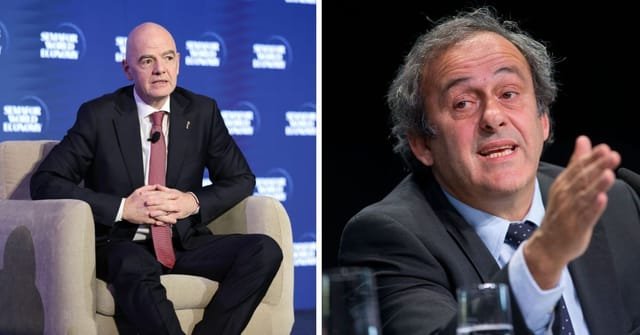
Just days before the kickoff of the 2026 FIFA World Cup, world football has been shaken by a major off-field controversy. Former UEFA president Michel Platini has reportedly filed a criminal complaint against FIFA president Gianni Infantino, reigniting one of the most politically charged rivalries in modern football governance.
The timing could hardly be more sensitive. With global attention turning toward the tournament, the allegations have added a layer of uncertainty to FIFA’s leadership narrative and revived questions about the decade-long power struggle that reshaped the organization.
Primary SEO Keyword: Michel Platini criminal complaint Gianni Infantino FIFA 2026
Related semantic keywords: FIFA corruption allegations timeline, Platini FIFA ban explained, Infantino ethics investigation controversy, 2026 World Cup political issues, UEFA vs FIFA leadership conflict, CAS ruling Platini Blatter case, FIFA governance scandal history
Background: A Rivalry Rooted in FIFA’s Most Controversial Era
The dispute between Michel Platini and Gianni Infantino is not new. It traces back to the mid-2010s, when FIFA was undergoing one of the most turbulent periods in its history following widespread corruption investigations.
Platini, once widely considered the frontrunner to succeed Sepp Blatter as FIFA president, saw his career trajectory collapse following a controversial payment made in 2011. Both Platini and Blatter were banned by FIFA’s ethics committee in 2015, effectively ending Platini’s presidential ambitions.
Although the ban was later reduced and both figures were eventually cleared by Swiss courts in subsequent rulings, the damage to Platini’s FIFA leadership prospects had already been done.
The Core Allegation: Claims of Political Exclusion
According to reports cited in international media, Platini’s new criminal complaint alleges that Gianni Infantino and others conspired to block his path to the FIFA presidency.
At the heart of the claim is the suggestion that internal FIFA politics played a larger role in his downfall than previously acknowledged.
Platini’s legal team argues that the process that led to his suspension was influenced by deliberate interference, rather than being solely a disciplinary matter based on financial misconduct.
While these claims remain legally unproven, they have reopened debates about transparency and governance within global football institutions.
Why the Timing Matters: A World Cup Shadowed by Off-Field Drama
The complaint arrives at a particularly sensitive moment—just before the start of the 2026 FIFA World Cup. Traditionally, FIFA aims to present a unified image during the build-up to its flagship tournament.
However, this development risks shifting media focus away from football and toward institutional controversy.
Even though FIFA has not issued a detailed response, the situation highlights how historical governance disputes continue to influence the sport at its highest level.
FIFA Leadership Pressure: Infantino Under Renewed Scrutiny
Gianni Infantino’s presidency has been marked by both expansion and controversy. Under his leadership, FIFA has increased the scale of global tournaments and commercial partnerships, but criticism regarding governance transparency has persisted.
This latest complaint adds another layer of scrutiny at a time when FIFA is attempting to maintain stability ahead of a high-profile World Cup.
Even if the case does not result in immediate legal consequences, it could influence public perception of FIFA’s leadership structure during the tournament.
Platini’s Position: A Long Fight for Reputation
For Michel Platini, this legal action represents another chapter in a long effort to restore his reputation within football administration.
Once regarded as one of the most influential figures in European football governance, Platini’s fall from power remains one of the most dramatic reversals in sports politics.
Despite multiple legal clearances in recent years, his legacy continues to be overshadowed by the original ethics investigation and its long-term consequences.
Broader Context: Governance Issues Still Affecting World Football
This development is not happening in isolation. FIFA has faced a series of administrative and logistical controversies in the lead-up to the 2026 World Cup, including visa-related complications for teams, fans, and officials.
Reports of travel authorization issues for supporters and restrictions affecting officials have already raised concerns about tournament logistics and global accessibility.
In this environment, the Platini–Infantino dispute adds to an already complex off-field narrative.
Key Insight: Football Politics Often Outlast Football Cycles
One of the most striking aspects of global football governance is how long political disputes persist compared to the sporting events they surround.
While World Cups last only a few weeks, leadership battles, legal cases, and institutional rivalries can span decades.
The Platini–Infantino situation is a clear example of how unresolved governance tensions can resurface even at the most high-profile moments in the sport.
Potential Impact on the 2026 World Cup Narrative
Although the tournament itself will remain focused on on-field action, such controversies often influence the broader media narrative.
If the case develops further, it could lead to:
- Increased scrutiny of FIFA decision-making processes
- Media focus shifting from teams to governance issues
- Renewed debate over transparency in global football bodies
- Long-term reputational challenges for FIFA leadership
However, unless there are immediate legal developments, the sporting spectacle is expected to proceed as planned.
Final Thoughts: A Familiar Pattern in Football Governance
The conflict between Michel Platini and Gianni Infantino is another reminder that football’s biggest battles are not always played on the pitch.
As the 2026 FIFA World Cup approaches, the focus will inevitably return to players, teams, and performances—but this legal complaint ensures that questions about governance, accountability, and leadership will remain part of the conversation.
Whether this case leads to further legal consequences or fades into the background, it reinforces a long-standing truth: in global football, politics and sport are never fully separate.
For breaking news and live news updates, like us on Facebook or follow us on Twitter and Instagram. Read more on Latest Sports on thefoxdaily.com.

COMMENTS 0