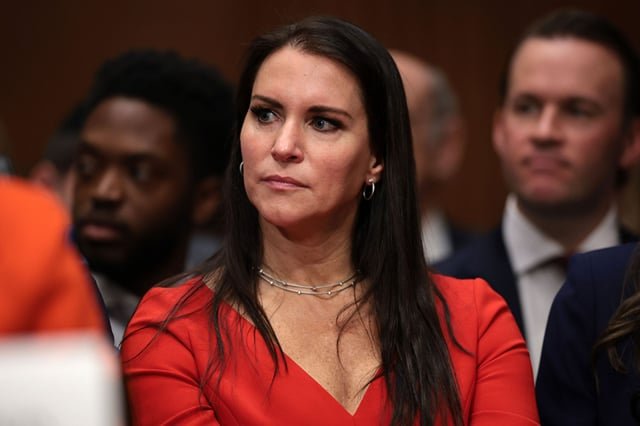
Stephanie McMahon has opened up about the extreme reactions she faced during her years as one of WWE‘s most recognizable on-screen villains. The former WWE executive and performer revealed that she received death threats while portraying a heel character on television.
McMahon discussed the subject during a recent episode of What’s Your Story? With Steph McMahon, while speaking with WWE star Lash Legend about the abuse that performers can receive when fans become emotionally invested in their on-screen roles.
The admission offers a glimpse into the boundary between professional wrestling’s scripted storytelling and the real-life consequences performers can sometimes face when their characters successfully provoke strong emotions.
Stephanie McMahon Says She Received Death Threats
During the conversation, Lash Legend spoke about receiving severe online abuse after missing a game-winning shot during a basketball game. Legend revealed that she had even received death threats following the incident.
Her experience prompted McMahon to share that she had faced a similar form of extreme reaction during her time as a WWE performer.
McMahon acknowledged that her circumstances were different because she deliberately portrayed an antagonistic character. She explained that she understood why audiences could become angry with her character, while emphasizing that the reaction could sometimes go far beyond normal wrestling fandom.
McMahon said that she had received death threats and acknowledged that she had played an intentionally evil and mean character on WWE programming.
Legend then suggested that such a reaction could also be interpreted as evidence that McMahon had succeeded in doing her job as a performer.
McMahon agreed with that assessment, highlighting the unusual nature of professional wrestling, where performers are often expected to make audiences strongly support or dislike their characters.
Stephanie McMahon Became One of WWE’s Major Heel Characters
Stephanie McMahon’s WWE career developed through several different roles. She initially appeared in storylines connected to the McMahon family before becoming an in-ring performer during the Attitude Era.
Over time, her role shifted from wrestler to one of WWE’s most prominent authority figures. That transition allowed McMahon to become a central character in major storylines without necessarily competing in every match.
Her heel persona became particularly prominent when she was involved with The Authority, the storyline faction built around Triple H and corporate control of WWE.
As part of the angle, McMahon frequently positioned herself against popular babyface wrestlers. Her character was designed to frustrate audiences and generate negative reactions.
That approach proved effective from a wrestling-storytelling perspective because McMahon became a recognizable antagonist whose appearances could immediately generate strong crowd responses.
Why Fans Reacted So Strongly to Her Character
Professional wrestling relies heavily on the contrast between babyfaces and heels. A heel is generally presented as an antagonist, while a babyface is positioned as the performer audiences are encouraged to support.
McMahon embraced that role during some of the most prominent WWE storylines of her career.
Her authority-figure character frequently used her position to interfere with or frustrate wrestlers presented as the heroes of the story. That included major names such as John Cena, Roman Reigns and Daniel Bryan.
Because WWE storylines are designed to create emotional investment, a successful heel can sometimes generate genuine anger from sections of the audience.
McMahon’s recent comments demonstrate the difficult distinction between a performer receiving a negative reaction because of a character and an individual being personally targeted outside the boundaries of entertainment.
McMahon’s Wrestling Career Extended Beyond Being an Authority Figure
Although many modern fans primarily remember McMahon as an authority figure, her WWE career included significant in-ring involvement.
During the Attitude Era, she became an active participant in several storylines and eventually competed as a wrestler. Her character evolved alongside WWE’s programming, allowing her to take on different roles as the company entered new eras.
Her position as Vince McMahon’s daughter also made her an important part of WWE’s broader on-screen family narrative. However, her character eventually developed an identity separate from simply being presented as a member of the McMahon family.
The Authority storyline was one of the most notable examples of that development. Her partnership with Triple H created a corporate power couple within WWE’s fictional universe, with both characters frequently attempting to influence storylines and control the company’s direction on television.
Stephanie McMahon and Triple H as The Authority
The Authority became one of WWE’s major villainous factions, with Triple H and Stephanie McMahon at the center of the storyline.
The pair were regularly positioned against wrestlers who challenged their authority. This created a consistent narrative structure in which popular WWE stars had to overcome corporate interference and the power held by the on-screen executives.
Names such as Daniel Bryan and Roman Reigns became involved in major storylines connected to The Authority, while John Cena also had several memorable confrontations with the faction.
McMahon’s ability to generate strong crowd reactions was an important part of those segments. Her character did not need to wrestle every week to remain central to WWE programming; her role as an authority figure allowed her to influence matches, make announcements and confront wrestlers.
The Difference Between Wrestling Heat and Real-Life Abuse
McMahon’s comments also highlight an important distinction within professional wrestling: receiving boos is part of the performance, but threats against performers are a different matter.
Heel characters are specifically designed to generate negative reactions. A performer who receives boos after an effective storyline has generally achieved the intended objective of the segment.
However, threats directed at performers personally cross beyond the normal boundaries of wrestling storytelling.
McMahon’s explanation that she understood why fans could become angry with her character does not mean that extreme personal abuse is part of the intended performance. Her comments instead illustrate how strongly some wrestling storylines can affect audience members.
The same issue applies to athletes and entertainers in other sports and forms of entertainment. Strong emotional investment can create passionate reactions, but performers remain real people outside their characters and professional roles.
Stephanie McMahon’s Role in Vince McMahon’s WWE Exit
McMahon’s recent comments about receiving threats come alongside renewed attention on her role in WWE’s corporate history, particularly her reported involvement in Vince McMahon’s departure from the company.
Vince McMahon retired from WWE in July 2022 amid misconduct allegations. He later returned to the company’s board in January 2023 as WWE moved toward its eventual transaction with Endeavor.
McMahon had previously stepped away from her executive position at WWE. She later became associated with the company’s leadership transition during a period of significant corporate change.
In January 2024, Vince McMahon resigned from his position at TKO amid allegations connected to a lawsuit filed by former WWE employee Janel Grant. McMahon has denied allegations of wrongdoing related to the matter.
The developments eventually became part of the wider story surrounding the transformation of WWE under TKO ownership.
Report Details Stephanie McMahon’s Influence on Vince McMahon
According to the material discussed by wrestling journalist Dave Meltzer on Wrestling Observer Radio, Ari Emanuel’s book Roll the Calls: A Memoir includes information about Stephanie McMahon’s role in discussions surrounding her father’s resignation.
The account described McMahon as someone who helped convince Vince McMahon that stepping down was necessary amid concerns about the potential business consequences.
Meltzer said the discussion included the possibility that WWE and its business partners could face consequences if Vince McMahon remained in his position.
These reports concern corporate decisions surrounding WWE and TKO rather than McMahon’s on-screen wrestling character. The distinction is important because Stephanie has occupied both a fictional role on WWE programming and significant real-world executive positions within the company.
From WWE Performer to Corporate Executive
Stephanie McMahon’s career has therefore covered several distinct phases. She moved from appearing in wrestling storylines to becoming an in-ring performer, then transitioned into an authority figure before taking on substantial corporate responsibilities.
Her executive career included leadership positions within WWE, where she worked on areas such as branding, marketing and the company’s broader business operations.
That dual identity made McMahon an unusual figure in professional wrestling. She was simultaneously connected to WWE’s real corporate structure and capable of becoming one of its most prominent fictional antagonists.
Her ability to move between those worlds was a major part of her public profile within WWE.
Lash Legend’s Experience Sparked the Conversation
The discussion with Lash Legend provided the immediate context for McMahon’s admission.
Legend described the intense criticism she received after missing a decisive basketball shot. McMahon responded by relating the experience to her own time in wrestling, when her heel character generated significant hostility from portions of the audience.
The conversation demonstrates that public figures in sports entertainment can face intense reactions even when their actions are part of a professional performance.
For wrestlers, this can be particularly complicated because fans are deliberately encouraged to become emotionally invested in fictional rivalries. The stronger the audience response, the more successful a storyline can appear on television.
Why Stephanie McMahon’s Admission Matters
McMahon’s revelation provides additional insight into the reality behind WWE’s most provocative storylines. A successful heel character can generate boos, chants and online criticism, but the performer behind that character remains separate from the fictional persona.
Her comments also demonstrate how the growth of social media has changed the relationship between wrestlers and fans. Performers can now receive immediate reactions from audiences around the world, making it easier for criticism to move beyond the arena.
That environment can create both opportunities and challenges for WWE performers. Social media allows wrestlers to connect directly with supporters, but it can also expose them to personal abuse and extreme reactions.
Final Verdict
Stephanie McMahon’s latest admission offers a rare look at the intense reaction that can accompany a successful WWE heel character. During her years as an on-screen antagonist, she deliberately portrayed a villainous authority figure who regularly clashed with some of WWE’s biggest babyfaces.
McMahon explained that she had received death threats during that period and acknowledged that her character was designed to make fans angry. Her comments came while discussing Lash Legend’s own experience with severe online abuse.
Beyond her wrestling persona, McMahon has also played a significant role in WWE’s real-world corporate history, including reports about her involvement in discussions surrounding Vince McMahon’s resignation.
Her career ultimately illustrates the unusual overlap between professional wrestling’s scripted characters and the real people performing them. While generating strong emotional reactions is part of the business, McMahon’s comments show that the response can sometimes extend far beyond the boundaries of the storyline.
For breaking news and live news updates, like us on Facebook or follow us on Twitter and Instagram. Read more on Latest Sports on thefoxdaily.com.






COMMENTS 0