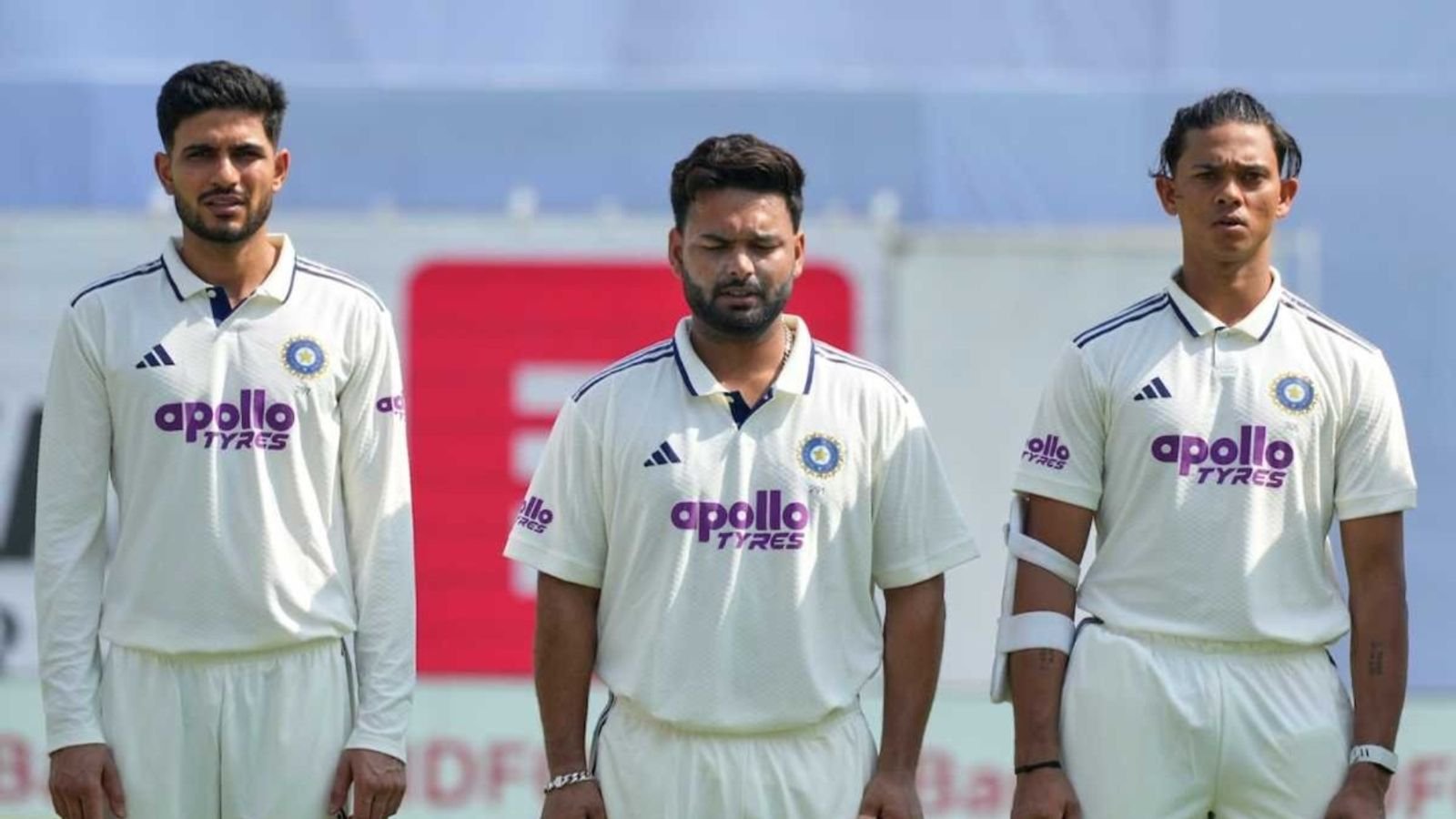
Team India’s injury crisis has once again become a major talking point as the national side prepares for its upcoming Test assignment in Sri Lanka with several important players facing fitness concerns. A report has now raised questions over whether an overloaded cricket calendar, combined with players pushing through injuries during the IPL, is contributing to the repeated setbacks.
The issue has gained attention after several members of India’s current setup have been involved in rehabilitation programmes at the BCCI’s Centre of Excellence in Bengaluru. Jasprit Bumrah, Hardik Pandya, Washington Sundar and Sai Sudharsan are among the players dealing with injury-related concerns, while India’s Test preparations have already been affected by unavailable or doubtful players.
According to a report by ANI, a source close to the Centre of Excellence believes workload and players continuing to compete while carrying injuries can create complications later in the season. The source specifically pointed towards the IPL and the financial and franchise pressures surrounding the tournament.
That claim does not establish that the IPL is directly responsible for every injury suffered by an Indian cricketer. However, it raises a much broader question for Indian Cricket: how can a country manage an increasingly crowded professional calendar while protecting players who are expected to perform across international cricket and lucrative franchise competitions?
What the Report Says About India’s Injury Problems
The central claim in the report is that excessive cricket can push the human body beyond its ability to recover effectively.
A Centre of Excellence source cited by ANI said that players sometimes continue playing during the IPL despite carrying injuries because of franchise and financial pressures. According to the source, those issues can subsequently become rehabilitation challenges when players enter the national setup.
The source also described overuse and stress injuries as particularly difficult because recovery timelines can be unpredictable.
This is an important distinction. A player may be able to participate in a match despite discomfort without necessarily being fully fit. Playing through pain can allow an athlete to remain available in the short term, but the risk is that the underlying problem may become more difficult to manage.
For India, that creates a difficult selection problem. The national team needs its best players available for major international assignments, while IPL franchises understandably want their contracted players on the field.
Why the IPL Is at the Centre of the Debate
The Indian Premier League occupies a unique position in modern cricket.
It is one of the world’s most prominent T20 competitions, attracts elite international and domestic players and provides significant commercial opportunities. For cricketers, franchise cricket can be an important part of their professional careers.
That creates an unavoidable tension when a player enters the tournament carrying an injury.
A franchise has a competitive incentive to field its strongest possible XI. A player may also have personal and professional reasons for wanting to remain available. At the same time, the national team has a longer-term interest in ensuring that the same player is fit for international cricket.
The conflict becomes particularly complicated when the player is an important member of India’s Test or white-ball plans.
The report’s allegation therefore touches on a structural issue rather than simply an individual player’s fitness decision.
Team India’s Injury List Highlights the Problem
India’s current fitness concerns have affected several important names.
Jasprit Bumrah’s availability is naturally significant because of his importance to India’s bowling attack. Hardik Pandya has also had a long history of workload management concerns, particularly because of the demands placed on an all-rounder who contributes with both bat and ball.
Washington Sundar and Sai Sudharsan are among the other players whose fitness situations have required attention from India’s support system.
When multiple players are unavailable simultaneously, the consequences extend beyond individual replacements.
Team combinations have to change. Backup players are brought into squads. Some cricketers may be asked to take on larger roles than originally planned, while others can find themselves making international debuts earlier than expected.
That is why India’s recurring injury issues are not simply a medical concern. They are also a selection and planning problem.
VVS Laxman Defends the Centre of Excellence
The discussion comes at a time when the Centre of Excellence has faced questions over the rehabilitation timelines of several players.
VVS Laxman, who is involved with the facility, has addressed the role of the Bengaluru-based centre and defended its rehabilitation processes.
The facility’s responsibility is not simply to declare a player fit as quickly as possible. Its broader purpose is to oversee rehabilitation, monitor recovery and assess whether a player can safely return to competitive cricket.
That distinction can sometimes create frustration among selectors, coaches and fans who naturally want important players back immediately.
But a cautious rehabilitation programme can be necessary when the alternative is returning a player too early and potentially creating another setback.
The Real Problem May Be Workload, Not One Tournament
Although the report focuses heavily on the IPL, India’s workload debate cannot be reduced to one competition.
Modern Indian cricketers can play international cricket, domestic competitions and franchise leagues across the same year. Different formats place different physical demands on players.
Fast bowlers face particular stress because of repeated high-intensity efforts. All-rounders can face another layer of workload because they contribute in multiple disciplines. Even batters are exposed to repeated travel, training and match commitments.
For centrally contracted or internationally important players, the calendar can become particularly demanding.
The bigger issue, therefore, is whether workload management is being treated as a continuous process rather than a problem that only becomes visible after an injury occurs.
Playing Through Injury Creates a Difficult Cycle
The report’s most significant warning concerns players competing while carrying injuries.
Consider a simplified workload cycle. A player develops discomfort, continues playing because the injury remains manageable, completes a demanding tournament and then reports for international duty. By that stage, the original issue may require more extensive rehabilitation.
The problem is not necessarily that playing through pain will always make an injury worse. Sports medicine decisions are individual and depend on the nature of the injury, symptoms, workload and medical assessment.
But the risk becomes more difficult to manage when competitive pressure discourages adequate recovery.
That is where communication between franchise medical teams, players, the BCCI and the Centre of Excellence becomes crucial.
Why Financial Pressure Can Complicate Player Decisions
The report specifically mentions franchise and financial pressure, which is one of the most sensitive aspects of the discussion.
Players operate within a professional environment where performances can affect contracts, selection and future opportunities. An IPL season can therefore carry enormous significance for a cricketer.
A player who believes that missing matches could affect his standing within a franchise may feel an incentive to continue playing.
However, that short-term decision can potentially create a longer-term problem if the injury prevents the player from participating in international cricket later.
This creates a classic short-term versus long-term dilemma.
The player, franchise and national team may all have different priorities, even though they ultimately want the same athlete to remain healthy and productive.
India’s New Fitness Approach Shows the Issue Is Being Taken Seriously
The injury debate comes alongside a tightening of India’s fitness expectations.
The BCCI has recently strengthened fitness requirements for its players and made the Bronco test more demanding, while also moving away from the idea of broad exemptions for senior players.
That development suggests the board is attempting to establish stronger physical standards across the national setup.
However, fitness testing and injury prevention are not identical.
A player can pass a fitness test and still sustain an injury during a high-intensity match. Similarly, a strong conditioning programme cannot eliminate all risks associated with workload, travel, recovery and competition.
The most effective approach therefore needs to combine fitness standards with workload monitoring and transparent injury management.
Fitness Tests Cannot Solve Every Injury Problem
This is perhaps the most important distinction missing from many public discussions about India’s injury concerns.
Fitness is not a single number.
A player may be physically strong, aerobically fit and capable of passing a demanding test while still needing appropriate recovery between matches.
Workload management involves monitoring several variables, including playing frequency, intensity, training load, travel and recovery periods.
For bowlers in particular, the number of high-intensity deliveries and match spells can be more meaningful than a general fitness score.
That means India’s injury strategy will likely need to evolve beyond simply making fitness tests tougher.
IPL and International Cricket Need Better Coordination
If the concerns raised by the report are to be addressed, coordination between IPL franchises and the national setup will be critical.
Medical information needs to be communicated responsibly while respecting player privacy. National selectors also need accurate information when deciding whether a player is ready for international duty.
A fragmented system can create uncertainty.
If a player is treated by one medical team during a franchise season and then moves into another rehabilitation system for international cricket, the handover process becomes extremely important.
A unified approach to injury reporting could help reduce misunderstandings and give all parties a clearer picture of a player’s workload and recovery status.
Why India’s Test Team Is Especially Vulnerable to Injuries
Injuries become particularly consequential when India prepares for Test cricket.
Test matches demand sustained physical effort over several days, especially from bowlers. A player who is capable of performing in a short T20 match may not necessarily be ready for the workload required in a five-day Test.
This is particularly relevant for fast bowlers.
India’s Test ambitions depend heavily on maintaining a strong pace attack, meaning the fitness of frontline bowlers can directly influence selection strategy and match plans.
Batting injuries can also disrupt combinations, especially when a player occupies a specialist position at the top of the order or is a key part of the middle order.
The Sri Lanka Series Adds Urgency
India’s upcoming two-match Test series in Sri Lanka has brought the fitness discussion into sharper focus.
With several players unavailable or dealing with injury concerns, the selectors have had to consider alternative combinations and replacements.
The situation provides an immediate example of how recurring fitness issues can influence a team’s preparation.
Instead of entering a series with its preferred combination fully available, India has had to monitor multiple rehabilitation programmes while also considering the readiness of replacements.
This can affect preparation because backup players may receive fewer opportunities to train in their expected roles before an important Test.
The Hidden Cost of Repeated Injuries
The impact of injuries extends beyond the matches a player misses.
Every absence can create additional pressure on another player. A reserve player may suddenly have to handle an international workload, while another member of the squad may need to change positions or roles.
Repeated disruptions can also affect team continuity.
For a side competing across multiple formats, maintaining a stable core is valuable because players develop familiarity with roles, combinations and tactical plans.
When injuries repeatedly force changes, that continuity becomes harder to maintain.
Could India Need a New Player-Workload Model?
The current situation could encourage Indian cricket to rethink how it manages its elite players.
One possible direction would be greater individualisation of workloads rather than applying the same expectations to every player.
A fast bowler, wicketkeeper, batter and all-rounder do not experience the same physical demands. Their workloads should therefore be monitored according to their roles and injury histories.
India could also benefit from stronger communication between international and franchise medical departments, particularly for players who have already experienced recurring problems.
The objective should not be to prevent players from playing franchise cricket. The IPL is a major part of modern cricket and offers significant competitive and financial value.
The more realistic objective is to make the transition between franchise and international cricket safer and better coordinated.
Comparison: Short-Term IPL Availability vs Long-Term India Availability
| Factor | Short-Term Priority | Long-Term Priority |
|---|---|---|
| Player availability | Remain available for franchise matches | Maintain fitness across the full season |
| Injury management | Control symptoms and continue when medically appropriate | Address the underlying issue properly |
| Workload | Maximise tournament contribution | Balance domestic and international commitments |
| Financial considerations | Protect franchise role and contract value | Protect long-term career and international opportunities |
| National team impact | Limited immediate impact | Greater availability for major international series |
What Should Happen Next?
The immediate priority for Indian cricket should be establishing the actual condition and rehabilitation timelines of every affected player rather than allowing speculation to dominate the discussion.
The report’s claims should be treated as an important warning rather than proof that the IPL is responsible for India’s entire injury situation.
There are many causes of sports injuries, and no single competition can automatically be blamed for every setback.
At the same time, the concerns about excessive workload deserve serious examination because the number of matches available to elite cricketers has increased significantly over the years.
The key question is whether India’s existing systems can identify risk early enough to prevent manageable problems from becoming prolonged absences.
The Bigger Picture for Indian Cricket
India has one of the deepest talent pools in world cricket, which means the team can often find replacements when major players are unavailable.
But depth should not become an excuse for poor workload management.
Having talented replacements is an advantage; repeatedly needing them because established players are unavailable is a different matter.
The strongest cricket system is not necessarily the one with the largest replacement pool. It is the one capable of keeping its best players fit while developing enough depth to handle unavoidable injuries.
The current debate could therefore become an opportunity for Indian cricket to build a more integrated model involving players, franchises, medical teams, the Centre of Excellence, selectors and coaches.
Conclusion
Team India’s injury crisis has raised difficult questions about workload, rehabilitation and the competing demands of international and franchise cricket. A report citing a Centre of Excellence source has specifically highlighted excessive cricket and players competing through injuries during the IPL as possible contributors to recurring fitness problems.
The claim should not be interpreted as evidence that the IPL alone is causing India’s injuries. Cricket injuries have multiple causes, and individual medical situations vary significantly.
However, the report highlights a genuine structural challenge. Players operate in an increasingly crowded calendar, franchises have strong incentives to field their best players and international cricket demands its own physical commitments.
For India, the solution may require more than tougher fitness tests. Better workload monitoring, stronger communication between franchise and national medical teams, individualised rehabilitation and greater transparency around player readiness could all become increasingly important.
As India prepares for its Test series in Sri Lanka, the fitness of key players remains a central part of the team’s planning. The immediate goal will be to get the available players ready, but the bigger challenge is preventing the same cycle of injuries from repeatedly disrupting India’s international campaigns.
For breaking news and live news updates, like us on Facebook or follow us on Twitter and Instagram. Read more on Latest Cricket on thefoxdaily.com.






COMMENTS 0