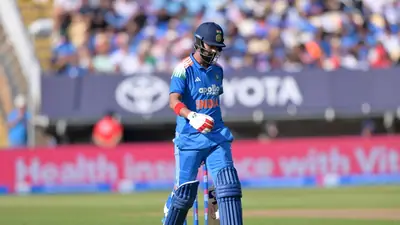
Every Indian Cricket generation has produced players whose value extends beyond statistics. KL Rahul belongs firmly in that category. Technically gifted, adaptable across formats, and capable of playing multiple roles, Rahul has often been described as one of India’s most versatile cricketers. Yet despite his experience and proven success in ODI cricket, questions continue to emerge about how he is being used by the Indian team management.
Following India’s 2-1 ODI series defeat against England, criticism has intensified over Rahul’s batting position. Former India cricketer Dodda Ganesh became the latest voice to question why Rahul continues to bat lower in the order despite having an impressive record higher up.
The discussion is no longer focused solely on one disappointing innings against England. Instead, it reflects a larger debate about India’s ODI strategy, batting structure, and whether the team is maximizing the potential of one of its most accomplished middle-order batters.
Why KL Rahul’s Batting Position Has Become a Major Talking Point
Batting positions in ODI cricket are far more important than they appear on paper.
Different positions demand different skills, responsibilities, and mindsets. A player batting at No. 5 often has more time to build an innings, manage the middle overs, and influence the outcome of a match. A batter arriving at No. 6 frequently faces a completely different challenge—accelerating immediately, rescuing difficult situations, or finishing chases under pressure.
For Rahul, the distinction matters because much of his ODI success has come when he has been given sufficient time at the crease.
Critics argue that consistently pushing him down the order limits his ability to control innings and showcase the qualities that have made him such an effective ODI player.
The Numbers Behind the Debate
One reason the discussion refuses to disappear is Rahul’s strong record in ODI cricket.
Over the years, he has demonstrated an ability to adapt to varying match situations while maintaining consistency. His performances in the middle order have often helped stabilize India during difficult phases.
Supporters of Rahul believe that his skill set is particularly suited to the No. 4 and No. 5 positions because he combines:
- Technical stability against quality bowling.
- Ability to rotate strike effectively.
- Strong performance against both pace and spin.
- Experience in high-pressure run chases.
- Capability to accelerate later in an innings.
These qualities make him valuable during the most crucial phase of ODI cricket—the middle overs.
What Happened During the England ODI Series?
Rahul’s England tour never truly gained momentum.
After missing one match because of illness, he featured in two ODIs and struggled to make a significant impact. Scores of 1 and 12 inevitably drew criticism from fans and analysts, especially as India lost the series.
However, supporters argue that focusing solely on those numbers ignores the broader context.
By the time Rahul arrived at the crease in the series decider, India’s chase had already become increasingly difficult. The required scoring rate was climbing, wickets were falling, and the pressure was immense.
In such circumstances, even experienced batters can struggle to produce match-winning performances.
The Modern ODI Dilemma: Flexibility vs Specialization
The KL Rahul debate reflects a wider trend in international cricket.
Modern teams increasingly prioritize flexibility. Batters are often expected to move up and down the order depending on match situations, team combinations, and tactical plans.
While this approach can create balance, it also carries risks.
Frequent positional changes may prevent players from settling into clearly defined roles. Batters often perform best when they understand exactly what is expected of them.
This is particularly relevant for Rahul, who has spent different phases of his career opening, batting in the middle order, keeping wickets, and acting as a finisher.
Versatility is valuable, but it can sometimes become a burden when a player is constantly adapting rather than specializing.
Has India Turned KL Rahul Into a Utility Player?
One of the most common criticisms surrounding Rahul is that his adaptability may have worked against him.
Because he can perform multiple roles, team managements have frequently used him to solve tactical problems elsewhere in the lineup.
Over the years, Rahul has been asked to:
- Open the batting.
- Bat at No. 3.
- Anchor innings in the middle order.
- Finish matches lower down the order.
- Keep wickets when required.
Few international cricketers possess such versatility.
However, critics argue that India has become so dependent on Rahul’s flexibility that they have not always prioritized placing him in the position where he can contribute most effectively.
How India’s Current ODI Structure Impacts Rahul
The emergence of new leadership under Shubman Gill and the strategic influence of Gautam Gambhir have brought noticeable changes to India’s ODI approach.
The current management appears focused on:
- Deeper batting line-ups.
- Greater emphasis on all-rounders.
- Aggressive middle-order scoring.
- Flexible batting roles.
- Match-up based decision making.
These priorities can sometimes push traditional middle-order specialists into unfamiliar positions.
As a result, Rahul often finds himself adjusting to the team’s needs rather than occupying a permanent role.
Comparing the Responsibilities of No. 5 and No. 6
| Position | Primary Responsibility | Impact on KL Rahul’s Style |
|---|---|---|
| No. 5 | Build innings and stabilize middle overs | Allows Rahul to construct innings naturally |
| No. 6 | Finish games and accelerate quickly | Reduces time available to settle |
| No. 5 | Handle spin-heavy phases | One of Rahul’s strengths |
| No. 6 | Face high-pressure end overs | Requires immediate aggression |
The comparison helps explain why many former cricketers believe Rahul is better suited to batting slightly higher in the order.
Why Rahul Continues to Divide Opinion
Few Indian cricketers generate as much debate as KL Rahul.
Part of the reason is the gap between perception and reality.
When Rahul scores heavily, he is praised for his elegance and versatility. When he fails, criticism often arrives quickly because expectations remain exceptionally high.
His calm batting style can also create misconceptions. Unlike naturally aggressive players, Rahul often builds innings through timing and placement rather than explosive stroke play.
As a result, his contributions can sometimes appear less impactful than they actually are.
What Former Cricketers Are Really Arguing
The criticism from former players is not necessarily about one selection decision or one innings.
Instead, it centers on a broader principle.
Many believe that teams should place their best batters in positions where they can face the most deliveries and influence matches most consistently.
The argument is simple:
- Elite batters should maximize their time at the crease.
- Proven performers deserve clearly defined roles.
- Constant adjustments can hurt consistency.
- Statistics should guide selection and batting positions.
Viewed through this lens, the debate becomes less about favoritism and more about strategic optimization.
What This Means for India’s Future ODI Plans
India’s management now faces an important decision.
As preparations continue for future ICC tournaments, the team must determine whether Rahul’s best value lies as a floating batter or as a permanent middle-order anchor.
Both approaches offer advantages.
A flexible Rahul provides tactical freedom. A fixed-position Rahul may deliver greater consistency.
The challenge for the selectors and coaching staff is finding the balance that maximizes both team performance and individual output.
The Bigger Question Beyond KL Rahul
The debate ultimately extends beyond one player.
It reflects a challenge faced by every modern cricket team: how to balance flexibility with role clarity.
Successful teams often have players capable of adapting to different situations. At the same time, they ensure key performers have enough stability to excel consistently.
Finding that balance could become one of the defining challenges of India’s ODI evolution over the next few years.
Conclusion: Is India Getting the Best Out of KL Rahul?
KL Rahul’s disappointing England series should not overshadow the larger discussion surrounding his role in Indian cricket.
The criticism from former players highlights a legitimate strategic question: should a batter with Rahul’s record and skill set be batting higher in the ODI order?
While India’s management values flexibility and team balance, Rahul’s performances over the years suggest he remains one of the side’s most reliable middle-order options when given the opportunity to build an innings.
As India looks ahead to future tournaments, the answer may not simply be selecting Rahul—it may be ensuring he is placed in the position where his strengths can have the greatest impact.
Because in modern cricket, talent alone is not enough. Maximizing that talent through the right role can often be the difference between a good team and a championship-winning one.
For breaking news and live news updates, like us on Facebook or follow us on Twitter and Instagram. Read more on Latest Sports on thefoxdaily.com.






COMMENTS 0