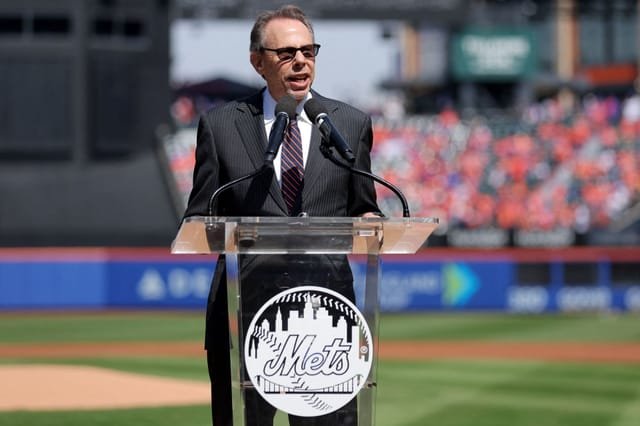
Tommy John’s health update has brought an emotional moment to Major League Baseball, with longtime New York Mets broadcaster Howie Rose describing the former Yankees pitcher’s situation as “ominous and extremely sad.” John, a four-time All-Star and one of the most influential pitchers in baseball history, is currently in hospice care while battling health complications following treatment for a recurrence of bladder cancer.
The news emerged as the Yankees prepared for Old-Timers’ Day festivities at Yankee Stadium. Rather than simply celebrating his remarkable career, John used the occasion to deliver a farewell message to the organization, its fans and the Steinbrenner family.
John’s message carried particular weight because his influence extends far beyond his statistics. His name became permanently attached to one of the most important medical procedures in sports history after he underwent groundbreaking elbow surgery in 1974. The procedure, performed by Dr. Frank Jobe, transformed what had once been viewed as a potentially career-ending injury into an obstacle many pitchers could overcome.
Nearly five decades later, Tommy John surgery remains a familiar term throughout professional baseball. That makes John’s current health battle especially poignant for generations of players who have benefited from the medical breakthrough associated with his name.
What is the latest Tommy John health update?
Tommy John is in hospice care as he deals with serious health issues following treatment connected to a recurrence of bladder cancer. Ahead of the Yankees’ Old-Timers’ Day event, the former pitcher shared an emotional message that served as a goodbye to the franchise and the people who supported him throughout his career.
John thanked the Yankees organization and the Steinbrenner family for giving him the opportunity to say goodbye. He also expressed gratitude toward the friends and fans who followed his 26-year professional career.
The message immediately resonated across baseball because John is not simply remembered as a successful pitcher. He became a symbol of perseverance after returning from an injury that, at the time, was widely considered devastating to a pitcher’s career.
His farewell also placed a difficult reality alongside a celebration of baseball history. Old-Timers’ Day is normally centered on memories, reunions and recognition. In John’s case, the occasion became an opportunity to acknowledge a career that changed both the Yankees and the wider sport.
Howie Rose reacts to Tommy John’s farewell message
Howie Rose, the longtime Mets broadcaster, reacted emotionally after seeing John’s message.
Rose described the situation as “ominous and extremely sad” and recalled his interactions with John in warm terms. He characterized the former pitcher as a classy and entertaining person before offering prayers for him.
Rose’s reaction reflects how John’s influence extends beyond the teams for which he played. Although John spent part of his career with the Yankees and Rose is closely associated with the Mets, the former pitcher became a widely respected figure throughout baseball.
That cross-team respect is one reason the news has resonated so strongly. Baseball history is often built around rivalries, but certain figures eventually become part of the sport’s shared cultural memory. John is one of those figures.
Tommy John’s career was already remarkable before the surgery
It is easy to discuss Tommy John primarily through the lens of the surgery that bears his name, but doing so overlooks how accomplished he was as a pitcher.
John enjoyed a 26-year MLB career and became a four-time All-Star. His longevity alone made him unusual in a sport where pitchers face enormous physical demands, particularly on the throwing arm.
His career eventually became intertwined with one of baseball’s most important medical stories after he suffered a torn ulnar collateral ligament in his left elbow in 1974.
At the time, the injury was viewed as potentially career-ending. There was no established blueprint for reconstructing the damaged ligament and returning a professional pitcher to competition.
That changed because of the collaboration between John and Dr. Frank Jobe.
The 1974 injury that changed baseball medicine
John’s elbow injury came at a time when a major ligament problem in a pitcher’s throwing arm could effectively end a career. Pitchers rely heavily on the elbow’s stability, particularly during the repeated high-speed motion involved in throwing a baseball.
Dr. Jobe developed an experimental procedure to reconstruct John’s damaged ulnar collateral ligament. Rather than accepting the injury as the end of John’s career, the medical team attempted something that had never before been successfully demonstrated at the highest level of professional baseball.
The procedure involved replacing the damaged ligament with a tendon taken from another part of the body. It was an extraordinary gamble for both the surgeon and the player.
The gamble worked.
John returned to the mound in April 1976, roughly two years after the procedure, and continued his professional career through the 1989 season.
His comeback did more than extend one player’s career. It changed the way baseball viewed serious elbow injuries.
Why Tommy John surgery became one of baseball’s biggest medical breakthroughs
The phrase Tommy John surgery eventually became part of everyday baseball vocabulary because the procedure moved from an experimental operation to an established method for treating UCL injuries.
Its importance is difficult to overstate. Pitchers who once might have faced the end of their careers gained another potential route back to competition.
The procedure did not make elbow injuries harmless, nor did it guarantee that every pitcher would return to the same level. Recovery requires extensive rehabilitation, patience and physical conditioning. Nevertheless, John’s successful comeback demonstrated that reconstructive surgery could give elite pitchers another chance.
That is why John’s name remains connected to the procedure decades after his own surgery.
There is an unusual irony in sports history here. The surgery is often discussed as a medical procedure, but its name comes from a player whose willingness to undergo an experimental operation helped prove that the concept could work.
Gerrit Cole pays tribute to Tommy John
Yankees ace Gerrit Cole also recognized John’s influence while discussing his own experience with Tommy John surgery.
Cole underwent the procedure last year, making his appreciation for John’s contribution particularly personal. Rather than viewing the surgery only as a difficult part of his own rehabilitation, Cole acknowledged that John effectively helped establish the path that modern pitchers follow after serious UCL injuries.
Cole’s comments highlight an important distinction. The procedure may be what makes recovery medically possible, but the player still has to endure the rehabilitation process.
For professional pitchers, that process can involve months of carefully controlled throwing, strength work, physical therapy and gradual increases in workload. Returning to competition is not simply a matter of healing the ligament; pitchers must rebuild the confidence and mechanics required to throw at an elite level.
John was one of the first players to demonstrate that this journey could lead back to a major-league mound.
From career-threatening injury to baseball legacy
The most remarkable part of John’s story is not simply that he returned to baseball. It is that he continued pitching for more than a decade after the surgery.
He returned in 1976 and remained in professional baseball through the 1989 season. That longevity helped establish the credibility of the procedure at a time when the medical community was still learning what it could accomplish.
John’s comeback also changed the psychological landscape for injured pitchers.
Before his surgery, a serious UCL injury could carry a devastating implication: the player’s career might be over. After John’s successful return, injured pitchers had a new reason to believe that rehabilitation could lead back to the mound.
That does not mean every player who undergoes the operation returns successfully. But the existence of a proven pathway can fundamentally change how athletes, doctors, teams and fans view a potentially devastating injury.
Tommy John’s legacy goes beyond the Yankees
John’s connection to the Yankees is especially relevant during the current Old-Timers’ Day discussion, but his legacy belongs to baseball as a whole.
Players from multiple generations have benefited from the medical advancement associated with his name. Modern pitchers who undergo UCL reconstruction may have little personal connection to John, yet they are indirectly connected to his pioneering comeback.
This creates a unique form of athletic legacy.
Most players are remembered for championships, awards, statistics or iconic performances. John is remembered for those things as well, but his greatest influence may be what happened after an injury that could have ended his career.
His story became part of baseball’s evolution.
Tommy John surgery: Then vs. now
| Aspect | Tommy John’s era | Modern baseball |
|---|---|---|
| UCL injury outlook | A serious UCL injury was viewed as potentially career-ending. | Reconstruction can provide many pitchers with a route back to competition. |
| Medical procedure | John underwent an experimental reconstruction in 1974. | UCL reconstruction has become an established part of sports medicine. |
| Recovery understanding | Doctors and players had limited experience with the rehabilitation process. | Teams have developed structured rehabilitation programs based on decades of experience. |
| Long-term impact | John’s successful comeback helped prove the concept. | Generations of professional pitchers have benefited from the procedure. |
The overlooked part of John’s legacy: he changed what athletes believed was possible
The medical achievement is only one part of John’s story. His recovery also demonstrated the importance of athlete cooperation in medical innovation.
John had to accept a procedure that was not guaranteed to work. He then had to endure a lengthy rehabilitation process while attempting to return to a level of competition where tiny differences in elbow health can determine whether a pitcher succeeds or fails.
That makes his story relevant even to athletes who never undergo Tommy John surgery.
Sports medicine advances require a relationship between doctors and athletes. Medical innovation can create an opportunity, but the athlete still has to commit to the difficult work of recovery.
Gerrit Cole’s comments reinforce that point. He expressed gratitude for the procedure and for Dr. Jobe, while also recognizing the role John played in establishing the path that later pitchers would follow.
Why the Yankees Old-Timers’ Day farewell carries extra meaning
John’s decision to address Yankees fans during Old-Timers’ Day gives the moment an additional emotional dimension.
Old-Timers’ Day exists partly to connect the present generation of baseball fans with the people who shaped the franchise’s past. For John, the event became a chance to acknowledge his relationship with the organization and the people who supported him throughout his career.
His farewell message also shows how professional sports careers can eventually become part of a much larger family of memories.
Fans may remember John’s pitching, his comeback or the historic medical procedure. Younger fans may know him primarily because their favorite pitchers have undergone Tommy John surgery. Both groups are connected to the same legacy.
Why today’s pitchers owe Tommy John a debt
Modern pitchers face many of the same physical challenges that John encountered, particularly the enormous stress placed on the elbow during repeated high-velocity throwing.
The difference is that today’s players have decades of medical knowledge that did not exist when John suffered his injury.
When a pitcher now receives a UCL diagnosis, the conversation can include surgical options, rehabilitation protocols and established recovery pathways. That level of knowledge was not available in the same form when John faced his injury in 1974.
His successful return helped create the evidence that made future treatment possible.
That is why John’s legacy should not be measured solely by the number of games he pitched or awards he received. His impact can also be measured through the careers that became possible after his pioneering procedure.
The human side of Tommy John’s farewell
For all the discussion about baseball history and medical innovation, John’s current health battle brings the story back to its most personal level.
A farewell message from a legendary athlete inevitably reminds fans that even the most durable careers eventually come to an end. John spent 26 years competing at the highest level, survived an injury that threatened his career and became a permanent part of baseball terminology.
Now, as he faces serious health complications, the baseball community is looking back not only at what he accomplished but also at the people who helped him along the way.
John specifically expressed gratitude toward Dr. Frank Jobe, whose work made his comeback possible. That acknowledgment is fitting because their names are now permanently linked in baseball history.
Howie Rose’s reaction captures baseball’s mood
Howie Rose’s emotional response reflects why John’s farewell has affected people beyond the Yankees organization.
Rose described John as someone he always enjoyed talking with and emphasized his character alongside his baseball accomplishments. That combination is significant because legendary status in sports is not created only by statistics.
Players and broadcasters who remain respected decades after their careers end often leave an impression through their personality as much as their performances.
Rose’s reaction suggests that John’s legacy is being remembered not simply as a medical milestone or a Yankees story, but as the story of a respected baseball figure whose influence reached generations of players and fans.
What Tommy John’s legacy means for the future of MLB
The future of baseball medicine will continue to evolve, particularly as teams learn more about workload management, biomechanics, injury prevention and rehabilitation.
Yet every future advancement builds on previous breakthroughs.
Tommy John’s 1974 surgery is one of those foundational moments. Modern baseball may have sophisticated technology and significantly more medical knowledge, but the sport still benefits from the lesson his comeback provided: an injury once considered devastating does not necessarily have to define the rest of an athlete’s career.
That does not make UCL reconstruction a simple solution. Recovery remains demanding, and players can face setbacks. But the possibility of returning to competition has changed the way baseball approaches one of its most serious pitching injuries.
Final outlook on Tommy John’s health and baseball legacy
The latest Tommy John health update has understandably created sadness throughout baseball. The former Yankees pitcher is in hospice care while battling serious health complications following treatment related to a recurrence of bladder cancer, and his farewell message has prompted emotional reactions from figures such as Howie Rose and Gerrit Cole.
Yet John’s story should ultimately be remembered for much more than his current health battle.
His 26-year career was already remarkable, but his most enduring contribution came after a torn UCL threatened to end his playing days in 1974. By agreeing to undergo Dr. Frank Jobe’s groundbreaking procedure and then returning to the mound in 1976, John helped demonstrate that a devastating elbow injury did not necessarily mean the end of a pitcher’s career.
Today, the phrase Tommy John surgery is known throughout baseball. Countless pitchers have followed a rehabilitation path that became possible because John was willing to take a chance when there was no established blueprint.
That is the unique power of his legacy. Championships and statistics eventually become part of history books, but an innovation that changes an entire sport can influence generations.
As baseball remembers Tommy John during the emotional circumstances surrounding Old-Timers’ Day, the most fitting tribute may be to recognize the full scope of his contribution: a durable pitcher, a pioneering patient, a symbol of perseverance and a figure whose name will remain permanently connected to the evolution of baseball.
For breaking news and live news updates, like us on Facebook or follow us on Twitter and Instagram. Read more on Latest MLB on thefoxdaily.com.






COMMENTS 0