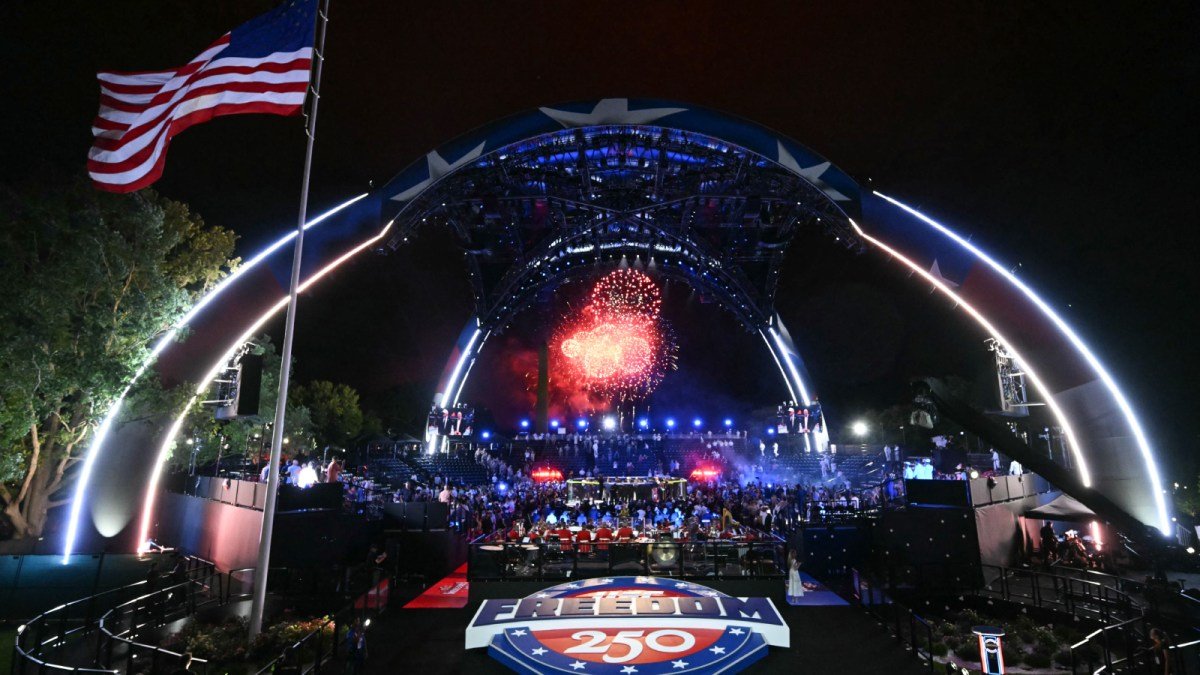
When the Ultimate Fighting Championship announced that it would stage an event on the South Lawn of the White House, many questioned whether the idea belonged in reality or a Hollywood screenplay. Yet UFC Freedom 250, held as part of America’s 250th anniversary celebrations, transformed one of the world’s most recognizable political landmarks into a combat sports arena.
What unfolded was more than a fight card. It was a carefully choreographed blend of elite competition, national celebration, celebrity culture, political symbolism, and commercial spectacle. From stunning upsets and emotional moments to legal challenges and ethical debates, UFC Freedom 250 became one of the most talked-about sporting events of 2026.
The headline moment came when veteran lightweight contender Justin Gaethje shocked the world by defeating previously dominant champion Ilia Topuria. However, the lasting legacy of the event extends far beyond the octagon.
Why UFC Freedom 250 Was Unlike Any Sporting Event Before It
Combat sports have historically embraced grand stages, from ancient Roman arenas to sold-out stadiums in Las Vegas and Riyadh. Yet hosting a professional mixed martial arts event at the White House represented a dramatic evolution in how sports intersect with politics and national identity.
Organized to commemorate 250 years of American independence, the event positioned itself as both a sporting showcase and a patriotic celebration.
The South Lawn underwent a remarkable transformation, featuring:
- A custom-built UFC octagon
- Large-scale production infrastructure
- Military tributes and historical video presentations
- Sponsor activations and branded experiences
- Special access areas for dignitaries, veterans, and invited guests
For UFC, the event represented an opportunity to move beyond traditional sports entertainment and establish itself as a central figure in mainstream American culture.
Justin Gaethje’s Upset Victory Over Ilia Topuria Defined the Night
While the setting captured headlines, the main event delivered the sporting drama fans expected.
Ilia Topuria entered UFC Freedom 250 as the overwhelming favorite. The reigning lightweight champion had built a reputation as one of the most technically complete fighters in the sport, combining elite striking precision with relentless pressure.
Justin Gaethje, however, once again proved why he remains one of mixed martial arts’ most dangerous competitors.
Despite facing significant betting odds, the 37-year-old veteran weathered early adversity and gradually shifted momentum through calculated aggression and relentless pace.
By the fourth round, visible damage had accumulated on Topuria’s face, with concerns emerging over a potential orbital injury. Ultimately, Topuria’s corner made the difficult decision to stop the contest, handing Gaethje one of the biggest victories of his career.
The result instantly reshaped the lightweight division and reinforced an enduring truth about combat sports: experience, resilience, and adaptability can still overcome youth and momentum.
What Gaethje’s Victory Means for the Lightweight Division
Gaethje’s win creates several compelling possibilities for the UFC:
- A potential rematch with Topuria
- A title unification bout against another top contender
- A late-career championship run for one of the division’s most popular fighters
- Fresh matchmaking opportunities in a rapidly evolving lightweight landscape
For Topuria, the defeat represents a significant setback but not necessarily a long-term decline. Many champions experience defining moments through adversity, and his response to this loss could ultimately shape his legacy.
The White House Became a Sports Arena for One Night
One of the most surreal aspects of UFC Freedom 250 was the setting itself.
Fighters reportedly made their walkouts through areas typically associated with state ceremonies and diplomatic events. Political leaders, business executives, celebrities, athletes, and military veterans shared the audience.
The guest list reflected the modern convergence of influence across sports, entertainment, technology, and politics.
The event demonstrated how major sporting experiences are increasingly evolving into cultural gatherings that transcend their original purpose.
| Traditional UFC Event | UFC Freedom 250 |
|---|---|
| Hosted in arenas or stadiums | Hosted at the White House South Lawn |
| Focused primarily on competition | Combined sports with national celebrations |
| Standard athlete walkouts | Walkouts featured iconic political backdrops |
| Typical VIP guests | Included politicians, business leaders, and diplomats |
| Sports-centered messaging | Integrated historical and patriotic themes |
Patriotism, Pageantry, and the Power of Storytelling
Throughout the broadcast, organizers emphasized themes of resilience, national pride, and historical achievement.
Tribute videos highlighted key moments in American history, including the American Revolution, major technological milestones, and pivotal social movements.
Patriotic music and military recognition segments were woven into the production.
From a storytelling perspective, the event followed a clear narrative strategy: position mixed martial arts as part of a broader American story about perseverance, competition, and ambition.
Gaethje’s underdog victory perfectly aligned with that message.
His post-fight speech connected his comeback performance to the nation’s history, creating an emotional moment that extended beyond sports.
Controversies Overshadowed the Celebration
Despite its entertainment value, UFC Freedom 250 sparked intense criticism.
Questions emerged about the appropriateness of hosting a commercial sporting event at a government landmark.
Critics raised concerns about:
- The use of public resources to support a privately promoted event
- The presence of corporate sponsorships on federal property
- Potential conflicts of interest involving financial ties to UFC’s parent company
- The commercialization of historically significant spaces
- The precedent such events could establish for future administrations
Legal challenges sought to halt the event, arguing that it represented an improper use of national property. Although those efforts were unsuccessful, they highlighted broader debates about the boundaries between public institutions and private entertainment.
The Growing Intersection of Sports and Politics
Sports and politics have always intersected, whether through Olympic boycotts, athlete activism, or major international tournaments.
However, UFC Freedom 250 showcased a new model where sporting events become platforms for national branding and political messaging.
Supporters viewed the event as an innovative celebration of American culture.
Critics argued that it blurred important lines between governance, commerce, and entertainment.
Regardless of perspective, the event demonstrated that sports organizations increasingly operate as cultural institutions with influence far beyond competition.
Memorable Moments Beyond the Main Event
Freedom 250 delivered several unforgettable scenes outside the octagon action.
- Brazilian fighter Mauricio Ruffy proposed to his girlfriend after his victory.
- Unexpected weather concerns created tension throughout the day.
- Every fight ended inside the distance, maintaining energy throughout the card.
- Several post-fight interactions between athletes and political figures generated viral moments.
These moments contributed to the event’s unique atmosphere and reinforced its status as a crossover spectacle rather than a conventional fight night.
What UFC Freedom 250 Means for the Future of Sports Entertainment
The success of UFC Freedom 250 could influence how sporting organizations approach event planning in the future.
Modern audiences increasingly seek experiences that combine competition with storytelling, cultural relevance, and shareable moments.
Traditional venues may no longer be enough.
Expect more sports organizations to explore unconventional locations, immersive productions, and collaborations with cultural institutions.
However, the controversy surrounding this event also serves as a warning.
Innovation must be balanced against ethical considerations, public expectations, and institutional responsibilities.
Not every iconic venue should become a commercial entertainment platform.
Could Other Sports Follow This Blueprint?
Major organizations across the sporting landscape will undoubtedly study the results of Freedom 250.
Potential future concepts could include:
- Basketball games at historic landmarks
- Boxing events at national monuments
- Exhibition matches at government venues
- Cross-industry collaborations between sports and public institutions
Whether these ideas gain acceptance will depend on public reaction, regulatory frameworks, and the ability to preserve the integrity of significant spaces.
Conclusion: A Night That Redefined the Boundaries of Modern Sports
UFC Freedom 250 succeeded in its most important objective: creating a sporting event that people will remember for years.
It delivered elite competition, emotional moments, cultural symbolism, and intense debate in equal measure.
Justin Gaethje’s stunning upset over Ilia Topuria ensured the event had a worthy sporting centerpiece, but the larger story was about how sports continue to evolve.
Modern audiences no longer consume athletics in isolation. They engage with narratives, personalities, politics, technology, and culture all at once.
UFC Freedom 250 embraced that reality more aggressively than any event before it.
Whether viewed as visionary innovation or controversial spectacle, one thing is certain: the White House fight night changed expectations for what a sporting event can be.
And in an era where attention is the most valuable currency of all, that may have been its greatest victory.
For breaking news and live news updates, like us on Facebook or follow us on Twitter and Instagram. Read more on Latest Sports on thefoxdaily.com.






COMMENTS 0