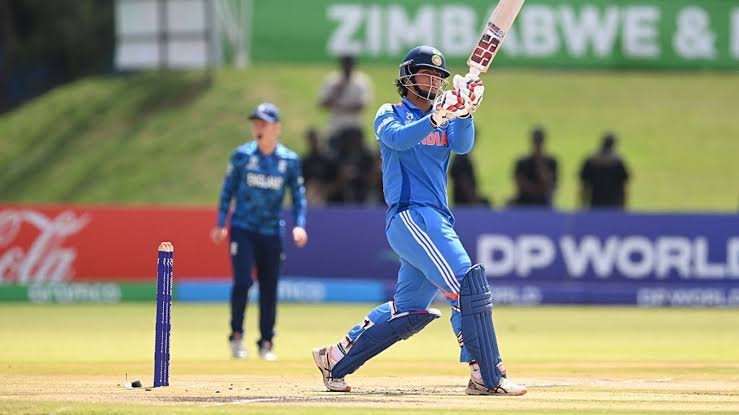
Sooryavanshi scored 776 IPL runs at a strike rate of 237.30, hit 72 sixes, won the Orange Cap and the Player of the Tournament award, and is now the youngest player ever selected for India’s men’s Cricket team. The experts are not quite sure what to make of him. That, in itself, tells you something remarkable is happening.
When a 15-Year-Old Forces Cricket to Rethink Everything
Vaibhav Sooryavanshi is 15 years old. He is not a project. He is not a development case being given experience ahead of a future debut. He is, based purely on what he produced in IPL 2026, arguably one of the most destructive batting talents in world cricket right now. The numbers do not allow any other interpretation: 776 runs, an average of 48.50, a strike rate of 237.30, one century, five half-centuries, 72 sixes, and the tournament’s Orange Cap and Player of the Tournament award.
He has now been selected for India’s T20I squads for the Ireland and England tours, making him the youngest player ever to be named in an Indian men’s cricket squad. The record he has broken belongs to Sachin Tendulkar, who was 16 when he was first selected. That is the level of historical territory we are operating in.
Predictably, the reaction from experts has not been uniform. A talent this young, this prolific, and this unprecedented forces a genuine reckoning with questions about player development, squad stability, and what selection at 15 actually means for the long-term arc of a career. Five of cricket’s most respected voices have weighed in, and the diversity of their perspectives reveals just how genuinely complicated this situation is.
The Numbers That Made the Selection Impossible to Avoid
| Metric | Vaibhav Sooryavanshi, IPL 2026 |
|---|---|
| Total Runs | 776 |
| Average | 48.50 |
| Strike Rate | 237.30 |
| Centuries | 1 |
| Half-centuries | 5 |
| Sixes | 72 (tournament record) |
| Fours | 63 |
| Awards | Orange Cap, Player of the Tournament |
| Age during tournament | 15 |
| Historical milestone | Youngest player ever selected for India men’s cricket team |
A strike rate of 237 in a competitive IPL season, against international-quality bowling attacks, is not an outlier performance or a hot streak across a handful of matches. It is a sustained demonstration across an entire season that this player operates at a tempo most T20 batters never reach, regardless of age. The sixes record is the most visceral expression of that: 72 maximums in a single IPL season, more than Chris Gayle at his most devastating.
Reaction 1: Ravichandran Ashwin Urges Patience and Sounds a Warning About Squad Culture
Ravichandran Ashwin’s response is the most analytically layered of the five, and it contains a warning that goes beyond the individual case of Sooryavanshi.
“Given all the buzz, all the current top three batters will be nervous about their place. There is a certain ruthlessness in the way selections have happened in the last five to six years. But to me, that’s very wrong for team building. This Vaibhav Sooryavanshi buzz is a reason why the established players must keep evolving to be certain in the team.”
Ravichandran Ashwin
“However, if I was the selector, I would wait before picking Sooryavanshi. The top three that played the T20 World Cup have all performed. So I would ask Sooryavanshi to show he has more by playing around the country and playing the India A series. I want to see you perform well for a 12-month period because the IPL can skew in favor of batters who can bat well.”
Ravichandran Ashwin
Ashwin is making two distinct arguments. The first is about the systemic effect of Sooryavanshi’s selection on the existing top-order batters. When a 15-year-old’s IPL performances create genuine uncertainty about the futures of established international players, the dressing room environment becomes destabilised in ways that can undermine collective performance. That is a legitimate concern about team culture, not a defense of mediocrity.
The second is a genuine cricket argument: the IPL, by its nature, creates conditions that favour power hitters in ways that do not always translate cleanly to international cricket. A sustained 12-month period of domestic and India A performances would provide a broader evidence base. It is a conservative position, but it is not an unreasonable one.
Reaction 2: Sunil Gavaskar Backs Sooryavanshi Fully and Wants Him in the Playing XI
If Ashwin represents caution, Sunil Gavaskar represents the opposite end of the spectrum, and his argument is built on the most fundamental principle in cricket selection: reward performance.
“Well, it was expected, wasn’t it? Look at the form that he was in. Look at the number of runs that he scored. How could you leave him out of the squad after that? You’ve got to reward performance, and I think that’s what they’ve done.”
Sunil Gavaskar, India Today
“I’ll pick him for the Ireland T20Is for sure. I’d like to see him play in the Ireland T20Is. Give him a chance ahead of, say, maybe Sanju Samson or Abhishek Sharma. Maybe in one match, Abhishek Sharma is left out. In another match, Sanju Samson is left out.”
Sunil Gavaskar, India Today
Gavaskar’s position is both straightforward and radical in its implications. He is not just endorsing the squad selection. He is actively advocating for Sooryavanshi to be played in the Ireland matches ahead of established internationals. That is a strong position from one of India’s most respected batting authorities, and it carries weight precisely because Gavaskar has seen enough international cricket to understand when a talent is truly special rather than merely impressive in a domestic context.
Reaction 3: Aakash Chopra Describes the Selection as a Tsunami That Could Not Be Ignored
Aakash Chopra’s contribution to the discussion is perhaps the most revealing from a procedural perspective. He points out that Sooryavanshi’s addition as a 16th player represents a departure from this selection committee’s established pattern.
“Recent memory, if that is serving me right, this is the first time this selection committee has picked 16 guys. They are very reluctant to pick more than 15. They pick 15 everywhere. In fact, only 15 have been picked in the Asian Games team, and those many only have to be picked. You have selected him as the 16th player here because it’s almost like you can’t ignore him. It’s gone to that stage. You can ignore a storm, but how can you ignore a tsunami? He is that tsunami.”
Aakash Chopra, Star Sports
The tsunami metaphor is vivid and accurate. A selection committee that has maintained a consistent 15-player squad policy across every assignment breaking that pattern specifically to accommodate one player is itself a form of institutional recognition that no amount of verbal endorsement can match. The selectors did not just include Sooryavanshi. They changed the rules of their own process to include him. That is the most unambiguous possible statement of how seriously they regard his talent.
Reaction 4: Mark Butcher Asks the World to Stop and Marvel
Former England batter Mark Butcher brings an international perspective that cuts through the domestically focused debate with a simple and powerful request.
“He’s only 15, and people are still saying he needs to prove himself in international cricket. Yes, he probably does, and none of this is a guarantee that he becomes a brilliant Test player or ODI player. But let’s just pause and marvel at this extraordinary talent without asking those questions.”
Mark Butcher, Sky Sports
“He does this in the IPL, and people still question if he can do it at the international level. He has done this in an IPL with the best players in the world. He flayed Pat Cummins and has hit more sixes in an IPL than even Chris Gayle.”
Mark Butcher, Sky Sports
Butcher also paid the 15-year-old one of the most extraordinary compliments in recent cricket commentary, comparing him to Sir Garry Sobers. The Gayle comparison on sixes alone is a statistical fact. The Sobers comparison is a statement about the quality and nature of the batting that Butcher has observed, and from a former international player of his standing, it is not said lightly.
His core argument is one that the debate often loses sight of: the questions about Test cricket suitability, about long-term development, about what happens if the bubble bursts, all have their legitimate place, but they should not be allowed to crowd out the recognition that something genuinely extraordinary is happening right now, at the age of 15, in front of everyone watching.
Reaction 5: Atul Wassan Wants Sooryavanshi’s Mentor to Point Him Toward Test Cricket
Atul Wassan’s reaction is the most forward-looking of the five, and it operates on a timescale that the IPL debate does not address: the arc of a career and the currency of respect within the sport.
“I don’t know if Test is in his mind or not, but his mentor should definitely put this in his mind that Test cricket is of larger significance. And if you want to see respect in the eyes of other players, then it only comes from the Test record, not from T20. You will get praise, you will get money, you will get respect and fame, but the respect you want in the eyes of other players comes from Test cricket. I think he should be pushed for Test cricket.”
Atul Wassan, ANI
Wassan’s point carries genuine wisdom about the long-term architecture of a career. T20 cricket delivers fame and commercial value faster than any other format. But within the professional cricket community, the hierarchy of respect has historically been built on Test match performance, and that remains largely true even in the current era of franchise cricket dominance. A player who reaches the end of their career with a distinguished T20 record and a thin Test record occupies a different place in cricket’s memory than one who succeeded across all three formats.
Sooryavanshi’s first-class record, 207 runs at an average of 17.25 in eight matches, tells a different story from his T20 numbers, which is expected at 15 and not particularly alarming. But Wassan is right that the time to plant the Test cricket ambition in a young player’s mind is early, before the commercial rewards of franchise cricket make it the path of least resistance.
The Bigger Question: What Does Selection at 15 Actually Mean?
The diversity of expert reaction to Sooryavanshi’s selection reflects a genuine uncertainty at the heart of the conversation that no single expert has fully resolved: what does selecting a 15-year-old to an international squad actually mean for their development?
There are historical examples of very young players thriving in international cricket immediately. There are equally prominent examples of players who were fast-tracked too early, found the transition difficult, and were damaged by the experience in ways that took years to repair. The IPL context adds an additional complication: Sooryavanshi’s T20 performances were produced in a franchise environment with specific powerplay rules, specific field restrictions, and specific bowling attack compositions that differ meaningfully from international T20I cricket.
Whether the step up exposes gaps or confirms his readiness will only be known once he faces international bowling in competitive match conditions. The Ireland fixtures, lower-pressure occasions against a less daunting bowling attack, represent exactly the right testing environment to find out. Ireland T20I cricket is competitive and professional. It is not the England series. If Sooryavanshi thrives in Dublin, the England appearances become less of a risk and more of a reward.
Conclusion: History Is Being Made. The Only Question Is What Kind.
Vaibhav Sooryavanshi has broken Sachin Tendulkar’s record as the youngest player ever selected for India’s men’s cricket team. He has done so on the back of an IPL season that produced numbers that most established international players will never match in any single edition of the tournament. The selectors, in breaking their own 15-player squad convention to include him as a 16th member, have made their institutional position on his talent as clear as it can be made without putting him directly into the playing XI.
The experts disagree, as they should, because this is genuinely complicated territory. Ashwin is right that rushed selections carry team-building risks. Gavaskar is right that performance must be rewarded. Chopra is right that the selectors’ own rule-bending is the most powerful endorsement available. Butcher is right that the world should pause and appreciate what it is watching. And Wassan is right that Test cricket is where the deepest respect ultimately lives.
All five of them are correct simultaneously, which is what makes this moment so fascinating. A 15-year-old has arrived in Indian cricket and made every established framework feel slightly inadequate for describing what is happening. That, above all else, is the sign of a genuinely special talent.
The Ireland T20Is begin soon. Vaibhav Sooryavanshi may or may not play. But if he does, the world will be watching very, very closely.
For breaking news and live news updates, like us on Facebook or follow us on Twitter and Instagram. Read more on Latest Sports on thefoxdaily.com.






COMMENTS 0