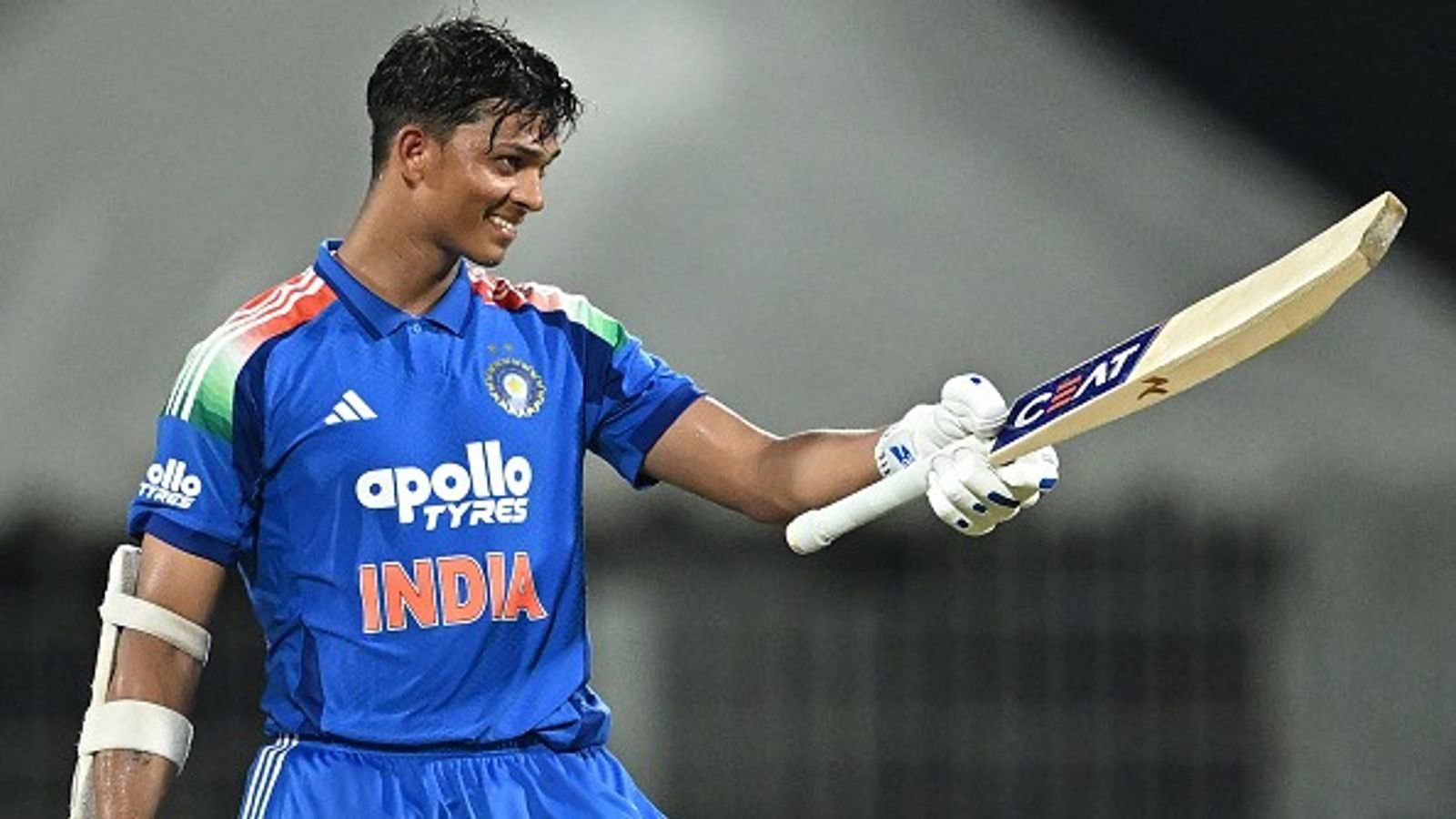
The announcement of India’s ODI squad for the upcoming three-match series against England has sparked intense debate among cricket fans, with one decision standing out above all others: the omission of Yashasvi Jaiswal. The young left-handed opener had seemingly done everything possible to cement his place in the national setup, scoring two centuries in his last three ODI appearances, including a commanding unbeaten hundred against Afghanistan.
Yet when the Board of Control for Cricket in India (BCCI) unveiled the squad for the England tour, Jaiswal’s name was missing. The decision has reignited discussions about India’s selection philosophy, the balance between youth and experience, and the challenge of breaking into one of the strongest batting lineups in world cricket.
While many supporters viewed the omission as surprising, a closer look at India’s squad composition reveals the strategic thinking behind the selectors’ decision.
The Main Reason Behind Yashasvi Jaiswal’s Exclusion
The biggest factor behind Jaiswal’s omission is not a lack of performance but rather the return of India’s established stars.
With Rohit Sharma retaining his place at the top of the order and Shubman Gill continuing as India’s preferred opening partner, there is currently little room for another specialist opener in the starting XI.
The expected return of Virat Kohli, subject to fitness clearance, further strengthens an already settled batting lineup. Kohli’s presence at number three effectively locks down the top order, leaving selectors with limited flexibility.
Rather than disrupting a successful combination, the selection committee has chosen continuity ahead of an important overseas assignment.
India’s Top-Order Competition Has Never Been Tougher
One of the biggest challenges facing emerging cricketers today is not necessarily earning opportunities but maintaining a place in a highly competitive squad.
India’s top-order options currently include some of the most accomplished batters in international cricket.
| Player | Likely Role | Experience Level |
|---|---|---|
| Rohit Sharma | Opening Batter | Senior Veteran |
| Shubman Gill | Opening Batter | Established Starter |
| Virat Kohli | Number 3 Batter | Senior Veteran |
| Ishan Kishan | Backup Opener/Wicketkeeper | Multi-Role Option |
| Yashasvi Jaiswal | Specialist Opener | Emerging Talent |
When competition reaches this level, selectors often prioritize squad balance over recent performances alone.
Why Ishan Kishan Was Preferred Over Jaiswal
The selection of Ishan Kishan instead of Jaiswal appears to be one of the key decisions shaping the squad.
Unlike Jaiswal, who is primarily a top-order batter, Kishan offers multiple options to the team management. He can:
- Open the batting
- Bat in the middle order
- Keep wickets
- Provide a left-handed batting option
- Adapt to different match situations
Modern ODI squads increasingly value versatility. In a limited squad environment, selectors often favor players capable of fulfilling multiple roles rather than specialists restricted to a single position.
This flexibility likely worked in Kishan’s favor.
Why Jaiswal’s Performances Were Not Enough
At first glance, dropping a batter who has scored two centuries in three matches appears difficult to justify. However, selection decisions are often influenced by factors beyond raw statistics.
Selectors typically evaluate:
- Current team combination
- Long-term planning
- Role requirements
- Squad balance
- Overseas conditions
- Leadership preferences
Jaiswal’s impressive numbers certainly strengthened his case, but they could not alter the fact that India’s first-choice top three remain among the most experienced and successful players in world cricket.
In many ways, Jaiswal has become a victim of India’s batting depth rather than any shortcomings in his own performances.
The Return of Virat Kohli Changed Everything
Perhaps the most significant factor influencing squad selection was the expected return of Virat Kohli.
Kohli missed India’s recent ODI series against Afghanistan because of a hamstring injury sustained during IPL 2026. That absence created an opportunity for Jaiswal to enter the squad and showcase his talent.
Once Kohli became available again, however, the team’s preferred batting structure returned.
The selectors clearly believe that a fully fit Kohli remains one of the most important components of India’s ODI plans, particularly with major ICC events on the horizon.
What This Decision Says About India’s ODI Strategy
The exclusion of Jaiswal provides insight into how India’s selectors currently view the ODI format.
Unlike T20 cricket, where experimentation is more common, ODI cricket often rewards stability and clearly defined roles. Teams generally prefer experienced players who understand how to build innings across 50 overs.
India’s squad selection suggests that management is focusing on continuity rather than introducing significant changes before a challenging tour of England.
This approach minimizes uncertainty and allows players to build familiarity within established partnerships.
England Conditions Also Influenced Selection
Playing ODI cricket in England presents unique challenges.
The conditions often feature:
- Movement for fast bowlers
- Variable weather conditions
- Longer boundaries at certain venues
- Pressure created by experienced English bowling attacks
For such tours, selectors often prioritize players with proven international experience and strong records in overseas conditions.
The decision to retain a settled batting group reflects a desire to maximize stability in potentially demanding environments.
Is This a Temporary Setback or a Long-Term Concern?
For Jaiswal, the omission should be viewed more as a temporary obstacle than a long-term setback.
At his age, he remains one of India’s brightest batting prospects across all formats. His recent performances demonstrated that he possesses the temperament, technique, and attacking mindset required at the international level.
Most importantly, selectors have already shown confidence in him by providing opportunities when vacancies emerged.
That suggests he remains firmly within India’s future plans.
How India’s Next Generation Is Creating a Selection Headache
One of the most encouraging signs for Indian cricket is the sheer number of talented young players competing for national selection.
In previous eras, teams often struggled to identify quality backups for senior stars. Today’s Indian setup faces the opposite challenge.
Players such as Yashasvi Jaiswal, Tilak Varma, Ruturaj Gaikwad, Ishan Kishan, and others continue to push for opportunities, creating healthy competition within the squad.
While individual omissions generate headlines, they also highlight the depth that has become one of India’s greatest strengths.
What Happens Next for Yashasvi Jaiswal?
The road ahead remains promising.
With international cricket becoming increasingly demanding, opportunities are likely to emerge through rotation, injuries, workload management, and future bilateral series.
Jaiswal’s immediate objective will be maintaining consistency across formats and continuing to build an undeniable case for selection.
If he continues producing big scores, it will become increasingly difficult for selectors to ignore his claims for a permanent ODI role.
Could India Eventually Have to Choose Between Experience and Youth?
The bigger question facing Indian cricket is not whether Jaiswal deserves a place, but when the transition from the current generation to the next will accelerate.
Rohit Sharma and Virat Kohli remain among India’s most influential cricketers, but every team eventually enters a transition phase.
When that moment arrives, players like Jaiswal are expected to become central figures in India’s batting lineup.
The current squad selection indicates that transition has not yet begun, but it is clearly approaching.
Conclusion
Yashasvi Jaiswal’s exclusion from India’s ODI squad for the England tour may appear surprising given his recent success, including two centuries in his last three matches. However, the decision reflects India’s commitment to an experienced and settled batting lineup rather than any lack of faith in the young opener.
With Rohit Sharma, Shubman Gill, and a potentially fit Virat Kohli occupying the top-order positions, opportunities remain limited despite Jaiswal’s outstanding performances. The selectors have also prioritized squad flexibility by choosing Ishan Kishan as a backup option.
While the omission is undoubtedly disappointing for Jaiswal and his supporters, it should not be interpreted as a setback to his long-term international future. If his recent form is any indication, it is only a matter of time before he forces his way back into India’s ODI plans and establishes himself as a permanent fixture in the national side.
For breaking news and live news updates, like us on Facebook or follow us on Twitter and Instagram. Read more on Latest Sports on thefoxdaily.com.



COMMENTS 0