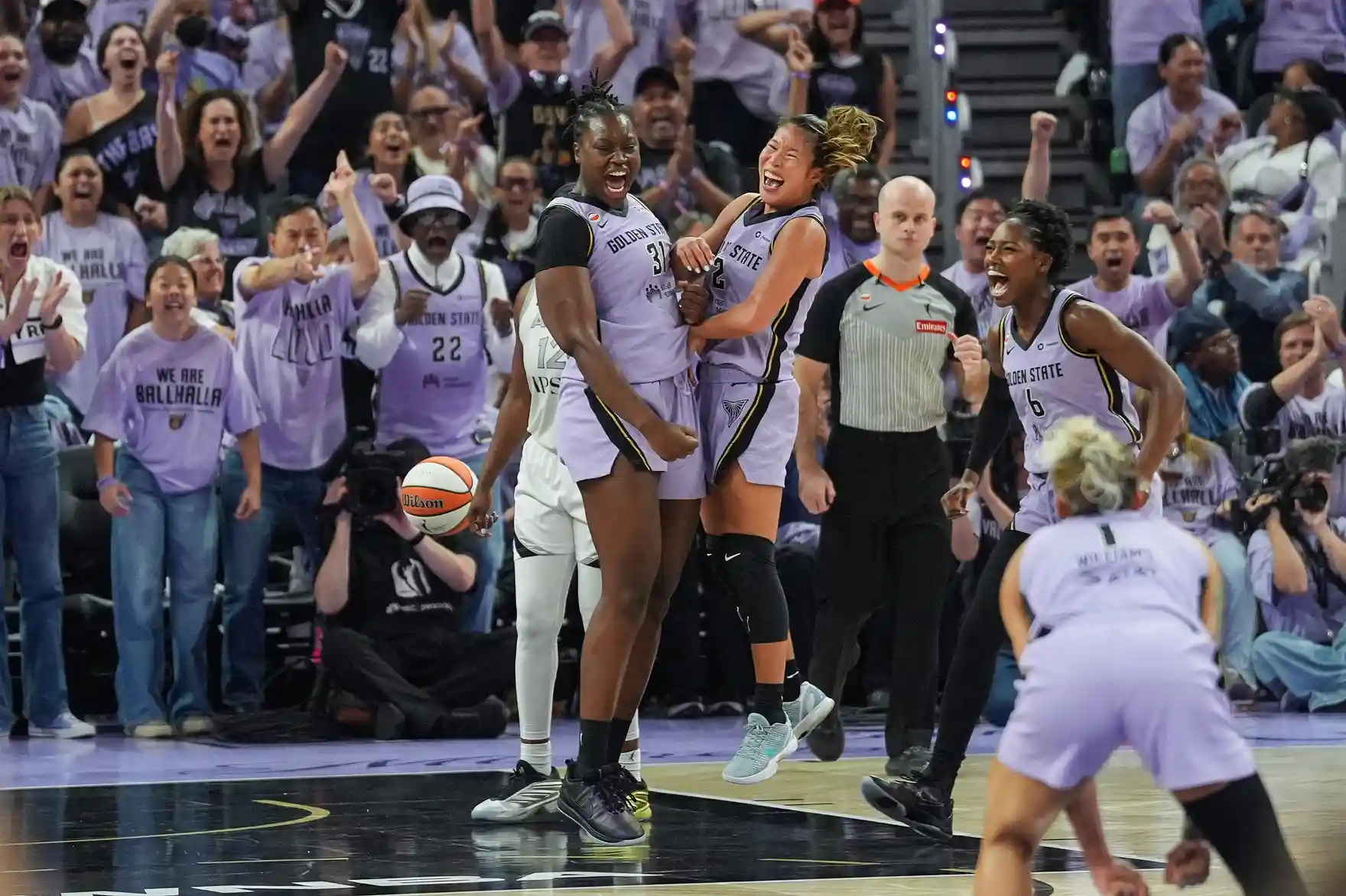
The 2026 WNBA Finals promise a compelling showdown between the Golden State Valkyries and the Atlanta Dream, with both franchises chasing a championship and a chance to make history. The best-of-seven series begins on Saturday, October 17, at Golden State’s home arena, known as Ballhalla, as two teams with contrasting strengths prepare to compete for the title.
For Atlanta, the spotlight falls on Angel Reese, whose rebounding, physical presence and growing offensive influence have helped transform the Dream into genuine championship contenders. The addition of veteran forward DeWanna Bonner has further strengthened a roster that combines established talent with players eager to establish themselves on the biggest stage.
Golden State, meanwhile, have become one of the most remarkable stories in the league. Rather than relying on a single superstar, the Valkyries have built their success around exceptional team defence, positional versatility, an unusually deep rotation and a clear identity under head coach Natalie Nakase.
The result is a fascinating matchup between Atlanta’s powerful frontcourt and Golden State’s collective approach. Both teams have reasons to believe they can win, and predictions from Basketball writers reflect how difficult it is to separate them. Several favour the Valkyries, while others believe Reese and the Dream can complete a memorable championship run.
With a first-time champion set to emerge, the central questions concern whether Golden State’s defensive system and home-court advantage will prove decisive, or whether Atlanta’s rebounding, experienced additions and improving team chemistry will carry the franchise to the title.
Why the Golden State Valkyries Have Reached the WNBA Finals
The Valkyries’ journey to the championship series has challenged traditional expectations about how quickly an expansion franchise can become a contender. New teams typically need time to assemble a competitive roster, develop chemistry and establish a consistent playing style. Golden State have moved through that process at extraordinary speed.
The franchise entered the WNBA with ambitious ownership, significant organisational investment and a clear plan for building a team capable of competing. Rather than treating the early seasons as a prolonged rebuilding exercise, the Valkyries pursued a competitive identity from the beginning.
That strategy has delivered results. Golden State have combined smart roster construction with disciplined defence, effective ball movement and the ability to find contributions throughout the rotation. Their success has demonstrated that an expansion team does not necessarily need to spend years accumulating high draft picks before it can compete at the highest level.
Four key elements explain the Valkyries’ rise: a strong defensive system, versatile players, depth across the roster and a coaching staff that has established a clear identity.
Defence has become Golden State’s biggest strength
Golden State’s defensive performances have been central to their remarkable season. The Valkyries have built a system that makes it difficult for opponents to find comfortable scoring opportunities, using coordinated rotations, positional flexibility and pressure on the ball to disrupt attacking possessions.
Instead of relying on one player to protect the basket or shut down an opposing scorer, the team functions as a connected defensive unit. Players are expected to communicate, help teammates and recover quickly when an opponent creates an advantage.
This collective approach is particularly valuable in a playoff series, where opponents have time to study previous games and adjust their tactics. Golden State’s versatility allows Nakase to change matchups and defensive assignments without completely altering the team’s identity.
The Valkyries’ defensive success has also reduced their dependence on high-scoring performances from a single player. Even when their offence encounters difficulties, they have a foundation that can keep games competitive and create opportunities to turn stops into transition points.
Gabby Williams gives the Valkyries a star presence
Gabby Williams has emerged as one of Golden State’s most important players during the postseason. The French international offers a combination of scoring, defence, versatility and decision-making that makes her especially valuable in high-pressure games.
Her performances have strengthened the argument that the Valkyries do not need a conventional superstar to win a championship. Williams has increasingly provided the kind of individual influence associated with elite players while remaining part of a system that encourages contributions from across the roster.
One of the predictions supplied for the Finals highlighted Williams’ average of 22.7 points through the semi-finals, alongside her defensive impact. That production makes her a leading candidate for Finals Most Valuable Player if Golden State maintain their form.
However, Williams is not the Valkyries’ only important contributor. Veronica Burton has provided stability in the backcourt, while other players have helped the team maintain its intensity and execution when starters rest. This balance makes Golden State difficult to prepare for because opponents cannot concentrate all their defensive attention on one individual.
Why the Atlanta Dream Believe They Can Win the Championship
Atlanta arrive at the Finals with a different but equally convincing formula. The Dream have combined an imposing rebounding presence with a talented backcourt, experienced additions and a defensive system that has become increasingly effective throughout the season.
Their run to the championship series has been especially impressive because they defeated the defending champion New York Liberty in a three-game semi-final sweep. That result demonstrated their ability to handle a high-pressure playoff matchup and suggested that the team has developed the defensive discipline required to challenge the league’s strongest opponents.
Head coach Karl Smesko has helped establish a team that can score in bunches while remaining competitive at the defensive end. Atlanta’s success has not depended on a single player carrying the entire workload. Instead, the Dream have benefited from the complementary strengths of Reese, Rhyne Howard, Allisha Gray, Jordin Canada and their veteran additions.
Their championship ambitions rest on several important factors, including their ability to dominate the glass, generate consistent scoring from the backcourt and use their frontcourt size to challenge Golden State’s defensive structure.
Angel Reese has transformed Atlanta’s rebounding
Reese is one of the central figures in Atlanta’s championship push. Her ability to compete for rebounds, create additional possessions and establish a physical presence around the basket has given the Dream a dimension they needed to become a more complete team.
Rebounding is particularly important in a championship series because it affects both ends of the floor. Offensive rebounds create second-chance scoring opportunities, while defensive rebounds prevent opponents from extending possessions after missed shots.
Reese’s activity can also change the way opposing teams defend. When a player consistently threatens to collect missed shots, defenders must pay closer attention to boxing out and securing the ball. That responsibility can create additional space for teammates and make it more difficult for opponents to concentrate on perimeter shooters.
Atlanta will need that physical presence against Golden State, whose defensive system depends on collective effort and limiting opponents’ opportunities. If Reese controls the boards, the Dream could gain a crucial advantage by generating extra possessions and preventing the Valkyries from turning defensive stops into fast breaks.
Her contribution is not limited to rebounding, either. Reese has been challenged to expand her shooting range, giving Atlanta another potential offensive option. If that improvement continues, Golden State may have to defend her farther from the basket, creating more room for teammates to operate.
Rhyne Howard and Allisha Gray provide offensive firepower
Atlanta’s backcourt gives the team another major advantage. Howard and Gray can create scoring opportunities, attack defensive gaps and provide the perimeter production needed to complement Reese’s interior presence.
Howard’s shooting will be particularly important. If she finds her rhythm early in the series, Golden State will have to make difficult decisions about how aggressively to help against Reese and Atlanta’s other frontcourt threats.
Gray adds another scoring option, reducing the pressure on Howard to produce every time the Dream need a basket. Jordin Canada also offers an important backcourt presence, helping Atlanta manage possessions and maintain offensive organisation.
The combination gives Smesko several ways to attack. Atlanta can look to score inside, create opportunities from the perimeter or use the threat of Reese’s rebounding to extend possessions. That variety should help the Dream avoid becoming predictable across a series in which opponents can make adjustments between games.
DeWanna Bonner Could Be the Difference for Atlanta
One of Atlanta’s most significant personnel decisions was adding veteran forward DeWanna Bonner during the season. Her experience and ability to contribute in different situations have strengthened the Dream at a crucial stage of their championship campaign.
Bonner has extensive experience in high-level basketball and has competed in championship environments throughout her career. That background can be especially valuable for a team whose current success has created new pressure and expectations.
Playoff basketball requires more than talent. Players must understand how to manage difficult stretches, respond when opponents go on scoring runs and remain composed when games are decided by a small number of possessions. Experienced veterans can help provide that stability.
Bonner’s role also gives Atlanta another player capable of contributing without requiring the offence to revolve entirely around her. That flexibility fits a team built around several complementary strengths rather than a single dominant scoring option.
If the Finals become a close, tactical contest, her experience could help the Dream navigate key moments. Her presence may also reduce the burden on younger players, allowing them to focus on executing their responsibilities rather than feeling that they must make every decisive play themselves.
For Atlanta, the value of the move extends beyond any individual statistical contribution. Bonner has added experience and depth to a roster that appears to have found the right balance at the right time.
WNBA Finals 2026 Schedule: Dates and Matchups
The 2026 WNBA Finals will be played as a best-of-seven series, meaning the first team to win four games will claim the championship. Golden State have home-court advantage, so the series begins in San Francisco before moving to Atlanta for Games 3 and 4.
The schedule provides both teams with opportunities to make adjustments between games. If the series extends beyond four contests, Golden State will host Game 5, Atlanta will host Game 6, and a decisive Game 7 will return to the Valkyries’ home floor.
| Game | Date | Matchup | Start time (ET) | US broadcaster |
|---|---|---|---|---|
| Game 1 | Saturday, October 17 | Atlanta at Golden State | 3:30 p.m. | NBC |
| Game 2 | Monday, October 19 | Atlanta at Golden State | 8 p.m. | USA Network/CNBC |
| Game 3 | Wednesday, October 21 | Golden State at Atlanta | 8 p.m. | USA Network/CNBC |
| Game 4 | Saturday, October 24 | Golden State at Atlanta | 1 p.m. | NBC |
| Game 5* | Monday, October 26 | Atlanta at Golden State | 8 p.m. | USA Network/CNBC |
| Game 6* | Thursday, October 29 | Golden State at Atlanta | 8 p.m. | USA Network/CNBC |
| Game 7* | Saturday, October 31 | Atlanta at Golden State | 8 p.m. | USA Network/CNBC |
*Games 5, 6 and 7 will be played only if necessary. All times are Eastern Time.
How to Watch the WNBA Finals 2026
Fans in the United States can watch the championship series across NBC, USA Network and CNBC, with streaming coverage available through Peacock. In the United Kingdom, Sky Sports will carry the Finals, while Australian viewers can follow the action through WNBA League Pass, with selected coverage also available on ESPN.
The opening game on Saturday will be particularly important because it will give the winner an early advantage in a series expected to feature intense defensive battles. Golden State will also look to make the most of its home support at Chase Center, where the Valkyries have developed a strong atmosphere under the Ballhalla name.
For Atlanta, taking a road victory early would be a significant achievement. It would demonstrate that the Dream can handle Golden State’s defensive pressure and potentially shift the momentum of the series before the teams move to Georgia.
Who Has the Coaching Advantage: Natalie Nakase or Karl Smesko?
The coaching battle between Natalie Nakase and Karl Smesko could be one of the defining features of the Finals. Both coaches have helped their teams exceed expectations, and each has earned the confidence of the players through a clearly defined approach.
Nakase has received the edge from several analysts because of her work with Golden State’s defence, her willingness to trust the full rotation and her previous experience as an assistant coach with the Las Vegas Aces. Her time working alongside Becky Hammon gave her exposure to championship-level preparation and the tactical adjustments required during a long playoff run.
That experience could be valuable against Atlanta, particularly if the series develops into a contest of small adjustments. Golden State can switch defensive assignments, vary its rotations and use different combinations to disrupt the Dream’s offence.
Smesko, however, should not be underestimated. He has turned Atlanta into a genuine contender by building a system that balances attacking variety with defensive intensity. The Dream’s sweep of New York demonstrated their ability to execute under pressure and find solutions when games become difficult.
His challenge will be finding ways to create productive possessions against a Valkyries defence that has consistently limited opponents’ scoring opportunities. Atlanta may need to move the ball quickly, attack favourable matchups and use Reese’s rebounding to create additional chances.
Both coaches also benefit from strong relationships with their players. Trust can become particularly important in a Finals series because rotations, tactical assignments and late-game decisions often demand sacrifices from individuals for the benefit of the team.
Nakase may have a slight advantage in experience at this stage, but Smesko has shown that his team can compete with established contenders. The tactical battle is likely to remain close throughout the series.
Unheralded Players Who Could Decide the Championship
While Reese and Williams are expected to attract much of the attention, the championship could also depend on players whose contributions do not always appear in the scoring column. Rebounding, defensive positioning, ball security and timely bench production can determine the outcome of close playoff games.
Naz Hillmon could provide Atlanta with an important boost
Hillmon is one player to watch for the Dream. Although her scoring average is modest compared with Atlanta’s leading offensive options, she contributes through physical effort, defensive work and the less visible tasks that help a team function effectively.
Her value could increase if the series becomes a battle for rebounds and second-chance opportunities. Atlanta will need players beyond Reese to help control the glass, particularly when Golden State uses its depth to change the pace of the game.
Hillmon has also shown that she can make an impact in matchups against Golden State. If she delivers another productive performance, she could give the Dream a valuable advantage without needing to become a primary scoring option.
Kiah Stokes is important to Golden State’s interior defence
Stokes offers the Valkyries a different kind of contribution. Her rim protection, rebounding and ability to challenge shots around the basket can help Golden State defend against Atlanta’s physical frontcourt.
Her assignment will be especially demanding because Reese is capable of creating second chances even when the initial shot misses. Stokes must help keep Atlanta away from the offensive glass while remaining disciplined enough to avoid unnecessary fouls.
Stokes also brings championship experience from her time with Las Vegas. That background could be useful when the Finals reach crucial moments, particularly if the Valkyries need a defensive stop to protect a narrow lead.
Kaitlyn Chen offers valuable backcourt depth
Chen is another player who could become important as the series develops. Her ability to provide relief minutes in the backcourt gives Nakase another option when the starters need rest or the matchup calls for a different combination.
Golden State’s depth has been one of its defining advantages throughout the season. If Chen and other bench players can maintain the team’s defensive intensity while contributing offensively, the Valkyries could put pressure on Atlanta’s starters over the course of a seven-game series.
Atlanta’s Jordin Canada also deserves attention. Her ability to organise the offence, defend opposing guards and contribute as a scorer makes her an important part of the Dream’s championship hopes.
WNBA Finals MVP Predictions: Gabby Williams or Angel Reese?
Gabby Williams enters the series as a leading candidate for Finals MVP, with several predictions favouring the Golden State forward. Her two-way performances have helped the Valkyries reach the championship series, and she has demonstrated an ability to influence games without relying exclusively on scoring.
Williams’ defensive work could be just as important as her offensive production. Golden State’s system depends on players who can pressure opponents, recover quickly and create turnovers. Williams can contribute in those areas while also taking responsibility for scoring when the team needs a decisive basket.
Her postseason scoring average of 22.7 points through the semi-finals strengthens her case. If she maintains that level against Atlanta, she could become the defining individual performer of the series.
Reese is another compelling candidate, particularly if the Dream win the championship. Her rebounding and defensive influence have helped transform Atlanta into a team capable of challenging the league’s strongest opponents.
Reese’s chances of winning Finals MVP will depend on whether she can turn her physical presence into sustained production against Golden State. If she controls the boards, limits second-chance opportunities for the Valkyries and continues to improve as a scorer, she could make a strong case for the award.
There is also a wider question about how the series will be decided. Golden State’s collective approach means several players could emerge as the most valuable performer if the Valkyries win. Williams may be the leading candidate, but contributions from Stokes, Burton and other rotation players could prove equally important to the final result.
Final Prediction: Will Angel Reese Win a WNBA Championship With Atlanta?
The Finals present a difficult choice because both teams have demonstrated that they can win through defence, resilience and effective roster construction. Atlanta have the rebounding advantage and an increasingly dangerous offence, while Golden State have the deeper rotation, a strong home-court advantage and the defensive consistency that has carried them through the season.
The Valkyries also won all three regular-season meetings between the teams. However, those games took place relatively early in the campaign, before Atlanta added Bonner and established the form that carried it through the later stages of the season and into the Finals.
The Dream’s improvement makes those earlier results less conclusive. Their semi-final sweep of New York showed how effectively they can defend and respond to pressure. If Reese dominates the glass and Howard and Gray provide consistent perimeter scoring, Atlanta have a realistic chance of overturning the regular-season results.
Golden State nevertheless appear to have the advantage in depth. Their ability to rotate players without losing defensive intensity could become increasingly important as the series progresses. The Valkyries can also rely on Williams to provide individual scoring when their collective offence needs a spark.
Several predictions favour Golden State in six or seven games, while others believe Atlanta can win in six. The disagreement reflects the strengths of both teams and the uncertainty surrounding a matchup between two franchises seeking their first WNBA championship.
Prediction: Golden State Valkyries to win in six games, with Gabby Williams as the leading Finals MVP candidate.
That prediction does not rule out a championship for Reese and Atlanta. If the Dream win the rebounding battle, take care of the ball and convert their offensive opportunities, they could make history of their own. Reese would be a strong Finals MVP contender if her performances prove decisive.
Ultimately, the 2026 WNBA Finals will be a test of whether Golden State’s collective defence and depth can overcome Atlanta’s physicality, improving offence and growing confidence. One franchise will finish the series with its first championship, and both have earned the opportunity to compete for it.
For breaking news and live news updates, like us on Facebook or follow us on Twitter and Instagram. Read more on Latest Sports on thefoxdaily.com.






COMMENTS 0