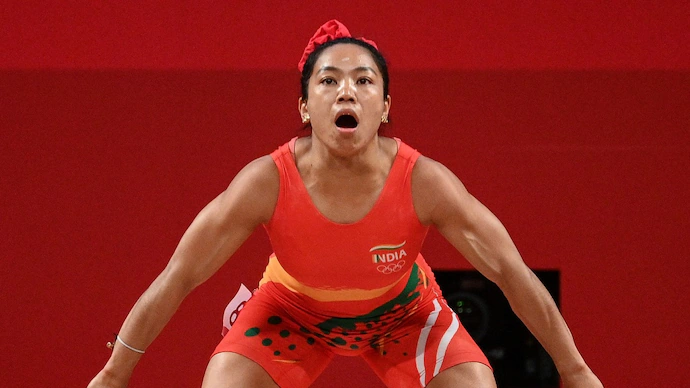
India’s campaign in the women’s 53kg category at the 2026 International Weightlifting Federation (IWF) World Weightlifting Championships produced contrasting outcomes on Thursday, October 29. Gyaneshwari Yadav finished eighth overall with a combined lift of 198kg, while Olympic silver medallist Mirabai Chanu did not start in the competition after being expected to make her debut in the category.
Gyaneshwari recorded 88kg in the snatch and 110kg in the clean and jerk to finish with a total of 198kg. Competing in Group C, the Indian weightlifter outperformed several athletes from the other groups to secure eighth place in the final standings.
Chanu’s withdrawal was a significant development for India, as the experienced lifter had been scheduled to compete in Group B with a declared entry total of 200kg. Reports attributed her withdrawal to a back issue, although the IWF’s published competition report recorded her as not starting without specifying the reason.
The event was held in Ningbo, China, and carried significance beyond the world championship medals. The 2026 World Championships are part of the first phase of qualification events for the 2028 Los Angeles Olympics, making performances in the revised Olympic weight categories particularly important for athletes planning their next Games campaign.
China’s Zhang Haiqin won the women’s 53kg world title with a total of 221kg, while American Miranda Ulrey took silver with 220kg. North Korea’s Kim So Hyon claimed bronze with 214kg, completing a closely contested medal battle at the top of the standings.
Gyaneshwari Yadav Finishes Eighth With a 198kg Total
Gyaneshwari delivered a competitive performance in the women’s 53kg division, combining an 88kg snatch with a 110kg clean and jerk. Her total of 198kg placed her eighth overall despite her participation in Group C rather than the top-ranked Group A session.
The result demonstrated the importance of successful lifts across both disciplines. Weightlifting competitions are decided by the combined total of an athlete’s best successful snatch and best successful clean and jerk, meaning consistency in both sections is essential for a strong final position.
Gyaneshwari’s performance also showed that competing in a lower group does not prevent an athlete from finishing ahead of lifters scheduled in higher groups. Group assignments are based on declared entry totals, while the final ranking reflects the weights successfully lifted on the platform.
Missed Attempts Cost Gyaneshwari an Opportunity to Improve Her Total
Although Gyaneshwari finished eighth, her performance left room for improvement. She missed one attempt in the snatch and another in the clean and jerk, preventing her from adding more weight to her final total.
The Indian weightlifter came close to improving her personal best of 199kg but finished one kilogram short of that mark. A successful additional lift in either discipline could have increased her combined total, although the effect on her final ranking would have depended on the performances of the other competitors.
Missed attempts are an important part of competitive weightlifting because athletes must balance ambition with execution. Increasing the weight can improve medal prospects or final rankings, but an unsuccessful attempt contributes nothing to the athlete’s total.
Gyaneshwari’s final tally of 198kg nevertheless provided a solid result at a major international competition. The eighth-place finish also offered a useful performance benchmark as she continues competing in the women’s 53kg division.
A Significant Result for the Commonwealth Games Silver Medallist
Gyaneshwari entered the championship with experience at major international events, including a silver medal at the Commonwealth Games and an Asian Championships silver medal in the 53kg category.
Her result in Ningbo added another international championship appearance to her record. While eighth place did not put her among the medal winners, the combined total showed that she could compete in a field featuring some of the world’s leading weightlifters.
The next step will be to improve consistency across all six potential attempts. Successful execution at higher weights could help her increase her total and strengthen her competitiveness in future international competitions.
Mirabai Chanu Withdraws Before Her Planned 53kg Debut
Mirabai Chanu’s absence was one of the main talking points surrounding India’s participation in the women’s 53kg event. The Olympic silver medallist had been listed in Group B with an entry total of 200kg, setting expectations for her first appearance in the category at the World Championships.
However, Chanu did not start in the competition. The withdrawal came before she could register a result in the event, leaving her planned debut in the 53kg division incomplete.
The distinction matters because an entry total is not the same as a competition result. An entry total represents the weight a lifter declares before the event as an indication of the intended combined performance. The final result can only be established through successful lifts in the snatch and clean and jerk.
Why the 53kg Category Matters for Chanu
Chanu’s planned appearance in Ningbo was important because she has been moving from the women’s 49kg category towards the 53kg division as part of her preparation for the Los Angeles 2028 Olympics.
The revised Olympic weight categories have made the 53kg division particularly relevant to her future ambitions. Chanu won Olympic silver in the women’s 49kg category at the Tokyo 2020 Games, and her experience in that division established her as one of India’s most prominent weightlifters.
Moving into a different weight class introduces new competitive demands. Athletes must adapt their strength, technique, bodyweight management and attempt selection to the standards of their new division. A higher weight category can also bring a different competitive field and different benchmarks for medal contention.
For Chanu, the World Championships were expected to provide an opportunity to test herself against international opposition in the 53kg category. Her non-start meant that this particular competition could not provide a new performance total in the division.
However, one missed competition does not by itself determine an athlete’s prospects for the next Olympic Games. Future performances, preparation and participation in the qualification events will be important in establishing her position during the Los Angeles 2028 cycle.
China’s Zhang Haiqin Wins Gold in a Close Medal Contest
China’s Zhang Haiqin captured the women’s 53kg world title with a combined total of 221kg. She lifted 98kg in the snatch and 123kg in the clean and jerk to finish one kilogram ahead of American Miranda Ulrey.
Ulrey claimed silver with a total of 220kg, comprising 98kg in the snatch and 122kg in the clean and jerk. North Korea’s Kim So Hyon secured bronze with 214kg after recording 91kg in the snatch and 123kg in the clean and jerk.
The medal results highlighted how small differences can determine the outcome of an elite weightlifting competition. Zhang and Ulrey both managed 98kg in the snatch, leaving the clean and jerk and their final combined totals to separate the gold and silver medallists.
Kim’s performance also illustrated the importance of combining successful attempts across both disciplines. Her 123kg clean and jerk was equal to Zhang’s winning lift in that section, but the difference in their snatch totals contributed to the gap in their overall results.
Women’s 53kg World Championships Medal Results
- Gold: Zhang Haiqin, China 221kg (98kg snatch and 123kg clean and jerk).
- Silver: Miranda Ulrey, United States 220kg (98kg snatch and 122kg clean and jerk).
- Bronze: Kim So Hyon, North Korea 214kg (91kg snatch and 123kg clean and jerk).
Zhang’s victory gave the host nation another title at the championships. For Ulrey, the silver medal came after a strong performance that produced a total of 220kg, while Kim earned bronze through a 123kg clean and jerk.
The Snatch Competition Highlights the Standard in the 53kg Division
The snatch section was another important feature of the women’s 53kg competition. Seven lifters successfully reached at least 90kg, illustrating the level of performance required to challenge for the leading positions in the category.
The snatch requires an athlete to lift the barbell from the platform to overhead in one continuous movement. The clean and jerk, by contrast, involves lifting the barbell to the shoulders before driving it overhead in a second movement. The two disciplines demand different combinations of speed, strength, coordination and technical precision.
Chanu has been working towards consistently reaching the 90kg mark in the snatch for more than six years, according to the supplied competition information. The performances in Ningbo therefore offered a useful indication of the demands she will face as she adapts to the 53kg division.
However, comparisons must account for the fact that Chanu did not compete. Without successful attempts in Ningbo, there is no new competition performance against which to measure her snatch progress at this event.
For Gyaneshwari, the successful 88kg snatch contributed substantially to her final total. Improving her performance in this discipline while maintaining or increasing her clean and jerk output could help her raise her combined total in future competitions.
How Weightlifting Groups Determine the Final Standings
At the IWF World Weightlifting Championships, athletes in each weight category are divided into groups according to their declared entry totals. Group A generally contains lifters with the highest declared totals, while Groups B, C and D include athletes with progressively lower entries.
These groups determine when competitors take the platform, but they do not establish the final medal positions. The overall ranking is calculated using the combined total achieved by each athlete across the snatch and clean and jerk.
This system explains how Gyaneshwari, who competed in Group C, could finish eighth in the overall standings. Her 198kg total was compared with the results recorded by athletes across the other groups rather than being judged only against the lifters in her own session.
It also explains why an athlete’s entry total should not be treated as a prediction of the final result. A declared total indicates an intended level of performance, but missed attempts, successful lifts and competition-day execution ultimately determine the final ranking.
Why the 2026 World Championships Matter for Los Angeles 2028
The championships in Ningbo form part of the first phase of the qualification system for the Los Angeles 2028 Olympics. The competition therefore carries significance beyond the distribution of world championship medals.
For weightlifters preparing for the next Olympic Games, the event offers an opportunity to begin the qualification cycle and compete against international rivals under championship conditions. Athletes must consider both their immediate results and the longer-term requirements of the qualification process.
The change in Olympic weight categories makes this especially relevant to Chanu. Her planned move into the 53kg division is connected to the weight classes scheduled for Los Angeles 2028, giving her future performances in that category added importance.
Gyaneshwari’s eighth-place finish also provides an international benchmark as she continues her development. Her 198kg total establishes a measurable result from which she can assess future progress, particularly in relation to successful attempts and improvements in her personal best.
At the same time, neither one competition result nor one withdrawal determines the eventual outcome of an Olympic qualification campaign. The wider cycle will depend on performances across the designated qualification events and compliance with the applicable qualification rules.
What Comes Next for India’s Weightlifters?
India’s results in the women’s 53kg category produced two different situations. Gyaneshwari completed her competition and secured eighth place, while Chanu left without a registered total after not starting in the event.
For Gyaneshwari, the immediate performance review will centre on her 88kg snatch, 110kg clean and jerk and the two missed attempts. Greater consistency could create opportunities to improve her combined total in subsequent competitions.
For Chanu, the priority will be her preparation and return to competition following the reported back issue. The available competition information does not establish a recovery timeline or confirm when she will next compete, so her next appearance should not be assumed.
Both athletes remain part of the broader story of Indian weightlifting as the sport moves towards the Los Angeles 2028 Olympics. Their paths may differ, but the revised weight categories and the qualification system will make future international performances important milestones.
Final Takeaway
Gyaneshwari Yadav finished eighth in the women’s 53kg event at the 2026 IWF World Weightlifting Championships with a total of 198kg, including an 88kg snatch and a 110kg clean and jerk. Two missed attempts prevented her from improving that tally, but she still finished ahead of several competitors from other groups.
Mirabai Chanu, meanwhile, did not start in the event after being scheduled to make her World Championships debut in the 53kg category. Her absence interrupted an expected opportunity to test herself in the weight class associated with her Los Angeles 2028 ambitions.
China’s Zhang Haiqin won gold with 221kg, followed by Miranda Ulrey with 220kg and Kim So Hyon with 214kg. The close medal contest underlined the importance of successful lifts in both disciplines.
With the Olympic qualification cycle underway, India’s attention will turn to future performances, athlete preparation and opportunities to build competitive totals in the relevant weight categories.
For breaking news and live news updates, like us on Facebook or follow us on Twitter and Instagram. Read more on Latest Sports on thefoxdaily.com.


COMMENTS 0