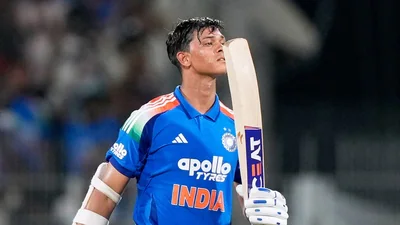
Indian cricket has never lacked batting talent, but breaking into the national team’s one-day lineup remains one of the toughest challenges in world cricket. On a night when India completed a comprehensive 3-0 ODI series sweep over Afghanistan, Yashasvi Jaiswal delivered a performance that may have long-term implications for the team’s future.
The left-handed opener smashed an unbeaten 110 off just 86 deliveries as India chased down a target of 219 with remarkable ease at Chennai’s MA Chidambaram Stadium. While the result itself may not significantly alter India’s standing as one of cricket’s strongest ODI teams, Jaiswal’s innings has reignited discussions about the evolving structure of India’s batting order ahead of major international tournaments.
More importantly, the innings showcased a young batter capable of adapting his game across formats, strengthening his credentials beyond Test cricket and T20 internationals.
Introduction: A Statement Beyond the Scoreboard
India entered the third ODI having already secured the series. Afghanistan, meanwhile, were searching for a consolation victory after being outplayed in the first two matches.
However, what could have been a routine dead rubber turned into a showcase of India’s batting depth and emerging talent.
Jaiswal, drafted into the squad after injury concerns disrupted India’s plans, grabbed his opportunity with both hands. His century not only secured a nine-wicket victory but also highlighted why selectors may soon face difficult decisions regarding the team’s top-order composition.
In elite sport, opportunities often arrive unexpectedly. The players who capitalize on them usually shape the future. Jaiswal’s innings felt like one of those moments.
How India Clinched the 3-0 Series Sweep
Before Jaiswal’s batting heroics, India’s bowlers laid the foundation for victory.
Afghanistan elected to bat first but quickly found themselves under pressure against a disciplined Indian pace attack. Early wickets reduced the visitors to a precarious position, forcing captain Hashmatullah Shahidi to anchor the innings.
Despite Shahidi’s resilient century and valuable support from Azmatullah Omarzai, Afghanistan struggled to maintain momentum throughout their innings.
India’s bowling attack consistently applied pressure, restricting scoring opportunities and ensuring that Afghanistan never gained complete control.
Eventually, the visitors were dismissed for 218, a total that appeared below par on a batting-friendly Chennai surface.
Prasidh Krishna Delivers a Career-Defining Spell
One of the standout performers of the match was fast bowler Prasidh Krishna.
The pacer produced a devastating spell that dismantled Afghanistan’s top order and prevented the visitors from building substantial partnerships early in the innings.
His ability to generate bounce and extract movement troubled Afghanistan’s batters throughout his spell.
The performance served as another reminder of India’s impressive pace-bowling depth, an area that has transformed dramatically over the past decade.
With established stars frequently managed for workload reasons, performances like Krishna’s provide selectors with valuable options for future assignments.
Yashasvi Jaiswal’s Century: More Than Just Runs
While centuries often dominate headlines, not all hundreds are created equal.
Jaiswal’s unbeaten 110 stood out because of its balance between aggression and control.
From the opening overs, he displayed clear intent without appearing reckless. He targeted loose deliveries, exploited fielding restrictions effectively, and maintained pressure on Afghanistan’s bowlers throughout the chase.
What impressed most was his maturity.
After racing to a rapid start, he adjusted seamlessly once the field spread. Instead of chasing boundaries every over, he rotated strike efficiently and forced Afghanistan to continually alter their plans.
That adaptability is often what separates talented players from future greats.
The Evolution of Jaiswal as an ODI Batter
For much of his early international career, Jaiswal has been viewed primarily as a Test and T20 specialist.
His attacking mindset naturally suited the shorter format, while his patience and technique translated effectively to Test cricket.
However, one-day cricket demands a unique blend of both skills.
Batters must balance risk and reward across multiple phases of an innings while adapting to changing match situations.
Against Afghanistan, Jaiswal demonstrated precisely those qualities.
He accelerated when conditions favored aggressive batting, consolidated when required, and finished the chase without allowing the opposition any opportunity to regain momentum.
This performance may ultimately be remembered as a breakthrough moment in his ODI journey.
Why India’s Top Order Competition Is Intensifying
India’s batting lineup remains one of the most competitive in world cricket.
Several accomplished players continue to compete for limited spots in the top order.
- Rohit Sharma
- Shubman Gill
- Virat Kohli
- KL Rahul
- Shreyas Iyer
- Ishan Kishan
- Yashasvi Jaiswal
Each brings unique strengths to the team.
As major ICC tournaments approach, selectors face the difficult task of balancing experience with emerging talent.
Jaiswal’s latest century adds another compelling argument in his favor.
The Left-Handed Advantage India Cannot Ignore
One aspect working strongly in Jaiswal’s favor is his left-handed batting.
Modern ODI teams increasingly value diversity in batting combinations, particularly at the top of the order.
Left-right partnerships force bowlers to constantly adjust their lines and lengths, disrupting rhythm and field placements.
Historically, many successful teams have benefited from strong left-handed options in their batting units.
Jaiswal’s presence offers India tactical flexibility while simultaneously providing explosive scoring potential.
Rohit Sharma’s Supporting Role Deserves Recognition
Although Jaiswal claimed the spotlight, Rohit Sharma played a crucial role in India’s victory.
His brisk 79 ensured Afghanistan never settled into the contest.
The experienced opener attacked from the outset, putting immediate pressure on the opposition bowlers.
By the time Rohit departed, the chase was effectively beyond Afghanistan’s reach.
The partnership also highlighted an intriguing possibility for India: combining youth and experience at the top of the order to maximize scoring opportunities.
What This Means for India’s ODI Future
India’s recent ODI performances suggest the team is gradually evolving toward its next generation.
While experienced stars continue to form the core of the lineup, younger players are increasingly forcing their way into conversations about long-term planning.
Jaiswal’s century reinforces several important realities:
- India’s talent pipeline remains exceptionally strong.
- Competition for places is driving higher performance standards.
- The team possesses multiple options across formats.
- The transition to future leadership groups appears healthy.
These factors position India well as they build toward upcoming global tournaments.
Afghanistan’s Positives Despite the Defeat
Although the series ended in disappointment, Afghanistan can still take encouragement from several individual performances.
Captain Hashmatullah Shahidi displayed resilience under pressure with a determined century.
Azmatullah Omarzai also continued to demonstrate his value as one of Afghanistan’s most reliable all-round contributors.
However, Afghanistan’s recurring issue remains consistency.
Against elite teams, they often show flashes of brilliance but struggle to sustain pressure over an entire match.
Closing that gap will be essential if they hope to challenge cricket’s leading nations more regularly.
A Comparison With India’s Emerging ODI Stars
| Player | Key Strength | Role in ODI Setup |
|---|---|---|
| Yashasvi Jaiswal | Aggressive top-order batting | Future opening option |
| Shubman Gill | Consistency and technique | Long-term batting pillar |
| Ishan Kishan | Explosive strokeplay | Flexible batting option |
| Shreyas Iyer | Middle-order stability | Spin specialist batter |
This depth highlights why every opportunity becomes crucial for players attempting to cement their positions.
The Hidden Story: India’s Bench Strength
Perhaps the biggest takeaway from the series is not the margin of victory but what it reveals about India’s squad depth.
Injuries, workload management, and scheduling challenges have become increasingly important in modern cricket.
The strongest teams are those capable of maintaining performance levels even when key players are unavailable.
India’s ability to introduce players like Jaiswal and still dominate a bilateral series reflects the strength of its talent development system.
This depth could prove invaluable during future ICC events where squad flexibility often determines success.
Looking Ahead: A Selection Dilemma Emerges
Success creates difficult decisions, and India’s selectors may soon face one.
Jaiswal has now demonstrated that he possesses the skills, temperament, and adaptability required for ODI cricket.
If he continues producing performances of this quality, leaving him out of future squads will become increasingly challenging.
Competition for places is ultimately healthy for any team, but it also means every inning carries greater significance.
Few players understand that better than Jaiswal right now.
Conclusion
India’s nine-wicket victory over Afghanistan completed a commanding ODI series sweep, but the match offered much more than another bilateral triumph.
Yashasvi Jaiswal’s unbeaten century served as a reminder that India’s next generation is ready to challenge for major roles across formats. Combining aggression, composure, and tactical awareness, he produced an innings that strengthened his position in India’s ODI plans.
While Prasidh Krishna’s exceptional bowling performance laid the groundwork for victory, Jaiswal ensured the chase became a showcase of his immense potential.
For India, the result reinforced their status as one of cricket’s strongest ODI sides. For Jaiswal, it may have marked the beginning of something even bigger—a permanent place in the future of India’s one-day cricket journey.
For breaking news and live news updates, like us on Facebook or follow us on Twitter and Instagram. Read more on Latest Sports on thefoxdaily.com.






COMMENTS 0