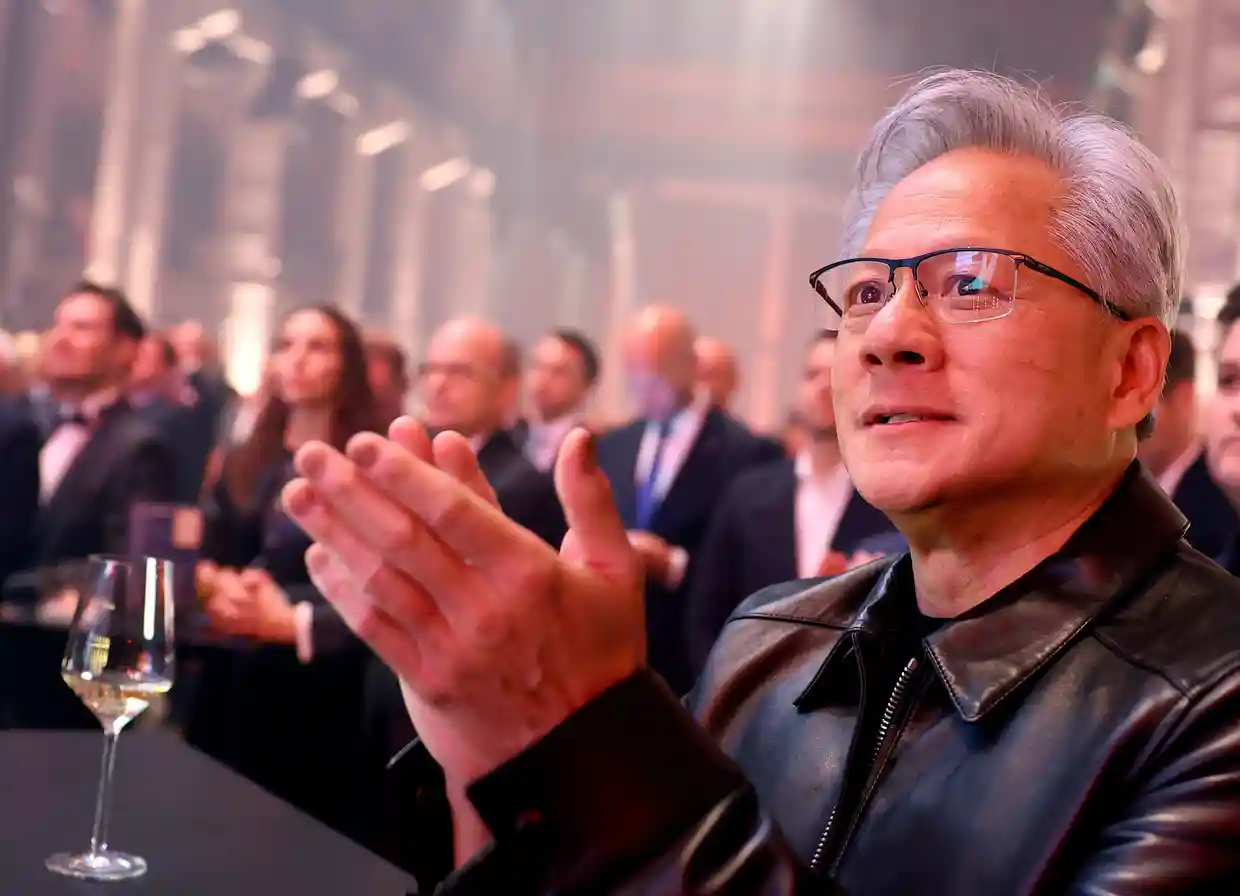
Nvidia and its chief executive, Jensen Huang, are facing a shareholder lawsuit alleging that the company misled investors about his reported relationship with Alice Huang, a former executive at Singapore-based Megaspeed who has been described in media reports as an alleged Chinese intelligence asset. The legal action adds another layer of scrutiny to the controversy surrounding the world’s most valuable chipmaker, raising questions about corporate disclosures, national security concerns and the potential impact on investor confidence.
The complaint was filed in a federal court in California and claims that Nvidia and Huang failed to disclose information that shareholders say could have affected the company’s reputation and business prospects. The allegations centre on whether the reported relationship and its possible national security implications were adequately addressed in the company’s public statements.
The lawsuit emerged as US President Donald Trump confirmed that the FBI was looking into aspects of the controversy. Trump said he had spoken with Huang and suggested that the Nvidia chief executive had not known that the person involved was allegedly connected to Chinese intelligence.
Nvidia has separately announced an independent investigation into reports that Huang was the target of a foreign intelligence effort. Huang has said he supports the investigation and will cooperate fully.
Why Nvidia and Jensen Huang Are Facing a Shareholder Lawsuit
The shareholder complaint accuses Nvidia and Huang of misleading investors by failing to disclose the potential significance of the reported relationship with Alice Huang. According to the lawsuit, the matter raised national security concerns that could have affected Nvidia’s reputation, business relationships and future prospects.
The plaintiffs argue that statements made by Nvidia about Huang’s interactions with Alice Huang did not accurately reflect the circumstances. They specifically challenge a comment the company provided to The New York Times after questions about the reported relationship emerged.
In that response, Nvidia described Huang’s interactions with Alice Huang as “not unusual or unexpected”. The company also explained that meetings with customers were a normal part of the chief executive’s responsibilities, noting that Huang regularly speaks with executives from thousands of customer organisations.
The lawsuit claims that this explanation was materially misleading because Huang allegedly had an affair with Alice Huang. The plaintiffs argue that the company should have disclosed the circumstances they believe were relevant to investors.
These claims have not been established in court. The filing represents the shareholders’ allegations, and Nvidia and Huang have not been found liable for misleading investors.
Who Is Alice Huang and What Are the Allegations?
Alice Huang is a former executive at Megaspeed, a Singapore-based company associated with data-centre infrastructure and Nvidia’s AI computing ecosystem. She is not related to Jensen Huang, despite sharing his surname.
The controversy intensified after The New York Times reported on an alleged relationship between the two and cited US authorities’ assessment that Alice Huang was a Chinese intelligence asset. These allegations have placed the reported relationship under scrutiny because of Nvidia’s position in the global semiconductor industry.
The claims have also raised questions about whether foreign intelligence agencies could attempt to gain access to information involving senior executives at companies that develop strategically important technologies.
However, the allegations concerning Alice Huang should be distinguished from established findings. Public reporting about intelligence assessments does not, by itself, establish that she engaged in espionage or that Nvidia’s confidential information was obtained by a foreign government.
There is also no publicly established finding in the supplied account that Jensen Huang knowingly participated in any intelligence operation.
Jensen Huang Admits Being Unfaithful to His Wife
The personal controversy became more prominent after Jensen Huang acknowledged that he had been unfaithful to his wife. In remarks made on Sunday, he admitted the infidelity but did not identify the person involved.
His admission brought additional attention to the reported relationship, although it did not independently confirm every detail of the allegations surrounding Alice Huang or establish any connection to espionage.
The shareholder lawsuit uses the reported affair to challenge Nvidia’s earlier explanation of the chief executive’s interactions. It argues that describing the meetings as routine customer engagement did not adequately reflect the alleged personal relationship.
The distinction is important because the legal case is not simply about Huang’s private life. The plaintiffs are attempting to establish whether information about the controversy was material to investors and whether the company’s public statements accurately described the circumstances.
For a publicly traded company, disclosure obligations can become significant when information has the potential to influence how investors assess its leadership, reputation or business risks. Whether the specific information in this case met that standard will be a matter for the legal process.
Megaspeed Also Faces Questions Over Nvidia Chip Exports to China
The lawsuit extends beyond the reported relationship and challenges Nvidia’s statements concerning its business dealings with Megaspeed.
The Singapore-based company has reportedly been investigated over suspicions that Nvidia chips may have been diverted to China in violation of US export restrictions. Advanced AI processors are subject to export controls because of their potential strategic and military applications, making the destination and end use of such hardware a significant issue for American authorities.
The shareholder complaint argues that Nvidia made misleading statements about its relationship with Megaspeed and the circumstances surrounding its GPU deployments.
During an interview published on October 30, Huang addressed questions about the company’s work with Megaspeed. He said Nvidia had examined the company’s GPU deployments and counted the units involved. He also suggested that the US government had conducted its own examination.
“We’ve studied all their [Megaspeed] deployments of our GPUs and counted every one,” Huang said.
He added that he believed the US government had also reviewed the deployments.
Megaspeed has previously denied violating export rules. In a statement last year, the company said it had acted in full compliance with applicable laws, including US export control regulations.
The allegations concerning potential chip diversion remain separate from the shareholder claims about Huang’s reported relationship. Together, however, they have brought renewed attention to Nvidia’s dealings with overseas customers and the safeguards used to ensure that advanced processors reach authorised destinations.
Trump Says FBI Is Investigating the Controversy
US President Donald Trump said on Monday that the FBI was investigating Huang’s affair, although he did not provide details about the precise scope of the inquiry.
Speaking at a White House briefing, Trump indicated that he did not believe Huang had a reason to be concerned. He also said he had spoken with the Nvidia chief executive to check on how he was handling the situation.
“I know the FBI is looking into it in terms of something else, and I think that he’ll be in good shape,” Trump said.
Trump said he had asked Huang how he was feeling and whether he was doing all right. According to the president, Huang told him that he had no idea the person in question was allegedly a spy.
“He said he had absolutely no idea that the person in question was a spy,” Trump said.
Trump’s comments provide an account of his conversation with Huang, but they do not establish the findings of any FBI investigation. The president did not disclose whether the inquiry concerns the reported relationship, possible foreign intelligence activity, export-control issues or related national security matters.
The exact scope and status of the investigation therefore remain important unanswered questions.
Nvidia Announces Independent Investigation Into Foreign Intelligence Allegations
Nvidia announced on Sunday that it was conducting an independent investigation into reports that Huang had been the target of a foreign intelligence effort.
The decision places the company’s board and governance processes at the centre of the response. An independent review can help establish what happened, examine relevant interactions and determine whether any company policies or security procedures require attention.
Huang has publicly supported the investigation and said he would cooperate fully.
“I support the investigation and will cooperate fully. I love our country and our company. I am committed to protecting Nvidia and supporting America’s national security,” Huang said in an open letter published on Nvidia’s website.
His statement emphasises the importance of protecting the company’s interests and supporting US national security. It also signals that he is prepared to participate in the review rather than oppose the investigation.
The investigation will be closely watched because Nvidia occupies an important position in the global AI supply chain. Any confirmed compromise involving sensitive information could have implications beyond the company, particularly given the strategic importance of advanced semiconductor technology.
At this stage, however, the reported foreign intelligence effort should not be treated as proof that Nvidia’s trade secrets or national security information were compromised.
Nvidia Shares Fall 4.3%, Wiping Out Around $190 Billion in Market Value
The controversy coincided with a sharp decline in Nvidia’s share price. The company’s stock fell 4.3% on Monday, reducing its market value by approximately $190 billion.
The decline came as investors assessed the potential implications of the allegations, the independent investigation and uncertainty surrounding the company’s leadership and business relationships.
However, a share-price movement alone cannot establish that the controversy was the sole cause of the decline. Nvidia’s valuation is also influenced by wider technology-sector sentiment, expectations for AI spending, semiconductor demand and broader market conditions.
The scale of the decline nevertheless illustrates how closely investors monitor developments involving Nvidia. The company has become one of the central beneficiaries of the global AI investment boom, making questions about its leadership and corporate governance particularly important to the market.
The shareholder lawsuit was filed five minutes after the US stock market closed on Monday, according to the report. Its timing added another development to an already eventful period for the company.
Shareholders Seek Unspecified Damages in Class Action
The lawsuit was brought by Nvidia shareholder Mark Kistenmacher, a retail investor, on behalf of a wider group of shareholders. The complaint seeks unspecified damages and has been filed as a class action.
A class action is a legal proceeding in which an individual or a small group of plaintiffs brings a case on behalf of a larger group of people who may have experienced similar alleged harm.
In this case, the plaintiffs are seeking to represent shareholders who claim they were affected by Nvidia’s allegedly misleading statements and failure to disclose material information.
The legal action follows a familiar pattern in US securities litigation. Investors sometimes file lawsuits after unexpected share-price declines, particularly when they believe a company made inaccurate statements or failed to disclose information that could have influenced investment decisions.
Several US law firms have also announced investigations into whether Nvidia misled investors and have invited shareholders to contact them. Such announcements do not mean that wrongdoing has been established or that separate lawsuits will necessarily succeed.
The outcome of the case will depend on the evidence, the legal arguments and whether the plaintiffs can establish the necessary elements of their claims.
What the Lawsuit Could Mean for Nvidia and Its Investors
The legal challenge creates several areas of uncertainty for Nvidia. The first concerns the company’s disclosure practices. Investors will want to understand whether the board and management provided accurate information about matters that could have materially affected the company’s business or reputation.
The second issue involves national security and corporate risk management. Nvidia’s processors are important to advanced computing, and the company operates in an industry where export restrictions and international technology competition are closely monitored by governments.
Any confirmed weaknesses in customer verification, chip tracking or export-control compliance could attract additional regulatory attention. However, the allegations concerning Megaspeed do not establish that Nvidia violated export restrictions.
The third issue is leadership confidence. Huang co-founded Nvidia in 1993 and has led the company through its transformation into a major semiconductor business and a central supplier to the AI industry. Developments involving its chief executive can therefore have consequences for investor perceptions, even when the underlying allegations remain unresolved.
The independent investigation may help address questions about the reported foreign intelligence effort. At the same time, the shareholder lawsuit could require the company to defend its earlier statements and explain its disclosure decisions.
Investors will also be watching whether the controversy affects Nvidia’s relationships with customers, regulators and business partners. The company’s ability to maintain confidence across these groups will be important as it continues to compete in the rapidly expanding AI infrastructure market.
What Happens Next in the Nvidia Shareholder Case?
The lawsuit now places Nvidia and Huang in a legal process in which the plaintiffs will need to support their allegations with evidence. The company and its chief executive will have an opportunity to respond through the court proceedings.
Several important questions remain unresolved:
- Were investors misled? The court will need to consider whether Nvidia’s statements and disclosures were materially misleading under applicable securities laws.
- Was information withheld? The case will examine whether the company failed to disclose information that it was legally required to provide to shareholders.
- Was national security information compromised? The independent investigation may help establish whether any sensitive information was exposed through the reported foreign intelligence effort.
- Did Megaspeed breach export restrictions? The allegations concerning possible chip diversion to China remain subject to scrutiny and should not be treated as proven violations.
- Will shareholders receive damages? The plaintiffs are seeking unspecified compensation, but the outcome will depend on the court’s findings and the progress of the case.
Nvidia and Megaspeed did not immediately respond to requests for comment on the lawsuit, according to the report.
Nvidia Faces a Test of Investor Confidence Amid AI Boom
Nvidia’s position at the centre of the Artificial Intelligence industry has made its leadership, customer relationships and corporate disclosures matters of significant interest to investors and policymakers. The shareholder lawsuit brings these issues together by challenging the company’s statements about Huang’s reported relationship and its dealings with Megaspeed.
Trump’s comments about the FBI investigation and Nvidia’s decision to conduct an independent review add further scrutiny, but neither development establishes that Huang knowingly had contact with a foreign intelligence asset or that company information was compromised.
The legal case is still at an early stage, and the allegations must be tested through the judicial process. For shareholders, the immediate concern is whether the controversy reveals previously undisclosed risks or weaknesses in Nvidia’s governance and compliance practices.
Huang remains the company’s chief executive, and Nvidia continues to operate as a major supplier of AI computing infrastructure. How the company handles the investigation, responds to the lawsuit and communicates with investors could shape confidence in its leadership during a critical period for the semiconductor industry.
Ultimately, the case is about more than a reported personal relationship. It raises broader questions about transparency, national security and the responsibilities of a company whose technology has become strategically important to the United States and the global AI economy.
For breaking news and live news updates, like us on Facebook or follow us on Twitter and Instagram. Read more on Latest Technology on thefoxdaily.com.




COMMENTS 0