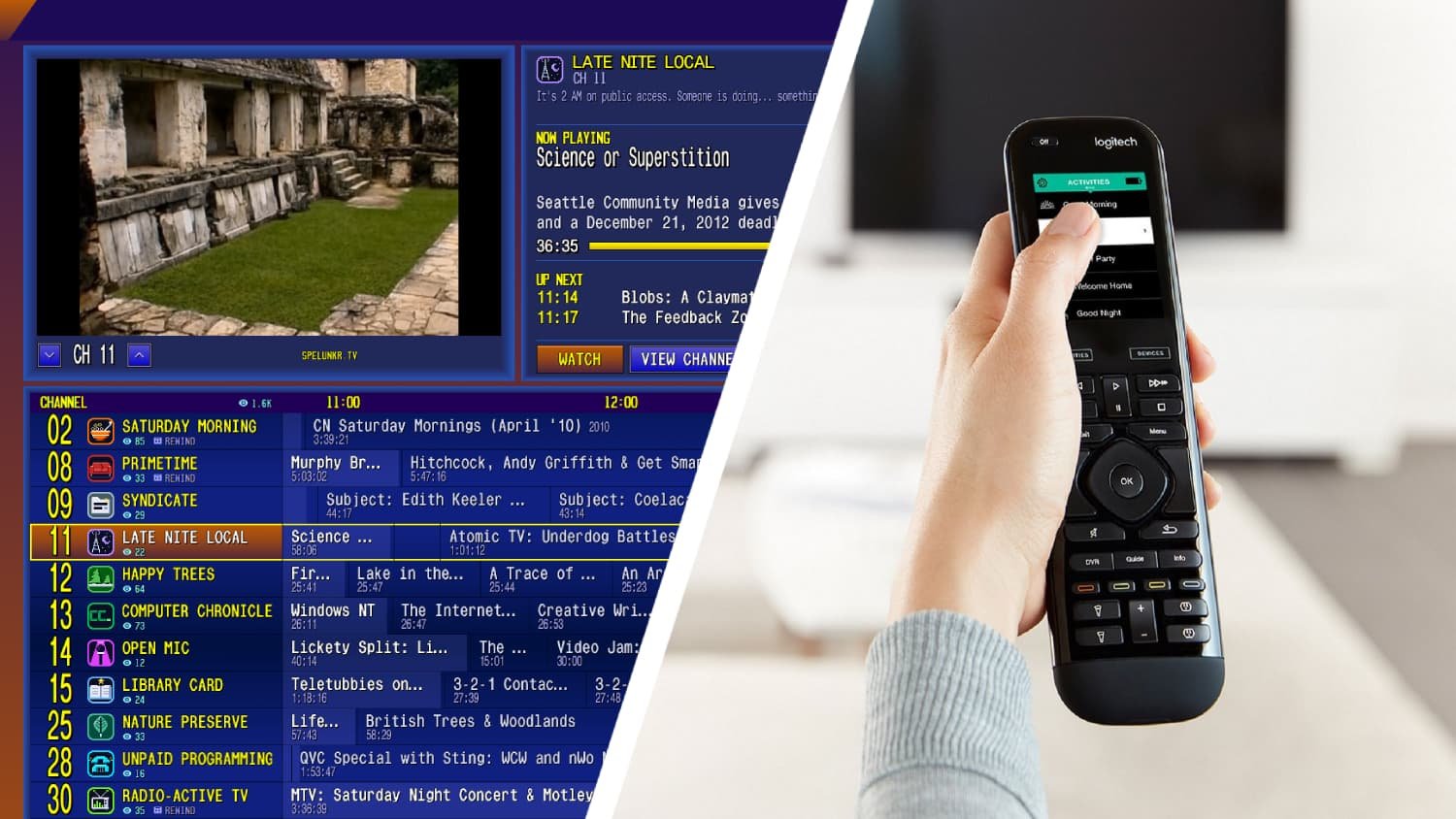
A new free web app called Spelunkr is bringing the experience of 1990s television back to life by transforming thousands of hours of forgotten Internet Archive videos into a collection of themed, continuously running TV channels. Designed for viewers who miss the unpredictable experience of traditional cable television, the project combines vintage footage, nostalgic programming and an old-school interface to recreate the atmosphere of watching television before streaming services became dominant.
Created with the help of Anthropic’s Claude Code, Spelunkr organizes more than 4,391 hours of archived footage into 37 channels covering everything from classic children’s programming and nature documentaries to unusual local television recordings and painting tutorials. Instead of choosing individual videos from an on-demand catalogue, viewers tune into a channel and watch whatever happens to be playing at that moment.
The concept offers a different way to explore the Internet Archive’s enormous collection of historical media. Much of the material was uploaded and preserved for future generations, but remains difficult for casual viewers to discover. Spelunkr attempts to make those forgotten recordings feel like part of a living television network again.
What Is Spelunkr and How Does the Retro TV App Work?
Spelunkr is a free internet television experience built around videos preserved by the Internet Archive. Rather than functioning like Netflix or YouTube, where viewers search for a particular title, the platform presents a selection of themed channels that play scheduled programming continuously.
The idea is deliberately simple: open the website, select a channel and start watching. There is no need to spend time building a playlist or deciding what to watch next. The programming is already running, recreating the familiar experience of switching on a television and discovering whatever is being broadcast.
The app currently features 37 channels, each organized around a particular subject or viewing mood. Its programming includes children’s entertainment, educational recordings, unusual television footage, wildlife documentaries and other examples of media that might otherwise remain buried in the Internet Archive’s collection.
According to the supplied project figures, the available programming totals approximately 4,391 hours of footage. That is enough material to support continuous viewing throughout the day, although the exact catalogue can change as the project develops and additional recordings become available.
Importantly, Spelunkr is not designed as a conventional video-on-demand service. Viewers cannot necessarily select any recording and play it immediately. Instead, they watch the content scheduled on a channel when they tune in, making the experience less predictable and more similar to traditional broadcast television.
37 Channels Bring Different Corners of the 1990s Internet to Life
One of Spelunkr’s biggest attractions is its variety of themed channels. Rather than grouping every recording into one enormous video library, the platform separates content into categories that resemble specialist cable networks.
Some channels focus on familiar forms of entertainment, while others highlight unusual recordings and obscure material. This variety makes the platform feel less like a simple archive viewer and more like a collection of small television stations.
Orange Soda: After-School Nostalgia
Orange Soda is dedicated to children’s programming and the kind of entertainment viewers might remember from after-school television. Its theme taps into the nostalgia of returning home, switching on the television and finding cartoons, educational shows or other youth-oriented content already playing.
For viewers who grew up during the 1990s, this type of programming can offer a glimpse into the television culture of the period. Even recordings that were never major hits can become interesting historical snapshots decades later.
Late Nite Local: Aliens, Oddities and Unusual Footage
Late Nite Local takes a different approach, focusing on aliens, strange recordings and unusual television material. Its theme is suited to the kind of obscure content that might once have appeared on local-access television or late-night broadcasts.
This is also where Spelunkr’s archive-based concept becomes particularly interesting. Unlike modern streaming platforms that prioritize familiar franchises and popular productions, the app can introduce viewers to recordings they may never have encountered before.
Nature Preserve: Wildlife and Nature Documentaries
Nature Preserve collects wildlife documentaries and nature-related footage. It provides a calmer alternative to the more unusual channels, giving viewers an opportunity to explore older educational recordings and documentary-style programming.
Historical nature footage can also offer an interesting perspective on how documentary production, presentation styles and television storytelling have changed over time.
Happy Trees: A Dedicated Bob Ross Channel
Another standout is Happy Trees, a channel dedicated entirely to painting tutorials by Bob Ross. His relaxed presentation style and landscape paintings have remained popular long after the original broadcasts, making the channel a natural fit for Spelunkr’s nostalgic approach.
Instead of searching for a specific painting lesson, viewers can simply tune in and watch whichever tutorial is currently playing. It recreates the relaxed feeling of discovering a Bob Ross episode while browsing television channels.
More Than 4,000 Hours of Forgotten Internet Archive Footage
The size of Spelunkr’s programming library is another major part of its appeal. The project reportedly brings together approximately 4,391 hours of video, providing enough material for continuous playback across its channels.
The recordings come from the Internet Archive, a nonprofit digital library that preserves websites, books, audio recordings, videos, software and other cultural material. Its video collection includes a wide range of historical and online recordings, from educational productions and television broadcasts to obscure clips that might otherwise be difficult to locate.
The Internet Archive has preserved millions of videos, but preservation does not automatically mean that people will discover or watch them. Large collections can be difficult to navigate, particularly when recordings are poorly categorized, unfamiliar or no longer connected to popular search trends.
Spelunkr approaches this discovery problem by presenting archived recordings in a familiar format. Instead of asking viewers to understand the structure of a huge digital library, it gives them a set of channels with recognizable themes.
This changes how people interact with archived media. A video that might receive little attention in a traditional search interface could become part of a channel’s regular programming and reach viewers who were not actively looking for it.
How to Watch Spelunkr’s Free Retro TV Channels
Getting started with Spelunkr is straightforward. The platform is designed as a web-based television experience, so viewers can access it through a compatible browser without needing to install a traditional TV application.
- Open the Spelunkr website: Visit the project’s website using a web browser.
- Choose a channel: Browse the available themed channels, including Orange Soda, Late Nite Local, Nature Preserve and Happy Trees.
- Click Tune In: Start watching the programming currently scheduled on the selected channel.
- Explore other channels: Switch between different themes whenever you want to discover another type of archived footage.
- Interact with content: Depending on the available features, signed-in viewers can like videos and pin comments to particular moments.
One unusual feature is the integration with Discord for certain interactions. Viewers can sign in through Discord to like videos and attach comments to specific moments in a recording. This adds a small social element to an otherwise traditional television experience.
However, the platform’s main attraction remains its passive viewing format. You do not have to search for a particular show or create a watchlist. You can simply tune in and see what is playing.
A 1990s Television Experience With Scanlines, Grain and Visual Glitches
Spelunkr’s retro identity extends beyond its video catalogue. The website itself is designed to resemble an older television interface, using bold colours, distinctive typography and visual effects inspired by analogue screens.
After clicking Tune In, viewers are transported into an interface that evokes the early 1990s. Scanlines, grainy footage and occasional artificial visual glitches help recreate the appearance of watching television through an older CRT display.
These effects are not merely decorative additions. They reinforce the project’s central idea of making archived recordings feel like part of an old television network rather than a collection of digital files.
The design also contrasts with the minimalist interfaces used by many modern streaming services. Instead of emphasizing recommendations, search boxes and personalized home screens, Spelunkr leans into the visual language of traditional television.
That approach gives the app a distinct personality. Its deliberately old-fashioned appearance complements the material it presents, creating a viewing experience that feels connected to the era in which much of the footage was originally produced.
Claude Code Helped Build the Retro Television Network
Although Spelunkr looks backward in its presentation, its development reflects a much more modern trend: AI-assisted software creation.
The creator reportedly built almost the entire application using Claude Code, Anthropic’s AI-powered coding tool. According to the project’s description, the application contains approximately 87,000 lines of AI-generated code.
Claude Code is designed to help developers work with software projects through natural-language instructions and AI-assisted coding. It can help write and modify code, understand existing project structures and support development tasks that would otherwise require substantial manual programming.
Spelunkr demonstrates how these tools can be used to build a relatively ambitious digital experience. A creator can combine an existing media collection, automated programming assistance and a clear creative concept to develop something that feels like a complete product rather than a basic demonstration.
However, AI-generated code does not eliminate the need for human direction, testing or maintenance. A project still needs decisions about its design, content organization, playback behaviour and user experience. The creator’s concept is what turns the underlying technology into a recognizable retro television service.
The project also highlights an interesting contrast: an application built with modern AI tools is being used to make decades-old internet footage easier to discover.
Why Spelunkr Matters for Digital Preservation
Beyond nostalgia, Spelunkr raises a broader question about the value of digital preservation. The Internet Archive has spent years collecting and maintaining material from across the web, but an enormous archive is only useful when people can access, understand and explore what it contains.
Millions of videos can remain technically available while receiving little attention. Some recordings may be difficult to find because viewers do not know their titles, creators or original broadcast details. Others may simply be overshadowed by newer entertainment and more heavily promoted content.
Spelunkr offers one possible solution by turning archived material into a curated viewing experience. Its channel-based structure gives older recordings a new context and allows viewers to discover content without knowing exactly what they are searching for.
This approach could be especially useful for obscure television recordings, local productions, educational videos and other media that have historical or cultural value despite limited mainstream recognition.
It also demonstrates that digital preservation is not just about storing files indefinitely. Making archived material engaging and accessible can help ensure that preserved content continues to be watched, discussed and appreciated.
Spelunkr vs Modern Streaming Services: A Different Way to Watch TV
Spelunkr is not necessarily trying to replace Netflix, YouTube or other major streaming platforms. Its appeal comes from offering something that conventional services have largely moved away from: scheduled, passive television viewing.
Most modern streaming platforms are built around personal choice. Viewers search for a title, receive recommendations, create watchlists and decide exactly what they want to play. That model offers convenience, but it also puts the responsibility of choosing content on the viewer.
Spelunkr reverses that relationship. The channels are already running, and viewers join whatever programme happens to be on. There is an element of surprise because the next video is not necessarily something they would have selected themselves.
This is similar to the experience of traditional cable television, where viewers often discovered unfamiliar shows simply by switching between channels. The format can make watching television feel less like completing a task and more like casual entertainment.
There are trade-offs, of course. The lack of conventional on-demand control means viewers may not be able to watch a particular recording whenever they want. The catalogue is also focused on archived footage rather than the latest films, television series or major streaming releases.
For people seeking a nostalgic alternative to algorithm-driven streaming, however, those limitations are part of the appeal.
Could AI-Powered Television Be the Next Big Streaming Experiment?
Spelunkr arrives at a time when technology companies are exploring increasingly unconventional approaches to television and entertainment. While this project uses AI-assisted development to organize existing recordings, other ideas focus on generating entirely new viewing experiences.
A reported Google patent involving AI-generated television programming, for example, has drawn attention for exploring the possibility of personalized content in which viewers could become part of a show’s experience. Such patent concepts should not be confused with confirmed consumer products or announced features, but they illustrate the direction in which some entertainment experiments are heading.
The contrast between these ideas is striking. One approach imagines television that is increasingly personalized and generated around individual viewers. Spelunkr instead brings back the unpredictability of older broadcasting, where viewers have less control over what appears next.
Both approaches reflect changing expectations around digital entertainment. Some audiences want more personalization and interactive features, while others may appreciate the simplicity of discovering something unexpected.
Is Spelunkr Worth Trying?
Spelunkr is worth exploring for anyone interested in retro television, internet history, forgotten media or unusual web projects. Its combination of themed channels, archived footage and CRT-inspired visuals gives it a clear identity that separates it from conventional video platforms.
The service is particularly appealing to viewers who enjoy discovering obscure recordings rather than watching only familiar shows. Channels such as Late Nite Local and Nature Preserve provide different entry points into the archive, while Happy Trees offers a more focused destination for Bob Ross fans.
It may not suit viewers who prefer complete control over their entertainment. The scheduled-channel format means that finding a particular recording can be less convenient than using a standard video search engine. Its appeal also depends on how much users enjoy older and sometimes obscure footage.
Nevertheless, the project makes a convincing case for giving forgotten internet videos another chance. By combining modern development tools with the familiar structure of 1990s television, Spelunkr turns an enormous archive into something that feels approachable, entertaining and surprisingly personal.
Frequently Asked Questions About Spelunkr
What is Spelunkr?
Spelunkr is a free web-based retro TV app that organizes videos from the Internet Archive into themed channels that play scheduled programming continuously.
How many channels does Spelunkr have?
The platform is described as having 37 channels covering subjects such as children’s programming, unusual television recordings, wildlife documentaries and Bob Ross painting tutorials.
How much video content is available on Spelunkr?
The project reports approximately 4,391 hours of archived video content, providing enough material for continuous viewing across its channels.
Is Spelunkr free to use?
Yes. Spelunkr is presented as a free web app that viewers can access through a compatible browser.
Can you watch specific videos on Spelunkr?
Spelunkr primarily uses scheduled channel programming rather than a conventional on-demand catalogue. Viewers tune in to watch whichever recording is currently playing on a selected channel.
What is the Happy Trees channel?
Happy Trees is a themed channel dedicated to Bob Ross painting tutorials, allowing viewers to watch his landscape painting lessons as part of Spelunkr’s scheduled programming.
Was Spelunkr built using Claude Code?
Yes. Its creator reportedly used Anthropic’s Claude Code for almost the entire application, describing the project as containing approximately 87,000 lines of AI-generated code.
Does Spelunkr support comments and likes?
Yes. Viewers can like videos and pin comments to specific moments in recordings when signed in through Discord, according to the project’s described features.
The Bottom Line
Spelunkr is a creative reminder that the internet’s past still has plenty to offer. Its 37 channels and thousands of hours of archived recordings turn forgotten videos into a television experience that feels familiar to anyone who remembers browsing cable channels in the 1990s.
Its use of Claude Code also makes the project an interesting example of how AI-assisted development can help creators turn unconventional ideas into working web applications. Rather than trying to compete with major streaming platforms through exclusive shows or blockbuster releases, Spelunkr focuses on discovery, nostalgia and digital preservation.
For viewers tired of endlessly scrolling through streaming catalogues, simply tuning in and seeing what is playing might be exactly the change of pace they need. And if that means spending an evening watching old nature documentaries or Bob Ross paint another landscape, that is part of the charm.
For breaking news and live news updates, like us on Facebook or follow us on Twitter and Instagram. Read more on Latest Technology on thefoxdaily.com.






COMMENTS 0