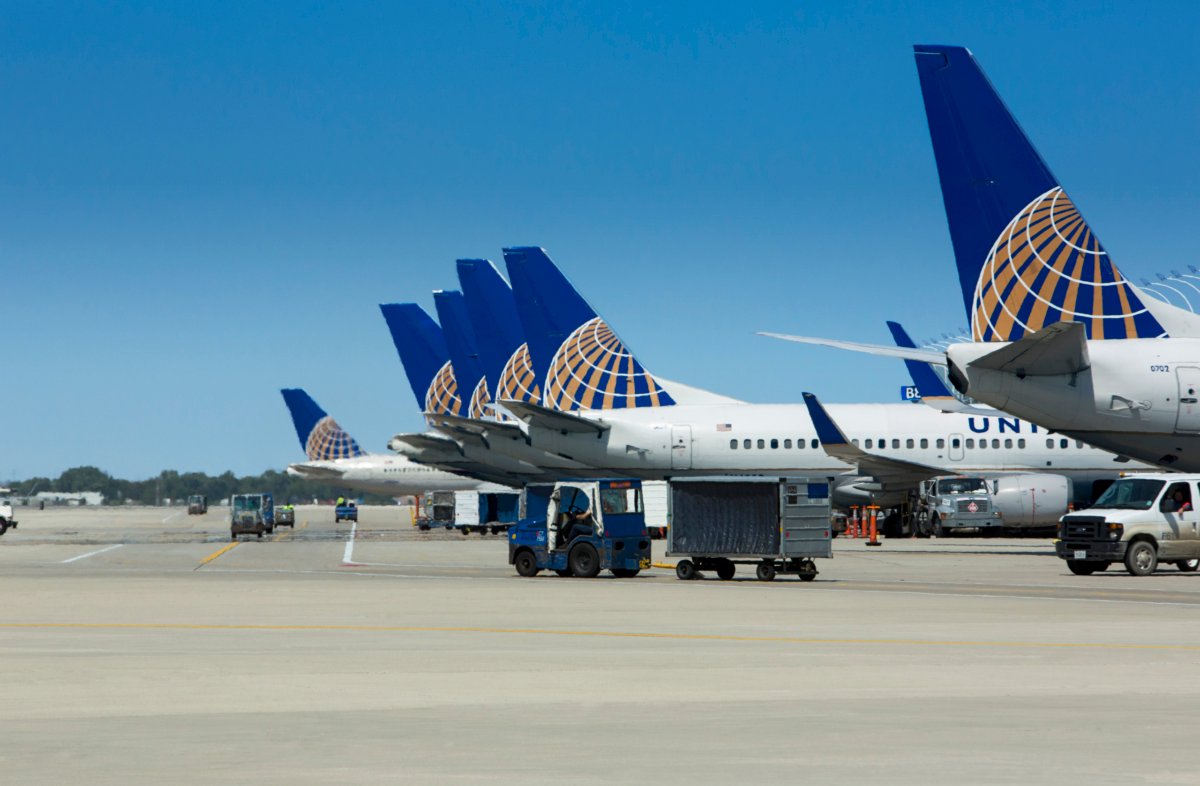
A maintenance operation intended to modernise America’s ageing air traffic control infrastructure ended up disrupting air travel across the United States. On Friday, November 13, the Federal Aviation Administration (FAA) ordered a nationwide ground stop after a telecommunications failure affected multiple air traffic control centres.
The disruption lasted more than four hours. The FAA issued the order at approximately 3:30 p.m. Eastern Time and lifted it at around 8:15 p.m., after technicians identified and isolated the problem. Although aircraft already in the air continued operating under available safety procedures, departing flights across the country were temporarily halted.
According to the FAA, approximately 3,500 aircraft landed safely during the disruption. The agency later reported that airlines cancelled around 12,462 flights on November 13, including cancellations made as a precaution while operations were being restored. Delays and cancellations continued to affect passengers as airlines worked through the resulting backlog.
The immediate cause was linked to work by government contractor L3Harris at a remote FAA facility. The maintenance involved replacing ageing copper telecommunications connections with fibre-optic infrastructure and deploying new networking equipment. During the work, a router began generating an unusually high volume of connection attempts, overwhelming parts of the wider network.
The incident raised an important question: how could replacing wires at one facility disrupt flights across an entire country? The answer lies in the way modern aviation depends on interconnected communications systems, and how a fault in one part of a shared network can spread to other facilities.
What Caused the Nationwide US Flight Ground Stop?
US Transportation Secretary Sean Duffy attributed the disruption to maintenance carried out by L3Harris, the contractor responsible for supporting and modernising parts of the FAA’s telecommunications infrastructure.
The work involved installing a new router at a remote facility in El Dorado, Arkansas, as part of the transition away from older copper-based communications links. According to the FAA’s initial investigation, the network experienced excessive data traffic associated with equipment at two locations: a radar site in Amarillo, Texas, and a radio communications site in El Dorado.
The problem involved a router generating more than 1,000 connection attempts every four to five seconds. Those repeated requests affected other routers connected to the FAA’s telecommunications network, creating instability in the systems that carry information between air traffic control facilities.
The disruption affected aircraft communications and some radar data feeds. The FAA initially reported instability at 17 of its 22 Air Route Traffic Control Centers, with the problem spreading to several Terminal Radar Approach Control facilities.
These centres manage different portions of US airspace and exchange information needed to coordinate aircraft movements. When the network became unstable across multiple locations, the FAA could no longer rely on the normal flow of information required to manage departures at the usual volume.
The agency therefore ordered a nationwide ground stop as a precaution. The decision was not an indication that every radar or radio system had stopped working. Instead, the instability created enough uncertainty about the reliability of the wider network to make continuing normal departures unsafe.
How Did Replacing Copper Wires With Fibre Optics Contribute?
The maintenance work involved two related but technically different changes: replacing the physical telecommunications medium and changing the Technology used to transmit information.
Copper and fibre-optic cables describe how signals physically travel through a network. Copper cables carry electrical signals, while fibre-optic cables transmit information using pulses of light. Fibre generally offers greater capacity and can carry data over long distances with less signal degradation.
However, replacing copper with fibre does not automatically mean that a system is changing from analogue to digital. Copper cables can carry digital information, just as fibre-optic cables do. The distinction between the physical cable and the technology used to organise data is important when understanding the FAA incident.
The other change involved the transition from an older telecommunications method called time-division multiplexing (TDM) to internet protocol (IP)-based networking.
These technologies determine how information is organised and transmitted across a communications system. Their differences help explain why a network upgrade can introduce new operational risks even when the physical infrastructure is being improved.
TDM vs IP: Why the Change in Technology Matters
Time-division multiplexing is a method in which multiple communications share a transmission channel by using separate time slots. Each connection receives a designated period in which to send its information.
One way to understand TDM is to imagine a single-lane bridge where traffic is allowed to cross in scheduled intervals. Each user gets a specific opportunity to pass through, reducing the likelihood of multiple vehicles trying to occupy the same space at once.
IP networking works differently. Information is divided into packets that can travel across interconnected network routes. Routers examine these packets and direct them towards their destinations. This approach offers greater flexibility and allows networks to handle different types of data and changing traffic demands.
However, the transition also changes how equipment communicates and responds to failures. Network devices must be correctly configured to recognise one another, manage traffic and prevent excessive requests from overwhelming other components.
If a router begins repeatedly requesting connections or broadcasting unnecessary information, other devices may spend significant processing capacity responding to that traffic. When multiple facilities depend on the same network infrastructure, a local equipment problem can affect communications well beyond the original site.
This does not mean fibre itself caused the failure. Fibre can carry large volumes of data efficiently, but it cannot prevent faulty equipment or incorrect network configurations from generating excessive traffic. The critical issue in the FAA incident was the behaviour of the networking equipment and the resulting instability in the wider system.
Why Did a Telecommunications Failure Ground Flights Across America?
Air traffic control depends on a continuous exchange of information between aircraft, controllers and facilities responsible for managing different sections of airspace.
Controllers need reliable surveillance information to know where aircraft are located, how they are moving and how much separation exists between them. They also use radio communications to issue instructions, coordinate routes and transfer responsibility for aircraft between control centres.
Radar systems and satellite-based surveillance technologies provide information about aircraft positions. Telecommunications networks carry much of that information between facilities, allowing controllers in different regions to coordinate traffic safely.
These systems are interconnected. A controller managing aircraft in one region may need information from another facility, particularly when flights cross geographical boundaries or move between different stages of their journeys.
If communications become unreliable, controllers may not receive information consistently or quickly enough to manage the normal volume of traffic. Even if aircraft can continue navigating using their onboard equipment, that does not mean the wider air traffic control system can safely handle thousands of departures under normal conditions.
This distinction explains why the FAA’s decision affected departing flights nationwide. The agency did not need to establish that every communication link had failed before taking action. It needed to ensure that controllers could reliably coordinate aircraft movements and maintain safe separation.
The ground stop was therefore a precautionary measure. By temporarily preventing additional departures, the FAA reduced the number of aircraft entering an airspace system experiencing communications instability. Aircraft already airborne could continue to land using available radar feeds, radio frequencies and established procedures.
Did Every Radar and Communication System Stop Working?
No. The FAA later clarified that the incident was not a complete loss of communications. Certain radio frequencies and radar feeds remained operational throughout the disruption, allowing controllers to communicate with and track aircraft.
Critical flights, including life-saving, law enforcement and military operations, were also able to continue. The agency said its existing safety procedures worked as intended and that every aircraft landed safely.
The distinction is important because a nationwide ground stop does not necessarily mean that every airport, radar installation or control centre has become completely inoperable.
In this case, instability across the telecommunications network created uncertainty about whether normal operations could continue safely. The FAA chose to restrict departures until the affected equipment was isolated and the network remained stable for a sufficient period.
The agency and L3Harris subsequently blocked the two locations identified in the initial investigation. The broadcasting function was also disabled on the new routers as a precaution. The FAA said it disabled the same functionality on approximately 60 similar routers across the network while investigating the problem.
Was the FAA Ground Stop Connected to Microsoft or AI?
The timing of the incident fuelled speculation about a possible connection to two separate technology developments: a Microsoft service disruption and the FAA’s recently expanded SMART air traffic management system.
Neither connection was established. Microsoft denied that its service problems were related to the FAA’s nationwide ground stop. The company said it had no indication that the aviation disruption was connected to its services.
The FAA’s new Strategic Management of Airspace, Routes and Trajectories (SMART) system also became a subject of discussion because its nationwide expansion had taken place just three days before the ground stop.
SMART is designed to help aviation specialists analyse information such as flight schedules, weather conditions, air traffic and potential congestion. It provides recommendations that can help the FAA plan routes and manage traffic more efficiently.
However, the SMART platform is separate from the core telecommunications infrastructure used by air traffic controllers to communicate and exchange operational information. The FAA and Air Space Intelligence, the company behind SMART, denied that the system caused the November 13 disruption.
Officials said the incident involved instability in the legacy telecommunications network rather than the new AI-assisted traffic management platform. The close timing between the nationwide expansion of SMART and the ground stop prompted questions, but timing alone does not establish a causal connection.
The distinction matters because modernisation projects often involve several technologies operating alongside older infrastructure. A failure in one system should not automatically be attributed to another simply because both are being upgraded or introduced during the same period.
Why the 2023 FAA Outage Is Also Relevant
The November 2026 disruption was not the first time a technical failure had forced the FAA to suspend departures across the United States.
In January 2023, a malfunction involving the agency’s Notice to Air Missions (NOTAM) system led to a nationwide ground stop. NOTAM provides pilots and aviation operators with important information about hazards, restrictions and changes affecting flight operations.
The 2023 incident involved a different system and a different technical failure. It was not caused by the same router problem reported in November 2026. However, both incidents demonstrated how a disruption affecting a widely shared aviation service can have consequences across the national airspace system.
The comparison highlights a structural challenge for the FAA. Air traffic control depends on numerous connected technologies, and a failure in a system supporting multiple facilities can create disruption far beyond the location where the original problem occurs.
That is why modern aviation infrastructure needs more than reliable individual components. It also requires safeguards that prevent faults from spreading and backup arrangements that allow essential services to continue when part of the network becomes unstable.
Ageing FAA Infrastructure Adds to Modernisation Challenges
The incident has renewed attention on the condition of America’s air traffic control infrastructure. Many systems currently supporting the national airspace network were developed decades ago and require maintenance, replacement or modernisation.
A September 2026 government assessment classified 51 of the FAA’s 138 air traffic control systems as unsustainable and another 54 as potentially unsustainable. These assessments reflect the scale of the infrastructure challenge facing the agency as it attempts to replace ageing communications, radar and control equipment.
L3Harris has been working with the FAA to convert legacy copper connections to fibre-optic infrastructure. The company said it had completed more than 70 per cent of the planned communications conversion across the national airspace system.
Modernisation is necessary because older equipment can become increasingly expensive and difficult to maintain. Replacement infrastructure can provide greater capacity, improved flexibility and better support for the growing demands of air travel.
However, upgrading a system that must operate continuously is complicated. New equipment has to work alongside existing technology, and the transition must be carefully managed so that maintenance does not disrupt essential services.
The November incident illustrates the risks involved when new networking equipment is introduced into a complex operational environment. A replacement router may be part of a broader upgrade, but if it is incorrectly configured or behaves unexpectedly, it can affect systems that depend on it.
How Can the FAA Prevent Another Nationwide Ground Stop?
Preventing another incident will require more than replacing copper cables with fibre-optic connections. The FAA and its contractors will need to ensure that upgraded equipment is properly configured, tested and isolated from other parts of the network.
One important measure is network segmentation. This involves dividing a large network into separate sections so that a fault in one area does not automatically affect every connected facility.
If a router begins generating excessive connection requests, network segmentation and appropriate traffic controls could help contain the problem. Instead of allowing the malfunction to spread across a shared infrastructure, the affected section could be isolated while other facilities continue operating.
Another important safeguard is stronger configuration management. Routers and other networking devices need to be tested under realistic conditions before they are connected to critical operational systems. Engineers should verify that devices do not generate unexpected traffic and that their failure modes are understood.
The FAA can also strengthen monitoring systems to identify unusual patterns before they develop into widespread instability. Automated alerts, traffic limits and failover arrangements can help technicians respond more quickly when a network component begins behaving abnormally.
Maintenance planning also deserves attention. The FAA said routine work of this type has been carried out for decades, typically during periods of lower traffic. Following the November disruption, the agency said it would reevaluate when and how such replacement work is conducted.
Finally, the agency needs reliable backup communication arrangements. Redundant systems can help maintain essential information flows when a primary network connection fails. Such safeguards are particularly important for facilities that coordinate large volumes of aircraft movements.
What the November 13 Ground Stop Reveals About Aviation Safety
The nationwide flight disruption was caused by a technical failure during telecommunications maintenance, according to the FAA’s initial investigation. A router associated with the replacement work generated an unusually high volume of connection attempts, creating instability across parts of the network used by air traffic control facilities.
The exact underlying reason for the router’s behaviour remained under investigation. Incorrect installation, configuration problems or defective equipment are among the possibilities that investigators may examine. The FAA and L3Harris will need to establish the precise failure mechanism before drawing final conclusions.
The incident also demonstrated why aviation safety depends on more than aircraft technology. Pilots can navigate using onboard systems, but safe air traffic management requires reliable coordination between controllers, surveillance equipment and communications networks across the country.
The FAA’s decision to halt departures was a precaution designed to protect aircraft while the system was unstable. The fact that all aircraft landed safely showed the importance of established operating procedures during a major technical disruption.
However, a resilient national aviation system should not have to rely on nationwide restrictions every time a localised equipment failure affects shared infrastructure. Modernisation must therefore include network isolation, stronger testing, reliable backups and safeguards against excessive data traffic.
Replacing old copper connections with fibre-optic technology remains an important part of upgrading America’s air traffic control system. But the November 13 incident shows that new infrastructure must be integrated carefully. The real measure of modernisation will not simply be how quickly old equipment is replaced, but whether the upgraded network can keep essential aviation services operating safely when individual components fail.
For breaking news and live news updates, like us on Facebook or follow us on Twitter and Instagram. Read more on Latest World on thefoxdaily.com.






COMMENTS 0