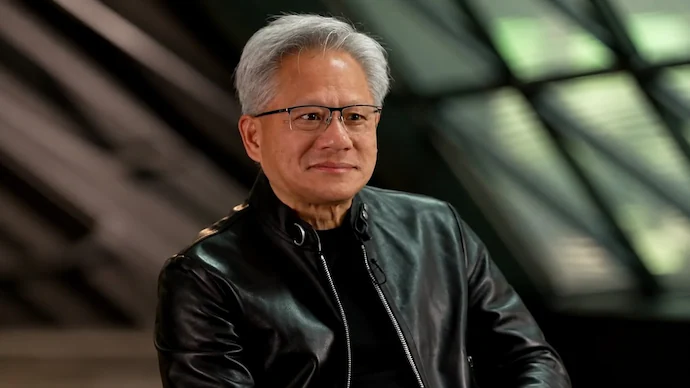
Nvidia chief executive Jensen Huang‘s long-standing push to regain access to China’s Artificial Intelligence market is facing renewed scrutiny following revelations about his personal relationship with Alice Huang, a former executive reportedly suspected by US intelligence agencies of having links to Chinese intelligence.
Weeks before publicly acknowledging the affair, Huang told Fortune that Nvidia could be of significant value to China’s technology industry. His remarks, made in an October interview before reports about the alleged intelligence connection emerged, have now attracted attention because of the questions surrounding his relationship with Alice Huang.
The Nvidia chief described China’s artificial intelligence market as a large and growing opportunity, arguing that the company could provide computing resources while competing for business in the country.
His comments reflect a position he has maintained for years: that restricting American semiconductor companies from selling advanced chips to Chinese customers risks limiting their commercial opportunities and reducing their influence in the global AI market.
However, the controversy has introduced a new dimension to the debate. Huang’s relationship with a woman reportedly suspected of having intelligence links has raised questions about his interactions with China, even though no established evidence demonstrates that the affair influenced his business strategy or views on export controls.
What Jensen Huang said about Nvidia’s opportunity in China
During his October interview with Fortune, Huang was asked whether he expected Nvidia’s sales in China to recover. His response acknowledged the continuing political and economic tensions between Washington and Beijing but emphasised the potential size of the Chinese AI market.
Huang said there would be a natural tension between the United States and China, suggesting that the disagreement could continue for a long time. Despite that uncertainty, he maintained that the commercial opportunity remained substantial.
He described China’s AI market as large and growing, comparing its potential with the broader expansion of artificial intelligence around the world.
Huang also argued that Nvidia could provide important computing resources to Chinese businesses while competing for a greater share of the market on behalf of the United States.
His position reflects the commercial argument behind Nvidia’s efforts to maintain access to China. The company wants to sell its technology to a major market, while Washington seeks to restrict access to advanced computing capabilities that could strengthen China’s technological and strategic position.
Despite expressing optimism about the market, Huang said Nvidia would continue excluding China from its revenue forecasts. The company had maintained that approach since August 2025 because of regulatory uncertainty in both countries.
This distinction is important. Huang’s positive assessment of China’s long-term potential did not mean Nvidia was treating future Chinese sales as guaranteed revenue. Government restrictions and uncertainty over whether Chinese customers could purchase approved products continued to complicate the company’s outlook.
Why Huang’s China comments have gained fresh attention
The timing of the Fortune interview has become significant because it took place before The New York Times reported allegations concerning Huang’s relationship with Alice Huang.
Photographs shared online show the two together in Taipei in June 2024. However, the available information does not establish how long their relationship lasted or provide evidence that it affected Nvidia’s commercial or political decisions.
Reports have said that US intelligence agencies suspect Alice Huang of being connected to Chinese intelligence. The allegations have placed her relationship with the Nvidia chief under greater scrutiny, particularly because of his influence over discussions about advanced semiconductor exports.
Huang’s admission of an affair has therefore changed how some of his earlier comments about China are being viewed. His statements about the Chinese market are attracting attention not only as corporate strategy but also because of questions about the people with whom he had personal connections.
Nevertheless, the distinction between suspicion and established fact remains essential. The reported intelligence concerns do not prove that Alice Huang obtained confidential information, influenced Huang’s position or acted on behalf of Beijing during their relationship.
Similarly, Huang’s support for selling chips to China predates the latest revelations. His public opposition to tighter restrictions has been part of Nvidia’s commercial position for several years.
The US chip restrictions that Jensen Huang has opposed
The dispute over Nvidia’s China business is rooted in American export controls introduced in 2022 and tightened in 2023. These restrictions were designed to limit China’s access to advanced semiconductor technology, particularly processors capable of supporting powerful artificial intelligence systems.
Advanced GPUs are essential for training large AI models and operating high-performance computing infrastructure. Limiting their availability to Chinese companies has been an important part of Washington’s efforts to protect America’s technological advantage.
For Nvidia, however, the restrictions have created a major commercial challenge. China has historically represented an important market for the company, and limits on advanced chip exports have affected its ability to serve Chinese customers.
To continue operating within the regulatory framework, Nvidia developed modified processors intended for the Chinese market. These products were designed to offer computing capabilities while remaining within the applicable export restrictions.
But the regulatory environment continued to change, creating further obstacles for the company.
How the A800 and H800 chips were affected
Among Nvidia’s China-focused products were the A800 and H800 processors. These chips were developed as alternatives to more advanced products that could not be exported under the restrictions in place at the time.
However, Washington tightened its export rules in 2023, bringing the A800 and H800 within the scope of the new restrictions.
The changes demonstrated how difficult it had become for Nvidia to design products that could satisfy both its commercial objectives and the evolving requirements of American export policy.
Every tightening of the rules required the company to reconsider which processors could legally be supplied to Chinese customers. The restrictions also created uncertainty for businesses in China that depended on Nvidia technology for AI development.
The H20, another processor developed for the Chinese market, subsequently faced licensing hurdles. This further complicated Nvidia’s efforts to maintain a presence in China.
The repeated changes illustrate the wider challenge facing American semiconductor companies: developing products for international markets while complying with restrictions that can change as policymakers reassess the national security implications of advanced computing technology.
Huang’s warning about Nvidia losing its Chinese market share
Jensen Huang has repeatedly argued that strict export restrictions could weaken Nvidia’s position in China. In October 2025, he said the company’s share of China’s advanced AI chip market had fallen from 95 per cent to zero under American export controls.
The statement highlighted the scale of the commercial impact that Huang attributed to Washington’s policies.
For Nvidia, losing access to Chinese customers creates more than an immediate sales challenge. It also gives domestic Chinese semiconductor companies an opportunity to develop products and build relationships with customers that previously relied on American technology.
Huang has argued that allowing Nvidia to compete in China would help American companies maintain a presence in the global AI industry. His position is based on the view that continued commercial engagement can preserve demand for American products and prevent competitors from gaining ground.
However, US policymakers have approached the issue from a national security perspective. Their concern is that advanced chips supplied to Chinese companies could strengthen computing capabilities that may have military or strategic applications.
The disagreement reflects a broader policy question: whether restricting access to advanced American technology provides greater security benefits than allowing controlled commercial sales.
Trump’s decision to allow Nvidia H200 sales to China
The debate over Nvidia’s China business took another turn in December 2025, when President Donald Trump announced that Nvidia could sell H200 chips to approved Chinese customers.
The reported arrangement included a 25 per cent fee on sales collected by the US government. The decision represented a significant development for Nvidia after years of restrictions on its ability to supply advanced processors to China.
Huang had met Trump to discuss export controls days before the announcement, according to the supplied report. The timing highlighted the importance of the Nvidia chief’s direct engagement with the administration as the government considered changes to semiconductor policy.
The H200 decision also renewed the debate over how much computing power American companies should be permitted to sell to Chinese businesses.
Supporters of greater market access can point to the commercial benefits of allowing Nvidia to compete internationally. Critics, meanwhile, have raised concerns that sales of powerful processors could help Chinese companies advance their AI capabilities.
The arrangement therefore sits at the intersection of trade, technology competition and national security. It also demonstrates why Huang’s views on China have attracted sustained attention from policymakers and industry observers.
Could the affair affect Huang’s influence over US chip policy?
The latest allegations have created a difficult environment for Huang as Nvidia continues seeking greater access to China. His public arguments for allowing chip sales are now being examined alongside questions about his personal relationship with Alice Huang.
The concern is not simply that Huang supported selling Nvidia products to Chinese customers. His position has been publicly known for years and is consistent with the company’s commercial interests.
Instead, the new scrutiny centres on whether his personal connections could have created opportunities for someone suspected of having foreign intelligence links to obtain information about business plans, government discussions or policy developments.
Such concerns are particularly sensitive because Huang has had direct access to senior American political leaders, including Trump. Discussions involving export controls can reveal the administration’s priorities, potential policy changes and the conditions under which American companies may be allowed to sell advanced technology overseas.
Information about these discussions could be valuable to businesses and governments attempting to understand Washington’s approach to semiconductor exports.
However, there is currently no established evidence that Alice Huang obtained such information or that the affair affected Huang’s discussions with the president. The allegations should not be treated as proof that Nvidia’s policy position was influenced by a foreign intelligence operation.
Nvidia board says there is no evidence of compromised secrets
Nvidia’s board has responded to the wider controversy by stating that it has no reason to believe company secrets or national security were compromised.
The company has also initiated an independent investigation into the reports surrounding Huang’s relationship and the potential security implications.
The inquiry is important because Nvidia occupies a strategically significant position in the global AI industry. Its processors are used by technology companies, research institutions and governments developing advanced computing systems.
Any evidence that confidential information had been exposed through an executive’s personal connections could have consequences extending beyond the company’s internal operations.
The investigation will need to establish whether any sensitive information was accessible, whether company security procedures were followed and whether the allegations point to a wider vulnerability.
Until the inquiry produces findings, the board’s statement provides an important qualification to the allegations. The existence of a reported relationship and suspicions about Alice Huang do not establish that Nvidia’s trade secrets or American national security information were compromised.
China’s push for domestic AI chips adds to the competition
Nvidia’s efforts to regain access to China are taking place as Beijing seeks to strengthen its domestic semiconductor industry and reduce dependence on foreign technology.
American export restrictions have increased the pressure on Chinese companies to develop alternative processors and build a more independent AI computing ecosystem.
This creates a complicated situation for Nvidia. The company wants to sell its products in China, but the longer its access remains restricted, the greater the opportunity for domestic competitors to expand their presence.
Huang’s argument that Nvidia could provide valuable computing resources to the Chinese market reflects this competitive reality. Maintaining access would allow the company to compete for customers while preserving its position in an important international market.
For Washington, the question is whether permitting selected chip sales can maintain American commercial influence without providing China with computing capabilities that policymakers consider strategically sensitive.
The controversy surrounding Huang’s personal relationship has added another layer to an already complicated policy debate. It has not established that his commercial arguments were shaped by foreign influence, but it has increased the scrutiny surrounding his interactions and access to sensitive discussions.
What happens next for Nvidia’s China strategy?
Nvidia’s future in China will continue to depend heavily on decisions by Washington and Beijing. American export rules will determine which advanced processors the company can legally supply, while Chinese policies and customer preferences will influence whether those products can find a market.
Huang’s ability to persuade the Trump administration to permit additional sales may also face closer scrutiny following the latest revelations. His arguments for commercial access will now be considered against the wider questions raised by the reported relationship.
The independent investigation announced by Nvidia’s board will be an important part of determining whether the controversy has any direct implications for corporate security. Its findings could help clarify whether the affair exposed confidential information or whether the concerns remain unsubstantiated allegations.
For now, the central facts remain distinct: Huang has publicly supported greater access to China, Nvidia has faced years of changing export restrictions, and reports have raised allegations about Alice Huang’s possible intelligence connections. No established evidence shows that the affair influenced his China policy position or resulted in a security breach.
The episode nevertheless highlights the growing importance of trust, transparency and security in the global AI industry. As Nvidia remains central to the competition over advanced computing, its leadership’s business decisions and personal connections are likely to receive close attention from governments, investors and technology companies.
For breaking news and live news updates, like us on Facebook or follow us on Twitter and Instagram. Read more on Latest World on thefoxdaily.com.




COMMENTS 0