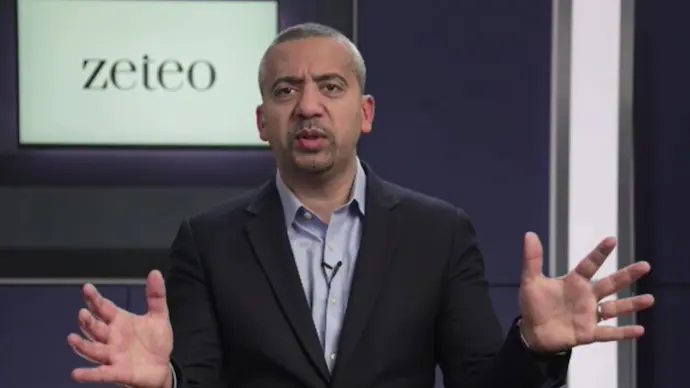
Abdul El-Sayed’s victory in Michigan’s US Senate race has renewed debate about the issues shaping American politics, particularly the growing importance of affordability, healthcare and economic inequality. Journalist and political commentator Mehdi Hasan believes the result demonstrated that a candidate can build support across communities by focusing on everyday economic concerns rather than relying primarily on identity-based appeal.
In an exclusive interview with India Today, Hasan, editor of digital news platform Zeteo and a critic of US President Donald Trump, argued that El-Sayed’s campaign connected with voters through a populist message centred on healthcare access, the cost of living and reducing the influence of wealthy donors in politics.
Hasan rejected the suggestion that El-Sayed’s victory could be explained mainly by his Muslim identity or support from Michigan’s Muslim community. Instead, he pointed to the candidate’s economic platform and ability to attract voters from different backgrounds.
“He ran on a very simple, tried and tested campaign for people who are mad,” Hasan said.
The distinction matters because El-Sayed’s victory came in a politically competitive state and followed a campaign in which his faith became a subject of public debate. Hasan’s assessment places the result within a broader discussion about whether economic populism is becoming more influential inside the Democratic Party.
Abdul El-Sayed Wins Michigan’s US Senate Race
Abdul El-Sayed, a former Michigan public health official, defeated Republican candidate Mike Rogers in the November 3, 2026, US midterm elections. His victory was projected by major news organisations on November 4, making him the first Muslim elected to the United States Senate.
One important distinction is that El-Sayed did not win Michigan’s gubernatorial election. He won the state’s open US Senate seat. The Democratic candidate projected to win the governor’s race was Jocelyn Benson, who defeated Republican John James.
El-Sayed’s Senate campaign followed an earlier attempt to enter Michigan politics. He had contested the Democratic gubernatorial primary in 2018 but did not secure the nomination. His 2026 Senate campaign placed him in a different political contest, one that attracted national attention because of its progressive platform and contentious primary campaign.
In the Democratic primary, El-Sayed defeated Representative Haley Stevens, who had backing from parts of the party establishment. The contest also drew attention because of substantial outside spending and disagreements over the candidates’ positions on Israel and other political issues.
During the general election, El-Sayed faced Rogers, a former Republican congressman. The campaign included attacks on El-Sayed’s political positions and Muslim identity, while the candidate continued to emphasise healthcare, economic concerns and campaign finance reform.
His victory therefore carried significance beyond the outcome of one Senate contest. It also gave progressives an important example to cite in their argument that candidates with ambitious economic platforms can compete successfully in politically divided states.
Why Hasan Says Economic Issues Mattered More Than Identity
Hasan’s central argument is that El-Sayed’s campaign addressed concerns that affect voters regardless of religion, ethnicity or political background. Healthcare expenses, household budgets, inflation and the influence of wealthy interests in government are issues that can connect with a broad electorate.
El-Sayed promoted policies including Medicare for All, expanded access to healthcare, reducing the role of money in politics and putting more money in people’s pockets. These proposals formed part of a wider message that government should respond more directly to the financial pressures facing ordinary Americans.
Hasan argued that this approach helped the candidate appeal beyond Michigan’s Muslim population. Muslims represent a relatively small share of the state’s overall population, making it difficult to explain a statewide Senate victory through Muslim support alone.
His point was not that identity played no role in the campaign. El-Sayed’s faith became a significant part of the political conversation, and he faced attacks that Hasan described as Islamophobic. Rather, Hasan argued that the candidate’s appeal extended beyond religious identity because his campaign concentrated on issues with wider public relevance.
This distinction is important when examining the political impact of minority candidates. A candidate’s background may shape how voters and opponents discuss an election, but the final result can also reflect policy preferences, party support, campaign organisation and the wider political environment.
El-Sayed’s victory does not establish that identity is irrelevant to American elections. It does, however, provide a basis for examining how economic messaging and a broad coalition of voters can influence the outcome of a competitive race.
Medicare for All and the Cost-of-Living Message
Healthcare was one of the most prominent elements of El-Sayed’s campaign. His support for Medicare for All placed him within the progressive wing of the Democratic Party, which has argued for a larger public role in ensuring access to medical care.
Healthcare costs are a major concern for American households because medical expenses can affect savings, employment decisions and the ability to manage other essential spending. For voters already dealing with higher prices for food, housing and transport, the cost of healthcare can add to financial pressure.
Hasan connected El-Sayed’s message to the wider cost-of-living debate. His argument was that voters respond to campaigns that directly address their economic difficulties, especially when they believe established political leaders have not provided convincing solutions.
The campaign’s focus on reducing the influence of money in politics also formed part of this message. El-Sayed presented political fundraising and wealthy donors as issues that affect whose interests receive attention in Washington.
For Hasan, this combination of economic proposals and criticism of concentrated political influence reflected a populist approach that has gained visibility within the Democratic Party. He compared El-Sayed’s campaign with that of New York politician Zohran Mamdani, whose political message also placed affordability and everyday economic concerns at its centre.
The comparison highlights a wider debate within the party: whether Democrats should place greater emphasis on economic policies that directly address household expenses and inequality, rather than relying primarily on opposition to Republican leadership.
Economic Populism Gains Influence Within the Democratic Party
Hasan believes economic populism has become increasingly prominent among Democratic politicians. He pointed to campaigns that challenge billionaires, large corporations and the influence of wealthy donors as evidence of a shift in the party’s political messaging.
He traced part of this development to Senator Bernie Sanders’s 2016 presidential campaign. Sanders placed economic inequality, universal healthcare, corporate influence and the power of wealthy individuals at the centre of his political platform.
At the time, several of these positions were viewed as outside the traditional Democratic establishment’s preferred approach. Over subsequent election cycles, however, issues associated with Sanders’s campaign became more visible in debates among Democratic candidates and lawmakers.
Hasan argued that El-Sayed’s campaign reflected this wider development. Rather than presenting economic inequality as a secondary issue, the candidate made healthcare, affordability and political money central to his appeal.
The debate also includes growing public scrutiny of artificial intelligence data centres. Their construction has raised questions about electricity consumption, water use, local infrastructure, employment and the distribution of economic benefits. Hasan pointed to opposition to data centres as another issue entering the wider conversation about corporate power and the economic consequences of technological expansion.
These concerns do not necessarily represent a single position across the Democratic Party. Different candidates and voters may support technological investment while seeking stronger safeguards on energy use, environmental effects and local costs. Nevertheless, the issue illustrates how economic populism is expanding into debates about new industries and infrastructure.
Iran War and Economic Pressure Behind Republican Setbacks
Hasan also linked the Republican Party’s poor performance in the 2026 midterm elections to the war involving Iran and its economic consequences. He argued that the conflict undermined Trump’s campaign promise to avoid new wars and contributed to higher costs for American households.
“The Iran war is the root of all evil when it comes to the failure of the Republicans to make any headway in these elections,” Hasan told India Today TV.
His assessment focused particularly on the effect of the conflict on fuel prices and the wider cost of living. Higher energy costs can influence transport expenses, household budgets and the price of goods that depend on fuel-intensive supply chains.
Hasan argued that the war made it harder for Trump to maintain his promise to reduce inflation and improve affordability. He also referred to Vice President JD Vance’s social media comments linking the Iran conflict to Republican electoral losses.
Economic concerns were prominent in polling conducted before and during the election period. A Reuters/Ipsos survey ahead of the November 3 vote found that the cost of living was the leading issue for registered voters, with 48% identifying it as their top voting concern. The economy, healthcare and the situation in Iran also featured prominently in other surveys of voter priorities.
Fox News polling after the election found that government corruption and the cost of living were among the main issues influencing voters. Concerns about fuel prices, groceries and healthcare also featured prominently in assessments of household finances.
These findings support the view that economic pressure was an important part of the election environment. They do not, on their own, prove that the Iran war caused the Republican losses. Voters make decisions based on multiple issues, and the influence of any single factor varies across groups and constituencies.
Corruption Emerges as Another Major Election Issue
Alongside economic pressure, Hasan identified corruption as a major concern for American voters. He said frustration with alleged misconduct, conflicts of interest and what he described as political profiteering in Washington had become an important part of the public debate.
Hasan referred to a Fox News poll conducted before the midterm elections that identified government corruption as a leading concern. The survey findings showed that voters were highly concerned about corruption, alongside inflation, fuel prices and healthcare.
“Americans are so fed up with the corruption they’re seeing, the grift in Washington, DC, that it was a top issue in a lot of polls,” he said.
His comments point to a challenge for the Trump administration as Democrats prepare to exercise greater oversight powers in Congress. Questions about government conduct, financial interests and the use of public office could become subjects of congressional investigations.
Hasan argued that Democrats should make scrutiny of alleged corruption a priority after taking control of both chambers of Congress. He believes investigations could provide a way to hold the administration and people associated with it accountable.
However, investigations require evidence, formal procedures and sustained congressional attention. Allegations must be examined through appropriate oversight processes rather than treated as established findings before the relevant facts have been established.
Democrats Face Questions About Their Congressional Majority
The midterm results gave Democrats control of both the House of Representatives and the Senate, creating a significant change in the balance of power in Washington. The victory gives the party greater ability to conduct congressional investigations, hold hearings and scrutinise executive branch decisions.
Hasan welcomed the electoral setback for Republicans as a source of hope for people opposing hate and division. At the same time, he expressed uncertainty about whether Democratic leaders would use their new congressional position effectively.
His concern is that winning control of Congress does not automatically mean the party will deliver on the promises made during the campaign. Democrats will have to decide which policies to prioritise and how to use their oversight powers while dealing with a president who remains in office.
Congressional control also has limits. Even with majorities in both chambers, Democrats would face the presidential veto and the administration’s executive powers. Passing major legislation would require navigating those obstacles, while investigations could become one of the more immediate ways to challenge the government.
The challenge is therefore twofold: demonstrate that the party can respond to voters’ economic concerns and use its new institutional position to scrutinise the administration.
Why Hasan Does Not See Trumpism Ending After the Midterms
Despite the Republican setbacks, Hasan warned against interpreting the results as the end of Trumpism or the Make America Great Again movement. He argued that the political movement built around Trump has developed a following and organisational influence that will continue beyond a single election cycle.
“Trumpism, MAGA, this neo-fascist movement, will be with us for a long time to come. It may even get worse,” Hasan said.
His assessment reflects the view that Trump’s political influence is not limited to his current administration. The movement has shaped Republican campaigning, political communication and debates over immigration, national identity, foreign policy and the role of government.
Hasan also expressed concern about younger Republican politicians and activists who entered political life during Trump’s rise. In his view, some members of this generation could adopt positions further to the right than those associated with the President himself.
Trump’s presidential term is scheduled to continue until January 2029. That means Democrats will have to deal with his administration for more than two years after the midterm elections, even as they gain greater influence in Congress.
Hasan said the period ahead would be crucial for Democrats to present an alternative approach to governance. He argued that the party would need to demonstrate that its economic proposals can offer a credible response to voters’ concerns while also providing checks on presidential power.
Hasan Questions Whether Democrats Should Pursue Impeachment
The interview also addressed whether Democrats might attempt to impeach Trump after gaining control of Congress. Hasan said Democratic leaders were not particularly keen on pursuing impeachment, partly because removing a president requires a two-thirds majority in the Senate for conviction.
Even with control of both chambers, Democrats would not automatically have the votes required to remove Trump from office. This makes the political and practical calculations around impeachment different from those involved in launching congressional investigations.
Hasan suggested that Democrats could instead concentrate on investigating members of the administration and individuals close to the President. Among the figures he named were Defence Secretary Pete Hegseth, Health Secretary Robert F. Kennedy Jr., White House aide Stephen Miller and Trump’s son-in-law Jared Kushner.
His argument was that Democrats should use their limited time and congressional resources to pursue investigations where they believe there may be a clearer path to obtaining information and establishing accountability.
Any investigation would still need to follow congressional procedures and be based on evidence. Naming public officials as possible subjects of scrutiny does not establish that they have committed wrongdoing.
What El-Sayed’s Victory Means for the Future of Democratic Politics
El-Sayed’s Senate victory has given supporters of economic populism a significant result to point to as the Democratic Party debates its future direction. His campaign placed healthcare, economic inequality and political fundraising at the centre of its message, while his personal identity became part of the wider national conversation.
Hasan’s interpretation is that the economic message helped El-Sayed build a coalition that extended beyond Muslim voters. The result also fits into a wider election in which affordability, corruption and dissatisfaction with the administration featured prominently.
However, one Senate victory cannot establish that every Democratic candidate should follow the same campaign strategy. Michigan’s political environment, El-Sayed’s background, the Republican opponent and the wider national mood all contributed to the circumstances of the contest.
The broader question for Democrats is whether they can turn electoral gains into policies that address the concerns voters have raised. Healthcare costs, inflation, fuel prices and household financial pressures are issues that require sustained attention beyond election campaigns.
For Hasan, the Republican losses offer an opportunity for Democrats to challenge the Trump administration, but the party’s response will determine how much political significance the midterm results ultimately carry. His comments underline a central tension in American politics: voters may punish an administration over economic and governance concerns, but the opposition must still demonstrate that it can provide a convincing alternative.
El-Sayed’s victory has therefore become part of a larger debate about identity, economic populism and the direction of the Democratic Party. Hasan’s message is that the campaign’s affordability-focused approach deserves attention, while the election results also place new responsibilities on Democrats to investigate alleged misconduct and respond to the economic pressures facing American households.
For breaking news and live news updates, like us on Facebook or follow us on Twitter and Instagram. Read more on Latest World on thefoxdaily.com.






COMMENTS 0