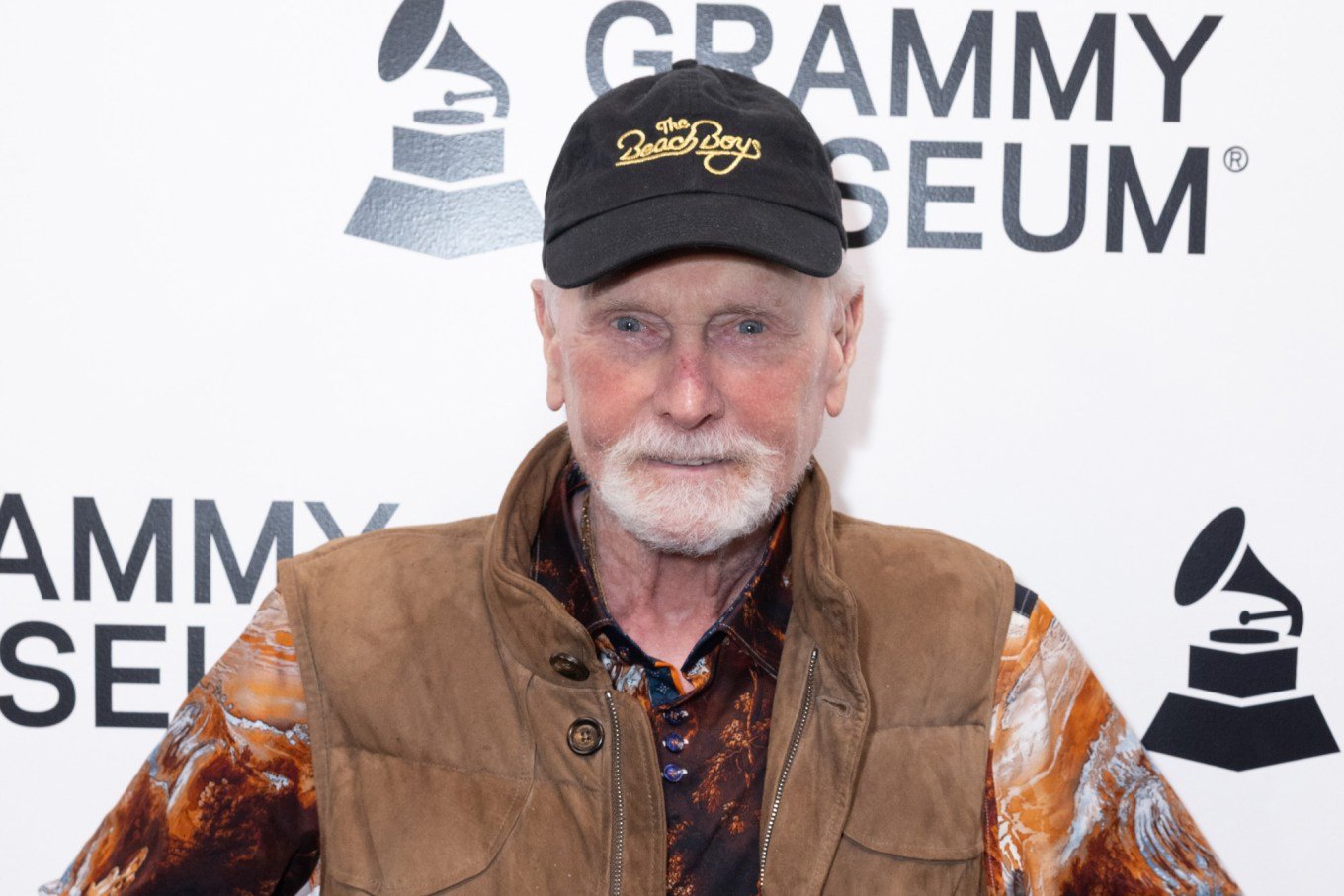
Mike Love, the founding member and longtime frontman of the Beach Boys who helped shape the sound of American pop music through songs including “Good Vibrations,” “Wouldn’t It Be Nice” and “Surfin’,” has died at the age of 85. Love died on Saturday, surrounded by his family, his spokesperson confirmed in a statement. His death marks the end of an era for one of the most influential bands in American music history.
Love was central to the Beach Boys from their formation in Southern California in 1961. As a vocalist, lyricist and co-writer, he helped establish the group’s distinctive harmonies and early surf-pop identity before its music evolved into more ambitious studio recordings. His career also included decades of touring, a major legal battle over the band’s name and a complicated relationship with fellow founding members, particularly his cousin Brian Wilson.
No cause of death was immediately announced. People close to Love had previously indicated that he was facing an unspecified health condition, with actor and longtime musical collaborator John Stamos expressing concern about his health weeks before his death.
Mike Love Helped Build the Beach Boys in 1961
Born into a musical family, Love frequently sang with his cousin Brian Wilson at family gatherings and holiday celebrations. That shared interest eventually developed into one of the most successful musical partnerships of the 1960s.
In 1961, Love joined Brian Wilson, Dennis Wilson and Carl Wilson, along with neighbour David Marks and Brian’s high school friend Alan Jardine, to form the Beach Boys in Los Angeles’ South Bay region. The group’s early identity was closely connected to Southern California’s youth culture, particularly surfing, cars, romance and the carefree image associated with the region.
The Wilson brothers attended Hawthorne High School, while Love went to school in Southwest Los Angeles. Their shared surroundings helped shape the band’s early musical themes, although the group’s association with surfing was not entirely representative of its members’ personal interests.
Dennis Wilson was reportedly the only genuine surfing enthusiast among the original members. According to Surfer magazine, his brothers and Love had tried the sport but did not continue with it. Nevertheless, the band’s music became closely associated with the surfing movement that gained popularity in the early 1960s, helped by Hollywood beach films and the growing appeal of California youth culture.
‘Surfin’ Helped Launch the Band’s Recording Career
One of Love’s earliest major contributions came in the fall of 1961, when he and Brian Wilson wrote “Surfin’.” The song captured the emerging California beach culture and helped establish the musical direction that would make the Beach Boys nationally recognised.
According to Love’s official biography, the track played a key role in securing the band’s recording deal with Capitol Records. That agreement gave the group a platform to reach a much wider audience and begin building a catalogue that would eventually become part of American popular music history.
The Beach Boys quickly became known for their vocal harmonies, melodic arrangements and songs centred on youthful freedom and Southern California lifestyles. Tracks such as “Surfin’,” “Surfin’ Safari,” “Fun, Fun, Fun” and “I Get Around” helped establish their commercial success.
Love’s vocal presence and songwriting contributions were important to that identity. His performances helped give the group a recognisable sound, while his lyrical work often reflected the accessible themes that connected the band’s early music with a generation of listeners.
From Surf-Pop to the Ambition of ‘Pet Sounds’
Although the Beach Boys became famous for upbeat songs about beaches, cars and teenage life, the group’s musical ambitions extended well beyond that image. By the middle of the 1960s, Brian Wilson was pursuing more complex arrangements and sophisticated studio production, placing the band in direct competition with the rapidly changing British rock scene.
The rivalry with the Beatles became one of the defining musical competitions of the era. As British groups reshaped popular music in the United States, the Beach Boys sought to demonstrate that American rock could match and even surpass the artistic ambition emerging from the United Kingdom.
That ambition reached a landmark with the release of Pet Sounds in 1966. Conceived largely by Brian Wilson, the album moved the group away from its earlier surf-pop formula through elaborate orchestration, layered harmonies, unconventional instrumentation and more introspective songwriting.
Wilson initially viewed the project as an effort to create something that could compete with the Beatles’ Rubber Soul. The result became one of the most influential albums in popular music, helping establish the idea of the rock album as a unified artistic statement rather than simply a collection of individual hit songs.
Rolling Stone later placed Pet Sounds at No. 2 on its list of the 500 Greatest Albums of All Time. The magazine praised its orchestration, lyrical ambition, pacing and thematic consistency, describing its influence on the development of album-oriented rock.
The album’s opening track, “Wouldn’t It Be Nice,” captured the emotional maturity that distinguished the record from the band’s earlier material. Its lyrics explored the desire for adulthood and a deeper romantic relationship, reflecting a more reflective approach to songwriting.
Love later recalled that Capitol Records initially struggled to understand the album. The label had become accustomed to the band’s commercially successful beach-themed songs and was uncertain how to promote a more experimental project.
In an Instagram post earlier in 2026, Love wrote that Capitol’s A&R and promotional teams did not know what to do when the band presented Pet Sounds. He said it took decades for the album to achieve the level of popularity it deserved.
The Beach Boys’ Rivalry With the Beatles Defined an Era
The competition between the Beach Boys and the Beatles was about more than record sales. Both groups were pushing the boundaries of popular music, influencing one another and challenging the expectations of what a successful rock band could achieve.
The Beatles’ growing experimentation encouraged artists across the world to explore new sounds and recording techniques. Brian Wilson’s work on Pet Sounds demonstrated that the Beach Boys were pursuing a similarly ambitious direction, even as their musical identities remained distinct.
The album’s critical reputation has continued to grow over the decades. Its placement near the top of Rolling Stone’s all-time album ranking reflects its enduring influence on musicians, producers and listeners.
Love was part of the band during this transformation, even as his musical preferences and approach sometimes differed from Wilson’s. Their creative relationship was productive but frequently complicated, contributing to the tensions that would shape the Beach Boys’ later history.
‘Kokomo’ Gave the Beach Boys Another No. 1 Hit
Love’s songwriting career extended well beyond the band’s early 1960s success. In 1988, he co-wrote “Kokomo,” which became another major commercial milestone for the Beach Boys.
The song reached No. 1 on the Billboard Hot 100, giving the group its first chart-topping single since “I Get Around” in 1964. Billboard noted that the 24-year gap between the two No. 1 hits was the longest such interval at the time.
“Kokomo” introduced the Beach Boys to another generation of listeners and demonstrated that the group could still achieve mainstream success decades after its formation. Its popularity also reinforced Love’s position as a central figure in the band’s commercial identity.
The song became one of the most recognisable late-career hits associated with the group, extending a catalogue that had already influenced several generations of pop and rock musicians.
Love Continued Touring Under the Beach Boys Name
As the original members gradually moved in different directions, Love became the only surviving relative among the Wilson cousins to continue performing under the Beach Boys name. He held legal ownership of the band’s name and led a touring version of the group for many years, even without the participation of the other original co-founders.
His version of the Beach Boys maintained an extensive touring schedule, performing the band’s best-known songs for audiences across the United States and internationally. Love also brought his son, Christian Love, a singer, songwriter and guitarist, into the touring lineup.
One of the most notable performances associated with Love’s touring group took place on July 4, 1985. The Beach Boys performed large-scale shows in Philadelphia and at the National Mall in Washington, DC. Love’s official biography described the combined attendance as a then-record for a rock act performing in a single day, estimated at 1.5 million people.
His continued use of the Beach Boys name also became a source of conflict. The band’s legacy was shared by several founding members, but the legal ownership and touring rights created disputes over who could represent the group and perform under its name.
Legal Disputes and Tensions With Fellow Band Members
Love was known for a forceful and sometimes contentious personality. His disagreements with other musicians were not limited to creative differences within the Beach Boys. He also became involved in legal disputes over the band’s identity and performance rights.
One prominent conflict involved Alan Jardine, another founding member. Their dispute over the use of the Beach Boys name became part of the wider disagreement over how the group’s legacy should be represented after its original lineup had changed.
Love also attracted attention for his outspoken remarks about fellow music stars during the Beach Boys’ induction into the Rock & Roll Hall of Fame in 1988. His acceptance speech included criticism of artists such as Diana Ross, Paul McCartney and Mick Jagger.
The remarks were memorable enough to prompt a response from Bob Dylan, who later joked that he was glad Love had not mentioned him. The episode reflected the outspoken side of Love’s public personality, which could be as controversial as his musical career was influential.
Despite their disagreements, the original surviving members reunited for a major tour in 2012 to mark the Beach Boys’ 50th anniversary. It was their first tour together since 1965 and brought the band’s founding lineup back into the spotlight for a new generation of fans.
Brian Wilson and Mike Love: A Complicated Musical Partnership
Love’s relationship with Brian Wilson was central to the Beach Boys’ success but was also marked by repeated disagreements. The two cousins had helped establish the group and contributed to some of its most enduring music, yet their creative approaches and personal views often diverged.
Wilson became increasingly associated with the band’s experimental musical direction, while Love remained closely connected to its touring identity and accessible pop sound. Their differences reflected broader tensions within the group over artistic control, commercial expectations and the future of the Beach Boys.
Their public identities also developed in different political directions. Wilson was known for criticising contemporary conservative politics, while Love was regarded as a supporter of conservative causes. Their contrasting views became another visible dimension of a relationship that had long been shaped by both collaboration and conflict.
Brian Wilson died in 2025. Dennis Wilson had died in 1983, while Carl Wilson died in 1998. Love’s death leaves another major chapter of the original Beach Boys era behind.
Transcendental Meditation Became a Lifelong Practice
Outside music, Love developed a long-standing interest in transcendental meditation. He traced the beginning of that commitment to 1967, when the Beach Boys were invited to perform at a United Nations Children’s Fund benefit.
During that period, Love met Maharishi Mahesh Yogi, along with Beatles members George Harrison and John Lennon. Love’s official biography states that, at Maharishi’s invitation, he joined Carl Wilson, Alan Jardine and Dennis Wilson in being initiated into transcendental meditation.
Love later described the practice as a lifelong part of his personal life. His interest in meditation became one of the defining elements of his identity beyond the stage, connecting his musical career with the wider cultural interest in Eastern spiritual practices that influenced several prominent musicians during the 1960s.
John Stamos and Alan Jardine React to Love’s Death
Tributes began emerging after news of Love’s death on Saturday, including messages from people who had known and worked with him for decades.
Actor John Stamos, who performed with the Beach Boys for many years, had expressed concern about Love’s health on Instagram approximately six weeks before his death. Stamos said Love was facing serious health challenges but continued to insist on performing.
According to Stamos, Love wanted to remain on stage because he needed the support of the band, his friends and audiences. The actor suggested that performing gave the musician a source of strength during a difficult period.
After Love’s death was announced, Stamos shared artwork he had created in the musician’s honour. He wrote that he would cry himself to sleep, adding that much of his life had been spent celebrating the joy Love brought to others.
Alan Jardine also paid tribute. On November 17, Jardine had published an open letter to Love on Facebook, expressing concern and wishing him a recovery. He ended the message with a reference to the Beach Boys’ music, sending him “the warmth of the sun and Good Vibes.”
Following the announcement of Love’s death, Jardine sent condolences to Love’s wife, family, friends and fans around the world.
Grammy Recognition and Rock & Roll Hall of Fame Legacy
The Beach Boys received four Grammy Award nominations during their career and were inducted into the Rock & Roll Hall of Fame in 1988. Their influence extended across surf rock, pop, vocal harmony and studio experimentation, making them one of the most important American bands of the postwar era.
Love also received recognition for his songwriting contributions. He was inducted into the Songwriters Hall of Fame in 2025, honouring his role in creating music that became part of the American cultural landscape.
His contributions included work on songs that helped define the Beach Boys’ early identity as well as later hits that sustained the group’s commercial relevance. His ability to combine memorable melodies with accessible lyrics helped make the band’s music widely recognisable across generations.
Mike Love Is Survived by His Wife and Eight Children
Love is survived by his wife, Jacquelyne Love, and eight children, according to his official biography. His spokesperson confirmed that he died surrounded by family but did not immediately disclose a cause of death.
In a statement, the spokesperson described Love as an American cultural icon whose talent and influence inspired generations of musicians. The statement also highlighted the joy he found in performing for his fans.
For more than six decades, Love remained closely connected to the Beach Boys’ music and public identity. His career included the group’s rise from a local Southern California act to an internationally recognised band, its transformation into a major artistic force, and the decades of touring that kept its songs alive for audiences around the world.
His legacy will remain closely tied to the Beach Boys’ defining recordings, from the early surf-pop sound of “Surfin’” to the enduring appeal of “Good Vibrations,” “Wouldn’t It Be Nice” and “Kokomo.” His death at 85 marks the passing of a founding voice of a band that helped shape the sound and cultural identity of American popular music.
For breaking news and live news updates, like us on Facebook or follow us on Twitter and Instagram. Read more on Latest World on thefoxdaily.com.






COMMENTS 0