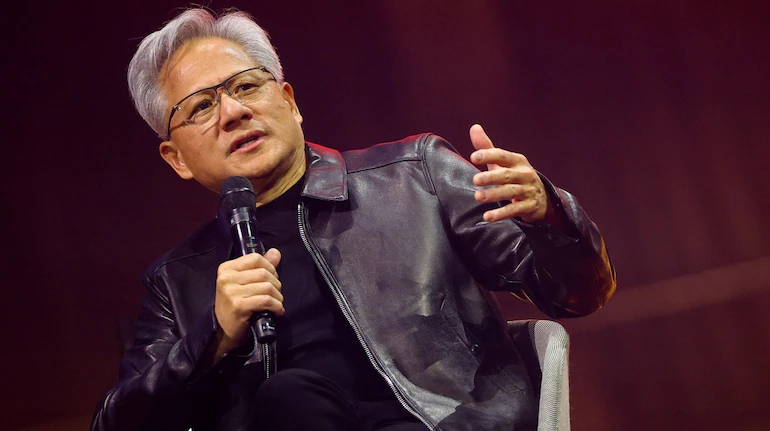
Nvidia chief executive Jensen Huang is due to face questioning by US lawmakers on December 1, 2026, as Congress examines allegations involving the diversion of advanced artificial intelligence chips to China, possible links to Chinese intelligence and the security risks surrounding the semiconductor industry. The closed-door session will bring Huang before three Republican-led House committees responsible for foreign affairs, intelligence and China-related investigations.
The scrutiny comes amid a wider controversy involving Megaspeed, a Singapore-based company linked to the alleged movement of restricted Nvidia chips into China, and its former executive Alice Huang, who has been described in reports and by lawmakers as a suspected Chinese intelligence asset. The allegations have intensified questions about Nvidia’s export-control safeguards, the protection of sensitive technology and the extent of the company’s exposure to foreign intelligence activity.
Why three House committees want answers from Huang
The joint questioning is being organised by the House Foreign Affairs Committee, the House Permanent Select Committee on Intelligence and the Select Committee on China. Their chairmen have raised concerns about Nvidia’s security procedures and the possibility that restricted American technology may have reached Chinese companies or organisations with military connections.
In a joint statement, the committee leaders said Nvidia’s internal investigation and Huang’s return to the chief executive position did not resolve the national security questions surrounding the controversy. They want explanations about the alleged smuggling of Nvidia products, their possible diversion for Chinese military purposes and their role in strengthening China’s artificial intelligence capabilities.
The lawmakers are particularly interested in understanding how advanced Nvidia processors could have been diverted despite US export restrictions. Such chips are important because they provide the computing power needed to train and operate sophisticated AI systems, including applications with potential military and intelligence uses.
The committees’ inquiry is therefore broader than Huang’s personal relationships. It also concerns whether Nvidia’s internal controls, customer checks and security procedures were sufficient to prevent restricted technology or sensitive information from reaching unauthorised parties.
How the Megaspeed controversy brought Nvidia under scrutiny
At the centre of the allegations is Megaspeed, a Singapore-based company that has been linked to the movement of advanced Nvidia chips towards China. Alice Huang, a former executive associated with the company, has reportedly attracted the attention of US intelligence agencies over suspected connections to Chinese intelligence.
Reports have alleged that Alice Huang had a personal relationship with Jensen Huang. Those reports have raised questions about whether any professional interactions or access to sensitive information could have created a security vulnerability. However, allegations about intelligence links and possible information transfers should not be treated as established findings. The investigation has not publicly demonstrated that Jensen Huang knowingly assisted a foreign intelligence operation.
Another major concern is the alleged diversion of restricted Nvidia processors. US export controls are designed to prevent advanced computing technology from reaching destinations or end users considered security risks. Investigators and lawmakers want to establish whether chips supplied through intermediaries or overseas companies were subsequently transferred to prohibited customers in China.
The distinction between legitimate commercial sales and unlawful diversion is important. A company may sell computing equipment to an overseas customer without knowing that it will later be transferred to another buyer. The central question for investigators is whether the companies involved followed the required checks and whether warning signs were ignored.
The House committees are seeking information about Nvidia’s customer-screening practices, its monitoring of overseas business relationships and the safeguards it uses to protect sensitive technology. The questioning could also help lawmakers assess whether existing export-control rules are adequate for a market in which advanced AI processors can be distributed through complex international supply chains.
Huang’s resignation and unexpected return as Nvidia CEO
The congressional scrutiny intensified after Huang resigned as Nvidia’s chief executive on November 12, 2026, following reports about multiple extramarital relationships, including one involving Alice Huang. Nvidia’s board accepted his resignation and appointed chief financial officer Colette Kress as interim CEO while it considered a permanent leadership arrangement.
The leadership change proved short-lived. On November 23, Nvidia announced that its board had reinstated Huang as president and chief executive with immediate effect. The decision came after an abrupt reversal in the board’s position and less than two weeks after his departure.
The company said its board had received input from senior levels of the US government before reaching its decision. Based on that input, the board said it was confident Huang’s reinstatement did not pose a national security risk.
Huang also expressed his willingness to return, saying he was honoured to lead Nvidia again and would approach the responsibility with renewed commitment. Colette Kress returned to her position as executive vice president and chief financial officer.
The reinstatement, however, did not end the controversy. Some lawmakers questioned why the board had reversed its earlier position while investigations into the allegations remained unfinished. Others argued that the company’s decision should not prevent Congress from examining potential national security risks independently.
Trump administration’s involvement draws political criticism
President Donald Trump’s role in Huang’s return has become another point of contention in Washington. Trump publicly expressed support for the Nvidia chief and acknowledged intervening in discussions surrounding the board’s decision.
The administration’s involvement has attracted criticism from lawmakers who want to understand what assurances were provided to Nvidia and whether government officials had examined the national security concerns before supporting Huang’s reinstatement.
Republican criticism has been particularly notable because the three House committees pursuing the questioning are led by members of Trump’s own party. Their investigation reflects concerns that access to advanced American technology could strengthen China’s military and artificial intelligence capabilities, regardless of the political circumstances surrounding Nvidia’s leadership.
Outgoing Republican Congressman Don Bacon also criticised the board’s decision publicly, arguing that Nvidia should have moved forward without Huang. He called on Congress to establish who had approved high-end computer chip sales to China and questioned the consistency of US policy towards competing with Beijing in artificial intelligence.
Democrats have also called for a wider examination of the controversy. Senate Democratic leader Chuck Schumer said his party intended to investigate potential wrongdoing involving the Trump administration, Huang, other Nvidia executives and anyone who may have compromised American national security for financial gain.
The political disagreement is therefore not limited to the question of Huang’s personal conduct. It extends to the administration’s handling of export controls, the independence of corporate decision-making and the government’s responsibility to prevent sensitive technology from reaching strategic competitors.
Nvidia general counsel Tim Teter also faces questioning
Huang will not be the only Nvidia representative expected to answer questions from lawmakers. The company’s general counsel, Tim Teter, is scheduled to appear before the same three House committees on December 2, one day after Huang’s closed-door interview.
Teter’s participation is significant because the investigation involves questions about corporate compliance, export-control procedures and the company’s response to potential security risks. As general counsel, he is positioned to address legal and regulatory issues surrounding Nvidia’s business operations.
The committees may seek details about how Nvidia evaluates customers, responds to concerns involving overseas partners and handles information about possible violations of US export restrictions. They may also examine what the company’s internal investigations have established so far.
The questioning of both the chief executive and general counsel could give lawmakers a clearer picture of how Nvidia’s leadership and legal teams handled the allegations. However, because the House sessions are closed-door interviews, the full details of their discussions may not immediately become public.
Public Senate hearing scheduled for December 3
Huang is also scheduled to appear before the US Senate Banking Committee on December 3 for a public hearing focused on oversight of American export controls. The session will provide a separate opportunity for lawmakers to question him about Nvidia’s business in China and the national security implications of advanced chip exports.
The Senate hearing is particularly relevant because export restrictions are a central part of Washington’s efforts to limit China’s access to advanced computing technology. Lawmakers have been debating whether existing rules adequately track the movement of high-performance processors and prevent their use by prohibited customers.
Some senators have supported proposals that would require stronger tracking of advanced chips and reporting when companies suspect that products have been diverted to restricted users. Such measures could increase compliance responsibilities for semiconductor manufacturers and other companies involved in the AI supply chain.
The public nature of the Senate session means Huang’s answers will receive wider attention than the closed-door House interviews. It could also bring the debate over Nvidia’s commercial interests, America’s technology policy and China’s access to advanced processors into sharper public focus.
Why advanced Nvidia chips are a national security concern
Nvidia’s processors have become central to the global artificial intelligence industry. High-performance graphics processing units and related computing systems are used to train large AI models, operate data centres and support applications across research, business and government.
The same computing capabilities can also be relevant to military research, intelligence analysis, surveillance systems and other advanced technological applications. This is why the US government has imposed restrictions on exports of certain high-end chips and related technology to China.
Washington’s concern is that access to advanced processors could help Chinese organisations develop more powerful AI systems and reduce the technological gap with the United States. The restrictions are intended to limit that access while allowing permitted commercial activity to continue under specified conditions.
However, controlling the international movement of advanced chips is difficult. Semiconductor supply chains involve manufacturers, distributors, cloud-computing providers, data-centre operators and customers spread across several countries. A processor sold to an authorised overseas customer may potentially be transferred or made available to another user through a different commercial arrangement.
That complexity is one reason lawmakers are examining the role of intermediaries and overseas technology companies. The Megaspeed allegations have brought renewed attention to whether existing safeguards can identify suspicious transactions before restricted hardware reaches an unauthorised destination.
Market uncertainty adds pressure on Nvidia
The congressional scrutiny comes at a sensitive time for Nvidia and the wider technology sector. The company’s shares and the broader AI trade have faced volatility amid concerns about technology valuations, export restrictions, corporate governance and the sustainability of investment in AI infrastructure.
Huang’s resignation and subsequent reinstatement added another source of uncertainty. Investors are watching whether the controversy could affect Nvidia’s relationships with customers, regulators and government agencies, particularly as the company remains central to the global AI computing market.
Technology analyst Dan Ives described the period ahead as a “rollercoaster ride” and suggested that Huang would be carrying significant expectations when he appeared in Washington. The hearings could influence how investors assess the risks surrounding Nvidia and the broader AI industry.
However, the immediate market impact will depend on what emerges from the questioning, whether investigators identify evidence of regulatory violations and whether lawmakers propose additional restrictions on chip exports. The allegations alone do not establish that Nvidia knowingly supplied restricted technology to prohibited users.
More investigations could follow in 2027
The political scrutiny may continue beyond the December hearings. Democrats are expected to take control of both chambers of Congress in January 2027, creating the possibility of additional investigations into Nvidia, the Trump administration and the government’s handling of advanced technology exports.
Schumer has indicated that Democratic lawmakers intend to examine whether any individuals or companies acted improperly and whether national security concerns were adequately addressed. The party has also signalled interest in investigating the administration’s role in Huang’s reinstatement.
Republican lawmakers, meanwhile, are already seeking answers about alleged chip smuggling, possible transfers to Chinese military-linked users and Nvidia’s safeguards against foreign intelligence activity. The extent to which the two parties agree on stronger export controls could shape the next phase of the debate.
For Nvidia, the challenge is to demonstrate that its business practices comply with US regulations and that its security systems can protect sensitive technology. For Congress, the immediate task is to establish what happened, assess whether existing rules were followed and determine whether additional safeguards are necessary.
Huang’s December appearances will therefore carry significance beyond the future of one company’s leadership. They will test how the United States balances its ambition to maintain an advantage in artificial intelligence with the commercial interests of its most important chipmakers and the national security risks posed by the global movement of advanced computing technology.
For breaking news and live news updates, like us on Facebook or follow us on Twitter and Instagram. Read more on Latest World on thefoxdaily.com.



COMMENTS 0