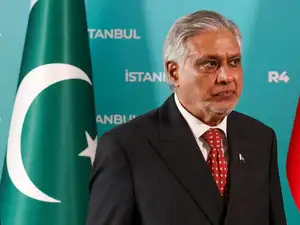
Pakistan’s Deputy Prime Minister and Foreign Minister Ishaq Dar has said that the Makkah Joint Defence Agreement involving Pakistan, Saudi Arabia and Turkiye is not directed against any particular country. He described the arrangement as an effort to strengthen collective security and support regional stability amid continuing geopolitical tensions.
Dar’s remarks underline Islamabad’s position that the defence understanding is intended to improve cooperation among participating countries rather than create a military arrangement aimed at a specific external power. He also highlighted Pakistan’s stated commitment to maintaining a balanced foreign policy while navigating an increasingly complex regional environment.
Pakistan Says Defence Agreement Is Focused on Regional Stability
Addressing the purpose of the Makkah Joint Defence Agreement, Dar emphasised that the arrangement should not be interpreted as a move against any country. According to his remarks, its central objective is to enhance cooperation on shared security concerns and contribute to stability in the region.
The statement comes against a backdrop of geopolitical tensions and security challenges affecting different parts of the region. Defence cooperation between countries can involve closer coordination on matters of mutual concern, but Dar’s comments sought to distinguish the agreement’s stated purpose from an alliance directed against an outside state.
His emphasis on collective security also reflects Pakistan’s position that regional challenges require cooperation between countries. However, the available details do not specify the agreement’s operational arrangements, military commitments or the precise mechanisms through which participating countries would coordinate their defence policies.
Dar Highlights Pakistan’s Balanced Foreign Policy
Dar also referred to Pakistan’s balanced foreign policy approach while discussing the wider geopolitical environment. Islamabad faces the challenge of managing relationships with regional and international partners while addressing security concerns that affect its neighbourhood.
By describing the defence agreement as non-targeted, Dar sought to present Pakistan’s participation as part of a broader regional security effort rather than an attempt to deepen divisions between countries. The position also places emphasis on cooperation and stability at a time when diplomatic and security developments continue to influence relations across the region.
Pakistan’s foreign policy discussions frequently involve questions of regional security, diplomatic engagement and its relationships with neighbouring countries. Dar’s remarks connect the Makkah arrangement to these wider priorities, although he did not provide further details about how the agreement would affect Pakistan’s existing diplomatic commitments.
Jammu and Kashmir and Palestine Remain Key Regional Issues
Dar also addressed the continuing situations in Jammu and Kashmir and Palestine, identifying them as important regional issues. Both remain prominent subjects in Pakistan’s diplomatic statements and international engagement.
Jammu and Kashmir has been a longstanding source of tension between India and Pakistan. The two countries maintain different positions on the region, and developments there continue to feature in their bilateral relationship.
Palestine is another major issue in Pakistan’s foreign policy. Islamabad has consistently raised the Palestinian question in its diplomatic engagement, particularly in discussions concerning the conflict and the broader political future of the Palestinian people.
By bringing these issues into the discussion, Dar placed the defence agreement within a wider regional context that extends beyond military cooperation. His remarks highlighted the importance Pakistan attaches to security and political developments affecting the Middle East and South Asia.
What the Makkah Agreement Means for Regional Cooperation
The Makkah Joint Defence Agreement brings Pakistan, Saudi Arabia and Turkiye into a shared defence-cooperation framework. Dar’s statement that it is not directed against any country is an important part of Islamabad’s public explanation of the arrangement.
At the same time, the agreement’s practical significance will depend on its provisions and how the participating countries implement them. Details about joint exercises, intelligence coordination, defence planning or specific mutual assistance commitments were not provided in the available information.
For now, Dar’s comments establish Pakistan’s stated position: the agreement is intended to promote collective security and regional stability, not to target another country. His remarks also reflect Islamabad’s effort to connect defence cooperation with a wider diplomatic approach that addresses regional tensions while maintaining relations with international partners.
Why the Agreement Is Drawing Attention
Defence cooperation among Pakistan, Saudi Arabia and Turkiye is significant because the three countries have important roles in their respective regional security environments. Any closer coordination between them is likely to attract attention as governments assess the potential implications for regional diplomacy and security.
However, the agreement should not automatically be interpreted as a new military bloc or as evidence of preparations against a particular country. Dar has explicitly rejected that interpretation. A clearer assessment of its implications will require further information about the agreement’s terms, institutional structure and implementation.
His statement therefore places the focus on the stated objectives of the arrangement: collective security, cooperation and regional stability. The unresolved situations in Jammu and Kashmir and Palestine, which Dar also highlighted, remain part of the broader geopolitical concerns shaping Pakistan’s diplomatic priorities.
For breaking news and live news updates, like us on Facebook or follow us on Twitter and Instagram. Read more on Latest World on thefoxdaily.com.




COMMENTS 0