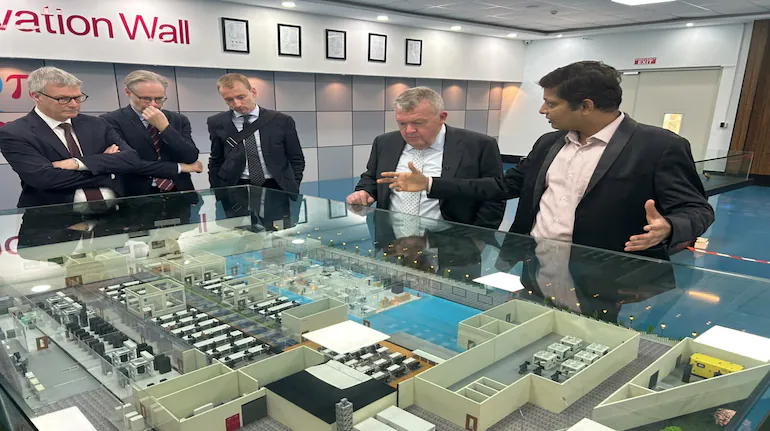
Denmark‘s Foreign Minister Lars Løkke Rasmussen visited Bengaluru to strengthen Technology cooperation between Denmark and India, explore opportunities for industrial collaboration and attract skilled Indian professionals. During the visit, he met Karnataka’s IT Minister Priyank Kharge and toured several prominent Indian research and technology institutions, including the Indian Space Research Organisation (ISRO), Hindustan Aeronautics Limited (HAL), C-CAMP and QpiAI.
The discussions focused on potential cooperation across areas such as space technology, quantum computing, biotechnology, defence and innovation. The visit reflects growing interest in expanding technology partnerships between the two countries, particularly by connecting India’s research capabilities and skilled workforce with Denmark’s technology and industrial ecosystem.
Rasmussen’s Bengaluru programme also included the launch of a report aimed at attracting skilled Indian technology professionals to Denmark. The initiative highlights the importance of talent mobility alongside institutional and commercial partnerships in strengthening bilateral technology relations.
Bengaluru Visit Focuses on Expanding India-Denmark Technology Cooperation
Bengaluru’s position as one of India’s leading technology and research centres made it a significant destination for the Danish foreign minister’s visit. The city has a strong presence in information technology, aerospace, biotechnology, advanced engineering and emerging technologies.
Rasmussen’s meeting with Karnataka IT Minister Priyank Kharge provided an opportunity to discuss areas where Danish companies and institutions could work with Karnataka’s technology ecosystem. Potential cooperation includes research partnerships, industrial innovation and opportunities for businesses operating in specialised technology sectors.
For Denmark, collaboration with Bengaluru offers access to a large pool of technology companies, research organisations, startups and skilled professionals. For Indian institutions, stronger engagement with Danish partners could create opportunities to explore international research networks, technology development and commercial applications.
The discussions also reflect the broader scope of India-Denmark relations. Cooperation is not limited to conventional trade and investment but increasingly includes advanced technology, research, innovation and the movement of skilled professionals.
Visits to ISRO and HAL Highlight Space and Defence Opportunities
Rasmussen’s visits to ISRO and HAL brought attention to the potential for collaboration in space technology, aerospace and defence-related innovation.
ISRO is India’s national space agency and has developed capabilities across satellite technology, launch vehicles, space applications and scientific missions. Its work has contributed to India’s position in the global space sector. Engagement with international technology partners can create opportunities for research exchanges, specialised components and cooperation in areas where technical capabilities complement each other.
Denmark’s interest in exploring space-related cooperation comes amid wider international efforts to develop advanced satellite systems, space applications and supporting technologies. Potential areas of engagement could include research, engineering and the development of technologies with commercial or scientific applications. However, any specific projects or agreements would depend on subsequent discussions between the relevant institutions.
The visit to Hindustan Aeronautics Limited also highlighted the importance of aerospace and defence manufacturing in the bilateral technology conversation. HAL is a major Indian aerospace and defence company involved in aircraft, helicopters and related systems.
Collaboration in these sectors can involve advanced manufacturing, engineering, research and specialised technological capabilities. Such partnerships generally require careful consideration of technical standards, regulatory requirements and security-related conditions.
The visits provided an opportunity for the Danish delegation to understand India’s industrial and research capabilities directly, while exploring possible areas where the two countries could develop stronger institutional connections.
C-CAMP Visit Brings Biotechnology and Life Sciences Into Focus
The Danish foreign minister’s programme also included a visit to C-CAMP, the Centre for Cellular and Molecular Platforms. The Bengaluru-based organisation supports research, innovation and entrepreneurship in areas connected to life sciences and biotechnology.
Biotechnology is an important area of potential cooperation because it brings together scientific research, healthcare applications, specialised equipment and commercial innovation. Collaboration between Indian and Danish organisations could help connect research teams, startups and businesses working on related technologies.
India has a growing biotechnology and life sciences ecosystem, supported by research institutions, startups and pharmaceutical companies. Denmark also has established capabilities in life sciences and healthcare-related industries. Stronger connections could create opportunities for knowledge exchange and joint research, although specific outcomes would depend on partnerships developed after the visit.
Engagement with C-CAMP therefore broadened the visit beyond information technology and aerospace. It highlighted how the India-Denmark technology relationship could extend into scientific research and innovation-driven industries.
QpiAI Visit Highlights Interest in Quantum Technology
Another important stop on Rasmussen’s Bengaluru programme was QpiAI, an Indian company working in quantum computing and artificial intelligence. The visit brought attention to quantum technology as an emerging area of potential cooperation between India and Denmark.
Quantum computing is a developing field that uses principles of quantum mechanics to process information in ways that differ from conventional computing. Although the technology remains at an early stage of commercial development, it has attracted attention for its potential applications in areas such as optimisation, simulation, materials research and scientific computing.
Building useful quantum systems requires expertise across several disciplines, including physics, mathematics, engineering, software and advanced hardware development. International collaboration can help research institutions and companies share knowledge and explore complementary capabilities.
India’s growing interest in quantum technology creates opportunities for engagement with international research and business networks. Denmark’s participation in discussions around this sector could support connections between technology companies, academic institutions and researchers.
However, the commercial impact of quantum computing will depend on continued research, improvements in hardware and software, and the development of practical applications. The visit should therefore be viewed as an opportunity to explore cooperation rather than evidence of a completed technology agreement.
Denmark Launches Report to Attract Skilled Indian Technology Talent
A key part of the visit was the launch of a report focused on attracting skilled Indian technology professionals to Denmark. The initiative highlights the importance of talent mobility in building stronger connections between the two countries.
India has a large pool of professionals working in software development, engineering, data science, artificial intelligence and other technology-related fields. Indian talent is an important part of the global technology workforce, with professionals contributing to companies and research organisations across multiple countries.
For Denmark, attracting skilled Indian workers could help address demand for specialised expertise and support the growth of technology-driven industries. Access to international talent can be particularly relevant in areas where companies require advanced technical knowledge or experience that may be difficult to source locally.
For Indian professionals, opportunities in Denmark could provide exposure to international research environments, advanced industries and specialised technology projects. Talent mobility can also strengthen professional networks and create connections between businesses and institutions in both countries.
The report’s launch indicates that the Danish government is looking beyond institutional partnerships and exploring ways to connect directly with India’s skilled workforce. However, the practical impact will depend on factors such as employment opportunities, immigration procedures, professional qualifications and the ability of international workers to settle and work in Denmark.
Why Bengaluru Is Important to Denmark’s Technology Strategy
Bengaluru has developed into a major centre for India’s technology industry. The city hosts global technology companies, domestic businesses, research organisations, engineering firms and startups working across established and emerging sectors.
Its ecosystem makes it an important location for international delegations seeking partnerships in technology and innovation. Companies and institutions can explore potential collaborations while gaining access to researchers, entrepreneurs and professionals with experience in specialised fields.
The presence of organisations such as ISRO, HAL, C-CAMP and QpiAI also demonstrates the diversity of Bengaluru’s technology landscape. The city is not limited to software services; it has capabilities in aerospace, biotechnology, advanced engineering and emerging computing technologies.
For Denmark, engagement with this ecosystem could support connections across multiple industries. Rather than focusing on a single commercial sector, the visit covered a range of technologies that could contribute to future research, investment and industrial partnerships.
What Stronger Technology Ties Could Mean for India and Denmark
Greater cooperation between India and Denmark could create opportunities for businesses, research institutions and skilled professionals in both countries. Technology partnerships can support knowledge exchange, innovation and access to international markets, particularly in sectors that require specialised research and engineering capabilities.
For Indian companies and startups, Danish partnerships could provide access to international expertise, potential business networks and opportunities to explore European markets. Danish companies, meanwhile, could benefit from India’s technology talent, research ecosystem and expanding industrial capabilities.
Cooperation in space, quantum technology, biotechnology and defence could also help establish connections between institutions working on complex technological challenges. Such partnerships may involve joint research, technical exchanges, commercial agreements or other forms of institutional engagement.
Nevertheless, visits and discussions do not automatically translate into commercial projects. The next stage will depend on whether the institutions and companies involved identify specific areas of mutual interest and develop practical arrangements to take them forward.
Conclusion
Denmark’s Foreign Minister Lars Løkke Rasmussen’s visit to Bengaluru highlighted the growing scope of technology engagement between India and Denmark. Meetings with Karnataka IT Minister Priyank Kharge and visits to ISRO, HAL, C-CAMP and QpiAI brought space technology, aerospace, biotechnology and quantum computing into focus.
The launch of a report aimed at attracting skilled Indian technology professionals also demonstrated the importance of talent mobility in the relationship. By combining institutional engagement with efforts to connect skilled workers to international opportunities, Denmark is seeking to deepen its technology links with India.
The long-term significance of the visit will depend on the partnerships that emerge from these discussions. If the two countries can translate shared interests into research cooperation, business opportunities and talent exchange, Bengaluru could play an important role in strengthening their technology relationship.
For breaking news and live news updates, like us on Facebook or follow us on Twitter and Instagram. Read more on Latest Business on thefoxdaily.com.






COMMENTS 0