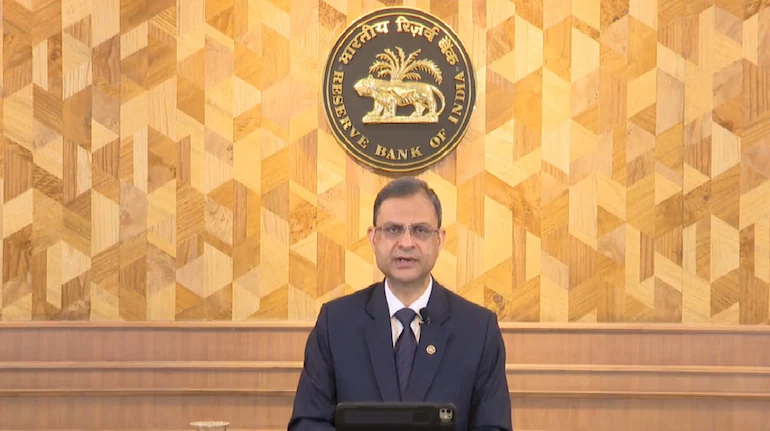
The Reserve Bank of India (RBI) has reduced the minimum daily cash reserve ratio (CRR) maintenance requirement for banks to 90% from 99%, offering lenders greater flexibility in managing their daily cash positions as liquidity conditions tighten across the Banking system.
The revised requirement will take effect from the fortnight beginning December 1, 2026. The decision comes after banking system liquidity shifted from a substantial surplus in September to a deficit in November, pushing overnight money market rates higher and increasing banks’ reliance on the central bank’s short-term liquidity facilities.
According to RBI data, the banking system liquidity deficit widened to Rs 47,641.20 crore on November 26 from Rs 32,216 crore a day earlier. Meanwhile, the weighted average call rate (WACR) reached 5.76% on November 27, moving above the RBI’s marginal standing facility (MSF) rate of 5.75%.
The adjustment is intended to make daily reserve management easier for banks during a period of tighter liquidity. Importantly, the RBI has changed the minimum daily maintenance threshold, not the overall CRR rate or the average reserve requirement that banks must meet over a reporting fortnight.
RBI Reduces Minimum Daily CRR Requirement to 90%
Under the revised arrangement, banks will be required to maintain at least 90% of their prescribed CRR on a daily basis, compared with the earlier minimum of 99%. The change restores the flexibility that banks had before the RBI tightened the daily requirement in October.
CRR is the portion of a bank’s net demand and time liabilities (NDTL) that must be maintained as cash reserves with the central bank. It is an important Monetary Policy instrument used by the RBI to regulate liquidity in the banking system.
Banks must meet the prescribed CRR as an average over a reporting fortnight. However, the RBI also sets a minimum proportion that lenders must maintain every day during that period.
When the daily maintenance requirement was increased to 99%, banks had very limited room to hold lower reserve balances on certain days and compensate by maintaining higher balances on others. Reducing the minimum to 90% gives lenders more flexibility to manage these daily fluctuations.
The change does not mean that banks can reduce their overall CRR obligation. They must still satisfy the applicable average reserve requirement over the fortnight. The adjustment only changes how much of that requirement must be maintained every day.
Liquidity Shifts From Rs 11.16 Lakh Crore Surplus to Deficit
The RBI’s decision follows a sharp reversal in banking system liquidity over the past few months. Liquidity conditions were considerably more comfortable in September, when the banking system surplus peaked at approximately Rs 11.16 lakh crore.
However, the surplus gradually narrowed as the central bank absorbed excess funds through variable rate reverse repo (VRRR) auctions and open market operation (OMO) sales. These measures were used to manage surplus liquidity and keep short-term money market conditions aligned with the RBI’s monetary policy framework.
The central bank also conducted a Rs 25,000 crore OMO sale in October. Such sales withdraw funds from the banking system by selling government securities to market participants, thereby reducing the amount of liquidity available to banks.
These operations coincided with other factors that reduced banking system liquidity. Government tax collections, including goods and services tax (GST) payments, transferred funds from the banking system into the government’s account with the RBI.
Currency in circulation also increased by slightly more than Rs 2.5 lakh crore between April and November 13. When people withdraw cash from banks, funds move out of the banking system, reducing the liquidity available for interbank transactions and lending.
The combination of these factors contributed to the transition from a large liquidity surplus to a deficit in November. As available funds became tighter, banks increasingly turned to the RBI for short-term liquidity support.
Rupee Support Operations Also Withdraw Liquidity
The RBI’s foreign exchange market operations have added another source of pressure on domestic liquidity. When the central bank sells dollars to support the rupee, it receives rupees from market participants. This process withdraws domestic currency from the banking system.
Net dollar sales through the spot and forward markets stood at approximately $6.4 billion between October 15 and November 13. These operations formed part of the factors contributing to tighter rupee liquidity.
Foreign exchange intervention can therefore have implications beyond the currency market. While dollar sales may help manage pressure on the rupee, the corresponding withdrawal of domestic currency can reduce liquidity available to banks.
Government cash balances have also affected the movement of funds through the banking system. When tax receipts accumulate in the government’s account with the RBI, the money is temporarily unavailable to banks. Liquidity returns when the government spends those funds and payments flow back into the banking system.
However, elevated government cash balances have limited the return of funds through government expenditure, adding to the pressure on available liquidity.
Overnight Rates Rise Above the RBI’s Policy Corridor
The tightening liquidity conditions have become visible in overnight money market rates. The weighted average call rate, which reflects the average interest rate at which banks lend and borrow unsecured funds overnight, stood at 5.76% on November 27.
This was above the RBI’s MSF rate of 5.75%, indicating pressure in the overnight funding market. The MSF facility allows eligible banks to borrow short-term funds from the central bank, generally at a rate above the policy repo rate.
The movement in the call rate matters because the RBI uses its liquidity management framework to keep short-term money market rates aligned with its monetary policy stance. When liquidity becomes scarce, banks may compete more aggressively for available funds, pushing overnight borrowing costs higher.
The recent rate movement suggests that maintaining the call rate close to the repo rate could become more difficult if the liquidity deficit persists. Greater flexibility in daily CRR maintenance can help banks manage their reserve positions without requiring them to hold almost the entire fortnightly requirement every day.
Strong Demand at RBI’s Three-Day Variable Rate Repo Auction
Demand for central bank liquidity was also evident in the RBI’s three-day variable rate repo (VRR) auction conducted on November 27.
Banks submitted bids worth Rs 1.35 lakh crore against the Rs 75,000 crore offered by the RBI. The central bank allotted Rs 75,006 crore at a weighted average rate of 5.66%.
The auction allowed banks to access short-term funds against eligible securities. The funds were scheduled to be reversed on November 30, making the operation a temporary liquidity support measure rather than a permanent addition to banking system funds.
The difference between the amount of bids submitted and the amount offered highlights the demand for short-term liquidity among lenders. Banks sought significantly more funds than the RBI made available through the operation.
Such auctions are part of the central bank’s liquidity management toolkit. They help address temporary funding shortages and support the functioning of the money market when banking system liquidity becomes tight.
Why the RBI Is Reversing Its October CRR Decision
The latest move reverses the RBI’s October decision to increase the minimum daily CRR maintenance requirement from 90% to 99%, effective October 16.
At that time, the banking system was operating with a substantial liquidity surplus. The higher daily maintenance requirement reduced banks’ flexibility to manage reserve balances across the reporting fortnight. It was intended to help keep overnight money market rates closer to the policy repo rate.
The liquidity situation has since changed. With the banking system moving into deficit and overnight rates facing upward pressure, the RBI has restored the lower daily maintenance threshold.
Gaura Sengupta, chief economist at IDFC First Bank, said the 99% daily CRR requirement had been introduced to keep the call rate close to the repo rate. However, she noted that with liquidity expected to remain in deficit through the fourth quarter, maintaining that requirement was no longer necessary.
According to Sengupta, the RBI could find it increasingly difficult to keep the call rate near the repo rate and prevent it from moving towards the MSF rate if the liquidity shortage continues.
The decision reflects the need to adjust liquidity management measures as banking system conditions change. A requirement that is manageable during a period of surplus can become restrictive when banks face a shortage of available funds.
Liquidity Conditions Could Remain Tight Through the March Quarter
Economists expect liquidity conditions to remain challenging during the March quarter. Estimates suggest that core liquidity, which excludes the government’s cash balance, has declined to approximately Rs 6.2 lakh crore and could fall to around Rs 2 lakh crore by the end of March.
The government’s cash balance is currently estimated at around Rs 5.2 lakh crore and is expected to decline to approximately Rs 3 lakh crore by March-end. A reduction in government cash balances could release some funds into the banking system as government spending increases.
However, the expected decline may not be sufficient to eliminate the liquidity shortage. Sengupta said that even with lower government cash balances, banking system liquidity could average a deficit of around Rs 1 lakh crore during the fourth quarter.
If these estimates materialise, banks may continue to depend on the RBI’s liquidity operations to manage short-term funding requirements. The central bank could therefore need to monitor liquidity conditions closely and adjust its operations according to changes in government balances, currency demand and foreign exchange activity.
What the CRR Relaxation Means for Banks
The reduction in daily CRR maintenance gives banks more room to manage their cash reserves during periods of fluctuating liquidity. Instead of maintaining at least 99% of the prescribed requirement every day, lenders will be able to operate with a minimum of 90%, while still meeting the overall fortnightly average requirement.
This flexibility can help banks manage daily payment obligations, withdrawals and interbank funding needs. It may also reduce the pressure to maintain unusually high reserve balances on individual days when liquidity is tight.
However, the measure does not directly inject additional funds into the banking system or reduce the total CRR obligation. Its immediate benefit is operational flexibility rather than a direct increase in the amount of lendable funds.
For the wider financial system, the adjustment signals that the RBI is responding to changing liquidity conditions. The effectiveness of the measure will depend on how the banking system’s liquidity position evolves and whether other funding pressures continue.
Conclusion: RBI Prioritises Flexibility as Liquidity Tightens
The RBI’s decision to reduce the minimum daily CRR maintenance requirement to 90% from 99% comes at a time when India’s banking system has shifted from a substantial surplus to a liquidity deficit. Rising overnight rates, strong demand at VRR auctions and continued liquidity withdrawals have highlighted the pressure facing banks.
By restoring flexibility in daily reserve management from December 1, the central bank is giving lenders more room to manage their cash positions without changing the overall CRR requirement.
With economists expecting liquidity conditions to remain challenging through the March quarter, the RBI’s approach to short-term funding and money market rates will remain important. The coming months will show whether the CRR adjustment, alongside other liquidity operations, is sufficient to ease funding pressure and keep overnight rates aligned with the central bank’s policy framework.
For breaking news and live news updates, like us on Facebook or follow us on Twitter and Instagram. Read more on Latest Business on thefoxdaily.com.






COMMENTS 0