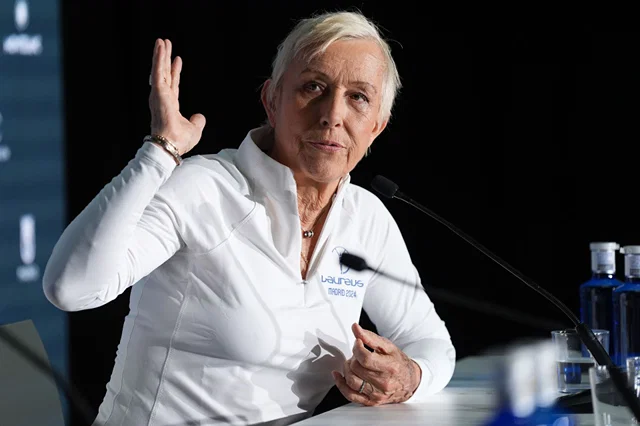
Tennis legend Martina Navratilova has criticised US President Donald Trump after he shared a controversial AI-generated image celebrating Jensen Huang’s return as Nvidia chief executive. The former world No. 1 questioned Trump’s claims about protecting women, arguing that the image reflected his attitude towards women.
Navratilova’s reaction came within hours of Nvidia’s board unanimously voting on November 23 to reinstate Huang as president and CEO. The decision reversed an earlier announcement that he would leave the company’s leadership following concerns raised about his conduct and reported connections involving a former Technology executive.
Trump had publicly supported Huang’s return and said he personally intervened with Nvidia’s board. After the reinstatement, the president shared an AI-generated image on Truth Social that reworked a photograph from the 2024 assassination attempt at his campaign rally. The altered image replaced Trump with Huang and included several provocative visual changes.
The image prompted Navratilova to revisit Trump’s earlier campaign statements about protecting women. Her criticism was direct, adding another episode to the former tennis champion’s frequent public commentary on American Politics.
Navratilova criticises Trump’s AI-generated image
The controversy began after Trump posted an AI-generated image celebrating Huang’s return to Nvidia. The original photograph was taken moments after a gunman opened fire at Trump’s rally in 2024, when the president was photographed with a bloodied face and his fist raised in the air.
In the altered version, Huang’s bloodied face replaced Trump’s, while a red bra appeared in place of the raised fist. An Nvidia banner also replaced the American flag visible in the original photograph.
Navratilova interpreted the image as revealing Trump’s attitude towards women. She connected her criticism to the president’s claim during a Pennsylvania rally in the 2024 campaign that he was a protector of women.
“This shows exactly what Trump thinks of women. Protecting women my a**!!!” Navratilova posted on X.
The former world No. 1’s response focused on the symbolism of the image and what she believed it communicated about the president’s public statements. Her post quickly became part of the wider discussion surrounding Trump’s use of AI-generated imagery and his celebration of Huang’s reinstatement.
The image itself was digitally altered and should not be confused with an authentic photograph of the events at Trump’s rally. Its composition combined elements of the 2024 incident with Nvidia branding and Huang’s likeness.
How Jensen Huang returned to Nvidia
Huang’s reinstatement followed a series of developments that began on November 12, when he resigned as Nvidia’s president, chief executive and director. The board had raised concerns that he disclosed personal conduct inconsistent with the company’s code of conduct.
Reporting surrounding the situation linked Huang to Alice Huang, a former executive at Singapore-based Megaspeed and a significant buyer of Nvidia chips. US intelligence officials reportedly suspected that she had passed information to Beijing. Beijing rejected the allegation, describing it as groundless.
These reports formed part of the wider scrutiny surrounding the circumstances of Huang’s departure. However, the reported suspicions were allegations attributed to intelligence officials and were not presented as established findings in the supplied account.
Following Huang’s resignation, Nvidia appointed finance chief Colette Kress as interim CEO. The company subsequently addressed the leadership situation during its November 17 earnings call, when it indicated that it did not intend to reinstate Huang.
That position changed six days later. On November 23, Nvidia’s directors voted unanimously to bring Huang back as chief executive. The board said its decision followed input from senior US government officials and that it was satisfied his return did not pose a national security risk.
The reversal attracted attention because of the short period between the company’s earlier position and its decision to restore Huang to the top leadership role. It also raised questions about the influence of government discussions on the board’s decision-making process.
Trump says he convinced Nvidia’s board
Trump had publicly pressed for Huang’s reinstatement in the days before the board announced its decision. Speaking to CNBC, the president said he had contacted the board and participated in its meeting.
“I spoke to them and I convinced them,” Trump said.
His comments suggested that he viewed his intervention as an important factor in the outcome. Nvidia’s board, meanwhile, cited input from senior US government officials when explaining why it had become comfortable with Huang’s return.
Trump’s involvement became another point of discussion after the president shared the AI-generated image celebrating the decision. The post connected the Nvidia leadership story with the president’s own political messaging and the public image created around the 2024 rally shooting.
For Navratilova, the image provided an opportunity to challenge Trump’s earlier claims about protecting women. Her criticism was directed at the president’s interpretation of that role, rather than at the business reasons behind Nvidia’s decision to reinstate Huang.
Navratilova questions the reinstatement and Trump’s influence
The Nvidia board’s decision also prompted a separate reaction from Navratilova. Responding to a post carrying the company’s statement about Huang’s reinstatement, particularly its reference to input from senior levels of the US government, the 18-time Grand Slam champion expressed surprise.
“Wow. Beyond….”
Her brief response indicated that she was taken aback by the circumstances surrounding the decision. The reference to senior government input was particularly notable because Trump had already claimed that he had spoken directly to the board and helped convince its members to bring Huang back.
Navratilova subsequently criticised Trump in response to a post highlighting the market reaction following the announcement. The post stated that Nvidia shares opened $37 higher and that the company added nearly $1 trillion in market value within half an hour, while the Nasdaq was up more than 6 per cent.
Reacting to those figures, Navratilova directed her criticism towards the president.
“The corruption of Trump knows no bounds,” she commented.
The remark represented Navratilova’s own political assessment of Trump’s involvement. The market figures and the timing of the reinstatement were part of the discussion she responded to, but her comment did not establish wrongdoing by the president or Nvidia’s board.
Earlier questions about Trump’s Nvidia stock transactions
Navratilova had also questioned the timing of a reported sale of up to $1 million in Nvidia stock by Trump in August. The former tennis champion had raised concerns about the transaction before Huang’s reinstatement became the focus of public attention.
The reported stock sale added another element to her criticism of the president’s relationship with the technology company. However, the supplied account does not establish a connection between the August transaction, Trump’s reported communication with Nvidia’s board and the eventual decision to reinstate Huang.
Navratilova’s latest comments brought these issues together in her criticism of the president. She questioned both the symbolism of the AI-generated image and the circumstances surrounding the company’s leadership reversal.
National security concerns remain part of the debate
Another issue Navratilova questioned was the framing of Huang’s return as posing no national security threat. Nvidia’s board said it was satisfied that his reinstatement did not create such a risk after receiving input from senior US government officials.
The issue is significant because Nvidia’s technology and chips have an important role in the global technology industry. The reported concerns involving a former executive and alleged information-sharing with Beijing had added a national security dimension to the story.
However, the board’s statement represented its assessment following the discussions it cited. The reported suspicions involving Alice Huang were not established as proven facts, and Beijing had rejected the allegation as groundless.
Navratilova’s reaction reflected her disagreement with the way the decision and its national security implications were being presented. The available account does not include a detailed response from her explaining what additional safeguards or evidence she believes should have been considered.
A controversy combining politics, technology and celebrity criticism
The events surrounding Huang’s return have brought together several different issues: Nvidia’s corporate leadership, reported national security concerns, Trump’s involvement and the use of AI-generated political imagery.
For Navratilova, the controversy became another opportunity to criticise the president. Her posts challenged Trump’s claim to be a protector of women and questioned the political circumstances surrounding Huang’s reinstatement.
Huang is back in charge of Nvidia following the board’s unanimous decision, while the company has said it is satisfied that his return does not pose a national security risk. Trump has publicly claimed credit for helping bring about the reversal, and his AI-generated post celebrating the decision has drawn criticism from Navratilova.
The episode highlights how a major corporate leadership decision can quickly become part of a wider political debate. While Nvidia’s board has explained its reasoning, questions about the reported allegations, government involvement and Trump’s public messaging continue to shape the discussion.
For breaking news and live news updates, like us on Facebook or follow us on Twitter and Instagram. Read more on Latest Sports on thefoxdaily.com.


COMMENTS 0