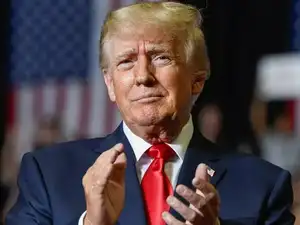
The United States is seeking what officials describe as a “final end” to the Russia-Ukraine war as trilateral peace talks begin in Abu Dhabi. The negotiations mark the first substantive discussions between Moscow and Kyiv since February and could open a new phase in Washington’s efforts to secure a settlement.
Beyond an immediate ceasefire or territorial agreement, the Trump administration wants to explore a broader security arrangement between Russia and Europe. The proposed framework is intended to address long-standing tensions over NATO’s military presence, regional security commitments and the risk of another conflict after any peace agreement.
However, the initiative faces significant obstacles. European governments are concerned that Moscow could use the negotiations to revive demands that would weaken NATO’s position in eastern Europe. There are also questions about whether Ukraine would receive security guarantees strong enough to deter another Russian attack.
Abu Dhabi Talks Mark a New Phase in Peace Efforts
The Abu Dhabi discussions bring together representatives from the United States, Russia and Ukraine in an effort to make progress towards ending the war. The negotiations are particularly significant because they represent the first substantive talks between the two countries since February.
The Trump administration has indicated that it wants to move beyond temporary arrangements and establish a settlement capable of preventing the conflict from restarting. US officials say that achieving this objective will require discussions not only about the future of Ukraine but also about the wider security relationship between Russia and European countries.
The diplomatic effort is taking place against a complicated international backdrop. The talks are the first of their kind since the United States and Israel launched joint strikes against Iran. They also follow midterm elections that have weakened Donald Trump’s domestic political position, adding another layer of pressure to his foreign policy agenda.
For Washington, the negotiations offer an opportunity to demonstrate progress towards one of Trump’s major foreign policy objectives. For Ukraine and its European partners, however, the central question is whether an agreement can protect Ukrainian sovereignty without creating new security risks across the continent.
Trump Administration Proposes a New European Security Framework
A major part of the American proposal involves developing a new long-term security architecture between Russia and Europe. The idea reflects the administration’s view that ending the fighting alone may not be enough to establish lasting stability.
US officials have suggested that the framework could include stronger communication between military establishments, more reliable crisis-management channels and measures designed to reduce the possibility of accidental escalation. The proposal could also involve renewed diplomatic mechanisms between NATO and Russia.
Jared Kushner, Trump’s son-in-law and one of the leading US negotiators, outlined some of the principles behind the proposed arrangement on Monday. He described an approach focused on stronger consultation, reliable crisis communications, greater military transparency and reciprocal steps to reduce escalation risks.
Kushner also stressed that any framework should respect the sovereignty and independent decision-making of every nation. That principle is particularly important for European governments, which are concerned that negotiations over the continent’s security must not become an opportunity for Russia to dictate the military or political choices of neighbouring countries.
The precise details of the American proposal remain unclear. Secretary of State Marco Rubio said that progress had been made in developing an understanding of what the future security architecture could look like, although he acknowledged that negotiations would first need to move beyond the ongoing conflict.
European Governments Fear Concessions to Moscow
European officials are approaching the discussions with caution. Their main concern is that Russia could use the negotiations to secure concessions on NATO’s military presence in eastern Europe, potentially changing the regional balance of power in Moscow’s favour.
Russian President Vladimir Putin has repeatedly criticised NATO’s eastward expansion and argued that the alliance’s growing presence near Russian territory threatens Moscow’s security. Russia has previously demanded restrictions on NATO expansion and a reduction in the alliance’s military footprint across parts of eastern Europe.
European governments fear that accepting such demands could undermine the security of countries that joined NATO after the end of the Cold War. It could also create uncertainty about the alliance’s ability to protect members located closest to Russia.
Delegations from Germany, France, the United Kingdom, Italy and the European Union are expected to meet American negotiators in Abu Dhabi to discuss the proposed framework. Their participation reflects Washington’s recognition that a lasting European security arrangement cannot be developed without the involvement of the countries most directly affected.
A European security official from one of the participating countries said the American proposal was not yet sufficiently clear. European representatives are preparing for the possibility that Washington could raise significant concessions to Russia during the consultations.
European Union foreign policy chief Kaja Kallas underlined the bloc’s concerns at a G7 foreign ministers’ meeting on Monday. She argued that Europe already has a security architecture based on international agreements and commitments, including obligations concerning sovereignty and territorial integrity.
Kallas’s central criticism was that Russia has failed to respect those existing commitments. Her remarks reflect a broader European position that the problem is not necessarily the absence of security arrangements but Moscow’s willingness to disregard the rules and agreements already in place.
Could the NATO-Russia Council Return?
One possibility raised by US officials is the revival of the NATO-Russia Council, a diplomatic forum that was suspended following Russia’s full-scale invasion of Ukraine in 2022.
The council was designed to provide a platform for consultation and cooperation between NATO members and Russia. Its potential restoration could offer a formal channel for discussing military activities, regional tensions and measures to prevent misunderstandings from escalating into confrontation.
US officials have also indicated that sanctions against Russia could potentially be lifted as part of a broader agreement. Such a move would represent a significant negotiating incentive for Moscow, although the details and conditions of any sanctions relief have not been established.
For European governments, the possibility of restoring formal engagement with Russia raises difficult questions. Any renewed diplomatic mechanism would need to address security concerns without allowing Moscow to gain influence over decisions that belong to individual European countries and NATO members.
The challenge for Washington will be to establish whether Russia is prepared to accept reciprocal arrangements rather than use negotiations to secure restrictions on NATO that it has sought for years.
Ukraine Could Receive Security Guarantees Similar to NATO’s Article 5
Another major issue under discussion is the possibility of providing Ukraine with security guarantees modelled on NATO’s Article 5. US officials have claimed that Washington has discussed potential arrangements with Russia that could offer Kyiv protection similar in effect to the alliance’s collective-defence commitment.
NATO’s Article 5 establishes that an armed attack against one member is considered an attack against all. It provides the foundation for collective defence, although it does not require every member to respond with identical military action.
An American security guarantee for Ukraine could therefore become a central part of a future peace agreement. US officials have suggested that such an arrangement could involve substantial American resources, funding and military support.
One administration official described the proposed protection as effectively very similar to NATO membership in terms of the security Ukraine could receive. The official also said that any decision would ultimately require discussions between Trump and Ukrainian President Volodymyr Zelenskyy.
However, the proposal raises several unresolved questions. The most important concerns the circumstances under which the guarantees would be activated. A clear definition of what constitutes an attack would be essential, particularly as modern conflicts increasingly involve cyber operations, sabotage and other forms of hybrid warfare.
Critics have also questioned how such guarantees would work in practice. Even NATO’s Article 5 does not automatically oblige every member to respond with the same military measures. A separate security arrangement for Ukraine would therefore need clearly defined obligations, response mechanisms and credible commitments from the countries providing protection.
Russia has consistently opposed Ukraine joining NATO and has rejected the presence of Western troops on Ukrainian territory. Whether Moscow would accept a security arrangement that gives Kyiv comparable protection without formal NATO membership remains a major question for the negotiations.
Territorial Concessions Remain a Major Obstacle
Security guarantees are only one part of the dispute. The future of territory occupied by Russia remains another major obstacle to a settlement.
Trump has indicated that Ukraine may be expected to surrender territory as part of a final agreement. He has also suggested that the country could emerge from the conflict with a “little bit different shape”, raising concerns about the territorial price Kyiv might be asked to pay for peace.
Any territorial arrangement would be politically sensitive for Ukraine, particularly if it required the government to recognise Russian control over areas seized during the war. It would also raise questions about whether a settlement based on territorial concessions could encourage further military aggression in the future.
For Zelenskyy, the challenge is to negotiate an agreement that can end the fighting without undermining Ukraine’s sovereignty or leaving the country exposed to another invasion. The strength and reliability of any proposed security guarantees will therefore be closely connected to the territorial negotiations.
European governments are also concerned that a settlement negotiated primarily between Washington and Moscow could leave Ukraine and its European partners with limited influence over decisions that directly affect their security.
Why Russia’s 2021 NATO Demands Still Matter
The concerns surrounding the proposed security architecture are rooted partly in Russia’s demands before the full-scale invasion of Ukraine.
In 2021, Moscow presented NATO with a list of security demands that included preventing further alliance expansion, including Ukraine’s potential membership. Russia also sought a rollback of NATO’s military presence towards its pre-1997 position and restrictions on the deployment of missiles.
NATO rejected the proposals. Russia launched its full-scale invasion of Ukraine less than a month later, transforming the dispute over European security into the largest war on the continent in decades.
For European officials, the history of those demands explains why the current negotiations are being treated with considerable caution. A new security arrangement that effectively accepts Moscow’s earlier demands could weaken the principle that European countries have the right to choose their own alliances and security policies.
US officials have acknowledged that the Russian proposals from 2021 remain a source of concern in Europe. One American official said there was considerable historical baggage surrounding the idea of redesigning European security, but argued that a new framework was needed to prevent another prolonged conflict.
The administration’s position is that the existing arrangements have not prevented the war and that a different approach is necessary. The difficulty will be ensuring that any replacement framework addresses the reasons for the conflict without rewarding the use of military force to change borders or impose political demands.
Washington Says Europe Must Be Part of the Negotiations
The Trump administration has stressed that European countries must participate in discussions about the continent’s future security. An American official said Washington would need Europe at the table if it wanted to end the war.
This position is significant because European governments have repeatedly warned against decisions about their security being made without their involvement. Countries such as Germany, France, Italy and the United Kingdom have major political, economic and military interests in the outcome of the conflict.
The European Union is also an important participant because sanctions, reconstruction support and broader economic relations with Russia will form part of any lasting settlement.
However, bringing European governments into the negotiations does not automatically resolve their differences with Washington. European leaders may support efforts to end the fighting while rejecting proposals that they believe would weaken NATO or compromise Ukraine’s long-term security.
The Abu Dhabi consultations will therefore test whether the United States can build a common negotiating position with its European allies while also finding terms that Russia and Ukraine are prepared to consider.
Can the Abu Dhabi Talks Deliver a Lasting Peace?
The negotiations could represent an important opportunity to restart diplomatic efforts, but major differences remain over territory, NATO’s role, sanctions and the future security of Ukraine.
Washington wants a settlement that goes beyond stopping the immediate fighting. Its proposed long-term framework is intended to reduce the risk of renewed conflict by establishing clearer communication channels, military transparency and arrangements for managing future crises between Russia and Europe.
For Ukraine, the credibility of security guarantees will be crucial. Any agreement that leaves the country vulnerable to another Russian attack could prove difficult to defend politically and strategically.
For European governments, the central concern is whether the proposed arrangement will strengthen continental security or create a system in which Russia gains influence over NATO’s presence and the independent decisions of neighbouring states.
Russia’s willingness to compromise will also determine whether the discussions can move beyond broad diplomatic proposals. Moscow has long opposed Ukraine’s NATO ambitions and has demanded changes to the wider European security order. Those positions could make agreement particularly difficult.
The US administration has described its objective as securing a genuine and lasting end to the war rather than another temporary pause in hostilities. Whether the Abu Dhabi talks can produce a framework that protects Ukraine, addresses European security concerns and gains Russian acceptance remains uncertain.
The immediate outcome will depend on whether the participants can turn broad proposals into specific commitments. Until questions over territory, military guarantees and NATO’s future role are resolved, the prospect of a comprehensive peace agreement will remain uncertain.
For breaking news and live news updates, like us on Facebook or follow us on Twitter and Instagram. Read more on Latest World on thefoxdaily.com.






COMMENTS 0