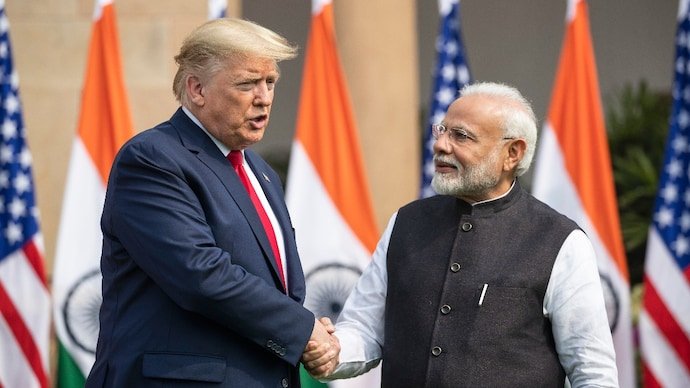
Prime Minister Narendra Modi‘s message to Donald Trump on the 250th anniversary of the United States‘ Independence reflects the continued importance of the India-US relationship in global affairs. Congratulating President Donald Trump and the American people on the historic milestone, Modi described the friendship between the world’s largest and oldest democracies as a “force for global good” founded on shared democratic values, mutual respect, and expanding strategic cooperation.
WHO exchanged the message? Indian Prime Minister Narendra Modi addressed US President Donald Trump and the people of the United States. What was the occasion? The 250th anniversary of the adoption of the Declaration of Independence, celebrated as America’s Independence Day. When? The message was issued on July 4 during nationwide celebrations across the United States. Where? While the greetings originated from India, they coincided with commemorative events taking place across the US. Why is the message significant? It reinforces the strategic, economic, and diplomatic partnership between India and the United States at a time of shifting global alliances. How does it affect bilateral relations? It signals both nations’ commitment to strengthening cooperation despite differences on certain policy issues.
A Historic Milestone for the United States
The 250th anniversary of American Independence represents one of the most significant milestones in US history.
On July 4, 1776, representatives of the thirteen American colonies adopted the Declaration of Independence, laying the foundation for the modern United States.
Over the following two and a half centuries, the country evolved into one of the world’s largest economies and an influential global political, technological, military, and cultural power.
The anniversary therefore carries historical importance beyond the United States, drawing messages from leaders around the world.
PM Modi’s Message: More Than Diplomatic Courtesy
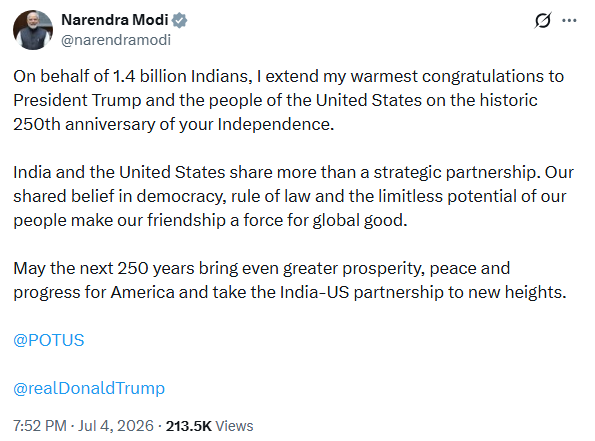
Prime Minister Modi’s congratulatory message emphasized that India and the United States share more than a conventional strategic partnership.
He highlighted several common values that continue to shape bilateral ties, including:
- Democracy.
- Rule of law.
- Freedom.
- Innovation.
- People-to-people connections.
- Shared commitment to peace and prosperity.
Such messages often serve both symbolic and diplomatic purposes, reinforcing political goodwill while reaffirming long-term cooperation.
How India-US Relations Have Evolved
The India-US relationship has transformed dramatically over the past three decades.
From a relationship once constrained by Cold War geopolitical realities, the partnership has expanded into multiple strategic sectors.
Today, cooperation extends across:
- Defence.
- Trade and investment.
- Technology.
- Space research.
- Education.
- Healthcare.
- Energy security.
- Critical and emerging technologies.
The relationship is increasingly viewed as one of the defining bilateral partnerships of the twenty-first century.
Recent Modi-Trump Meeting Reinforced Bilateral Engagement
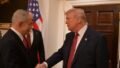
The Prime Minister’s Independence Day message follows a recent face-to-face meeting between Narendra Modi and Donald Trump during the G7 Summit in France.
The discussions reflected continued engagement between both governments despite ongoing policy differences.
Public remarks following the meeting indicated a shared interest in maintaining close diplomatic and strategic cooperation while addressing outstanding issues through dialogue.
High-level leadership interactions remain an important feature of India-US diplomacy, particularly during periods of geopolitical uncertainty.
Areas Driving the India-US Strategic Partnership
The modern India-US relationship extends well beyond traditional diplomacy.
| Area of Cooperation | Importance | Long-Term Impact |
|---|---|---|
| Trade | Growing bilateral commerce | Economic growth and investment |
| Defence | Security cooperation and exercises | Regional stability |
| Technology | Innovation and digital collaboration | Future economic competitiveness |
| Education | Academic exchanges | Knowledge sharing |
| Energy | Energy diversification | Long-term sustainability |
| Healthcare | Medical research and pharmaceuticals | Public health cooperation |
Economic Partnership Continues to Expand
Trade remains one of the strongest pillars of India-US relations.
The two countries maintain substantial commercial ties across manufacturing, services, information technology, pharmaceuticals, agriculture, and digital industries.
American companies continue investing in India, while Indian firms contribute significantly to employment and innovation in the United States.
Although tariff negotiations and market access discussions periodically create differences, economic engagement has generally continued expanding over time.
The Importance of the Indian Diaspora
Another defining feature of bilateral relations is the vibrant Indian-origin community in the United States.
Millions of Indian Americans contribute across sectors including:
- Technology.
- Medicine.
- Scientific research.
- Education.
- Business.
- Public service.
- Entrepreneurship.
These people-to-people connections often strengthen diplomatic relations by promoting cultural understanding, business collaboration, and educational exchange.
Challenges That Continue to Shape the Relationship
Despite strong cooperation, India and the United States continue to manage differences on several policy issues.
Recent discussions have involved:
- Trade tariffs.
- Immigration policies.
- Market access.
- Regional security issues.
- Supply chain resilience.
- Economic regulations.
However, both governments have generally emphasized dialogue rather than confrontation when addressing disagreements.
Why the Partnership Matters in Today’s Global Environment
International politics has become increasingly complex due to shifting geopolitical alignments, technological competition, economic uncertainty, and regional conflicts.
Against this backdrop, India and the United States share interests in:
- Maintaining a stable Indo-Pacific region.
- Securing global supply chains.
- Countering terrorism.
- Supporting economic resilience.
- Expanding technological cooperation.
- Strengthening democratic institutions.
This broader strategic context explains why bilateral engagement continues receiving high-level political attention.
America’s 250th Anniversary Celebrations
The United States marked the historic anniversary with events across the country.
Traditional celebrations included:
- Fireworks displays.
- Community festivals.
- Parades.
- Concerts.
- Historical exhibitions.
- Cultural programmes.
Philadelphia, where the Declaration of Independence was adopted in 1776, remained a focal point of commemorative activities, while celebrations also took place in major cities including New York and Washington.
Political Debate Around the Celebrations
Like many major national commemorations, the anniversary also generated political debate.
Different groups presented varying perspectives on how American history should be commemorated and interpreted.
Supporters emphasized patriotism, national achievements, and constitutional values, while critics argued for greater attention to the country’s more complex historical experiences.
Such debates are common in democratic societies where historical interpretation continues evolving over time.
Timeline of India-US Relations in Recent Years
| Period | Development | Significance |
|---|---|---|
| Past decade | Expansion of strategic partnership | Broader cooperation across sectors |
| Recent years | Growing defence and technology collaboration | Enhanced strategic engagement |
| Recent period | Continued trade discussions | Economic relationship evolves |
| G7 Summit | Modi-Trump bilateral meeting | Leadership-level engagement |
| July 4 | 250th Independence anniversary message | Reaffirmation of bilateral friendship |
Comparison: Traditional Diplomacy vs. Modern Strategic Partnership
| Traditional Bilateral Relations | Modern India-US Partnership |
|---|---|
| Focused mainly on diplomacy. | Multi-sector strategic cooperation. |
| Limited economic engagement. | Extensive trade and investment. |
| Occasional security dialogue. | Regular defence cooperation. |
| Government-centric interaction. | Strong business and people-to-people ties. |
| Regional focus. | Global strategic collaboration. |
A Unique Insight: Symbolic Messages Often Shape Diplomatic Momentum
Messages exchanged between world leaders during national anniversaries may appear ceremonial, but they frequently play a meaningful role in international diplomacy.
Such communications reinforce mutual respect, maintain political goodwill, and create a positive environment for future negotiations.
When accompanied by ongoing dialogue between governments, symbolic gestures help sustain long-term partnerships even when policy differences remain unresolved.
In this context, Prime Minister Modi’s message reflects continuity rather than a single diplomatic event.
Future Outlook
The India-US partnership is expected to remain one of the most consequential bilateral Relationships in global politics. As both countries continue expanding cooperation in technology, Artificial Intelligence, defence manufacturing, clean energy, semiconductor development, and economic resilience, the relationship is likely to deepen further.
While trade negotiations, regulatory issues, and geopolitical developments may occasionally create friction, the broader strategic convergence between New Delhi and Washington provides a strong foundation for continued engagement. Future cooperation is expected to increasingly focus on innovation, supply chain security, advanced manufacturing, and regional stability.
Conclusion
Prime Minister Narendra Modi’s message to Donald Trump on the United States’ 250th Independence anniversary underscores the enduring strength of India-US relations. By describing the partnership as a force for global good rooted in democracy, the rule of law, and shared aspirations, the Prime Minister reaffirmed India’s commitment to deepening cooperation with one of its most important strategic partners.
As the United States celebrates a historic national milestone, the exchange of greetings also reflects the broader evolution of India-US ties from a relationship once defined primarily by diplomacy to one encompassing trade, technology, defence, innovation, education, and people-to-people connections. Despite occasional policy differences, both nations continue to view their partnership as a key pillar of regional stability and global progress in the decades ahead.
For breaking news and live news updates, like us on Facebook or follow us on Twitter and Instagram. Read more on Latest India on thefoxdaily.com.



COMMENTS 0