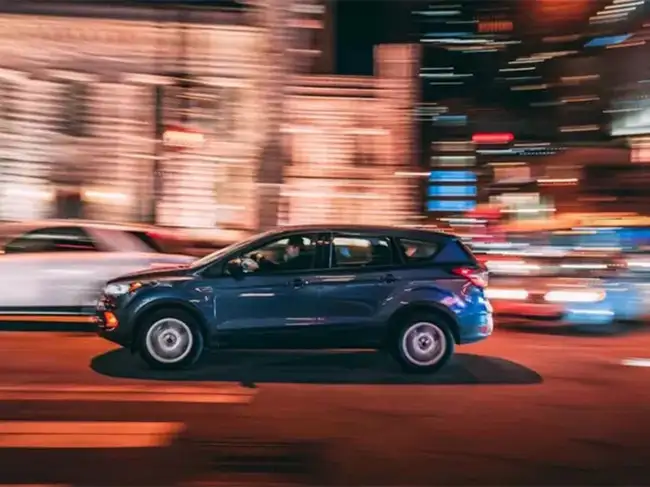
India’s growing preference for SUVs is influencing more than just the country’s automobile market. As larger vehicles become increasingly common on Indian roads, parking infrastructure is also facing the need to adapt. Traditional parking spaces and mechanical parking systems designed around smaller hatchbacks and sedans may not always be suitable for today’s larger SUVs.
This shift is creating new requirements for parking operators, real estate developers and automobile manufacturers. From wider parking bays and higher load capacities to smarter parking technologies, the growing popularity of SUVs is changing how urban parking facilities are planned and used.
Growing SUV Popularity Is Changing Parking Requirements
SUVs have become an increasingly popular choice among Indian car buyers, thanks to their road presence, higher seating position and perceived practicality. However, their larger dimensions can create challenges in urban environments where parking space is already limited.
Compared with many traditional hatchbacks and compact sedans, SUVs can require more room in terms of length, width and height. Their greater weight can also place additional demands on parking platforms and mechanical systems, particularly in facilities that use automated or multi-level parking arrangements.
As a result, parking infrastructure providers must consider the dimensions and weight of the vehicles that their systems are expected to accommodate. Facilities designed around older vehicle-size assumptions may need modifications to remain suitable for the changing mix of cars on Indian roads.
Parking Companies Face Pressure To Upgrade Systems
The increasing presence of SUVs is prompting parking companies to reconsider the design and capacity of their systems. Mechanical parking solutions, which are commonly used in locations where available land is limited, need to account for larger and heavier vehicles.
Parking platforms, lifting mechanisms and supporting structures must be designed to handle the intended vehicle weight safely. Dimensions also matter, as wider and longer vehicles need sufficient clearance for entry, positioning and movement within a parking facility.
This could encourage greater demand for parking systems with higher load capacities and more flexible platform dimensions. Operators may also need to assess whether existing facilities can accommodate larger vehicles without affecting safety, convenience or the number of parking spaces available.
Real Estate Developers Rethink Parking Layouts
Real estate developers are also adjusting their approach to parking design. In cities where land availability is limited and property costs are high, providing larger parking spaces without reducing the total parking capacity can be a significant challenge.
Developers must balance the need for wider and longer parking bays with the requirement to use available space efficiently. Flexible parking layouts could become increasingly important, allowing facilities to accommodate different vehicle sizes while making the best possible use of the available area.
Residential complexes, commercial buildings and office developments may therefore need to consider changing vehicle dimensions during the planning stage itself. Designing parking infrastructure exclusively around smaller cars could create practical limitations as SUV ownership increases.
The challenge is particularly relevant for older buildings, where parking areas may have been designed around a smaller average vehicle size. Retrofitting such facilities to accommodate larger SUVs can require changes to parking arrangements and infrastructure.
Demand For Advanced Parking Technology
The shift towards larger vehicles is also increasing the importance of parking-assistance technology. In crowded urban areas, manoeuvring an SUV through narrow driveways, basement parking areas and tight spaces can be challenging, particularly for less experienced drivers.
Automakers are responding by offering technologies designed to make parking easier and safer. These include parking sensors, rear-view cameras, 360-degree camera systems and automated parking assistance. Such features help drivers judge distances, identify nearby obstacles and position their vehicles more accurately.
Advanced camera systems are particularly useful in larger vehicles, where the driver may have limited visibility of the area immediately surrounding the car. Parking sensors can also provide alerts when the vehicle approaches an obstacle, reducing the difficulty of manoeuvring in confined spaces.
As SUVs continue to gain popularity, these technologies could become increasingly important features for buyers, especially those who regularly park in congested urban environments.
Balancing Larger Parking Spaces With Limited Urban Land
While larger parking bays can improve convenience, increasing their dimensions also has an impact on the overall capacity of a parking facility. A parking area that accommodates a certain number of smaller cars may hold fewer vehicles if every space is redesigned to suit larger SUVs.
This creates a planning challenge for developers and parking operators. They must provide enough clearance for modern vehicles while ensuring that valuable urban space is not wasted. Flexible layouts and appropriately designed mechanical parking systems could help address some of these challenges.
Parking infrastructure will also need to account for different vehicle categories rather than assuming that every car has similar dimensions and weight. A combination of standard and larger parking bays could offer a practical solution, depending on the needs of a particular building or facility.
What Lies Ahead?
India’s growing SUV market is creating new demands across the automotive ecosystem, and parking infrastructure is no exception. As vehicle sizes and weights increase, parking companies will need to ensure that their systems can safely accommodate modern cars. Real estate developers, meanwhile, will have to make parking layouts more adaptable without compromising space efficiency.
Automakers are also likely to place greater emphasis on parking-assistance features as urban driving conditions become more challenging for owners of larger vehicles. Technologies such as 360-degree cameras, parking sensors and automated assistance can help improve convenience, although they cannot replace properly designed parking infrastructure.
Ultimately, the shift towards SUVs is making parking a more important consideration in India’s urban development plans. Bigger vehicles require more than just larger parking bays; they also call for stronger systems, smarter layouts and technology that makes everyday manoeuvring easier.
For breaking news and live news updates, like us on Facebook or follow us on Twitter and Instagram. Read more on Latest Automobile on thefoxdaily.com.



COMMENTS 0