- Why This ADAS Test Matters So Much
- Tesla’s Strong Performance Comes Despite Major Disadvantages
- Chinese Automakers Face Embarrassing Questions
- The Fatal Xiaomi SU7 Crash Changed the Conversation
- The Hidden Technology Divide: Cameras vs LiDAR
- Consumer Trust Is Becoming the Real Battleground
- Why Tesla Still Faces Serious Challenges in China
- China’s EV Industry Is Entering a More Dangerous Phase
- The Global Implications Go Beyond China
- Conclusion
Tesla has secured a significant victory in china’s increasingly competitive electric vehicle market after emerging as the top performer in a large-scale Advanced Driver Assistance System (ADAS) evaluation conducted by Chinese state-backed media organisations. The results are particularly notable because they arrive at a time when local EV giants such as BYD, Xiaomi, and Huawei-backed automotive brands are aggressively challenging Tesla’s dominance in the world’s largest EV market.
The benchmark test, jointly organised by China Central Television (CCTV) and ByteDance-owned automotive platform Dcar, evaluated how modern Electric Vehicles respond to dangerous highway situations using Level 2 driver assistance systems. These systems are designed to assist drivers with steering, braking, lane management, and collision avoidance but still require human supervision.
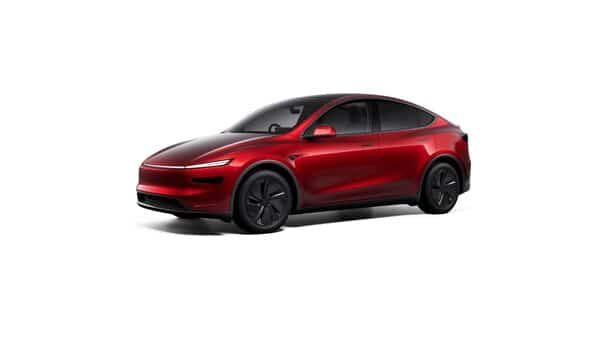
Among more than 20 participating EV brands, Tesla’s Model 3 and Model X delivered the strongest overall performance, successfully passing five out of six simulated highway danger scenarios. Several major Chinese competitors struggled in comparison, including BYD’s premium Denza Z9GT and the Huawei-backed Aito M9, both of which reportedly failed half the test scenarios. Xiaomi’s highly publicised SU7 managed to pass only one scenario.
The results quickly sparked widespread debate across Chinese Social Media platforms, with many consumers questioning whether domestic brands have prioritised flashy marketing over real-world ADAS safety performance.
Why This ADAS Test Matters So Much
The importance of this evaluation goes far beyond brand reputation.
China is currently one of the world’s most aggressive markets for semi-autonomous driving Technology. Nearly every major EV manufacturer now promotes advanced driver assistance features as a key selling point. Terms like “smart driving,” “AI driving,” and “autonomous capability” have become central to EV marketing campaigns.
However, regulators are becoming increasingly concerned that consumers may misunderstand the limitations of current systems.
Unlike fully autonomous vehicles, Level 2 ADAS technology still requires drivers to remain alert and maintain control of the vehicle at all times. The system can assist but it cannot fully replace human judgment.
The latest test specifically focused on how vehicles handled complex highway hazards, which are among the most challenging situations for ADAS software.
These scenarios reportedly included:
- Sudden obstacle detection
- Emergency lane changes
- High-speed braking situations
- Vehicle cut-ins
- Road hazard recognition
- Traffic flow adaptation
Such tests are critical because highway environments often expose weaknesses in sensor systems, AI decision-making, and real-time processing.
Tesla’s Strong Performance Comes Despite Major Disadvantages
One of the most surprising aspects of Tesla’s performance is that the company achieved the top ranking despite operating under strict data limitations inside China.
Tesla CEO Elon Musk highlighted this issue publicly after the results gained attention online, stating that Tesla had achieved the strongest outcomes “despite having no local training data.”
This is a major technical limitation.
China’s strict data Security laws currently prevent Tesla from freely transferring locally collected driving data back to the United States for AI training purposes. Tesla has reportedly been seeking regulatory approval to export certain driving datasets collected from vehicles operating in Shanghai and other Chinese regions.
Artificial Intelligence systems powering ADAS technologies improve through massive amounts of real-world driving data. Local driving habits, road infrastructure, traffic patterns, weather conditions, and pedestrian behaviour all influence how effectively these systems perform.
In theory, local Chinese automakers should possess a substantial advantage because they can train their systems directly using Chinese road data.
Yet Tesla still managed to outperform many domestic rivals.
This has reinforced the argument among Tesla supporters that the company’s software-first approach remains one of the strongest in the global EV industry.
Chinese Automakers Face Embarrassing Questions
The test results have created an uncomfortable moment for several Chinese EV manufacturers that heavily market their smart driving capabilities.
BYD’s Denza brand, Xiaomi’s SU7, and Huawei-backed Aito vehicles are frequently promoted as technologically advanced alternatives to Tesla. Many of these companies also market their systems using aggressive language around intelligent driving and AI-powered mobility.
However, the benchmark results suggest that some systems may still struggle in critical real-world safety situations.
Particularly damaging was Xiaomi SU7’s poor performance. The vehicle has received enormous attention in China due to Xiaomi’s massive consumer electronics ecosystem and aggressive expansion into the EV sector.
The disappointing ADAS performance comes at a sensitive time for Xiaomi following a fatal crash involving an SU7 earlier this year.
The Fatal Xiaomi SU7 Crash Changed the Conversation
In March, a deadly accident involving a Xiaomi SU7 reportedly resulted in three deaths, triggering widespread public debate about the safety of driver assistance technologies.
The incident intensified regulatory scrutiny and forced authorities to address concerns about how automakers market semi-autonomous systems.
Following the crash, Chinese regulators reportedly moved to restrict the use of terms such as:
- Autonomous driving
- Self-driving
- Smart driving
- Hands-free driving
Officials feared that consumers could overestimate the actual capabilities of Level 2 systems and become dangerously reliant on them.
China’s Ministry of Public Security later issued warnings stating that drivers remain legally responsible for accidents involving misuse of driver assistance systems.
This marks a significant shift in China’s regulatory tone.
For years, the country encouraged rapid EV innovation and aggressive adoption of smart mobility technologies. But regulators are now increasingly focused on safety standards and consumer understanding.
The Hidden Technology Divide: Cameras vs LiDAR
The test results have also revived a major debate within the automotive technology industry: camera-based systems versus LiDAR-assisted systems.
Tesla famously relies primarily on cameras and AI vision systems for its ADAS platform. The company removed radar sensors from many models and has consistently rejected LiDAR technology, with Elon Musk previously describing LiDAR as expensive and unnecessary.
Most Chinese automakers have taken the opposite approach.
Brands such as BYD, Huawei-backed Aito, Nio, XPeng, and Xiaomi increasingly integrate LiDAR sensors alongside cameras, radar, and ultrasonic systems.
LiDAR uses laser-based mapping to generate detailed three-dimensional environmental awareness, especially in poor lighting or complex traffic situations.
Supporters of LiDAR argue it improves safety redundancy and object detection reliability.
Tesla, however, believes advanced neural networks combined with camera vision can ultimately achieve superior scalability at lower cost.
The latest Chinese benchmark results will likely strengthen Tesla’s argument that software optimisation matters more than simply adding extra sensors.
Consumer Trust Is Becoming the Real Battleground
The global EV market is no longer only about battery range or acceleration figures.
Increasingly, consumer trust in vehicle software is becoming a deciding factor.
Modern EV buyers are now evaluating:
- Safety systems
- Software reliability
- AI performance
- Update frequency
- Real-world ADAS capability
- Driver monitoring systems
This creates enormous pressure on automakers because ADAS failures directly impact public confidence.
A single widely publicised accident involving driver assistance misuse can damage consumer perception across an entire brand.
Tesla itself has faced similar scrutiny globally over Autopilot-related crashes. However, the company’s strong performance in independent testing helps reinforce its technological leadership narrative.
Why Tesla Still Faces Serious Challenges in China
Despite winning the ADAS benchmark, Tesla’s broader business challenges in China remain significant.
The company continues to face intense pricing pressure from domestic competitors.
Chinese EV brands are aggressively undercutting Tesla on pricing while offering increasingly advanced features. Many local manufacturers bundle ADAS technologies at no additional cost, whereas Tesla charges nearly $9,000 for its Full Self-Driving-related package in China.
That pricing difference matters greatly in China’s ultra-competitive EV market.
At the same time, Tesla’s China-made vehicle sales have shown signs of slowing. Although recent figures indicated a modest year-on-year increase, quarterly performance remains under pressure due to fierce competition.
Chinese consumers now have more EV choices than ever before, ranging from ultra-budget models to high-end luxury electric vehicles.
China’s EV Industry Is Entering a More Dangerous Phase
The latest ADAS benchmark reflects a larger transformation happening within China’s electric vehicle industry.
During the early EV boom, success was often measured through rapid growth, aggressive pricing, and flashy innovation.
Now the market is maturing.
Consumers, regulators, and investors are increasingly demanding:
- Safety validation
- Reliable software
- Regulatory compliance
- Real-world performance transparency
- Long-term product reliability
This transition may fundamentally reshape competition in the sector.
Companies that focused heavily on marketing-driven innovation may struggle if their technologies fail under independent testing.
Meanwhile, firms with stronger software engineering and AI infrastructure could gain long-term credibility advantages.
The Global Implications Go Beyond China
Although the benchmark was conducted in China, its implications extend globally.
China has become the world’s largest testing ground for next-generation electric mobility technologies. The country’s EV ecosystem evolves faster than nearly any other automotive market.
That means trends emerging in China today often influence global automotive strategies tomorrow.
The growing focus on ADAS safety validation could eventually inspire stricter testing standards internationally, especially as governments become more cautious about semi-autonomous driving claims.
The benchmark also reinforces an uncomfortable reality for the global auto industry: advanced driving technology remains far from perfect.
Even the best-performing systems still failed at least one scenario.
True fully autonomous driving continues to face enormous technical, ethical, and regulatory barriers.
Conclusion
Tesla’s victory in China’s high-profile ADAS benchmark represents more than just a technical win over BYD, Xiaomi, and Huawei-backed rivals. It highlights the growing importance of software reliability, AI training quality, and real-world safety performance in the future of the automotive industry.
The results also arrive at a critical moment when regulators worldwide are becoming more cautious about autonomous driving claims and consumers are demanding greater transparency around vehicle safety technologies.
For Chinese automakers, the benchmark serves as a reminder that advanced marketing alone cannot replace consistent real-world performance.
For Tesla, the strong showing strengthens its image as a software-driven automotive leader even as the company continues battling fierce pricing pressure and political challenges inside China.
Most importantly, the test underscores a reality many consumers are only beginning to understand: modern driver assistance systems may be impressive, but they are still assistants not replacements for human drivers.
For breaking news and live news updates, like us on Facebook or follow us on Twitter and Instagram. Read more on Latest Automobile on thefoxdaily.com.



COMMENTS 0