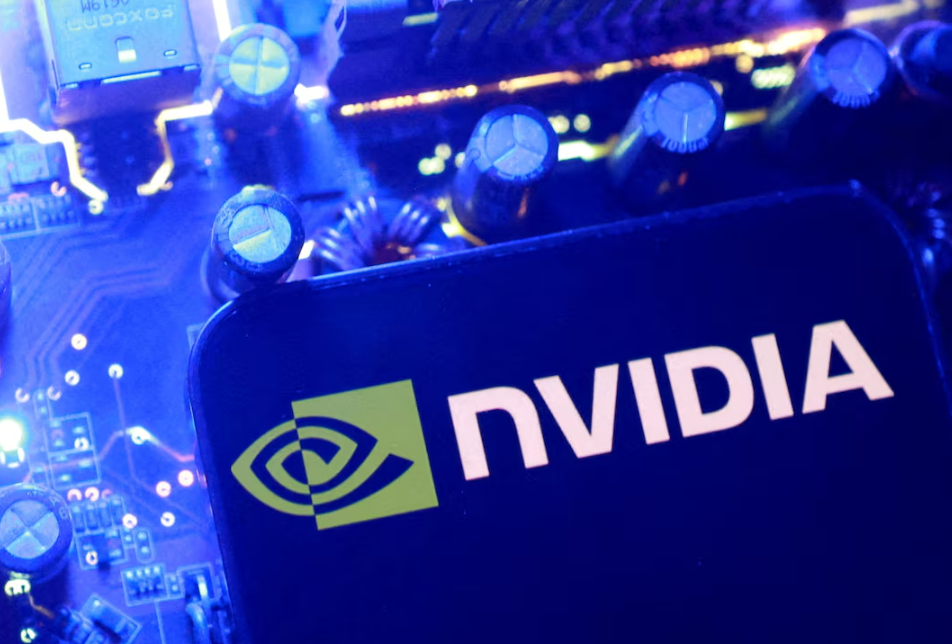
Apple is reportedly exploring a return to the dedicated server market, with the company considering Nvidia’s NVLink Fusion networking technology for a future AI inference server built around Apple’s own processors.
The potential move would represent a major change from Apple’s long-standing focus on consumer devices and standard Mac hardware. According to a report by The Information, Apple is developing an enterprise-focused AI server that could be designed for developers, businesses and government customers.
The project is still years away from a possible launch and could ultimately change significantly. Apple could also abandon the project altogether or develop the server without Nvidia’s networking technology. Reuters said it could not independently verify the report.
Apple Reportedly Plans AI Server With Its Own Chips
The reported Apple server is expected to focus on AI inference, the process of running trained artificial intelligence models to generate responses, predictions or other outputs.
The Information reported that Apple is developing versions of the server that could use either two or four planned M8 Ultra chips, described as the company’s highest-performance processors in the report.
This would give Apple a potential way to combine its chip-design capabilities with an enterprise hardware platform aimed at customers beyond the traditional Mac ecosystem.
| Reported Feature | Details |
|---|---|
| Primary purpose | AI inference |
| Target customers | AI developers, businesses and governments |
| Processor | Planned M8 Ultra chips |
| Potential configurations | Two-chip or four-chip versions |
| Networking technology under consideration | Nvidia NVLink Fusion |
| Possible launch timing | Not expected before 2029 |
| Current status | Reportedly under development; plans could change or be cancelled |
Why Nvidia’s NVLink Fusion Matters
The most significant part of the reported project may be Apple’s consideration of Nvidia’s NVLink Fusion.
High-performance AI systems often need multiple processors to work together efficiently. Networking and interconnect technologies are therefore critical because they allow processors to exchange data at very high speeds.
Apple’s consideration of NVLink Fusion would be notable because it could potentially connect multiple Apple-designed processors within a future AI server while using technology from a company with a dominant position in accelerated computing.
In practical terms, the networking layer can influence how effectively multiple chips operate as part of a larger computing system. For AI inference workloads, efficient communication between processors can be important when models and workloads are distributed across several compute units.
Apple Would Still Use Its Own Silicon
The reported plan does not suggest that Apple would replace its own processors with Nvidia GPUs. Instead, the proposed server would reportedly be powered by Apple’s own chips, with Nvidia technology potentially being used for high-speed connectivity.
That distinction is important because Apple has invested heavily in designing its own silicon for Macs, iPhones, iPads and other products.
A server combining Apple processors with Nvidia networking technology could therefore represent a hybrid approach: Apple would retain control of the core compute architecture while potentially using an established technology for connecting processors.
Apple Has Not Sold Dedicated Servers for More Than a Decade
A return to servers would not be completely unprecedented for Apple.
The company previously sold dedicated server hardware under its Xserve product line. Apple discontinued Xserve in 2011 as it shifted its enterprise strategy toward standard Mac hardware and consumer-focused products.
The proposed AI server would be very different from the traditional Xserve business. Instead of competing primarily as a general-purpose enterprise server provider, Apple could be targeting the rapidly expanding market for AI computing infrastructure.
That distinction could be strategically important because AI has created new demand for specialised computing systems capable of handling large workloads.
Why Apple Could Be Looking at Enterprise AI Servers
Apple’s reported interest comes at a time when artificial intelligence is reshaping the data-centre and enterprise-computing markets.
Large businesses and governments increasingly need computing resources to run AI models internally or through dedicated infrastructure. While cloud providers remain important, some organisations may seek greater control over data, latency, security, costs or deployment environments.
An Apple-designed AI inference server could potentially extend the company’s hardware ecosystem into this enterprise market.
AI Inference Is Different From AI Training
AI training involves teaching a model using large quantities of data and substantial computing resources. Inference occurs after training, when the model is used to answer questions, analyse information, generate content or perform other tasks.
Apple’s reported focus on inference could therefore indicate a different market opportunity from the enormous systems used to train frontier AI models.
Inference can occur across many environments, including corporate data centres and specialised enterprise infrastructure. Performance, energy efficiency, reliability and the cost of running each AI task can all influence purchasing decisions.
| AI Computing Stage | What It Does | Why Hardware Matters |
|---|---|---|
| Training | Builds or teaches AI models using large datasets | Requires substantial compute and high-speed communication |
| Inference | Runs trained models to produce outputs | Efficiency, latency, reliability and operating cost become important |
Why the Apple-Nvidia Relationship Is Significant
The possibility of Apple using Nvidia technology is notable because the relationship between the two companies has been complicated for many years.
The companies’ ties deteriorated following an alleged defect involving Nvidia graphics chips that was associated with widespread MacBook failures. Apple subsequently moved away from Nvidia graphics technology in its products.
The reported consideration of NVLink Fusion would therefore represent a notable development, although it does not necessarily indicate a broad strategic partnership between Apple and Nvidia.
It is also important to separate the historical relationship from the current report. The Information’s report describes technology under consideration, not a confirmed commercial agreement.
Apple’s Silicon Strategy Could Expand Beyond Macs
Apple’s custom-chip strategy has become one of the company’s defining hardware advantages. Its transition away from Intel processors in Macs enabled Apple to control more aspects of performance, power efficiency and hardware-software integration.
The reported M8 Ultra server project would potentially take that strategy into a new category.
Instead of designing chips only for consumer products, Apple could use its silicon expertise to build a specialised enterprise system around its own processors.
This could give Apple control over the processor, operating environment and system design while allowing the company to tailor the hardware specifically for AI inference workloads.
The Software Ecosystem Would Be Just as Important
Hardware alone would not determine the success of an enterprise AI server. Developers and businesses would also need software tools, model frameworks, security features, management systems and reliable support.
Apple has a substantial developer ecosystem, but enterprise servers operate under different requirements from consumer devices.
Enterprise customers typically consider factors such as long-term support, system management, compatibility, uptime, security and integration with existing infrastructure. Apple would therefore need to address more than raw processor performance if the reported server eventually reaches the market.
Why the 2029 Timeline Matters
The reported server is not expected before 2029. That long timeline means the current specifications should not be treated as final.
AI hardware is evolving rapidly, and a technology that appears attractive in 2026 could look very different several years later.
Apple could change the processor design, networking technology, target customers or even the entire product strategy before launch.
The possibility of cancellation is also explicitly part of the current report. Apple could decide that the economics or competitive environment do not justify entering the server market.
Potential Market Position for an Apple AI Server
If Apple eventually enters enterprise AI infrastructure, it would face an established ecosystem of chip, server and cloud companies.
Nvidia remains a major provider of accelerated computing technology, while major server manufacturers and cloud providers already offer systems designed for AI workloads.
Apple would therefore need to differentiate its product rather than simply compete on the number of processors or headline performance.
Apple Could Emphasize Integration
Apple’s historical approach has been to control the relationship between hardware and software. A similar strategy could be applied to an AI server.
A tightly integrated system could potentially give customers a consistent platform for deploying AI applications. Whether that would be enough to persuade enterprise customers to adopt Apple hardware would depend on performance, compatibility, pricing, software support and deployment flexibility.
What Nvidia Gains From NVLink Fusion Adoption
If Apple ultimately chooses NVLink Fusion, the decision could also demonstrate the technology’s usefulness beyond conventional Nvidia GPU systems.
Apple would be a particularly visible customer because of its scale and influence in the technology industry. However, a reported consideration is not the same as a confirmed order, so any potential commercial impact remains uncertain.
For Nvidia, expanding its networking technology into systems powered by third-party processors could represent another way to participate in the broader AI infrastructure market.
What Could Make the Project Difficult?
Entering enterprise servers would expose Apple to a market with different economics and customer expectations from its traditional consumer businesses.
- Enterprise competition: Apple would enter a market where established server and cloud providers already have large customer bases.
- Software compatibility: Developers would need suitable tools and frameworks to deploy workloads efficiently.
- Long-term support: Business customers often require predictable support and infrastructure lifecycles.
- Cost: Enterprise AI hardware must deliver competitive performance relative to its total ownership cost.
- Technology changes: AI architectures could evolve substantially before a potential 2029 launch.
- Project uncertainty: The reported product could still be cancelled or launched without Nvidia’s networking technology.
Apple’s Possible Return to Servers: What to Watch
The most important developments will be whether Apple formally confirms its enterprise AI hardware plans and whether Nvidia’s technology becomes part of the final architecture.
Investors and technology customers would also watch for details about Apple’s M8 Ultra processors, software support, pricing, customer availability and the workloads the company intends to target.
Another important question is whether Apple would sell the servers directly to customers or work through enterprise technology partners and data-centre providers.
Until Apple makes an official announcement, these details remain uncertain.
| What to Watch | Why It Matters |
|---|---|
| Apple’s official confirmation | Would establish whether the reported project is moving toward commercialization |
| M8 Ultra specifications | Would indicate the server’s potential computing architecture |
| NVLink Fusion adoption | Would show whether Apple ultimately chooses Nvidia’s interconnect technology |
| Enterprise software support | Could determine developer and business adoption |
| Pricing and availability | Would reveal Apple’s intended competitive position |
| Launch timeline | The current report does not expect a product before 2029 |
Apple Server Market Return Could Mark a Strategic Shift
Apple’s reported exploration of an AI inference server represents a potentially significant expansion of its hardware ambitions. The company has spent years building custom silicon for consumer devices and Macs, while its dedicated Xserve business ended in 2011.
A future enterprise AI server would be a very different product, designed around the growing demand for AI inference rather than traditional general-purpose server computing.
The reported consideration of Nvidia’s NVLink Fusion makes the story particularly interesting. It suggests that Apple could combine its own processor technology with an external high-speed networking solution rather than attempting to build every component independently.
However, the project remains unconfirmed and is reportedly not expected before 2029. Apple could change the design, remove Nvidia technology or cancel the product altogether.
Conclusion
Apple’s reported return to the server market would represent a notable evolution of its custom-silicon strategy. A server powered by M8 Ultra chips and potentially connected through Nvidia’s NVLink Fusion could give Apple a route into enterprise AI inference infrastructure.
The opportunity is substantial, but so are the challenges. Enterprise customers require more than powerful chips: they need software compatibility, security, reliability, support and competitive economics.
For now, the most important point is that Apple is reportedly exploring the idea rather than confirming a commercial product. With a potential launch no earlier than 2029, there is considerable time for the technology, market and Apple’s strategy to change before any server reaches customers.
For breaking news and live news updates, like us on Facebook or follow us on Twitter and Instagram. Read more on Latest Business on thefoxdaily.com.






COMMENTS 0