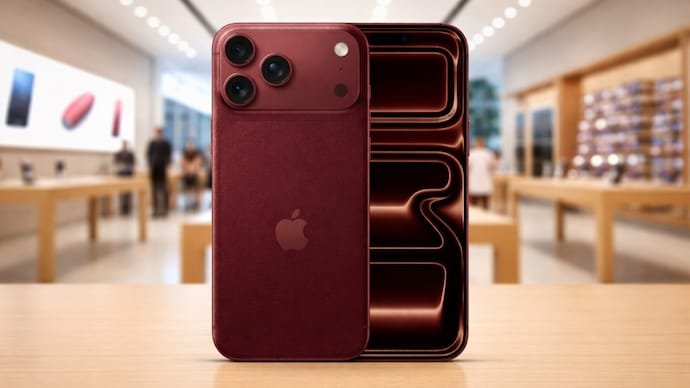
Apple has launched the iPhone 18 Pro and iPhone 18 Pro Max under new CEO John Ternus, marking the beginning of a new chapter for the company and introducing one of its most important product cycles in years.
The September 9 launch brought major upgrades to camera performance, battery life and sustained processing power, but Apple’s most significant software message was arguably the arrival of Siri AI. Built into iOS 27 and Apple Intelligence, the new Siri is designed to understand personal context, work with what is displayed on screen and perform more useful actions while keeping privacy and security at the core of the experience.
The event also delivered the product announcement that had been the subject of intense speculation for years: Apple unveiled its first Foldable iPhone, called iPhone Duo. The device opens into a 7.6-inch display and is designed around a new version of iOS optimized for a larger, folding screen.
That makes this launch considerably more significant than a routine annual iPhone upgrade. Ternus is taking over from Tim Cook at a time when Apple must simultaneously defend its leadership in premium smartphones, catch up with competitors in AI and expand the iPhone beyond the traditional slab design.
John Ternus takes the stage for his first major iPhone launch
The iPhone 18 launch was closely watched because it was the first major iPhone event led by John Ternus as Apple CEO.
Ternus became CEO on September 1, 2026, succeeding Tim Cook, who moved into the role of executive chairman. Ternus previously served as Apple’s senior vice president of Hardware Engineering and was closely involved in the development of the company’s major devices.
His elevation comes with an unusually high set of expectations. Cook leaves behind one of the most valuable consumer-technology businesses in history, with Apple having built an enormous installed base of iPhones, Macs, iPads and other devices.
Ternus therefore does not need to rebuild Apple. His challenge is to identify where the company can create its next major growth engine while protecting the enormous business Cook helped develop.
The iPhone 18 Pro, Siri AI and iPhone Duo all point toward the same answer: Apple wants to make the iPhone more intelligent and more versatile without abandoning its emphasis on tightly integrated hardware, software and privacy.
iPhone 18 Pro and Pro Max focus on four major upgrades
Apple’s new Pro lineup is centered on camera, battery, performance and artificial intelligence.
The iPhone 18 Pro and iPhone 18 Pro Max introduce a new 48-megapixel Fusion Main camera with a variable aperture, giving users greater control over light entering the lens and more flexibility when shooting photos and video.
Apple also introduced new professional camera controls and improvements aimed at low-light photography, video capture and depth-of-field effects.
The phones are powered by the A20 Pro chip, supported by a next-generation vapor chamber designed to maintain high sustained performance during demanding workloads.
Battery life has also received a major upgrade. Apple says the iPhone 18 Pro Max delivers its biggest battery-life improvement ever for an iPhone, with the company claiming up to 45 hours of video playback for the larger model under its specified testing conditions.
These improvements may not sound as radical as a completely new product category, but they address the areas that consumers use every day and create the hardware foundation for Apple’s more ambitious AI strategy.
Siri AI is the real software headline
The biggest change in the iPhone 18 Pro is arguably not something that can be seen from the outside.
Siri AI represents Apple’s attempt to turn its long-standing voice assistant into a more capable, context-aware system that can interact with users and their devices in a substantially more useful way.
Apple says the new Siri can understand personal context across information such as messages, email and photos. It can also use awareness of what is currently displayed on the screen to perform actions related to that content.
That changes Siri from a system that mainly responds to individual commands into something closer to an assistant that can understand what the user is doing.
For example, Apple says users can ask Siri to locate information across their personal content or take action based on something visible on the screen.
The company has also introduced a Siri mode inside the Camera app, allowing users to ask questions about objects or scenes visible through the camera and take actions based on what the phone sees.
There is another significant addition: users can write what they need to Siri simply by describing the request instead of relying exclusively on spoken commands.
Apple is making privacy part of its AI pitch
Apple knows it is entering an AI market where rivals such as Google and OpenAI have moved rapidly. Rather than competing only on model capability, the company is emphasizing how AI processes personal information.
Apple says Apple Intelligence uses a combination of on-device processing and Private Cloud Compute. The idea is to perform as much processing as possible directly on the iPhone, while more demanding tasks can be handled in Apple’s secure cloud Infrastructure without creating a conventional data-storage model.
This is an important distinction for Apple because the company has built a large part of its brand around privacy.
AI assistants can potentially access extremely sensitive information, including messages, photographs, calendars, browsing behavior and personal preferences. Making an assistant genuinely useful therefore creates a difficult balance between intelligence and privacy.
Apple wants customers to believe that Siri can become more personalized without requiring them to give up control over their personal data.
That could become one of Apple’s most important competitive advantages if the company can deliver AI features that are both useful and trustworthy.
Siri AI will initially arrive as a beta
Despite its prominent role in the launch, the new Siri is not arriving as a completely finished service for every market from day one.
Apple says Siri AI will roll out in beta with iOS 27, beginning in English. Additional languages, including French, Japanese, Korean, Portuguese and Spanish, are scheduled to follow.
There are also geographic restrictions.
Apple has confirmed that Siri AI will not initially be available on iOS in the European Union because of regulatory issues. The company says it is working to find a way to provide the technology while preserving its privacy and security requirements.
That creates a significant challenge for Apple. AI products are improving rapidly, and competitors are releasing new features at a much faster pace than the traditional annual smartphone cycle.
Apple therefore needs Siri to keep improving continuously rather than treating its 2026 launch as the end of development.
Why the AI race matters so much to Ternus
Apple has traditionally controlled the smartphone experience through hardware, operating systems and tightly integrated services. Artificial intelligence is changing that equation.
Google has built Gemini deeply into Android, while Microsoft, OpenAI, Meta and other technology companies are investing heavily in AI assistants and agents.
The risk for Apple is that the smartphone itself could remain powerful while the most important consumer interactions increasingly happen through external AI systems.
That is why Siri matters strategically.
If users start asking an AI assistant to search, plan, summarize, book, communicate and act on their behalf, the assistant can become a new gateway to computing. Apple wants that gateway to remain within the iPhone ecosystem.
Ternus therefore has a dual challenge: make Apple devices excellent at conventional tasks while also making them the preferred platform through which people use AI.
Apple finally enters the foldable smartphone market
The other defining event of the launch was the introduction of the iPhone Duo, Apple’s first foldable iPhone.
The device opens like a book and features a 7.6-inch internal display, the largest screen Apple has put on an iPhone. When closed, it uses a 5.4-inch outer display.
Apple is positioning the Duo as a device that combines smartphone portability with a larger canvas for media, gaming, reading and multitasking.
When opened, the phone is also the thinnest iPhone ever produced, according to Apple.
The timing of Apple’s entry is significant. samsung and other manufacturers have already spent years refining foldable hardware, while Chinese companies have pushed the category in different directions with thinner designs, larger displays and even multi-fold devices.
Apple’s strategy is therefore less about being first and more about entering when the technology is mature enough to support the experience the company wants.
The iPhone Duo is priced at $1,999
The new foldable is positioned at the premium end of Apple’s product range, with a starting price of $1,999.
That places it well above the conventional iPhone 18 Pro models but within the existing pricing range of premium Foldable Smartphones from major competitors.
The price also reflects the complexity of producing a foldable device. Apple has developed a specialized hinge and folding display system while attempting to keep the phone thin and durable.
The company says the Duo uses a precision hinge designed to provide a smooth folding experience and withstand repeated use.
Apple is also emphasizing screen durability and a new display surface designed to reduce glare.
Apple is betting that software will make the foldable worthwhile
Apple’s first foldable is not simply a larger iPhone.
The company has redesigned parts of the iOS experience to make better use of the internal display. Users can move between the outer and inner screens while maintaining continuity, while the larger display supports multitasking and resizable application windows.
The device also supports Apple Pencil, extending the product beyond traditional smartphone use.
Apple is targeting users who may want to read documents, watch videos, participate in video conferences or work with multiple applications without carrying a separate tablet.
That positioning is important because foldable phones have historically faced a basic consumer question: why pay considerably more for a phone that performs many of the same tasks as a conventional smartphone?
Apple’s answer is that the larger screen should meaningfully change what the device can do.
The foldable could change Apple’s iPhone strategy
The iPhone has historically followed a predictable annual upgrade cycle. Customers choose between different sizes, cameras and performance levels, but the underlying slab-shaped design remains largely unchanged.
The iPhone Duo challenges that model.
A foldable introduces an entirely different relationship between physical size and screen area. A pocket-sized device can become a tablet-like screen without requiring a second product.
That gives Apple a new premium category to sell alongside conventional iPhones rather than forcing every customer into a completely different design.
The company can therefore continue selling standard iPhone models while using the Duo as an ultra-premium showcase for new technologies.
Over time, some of those technologies could potentially migrate downward into less expensive products.
Why Apple waited so long to launch a foldable
Apple’s late entry into foldables is consistent with a strategy the company has followed with several major technologies.
Instead of being first to market, Apple often waits until competing products reveal weaknesses and the underlying technology has improved.
Foldables provide a clear example. Early generations suffered from fragile displays, thick bodies, visible creases, limited battery capacity and software that did not always take advantage of the larger screen.
Those weaknesses have gradually improved across the industry.
Apple can now enter with years of competitor experience available as a reference point. That gives the company an opportunity to avoid some early mistakes and focus on the elements it believes consumers value most.
The risk, however, is that the category remains relatively small compared with conventional smartphones.
Apple therefore has to prove that it can do more than capture existing foldable buyers. It must convince ordinary iPhone customers to pay a premium for an entirely different form factor.
The iPhone 18 Pro camera gets a major redesign
The camera system is another area where Apple is emphasizing meaningful improvement rather than simply increasing megapixel counts.
The new 48MP Fusion Main camera introduces variable aperture, allowing the lens to adjust how much light enters the camera.
Variable aperture can provide greater control over exposure and depth of field and can be especially useful when lighting conditions change rapidly.
Apple is also introducing improved cinematic effects and intelligent focus tracking to enhance video capture.
Professional users receive more manual controls inside the Camera app, while computational photography continues to handle much of the image processing automatically.
The strategy reflects Apple’s broader approach to mobile photography: combine strong hardware with computational imaging so users can achieve high-quality results without having to understand every technical setting.
Performance gets a major boost from A20 Pro
The A20 Pro sits at the centre of the iPhone 18 Pro performance story.
Apple says the chip delivers its highest sustained performance yet, supported by a next-generation vapor chamber that helps manage heat during demanding workloads.
That matters more as AI processing becomes a normal part of smartphone use.
AI models can require substantial computing resources, particularly when tasks involve image processing, language understanding, voice recognition or real-time analysis.
A more powerful and efficient processor gives Apple additional room to perform AI tasks locally rather than sending every request to a cloud server.
That aligns directly with the company’s privacy-first AI strategy.
The result is a connection between two of the most important aspects of the iPhone 18 Pro: the A20 Pro is not simply there to make games faster. It also provides the computing foundation for Apple Intelligence and Siri AI.
Battery life becomes increasingly important in the AI era
AI features introduce another challenge: power consumption.
Running sophisticated models locally can consume more energy than traditional smartphone functions. At the same time, larger displays, faster processors and more advanced cameras continue to place pressure on battery capacity.
Apple has addressed the problem through both hardware efficiency and larger batteries.
The iPhone 18 Pro Max receives the most significant battery improvement, while the A20 Pro and updated battery architecture are designed to improve efficiency across the Pro lineup.
Apple says the Pro Max can achieve up to 45 hours of video playback under its specified conditions.
Longer battery life could become increasingly important as AI assistants operate more continuously in the background and as users rely on their phones for more tasks.
How the iPhone 18 Pro fits into Apple’s broader strategy
The new Pro models continue to perform the role they have played in Apple’s lineup: they are the highest-end conventional iPhones and a showcase for the company’s newest technologies.
The iPhone Duo occupies a different position.
Rather than replacing the Pro range, it creates a new premium category above it.
This gives Apple a broader product ladder. Consumers who want a conventional flagship can purchase the 18 Pro or Pro Max, while those willing to pay significantly more for a radically different design can move to the foldable.
That strategy also gives Apple room to learn from the first generation without making the entire iPhone business dependent on foldable technology.
Apple’s new AI approach could reshape the iPhone experience
The deeper significance of the iPhone 18 Pro may emerge over the next several years as Apple Intelligence becomes integrated into more parts of the operating system.
Siri AI can already draw on personal context, screen content and camera input. But the long-term direction is potentially much broader.
An assistant that understands what a user is doing could eventually become the layer through which many device functions are accessed.
Instead of opening a specific application, finding a menu and manually entering information, users could increasingly describe the outcome they want.
That would represent a fundamental change in how smartphones are used.
The challenge for Apple is execution. AI assistants are only useful when they understand commands accurately, respond quickly and take reliable actions. A system that occasionally makes mistakes with low-stakes questions may be tolerable. One that makes mistakes while handling personal information or taking consequential actions is much more problematic.
Apple’s privacy-first positioning therefore has to be matched by equally strong reliability.
Regulation could make Apple’s AI rollout uneven
Apple’s emphasis on privacy also creates a regulatory challenge.
The company’s statement that Siri AI will not initially be available in the European Union illustrates the tension between its product architecture and local regulations.
Users increasingly expect major AI features to arrive simultaneously across markets, but legal requirements can prevent technology companies from deploying identical systems worldwide.
Apple therefore faces a difficult balancing act: maintain its privacy standards while satisfying regulators and making new AI capabilities available to as many customers as possible.
The situation could become even more complex as governments introduce new rules concerning artificial intelligence, personal data, competition and digital platforms.
Apple is trying to turn late entry into an advantage
Both major product stories from the event Siri AI and the foldable iPhone share a common pattern.
Apple is arriving after competitors have already spent years experimenting with the technology.
Google, Samsung and Chinese smartphone companies have moved quickly on AI and foldables. Apple is now attempting to use its strengths in hardware integration, software development, ecosystem control and brand loyalty to close the gap.
That strategy carries both advantages and risks.
Waiting can allow a company to avoid immature technology and learn from competitors’ mistakes. But waiting too long can also mean losing mindshare and developer momentum to competitors that established the category first.
Ternus must therefore prove that Apple’s slower approach produces a better end product rather than simply a later one.
The iPhone 18 Pro starts at $1,199
Apple has also adjusted the pricing structure around its new Pro models.
| Model | Starting price in the US | Key positioning |
|---|---|---|
| iPhone 18 Pro | $1,199 | Premium conventional flagship |
| iPhone 18 Pro Max | $1,299 | Largest display and longest battery life in the Pro range |
| iPhone Duo | $1,999 | First Apple foldable with 7.6-inch inner display |
The Pro models are available for pre-order from September 12, with retail availability beginning September 18. The iPhone Duo is scheduled to become available on October 23.
The pricing places Apple’s foldable firmly in luxury territory, but it also creates a clear distinction between the new product and the mainstream iPhone lineup.
Can Apple make foldables mainstream?
This may ultimately be the biggest strategic question surrounding the iPhone Duo.
Foldable smartphones have remained a relatively small portion of the overall global smartphone market despite years of development. Their higher prices, mechanical complexity and concerns over durability have limited mass adoption.
Apple’s enormous installed user base could change the equation.
If even a modest proportion of existing iPhone customers decide that the larger foldable screen is worth the premium, Apple could quickly become a major player in the category.
Analysts have already suggested that Apple could take a disproportionately large share of the foldable market because of its brand strength and customer loyalty.
But the company must still demonstrate that the format solves a meaningful problem for consumers rather than simply offering novelty.
John Ternus inherits a strong Apple and a harder technology race
The launch demonstrates the unusual position Ternus inherits.
Apple remains one of the world’s most powerful technology companies, but the next phase of smartphone innovation is increasingly being defined by categories in which rivals have moved first.
AI assistants are advancing rapidly, while foldable phones are evolving from experimental devices into an established premium category.
Ternus therefore needs to maintain Apple’s enormous existing business while preparing it for a future in which the smartphone may no longer be the primary way people interact with technology.
That is a particularly important point. The iPhone’s dominance has historically come from being the centre of Apple’s ecosystem. In the AI era, that centre could shift toward an intelligent assistant capable of operating across devices and services.
Apple wants the iPhone to remain that centre.
Why this launch is more important than a normal iPhone upgrade
The iPhone 18 Pro may look like the familiar annual flagship upgrade, but the technology behind it points toward a much larger transition.
The A20 Pro provides the computing power for advanced on-device intelligence. Siri AI is designed to make the phone more context-aware. The new camera system expands computational photography and video capabilities. The improved battery system supports heavier workloads.
And beyond the Pro models, iPhone Duo introduces a completely new physical form factor.
Taken together, these products represent Apple’s attempt to evolve the iPhone on two fronts simultaneously: make it smarter and make it more flexible.
What Apple must prove next
The launch itself is only the beginning.
Apple needs Siri AI to work reliably enough that users actually depend on it rather than treating it as another novelty. Developers must also have strong reasons to build around Apple Intelligence and the new foldable form factor.
The iPhone Duo must prove that its larger display is useful enough to justify a $1,999 starting price. Its hinge and inner display will face long-term scrutiny, particularly because customers buying a first-generation Apple foldable will expect premium durability.
And Apple must continue improving both products after launch. AI is advancing too quickly for a once-a-year update cycle to be sufficient, while foldable hardware will continue evolving as competitors introduce thinner designs and new form factors.
Apple’s new era begins with AI and a foldable iPhone
John Ternus’ first major iPhone launch has delivered more than another generation of premium smartphones.
The iPhone 18 Pro and iPhone 18 Pro Max introduce the A20 Pro chip, a redesigned 48MP Fusion Main camera with variable aperture, major battery improvements and a new generation of Siri AI integrated into iOS 27.
At the same time, Apple’s iPhone Duo finally brings the company into the foldable market, with a 7.6-inch internal display, a slim design and a starting price of $1,999.
The two launches address different problems, but together they reveal Apple’s broader strategy.
AI is being used to make the iPhone more intelligent and personalized. Foldable hardware is being used to make it more versatile. Privacy is positioned as the foundation that connects the two.
That leaves Ternus with a clear test. Apple has enormous scale, an exceptionally loyal customer base and tight control over its hardware and software ecosystem. What it now needs to demonstrate is that those advantages can be translated into leadership in the next phase of consumer technology.
The iPhone 18 Pro is the foundation of that effort. Siri AI is the biggest software bet. And iPhone Duo is the most visible sign that Apple is finally willing to change what an iPhone can physically be.
The question is no longer whether Apple will enter the AI and foldable races. It has. The real test begins now: can Apple turn late entry, premium pricing and tightly integrated technology into a new generation of products that changes what consumers expect from the iPhone?
For breaking news and live news updates, like us on Facebook or follow us on Twitter and Instagram. Read more on Latest World on thefoxdaily.com.






COMMENTS 0