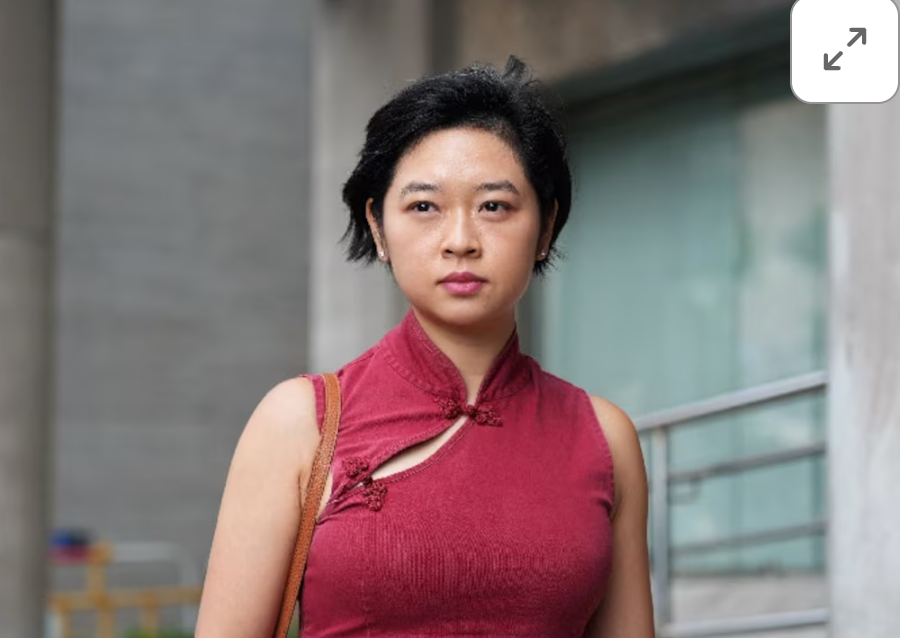
A Hong Kong court has convicted Dow Jones, the publisher of The Wall Street Journal, for attempting to prevent former reporter Selina Cheng from taking a leadership role in a registered journalists’ union. The court, however, acquitted the company of a separate charge alleging that Cheng was unlawfully dismissed because she exercised her trade-union rights.
The verdict, delivered on September 10, 2026, has drawn attention to the balance between employee union rights, press freedom and corporate restructuring in Hong Kong. The case is also significant because Cheng was elected chairperson of the Hong Kong Journalists Association (HKJA) during a period of increased pressure on independent media and journalists in the city.
What Did the Hong Kong Court Rule?
Magistrate David Cheung found Dow Jones guilty of wilfully preventing Cheng from exercising her legal right under Hong Kong’s Trade Unions Ordinance to become an officer of a registered trade union.
The court heard that the company required Cheng to seek permission before standing for the chairpersonship of the Hong Kong Journalists Association. According to the ruling, the company indicated that permission would not have been granted and that Cheng would not remain employed if she took the union position.
At the same time, the court cleared Dow Jones of a second charge alleging that the company unlawfully terminated Cheng’s employment because she had exercised her union rights.
The court said it could not rule out, beyond reasonable doubt, that Cheng’s dismissal was connected to a genuine corporate restructuring. That distinction is central to the verdict: the court found unlawful interference with her union rights but did not establish that the later termination itself was unlawful on the charge brought.
Who Is Selina Cheng and Why Is the Case Important?
Selina Cheng was a Hong Kong-based journalist who covered China’s automobile industry for The Wall Street Journal. In 2024, she was elected to become chairperson of the Hong Kong Journalists Association.
Her case became closely watched because the HKJA is one of Hong Kong’s longstanding organizations representing journalists and advocating for their professional interests. Cheng’s dispute with her employer therefore extended beyond an ordinary employment disagreement.
She said she was told by a supervisor that employees of The Wall Street Journal should not be seen as advocating for press freedom in Hong Kong because doing so could create a conflict of interest.
Cheng later said her experience demonstrated why employment protections for journalists matter. Following Thursday’s verdict, she argued that employers should not have the right to require workers to consult them before joining or holding office in a union.
What Led to Cheng’s Dispute With Dow Jones?
The conflict emerged in June 2024, when Cheng was elected as the HKJA’s new chairperson. According to the court’s findings, Dow Jones sought to prevent her from taking the union position without company approval.
Cheng alleged that senior editors demanded that she sever her relationship with the journalists’ association and refrain from advocating for press freedom. She refused those demands.
She was subsequently dismissed on July 17, 2024. Cheng argued that the dismissal was connected to her decision to exercise her union rights.
Dow Jones pleaded not guilty to both charges. The company maintained that it had made restructuring decisions in 2024 but declined to discuss the circumstances of individual employees.
Why Was Dow Jones Acquitted of the Unlawful Dismissal Charge?
The court’s decision on the dismissal charge was different from its finding on union interference.
For the second charge, prosecutors needed to establish that Cheng was dismissed because she exercised her legal right to become a union officer. Magistrate David Cheung concluded that the possibility of a genuine corporate restructuring could not be excluded beyond a reasonable doubt.
That resulted in an acquittal on the unlawful termination allegation.
This means the verdict does not establish that Cheng’s dismissal was lawful in every possible sense. Rather, the specific criminal charge before the court was not proven to the required standard.
How Much Could Dow Jones Be Fined?
Both charges carry a maximum penalty of HK$100,000, equivalent to about US$12,750, according to the report. Dow Jones was convicted on one charge, while it was acquitted on the other.
Sentencing is expected at a later date. The court’s conviction therefore establishes the legal finding, while the eventual penalty will determine the financial consequence for the publisher.
Dow Jones and The Wall Street Journal’s Hong Kong Restructuring
The case unfolded alongside changes to The Wall Street Journal’s Asian operations.
In 2024, the newspaper announced changes that shifted what it described as the region’s “centre of gravity” from Hong Kong to Singapore. The company said that, as a consequence, some employees, mostly in Hong Kong, would leave the organization.
This restructuring became an important part of the legal dispute because Dow Jones argued that organizational changes were taking place around the same period as Cheng’s departure.
The court ultimately accepted that a genuine restructuring could not be ruled out when considering the dismissal charge. However, the restructuring argument did not prevent the court from convicting the company on the separate issue involving Cheng’s union rights.
Why Union Rights Matter in the Case
Trade unions are designed to give employees a collective voice in workplace matters. Union officers may represent workers, raise concerns about employment conditions and participate in discussions involving labor rights.
Hong Kong’s Trade Unions Ordinance provides legal protection for certain trade-union activities. The court’s conviction therefore raises an important principle: an employer cannot simply prevent an employee from exercising a legally protected union right because the employer disagrees with the activity.
For journalists, the issue can become particularly sensitive because news organizations often have editorial policies governing political activity, public advocacy and potential conflicts of interest.
The difficult question is where legitimate workplace policies end and legally protected employee rights begin.
Press Freedom Adds Another Dimension
The case has attracted wider attention because it occurred during a period of major changes in Hong Kong’s media environment.
Authorities have intensified national-security enforcement since the introduction of the city’s national security framework, while several pro-democracy media organizations have closed and journalists have faced arrests and legal pressure.
Against that background, Cheng’s role at the HKJA became more politically and professionally significant than a conventional union position.
Her argument was that journalists need sufficient legal protection to perform their jobs safely and independently. She said that if employment rights are not adequately protected or enforced, journalists may become less able to work safely.
Dow Jones’ Position on the Employment Dispute
Dow Jones did not immediately provide a response following Thursday’s verdict, according to the report. The company had previously declined to comment on the specific allegations made by Cheng.
A Dow Jones spokesperson told Reuters in 2024 that the company had made restructuring decisions but would not comment on individual employees.
The company’s position is important because the court’s decision did not find it guilty of both allegations. The conviction specifically concerned interference with Cheng’s union rights, while the dismissal-related charge resulted in an acquittal.
What Does the Verdict Mean for Journalists in Hong Kong?
The case could have implications beyond Cheng and her former employer because it highlights the practical importance of legal protections for employees who participate in registered unions.
For journalists, there is an additional layer of concern. News organizations must maintain editorial independence and avoid conflicts of interest, while journalists may also have professional, legal and workplace rights outside their reporting duties.
The verdict demonstrates that those interests can come into conflict. The court’s finding suggests that an employer’s internal policies cannot automatically override statutory trade-union protections.
At the same time, the acquittal on the dismissal charge shows that proving a connection between union activity and a later employment decision can be more difficult when a company can point to broader restructuring.
Union Rights vs Corporate Restructuring: What the Case Shows
| Issue | Court Finding | Why It Matters |
|---|---|---|
| Union leadership | Dow Jones was convicted of attempting to prevent Cheng from exercising her union right. | Employers must respect legally protected trade-union activities. |
| Employment termination | Dow Jones was acquitted of the separate unlawful dismissal charge. | The court could not exclude genuine restructuring as the reason for the termination. |
| Penalty | Sentencing will take place later. | The financial consequence has not yet been determined. |
| Press freedom | The case occurred amid wider concerns over Hong Kong’s media environment. | Employment protections can have broader implications for journalistic independence. |
Why the Case Could Have a Broader Impact
The most important aspect of the verdict may be the separation between protected union activity and an employer’s business decisions.
Companies routinely restructure operations, close offices, relocate teams or change organizational priorities. Employees, meanwhile, may have statutory rights that exist independently of those commercial decisions.
The Cheng case illustrates how those two realities can collide. The court effectively drew a line between interference with a protected union right and the separate question of whether a later dismissal was sufficiently connected to that activity to constitute an offence.
That distinction could be important for future employment disputes, particularly where companies are simultaneously restructuring and employees are exercising workplace rights.
The Wider Significance for Hong Kong’s Media Industry
Hong Kong has historically served as a major international media and financial centre, with global news organizations maintaining regional operations in the city.
The relocation of some media operations toward Singapore and other Asian hubs reflects broader changes in the regional media landscape. The political and regulatory environment has also become a major consideration for international news organizations.
Against this backdrop, disputes involving journalists, unions and press freedom can attract attention well beyond the workplace.
The Cheng verdict does not by itself determine the future of Hong Kong’s press environment. However, it provides a concrete legal example of how employment law and media-related concerns can intersect.
What Happens Next in the Selina Cheng Case?
The immediate next step is sentencing for Dow Jones on the union-rights conviction. The maximum fine for the charge is HK$100,000.
The broader significance will likely depend on how the verdict is interpreted by journalists, employers, unions and legal experts. Cheng has already said that she hopes the case increases awareness of union suppression and employee rights in Hong Kong.
For Dow Jones, the conviction comes alongside the separate court finding that the unlawful termination allegation was not proven beyond a reasonable doubt.
Bottom Line
The Hong Kong court’s conviction of Dow Jones marks a significant development in a long-running dispute involving former Wall Street Journal reporter Selina Cheng and her role in the Hong Kong Journalists Association.
The court found that the publisher unlawfully attempted to prevent Cheng from exercising her right to become a union officer, but it did not find sufficient evidence to convict the company of unlawfully dismissing her.
The two-part verdict is important because it distinguishes union rights from the separate question of corporate restructuring. It also highlights the continuing sensitivity surrounding journalists’ employment rights and press freedom in Hong Kong.
As sentencing approaches, the case will remain closely watched for what it could mean for workplace rights, union participation and the relationship between international media organizations and Hong Kong’s evolving legal and regulatory environment.
For breaking news and live news updates, like us on Facebook or follow us on Twitter and Instagram. Read more on Latest Business on thefoxdaily.com.


COMMENTS 0