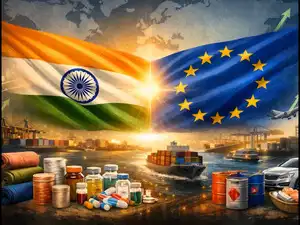
India’s upcoming free trade agreement (FTA) with the European Union is expected to improve market access for Indian exporters by eliminating import duties on a large share of goods. However, lower tariffs may not automatically translate into lower costs of doing business in Europe. A growing set of European Union regulations covering carbon emissions, sustainability, deforestation, product traceability and labour practices could create significant compliance challenges for Indian companies.
The Global Trade Research Initiative (GTRI) has warned that eight major EU regulatory measures could increase the cost of exporting to the 27-member bloc, particularly for small and medium-sized Indian businesses. Among the most significant is the Carbon Border Adjustment Mechanism (CBAM), which introduces carbon-related costs for certain imported products.
The concern is that smaller exporters may struggle to meet the documentation, reporting, verification and supply-chain requirements associated with these rules. As a result, some businesses could find that the additional compliance expenses reduce or even offset the commercial benefits of lower import duties under the trade agreement.
India-EU FTA offers duty-free access for 93% of Indian goods
The India-EU free trade agreement is expected to provide duty-free access to the European market for around 93% of Indian goods. The proposed arrangement is intended to reduce trade barriers and create additional opportunities for Indian manufacturers and exporters across multiple industries.
India’s access to the European market could become more competitive as tariffs are reduced or eliminated on a wide range of products. Export-oriented sectors may benefit from improved price competitiveness, potentially helping Indian companies expand their customer base across Europe.
However, the agreement’s tariff benefits must be understood separately from the EU’s regulatory requirements. An FTA can reduce customs duties, but it does not automatically exempt exporters from environmental, product-safety, labour or traceability standards applicable in the European market.
This distinction is central to GTRI’s warning. Even if an Indian product becomes cheaper at the European border because of lower duties, the exporter may still need to spend more on collecting data, obtaining certifications, monitoring suppliers and demonstrating regulatory compliance.
Why eight EU regulations could increase export costs
According to GTRI, eight EU regulatory measures could create additional compliance obligations for Indian exporters. These measures cover different aspects of environmental protection, carbon emissions, product information, waste management and human rights.
The eight measures identified by the trade policy think tank are:
- EU Deforestation Regulation: Requires relevant products to meet deforestation-related requirements and provide information about their origins.
- Carbon Border Adjustment Mechanism (CBAM): Introduces carbon-related obligations and financial costs for covered imports.
- EU Green Claims Rules: Seek to prevent misleading environmental claims in product marketing and advertising.
- Digital Product Passport: Supports product traceability by making information about materials, production and other characteristics accessible digitally.
- EU Forced Labour Regulation: Prohibits products made using forced labour from being placed on the EU market.
- Extended Producer Responsibility (EPR): Places responsibility for certain product and packaging waste-management costs on producers.
- Corporate Sustainability Reporting Directive (CSRD): Establishes sustainability reporting requirements for companies within its scope.
- Corporate Sustainability Due Diligence Directive (CSDDD): Requires qualifying companies to address human rights and environmental risks in their operations and value chains.
These measures do not apply identically to every product or exporter. Their relevance depends on the sector, product category, company size, business structure and role within the supply chain. Nevertheless, Indian suppliers may face requests from European buyers for additional information and evidence to help those buyers meet their own regulatory obligations.
CBAM could create a major challenge for Indian manufacturers
The Carbon Border Adjustment Mechanism is one of the most closely watched EU regulations because it connects the carbon emissions associated with imported products to the cost of accessing the European market.
CBAM is designed to address the risk of carbon leakage, which occurs when production moves from countries with stricter climate policies to countries with less stringent requirements. The mechanism aims to ensure that covered imports face a carbon cost comparable to that borne by products manufactured within the EU.
Its initial coverage includes carbon-intensive sectors such as iron and steel, aluminium, cement, fertilisers, electricity and hydrogen, along with specified related products. This makes the mechanism particularly relevant to Indian manufacturers and exporters operating in industries with significant emissions.
Exporters dealing in covered goods may need to provide detailed information about the emissions associated with their products. This can require monitoring energy consumption, production processes and emissions across manufacturing operations.
For large manufacturers, establishing emissions-monitoring systems may be manageable through existing environmental and reporting teams. Smaller factories, however, may lack the technical expertise, specialised software and financial resources needed to calculate and verify emissions data.
When reliable emissions information is unavailable, exporters may face additional difficulties in demonstrating compliance. European buyers may also demand more detailed documentation before placing orders, increasing the administrative burden on suppliers.
EU Deforestation Regulation raises traceability requirements
The EU Deforestation Regulation focuses on preventing products associated with deforestation from entering the European market. It covers commodities including cocoa, coffee, palm oil, rubber, soya and wood, as well as certain products derived from these materials.
For relevant exports, businesses must be able to demonstrate that the products meet the regulation’s requirements, including the rule concerning land that has not been subject to deforestation after December 31, 2020.
Traceability is a central part of compliance. Exporters may need to collect information about the origin of raw materials, identify the land where relevant commodities were produced and maintain supporting records.
This can create difficulties for fragmented supply chains involving numerous farmers, traders, processors and manufacturers. Small suppliers may not have digital records or the resources to map production locations and maintain the required documentation.
Companies dealing in covered agricultural and forest-related products will therefore need to strengthen their sourcing systems and work closely with upstream suppliers. The requirements are product-specific and should not be interpreted as applying to every Indian export to Europe.
Green Claims Rules could change product marketing
The EU’s Green Claims framework targets misleading or unsupported environmental claims made by companies when promoting products and services.
Terms such as environmentally friendly, sustainable and carbon neutral can influence consumer purchasing decisions. However, broad environmental claims without adequate evidence can make it difficult for buyers to assess whether a product genuinely delivers the benefits being advertised.
Under the relevant EU rules, companies making environmental claims may need to provide credible supporting evidence. Sustainability labels and other environmental statements can also face scrutiny over how they are verified and communicated.
Indian exporters selling consumer products in Europe may therefore need to review product labels, packaging and marketing materials. Claims that cannot be substantiated could create compliance risks for businesses and their European customers.
For smaller manufacturers, obtaining independent verification and preparing supporting environmental information can add to the cost of entering the market.
Digital Product Passport could increase data requirements
The Digital Product Passport is intended to improve transparency by making important information about products available through digital identification systems. Depending on the product category and applicable requirements, the information may include details about materials, components, environmental impact, repairability and recycling.
The system is part of the EU’s wider effort to support a more circular economy, in which products and materials can be used, repaired and recycled more effectively.
For Indian exporters, the development could mean collecting more detailed information from suppliers and maintaining records throughout the production process. Manufacturers may need to know where materials originate, what components are used and whether relevant product information can be provided in the required format.
Companies supplying products covered by specific Digital Product Passport requirements will need to monitor the applicable implementation timelines. The rules are being developed across product categories rather than becoming mandatory for every product at the same time.
Smaller manufacturers could face additional costs when investing in digital systems and coordinating information across multiple suppliers.
Forced Labour Regulation puts supply-chain practices under scrutiny
The EU Forced Labour Regulation is intended to prevent goods made using forced labour from being sold in the European market. It creates risks for businesses whose products or supply chains are found to be associated with prohibited labour practices.
For Indian exporters, the implications may extend beyond their own factories. European buyers could seek information about labour conditions among suppliers, subcontractors and other participants involved in manufacturing.
This may increase the importance of maintaining employment records, supplier information, workplace policies and systems for identifying labour-related risks.
Smaller companies that depend on multiple subcontractors may find it difficult to monitor every stage of production. Weak documentation or gaps in supplier oversight could affect their ability to demonstrate that their products meet buyer expectations.
Businesses will need to pay attention to the regulation’s implementation requirements and ensure that their labour-monitoring processes are appropriate for the products and supply chains involved.
Extended Producer Responsibility could raise waste-management costs
Extended Producer Responsibility shifts certain waste-management responsibilities towards producers rather than leaving the entire burden with public authorities and taxpayers.
Depending on the applicable product rules, companies may need to register with relevant systems, report the quantities of products or packaging placed on the market and contribute towards waste collection, recycling and treatment.
The framework covers areas such as batteries, packaging, electronics and other product categories. Requirements differ depending on the specific EU rules and the markets in which products are sold.
For Indian companies exporting directly to European consumers, understanding local registration and producer-responsibility obligations could become particularly important. Businesses selling through European distributors may also face requests for information or contributions to compliance arrangements.
These obligations can add administrative expenses and waste-management costs, particularly for smaller businesses handling several product categories.
CSRD and CSDDD could increase pressure on suppliers
The Corporate Sustainability Reporting Directive and Corporate Sustainability Due Diligence Directive address different aspects of corporate responsibility, but both could influence how European companies engage with their suppliers.
CSRD establishes reporting requirements covering environmental, social and governance matters for companies within its scope. Qualifying businesses may need to disclose information about emissions, energy use, water consumption, workforce conditions and other sustainability indicators.
Indian suppliers may not automatically become directly subject to the same reporting requirements as their European customers. However, large EU companies may seek relevant information from suppliers to complete their own reporting and assess sustainability risks across their value chains.
This could increase requests for emissions data, resource-consumption figures and information about working conditions. Smaller exporters may need to develop more systematic record-keeping processes to respond to such requests.
The CSDDD focuses on identifying and addressing certain human rights and environmental risks in the operations and value chains of qualifying companies. European businesses covered by the directive may therefore examine their suppliers’ labour practices, workplace safety and environmental management systems more closely.
For Indian exporters, the practical effect could include more supplier assessments, audits and requests for corrective action. The direct legal obligations depend on the scope of the relevant rules, but commercial pressure from European buyers may reach suppliers that are not themselves covered entities.
Why smaller Indian exporters could face greater pressure
Large exporters generally have more resources to manage regulatory requirements. They may employ compliance specialists, maintain digital supply-chain systems and work with consultants or certification agencies to prepare the necessary documentation.
Small and medium-sized businesses often operate with tighter budgets and limited administrative capacity. Meeting multiple requirements can therefore represent a much larger share of their operating expenses.
For example, an exporter may need to collect information from several raw-material suppliers, maintain records of production processes, calculate emissions, verify environmental claims and respond to buyer audits. Each activity can involve additional staff time, technology investment and external service costs.
These expenses can reduce profit margins, especially when exporters operate on competitive pricing and have limited bargaining power with international buyers.
In some cases, the additional cost of compliance could make an order commercially unattractive. European buyers may also prefer suppliers that can provide the required documentation quickly and consistently, potentially creating an advantage for larger manufacturers with established compliance systems.
FTA tariff benefits may not remove non-tariff barriers
The concerns raised by GTRI highlight the difference between tariff barriers and non-tariff requirements. Tariffs are customs duties imposed on imported goods, while non-tariff requirements can include product standards, environmental rules, documentation obligations and other regulatory conditions.
The India-EU FTA is expected to reduce or eliminate duties on a substantial share of Indian exports. However, exporters will still need to meet the rules applicable to their products when selling in Europe.
This means the commercial benefits of the agreement will depend not only on tariff reductions but also on how efficiently Indian businesses adapt to the European regulatory environment.
For sectors with complex supply chains or high environmental footprints, regulatory compliance could become an increasingly important part of export competitiveness.
What Indian exporters should do to prepare
GTRI has called for coordinated action involving the Indian government, export promotion councils, manufacturing associations and exporters to help smaller businesses manage the growing compliance burden.
Companies can begin by identifying which EU regulations apply to their products and understanding the requirements of their European buyers. A product-specific assessment is important because the eight measures do not apply uniformly across all industries.
Exporters should also strengthen supplier records, document the origin of raw materials and maintain reliable information about manufacturing processes. Businesses in covered carbon-intensive sectors may need to improve emissions monitoring and data verification.
Industry associations and export councils could support smaller firms through training programmes, shared compliance resources and guidance on documentation. Government-backed assistance may also help businesses access technical expertise and understand changing regulatory requirements.
European buyers can play a role by communicating their requirements clearly and giving suppliers sufficient time to improve their systems. Better coordination across supply chains could reduce duplication and make compliance more manageable for smaller manufacturers.
What the EU regulatory challenge means for India’s export outlook
India’s proposed trade agreement with the European Union could create significant opportunities by improving tariff access to one of the world’s major consumer markets. However, the benefits will not be determined by customs duties alone.
The eight regulatory measures identified by GTRI show how sustainability, traceability and labour standards are becoming important parts of International Trade. For Indian exporters, the ability to provide reliable product and supply-chain information may increasingly influence their access to European customers.
CBAM is particularly relevant for covered carbon-intensive industries, while deforestation rules, product passports and producer-responsibility requirements could affect specific agricultural, manufacturing and consumer-goods supply chains. Sustainability reporting and due-diligence requirements may also influence how large European buyers assess their suppliers.
The challenge will be more difficult for smaller exporters that lack the financial and technical resources of larger companies. Without adequate preparation, additional compliance costs could reduce the advantages created by lower tariffs.
For India, the priority will be to ensure that exporters understand the requirements early and receive sufficient support to meet them. The FTA may open the door to greater trade, but businesses will need stronger documentation, transparent supply chains and effective compliance systems to make the most of the opportunity.
For breaking news and live news updates, like us on Facebook or follow us on Twitter and Instagram. Read more on Latest Business on thefoxdaily.com.





COMMENTS 0