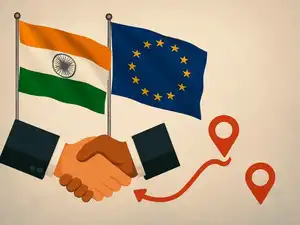
Small Indian Exporters could face significant compliance challenges in the European Union (EU) market despite the proposed benefits of the India-EU Free Trade Agreement (FTA), according to the Global Trade Research Initiative (GTRI). A growing set of European regulations covering sustainability, product traceability, emissions and supply-chain practices could increase the cost and complexity of exporting goods to Europe.
While an FTA can improve market access by reducing or eliminating customs duties, exporters must also meet the regulatory requirements of the destination market. For smaller Indian businesses, complying with multiple EU rules could become a major financial and operational challenge.
Several European directives and regulations require manufacturers and suppliers to provide detailed information about products, their origins, production processes and environmental impact. Meeting these requirements may involve additional documentation, data collection, audits and changes to manufacturing practices.
GTRI has highlighted the need for coordinated support from the Indian government and industry associations to help smaller exporters navigate this regulatory environment. Without adequate assistance, the compliance burden could limit their ability to benefit fully from improved trade access under the India-EU FTA.
Why EU Regulations Could Create Challenges for Indian Exporters
The European Union has introduced a broad range of rules aimed at improving environmental sustainability, strengthening supply-chain transparency and encouraging responsible business practices. These measures apply to different products and industries, creating multiple compliance requirements for companies seeking access to the European market.
For exporters, the challenge is not limited to meeting product-quality standards. Businesses may also need to demonstrate where raw materials originate, how products are manufactured and what environmental impact is associated with their production.
Large companies may have dedicated compliance teams, specialised software and financial resources to manage these requirements. Smaller exporters, however, often operate with limited administrative capacity and tighter margins.
As a result, the cost of understanding regulations, preparing documentation and collecting the required information could represent a disproportionately large burden for small businesses.
FTA Benefits May Not Automatically Translate Into Easier Market Access
A free trade agreement generally seeks to improve trade between participating economies by reducing tariff barriers and establishing rules for market access. For Indian exporters, an agreement with the EU could create opportunities by making certain products more competitive in European markets.
However, lower customs duties do not automatically remove non-tariff barriers. Exporters must still comply with applicable product standards, environmental rules, safety requirements and documentation obligations.
This distinction is important for smaller businesses. Even if an FTA reduces the tariff cost of exporting a product, additional compliance expenses could reduce the financial benefit.
For example, a small manufacturer may face new expenses when collecting emissions information, documenting the origin of raw materials or demonstrating that production processes meet relevant sustainability standards. These costs can affect the final price of a product and the exporter’s ability to compete.
Therefore, the commercial benefits of an FTA will depend not only on tariff concessions but also on whether businesses can realistically meet the regulatory conditions attached to selling goods in the European market.
Eight Key EU Regulations and Compliance Requirements
The EU’s regulatory framework covers several areas that can affect Indian exporters. These rules do not apply uniformly to every product or business. Their relevance depends on the industry, product category, company size and specific obligations under each measure.
The following eight regulatory areas are important for exporters to understand when assessing their access to the European market.
1. Carbon Border Adjustment Mechanism (CBAM)
The Carbon Border Adjustment Mechanism is designed to address the carbon emissions associated with certain imported goods. It focuses on products in carbon-intensive sectors and seeks to account for the emissions generated during their production.
For affected Indian exporters, CBAM can create additional reporting and compliance requirements. Businesses may need to provide information about the emissions embedded in their products and coordinate with European importers to meet applicable obligations.
Smaller manufacturers could face difficulties collecting accurate emissions data, particularly if they rely on several suppliers or lack established systems for measuring their carbon footprint.
2. Corporate Sustainability Reporting Directive (CSRD)
The Corporate Sustainability Reporting Directive establishes sustainability reporting requirements for companies within its scope. It is intended to improve the availability and consistency of information about environmental, social and governance matters.
Although the reporting obligations primarily apply to companies covered by the directive, Indian suppliers may be asked to provide relevant information to European customers as part of their value-chain reporting requirements.
This could increase the documentation expected from Indian businesses, including smaller suppliers that do not have dedicated sustainability reporting teams.
3. Corporate Sustainability Due Diligence Directive (CSDDD)
The Corporate Sustainability Due Diligence Directive concerns how companies identify and address certain human rights and environmental risks across their operations and chains of activities.
For Indian exporters supplying businesses covered by the rules, requests for information about labour practices, environmental risks and supplier relationships could become more important.
Smaller firms may need to improve internal records and provide additional details about their operations to maintain business relationships with European customers.
4. EU Deforestation Regulation (EUDR)
The EU Deforestation Regulation seeks to prevent certain products associated with deforestation and forest degradation from entering the European market. It covers specified commodities and products derived from them.
Businesses dealing in affected products may need to demonstrate that relevant goods meet the regulation’s requirements, including rules concerning production land and traceability.
For Indian exporters in covered supply chains, collecting information about raw material origins and maintaining reliable supplier records could create additional administrative work.
5. Ecodesign for Sustainable Products Regulation (ESPR)
The Ecodesign for Sustainable Products Regulation establishes a framework for improving the environmental sustainability of products placed on the EU market. Its scope includes requirements that can be introduced for different product categories.
Depending on the applicable product-specific rules, manufacturers may need to address issues such as durability, repairability, recyclability and resource efficiency.
Indian exporters may therefore need to review product design and manufacturing practices to ensure that goods meet the requirements applicable to their categories.
6. Digital Product Passport Requirements
Digital Product Passports are part of the EU’s broader approach to improving product information and traceability. They are being introduced through the Ecodesign for Sustainable Products framework and related product-specific requirements.
Depending on the product category and implementation timeline, businesses may need to provide information about product composition, materials, environmental characteristics and other relevant details through digital systems.
For smaller Indian manufacturers, maintaining accurate product-level information and coordinating data across suppliers could require investment in digital systems and improved record-keeping.
7. REACH Regulation
The EU’s REACH Regulation governs the registration, evaluation, authorisation and restriction of chemicals. It places requirements on companies involved in manufacturing, importing and using chemical substances within its scope.
Indian exporters supplying chemicals, materials or products containing regulated substances may need to meet relevant information and compliance requirements. These can involve documentation about chemical composition and restrictions on certain substances.
Businesses without specialised regulatory teams may find it difficult to understand the requirements and ensure that their products meet applicable EU rules.
8. EU Packaging and Packaging Waste Regulation (PPWR)
The Packaging and Packaging Waste Regulation aims to reduce packaging waste and improve the sustainability of packaging placed on the EU market. Its requirements cover aspects such as packaging design, recyclability and waste reduction.
Indian exporters may need to review the packaging used for products supplied to European customers. Depending on the applicable provisions, businesses could face additional requirements concerning packaging materials, design and information.
For smaller exporters, adapting packaging systems and coordinating with suppliers could add to the cost of fulfilling European orders.
Why Small Indian Exporters Could Face Higher Compliance Costs
The impact of EU regulations may vary considerably across businesses. However, smaller exporters could face particular difficulties because they often have fewer financial and administrative resources than large manufacturers.
Limited Financial Resources
Compliance with sustainability and traceability requirements can involve spending on consultants, testing, certification, data management and internal systems. These expenses may be manageable for large companies but could place pressure on smaller firms with limited cash reserves.
When businesses operate on narrow profit margins, even additional documentation or testing costs can affect the economics of an export order.
Complex Documentation Requirements
Several regulatory measures require information about products, suppliers and manufacturing processes. Exporters may need to collect data from multiple sources and maintain records that can be shared with European buyers or relevant authorities.
Small businesses that rely on informal supplier relationships or manual record-keeping may need to change their internal processes to meet these expectations.
Pressure on Delivery Timelines
Additional compliance checks can increase the time required to prepare shipments. Businesses may need to verify product information, obtain supporting documents and coordinate with suppliers before completing export orders.
Delays can create difficulties for exporters working with strict delivery schedules. They may also affect relationships with European buyers if documentation is incomplete or arrives late.
Risk of Losing Competitiveness
If compliance expenses increase the cost of Indian products, smaller exporters could find it harder to compete with suppliers that have greater resources or more advanced compliance systems.
Some businesses may also struggle to secure orders if European buyers prefer suppliers capable of providing detailed sustainability and traceability information without delays.
Why Government and Industry Support Is Important
GTRI has emphasised the need for coordinated support from the Indian government and industry associations to help small exporters manage the growing web of EU regulations.
Such support could help businesses understand which requirements apply to their products and what steps they need to take before exporting to Europe. Clear guidance would also reduce the risk of companies spending money on compliance measures that are not relevant to their particular product categories.
Government agencies and industry bodies could play a role in improving access to technical information, training and compliance assistance. Smaller manufacturers may also benefit from shared facilities and affordable services for testing, certification and data management.
Practical Measures to Help Exporters
Several forms of assistance could make it easier for small Indian businesses to meet EU requirements:
- Regulatory guidance: Provide clear explanations of relevant EU rules, product categories and compliance deadlines.
- Training programmes: Help exporters understand sustainability reporting, traceability and documentation requirements.
- Affordable testing facilities: Improve access to laboratories and technical services needed to verify product compliance.
- Digital support: Help smaller businesses adopt systems for maintaining product, supplier and emissions data.
- Industry coordination: Encourage associations to share information, organise workshops and assist members with regulatory changes.
- Financial assistance: Explore suitable support mechanisms to reduce the initial cost of compliance for smaller exporters.
These measures could help Indian businesses prepare for changing European requirements while improving their ability to compete in international markets.
What Indian Exporters Should Prepare For
Indian exporters seeking to expand their presence in Europe may need to make regulatory readiness an important part of their business planning. Understanding the rules that apply to individual products is the first step.
Businesses should review their supply chains, identify information gaps and improve documentation concerning raw materials, manufacturing processes and product characteristics. Companies operating in affected sectors may also need to assess whether existing systems can provide the information required by European customers.
Smaller exporters could benefit from working with industry associations, trade bodies and professional advisers to understand their obligations. Early preparation may reduce the risk of unexpected costs and delays when fulfilling orders.
Importantly, not every EU regulation applies to every Indian exporter. Companies must assess their specific products, activities and role in the supply chain rather than assuming that all requirements apply equally across industries.
Conclusion: EU Compliance Could Determine How Much Small Exporters Benefit From the FTA
The growing range of EU sustainability, traceability and product regulations could create significant challenges for small Indian exporters, even if the India-EU FTA improves tariff-related market access. Requirements involving emissions data, product origins, chemical safety, packaging and supply-chain information may increase the cost and complexity of doing business in Europe.
For larger companies, these requirements may be easier to manage because of their financial resources and established compliance systems. Smaller businesses, however, could face greater pressure from documentation expenses, technical requirements and changes to manufacturing processes.
GTRI’s call for coordinated support from the Indian government and industry associations highlights the importance of helping smaller exporters prepare for these changes. Clear guidance, affordable testing, training and digital assistance could make compliance more manageable.
Ultimately, the benefits of an India-EU trade agreement will depend not only on tariff concessions but also on the ability of Indian businesses to meet European market requirements. Helping small exporters navigate the regulatory framework will be important to ensuring that improved trade access translates into wider export opportunities.
For breaking news and live news updates, like us on Facebook or follow us on Twitter and Instagram. Read more on Latest Business on thefoxdaily.com.






COMMENTS 0