India’s economy is estimated to have grown by 7.35% in the July-September quarter of financial year 2026-27, moderating from 7.8% in the April-June quarter, according to the Ministry of Finance’s Monthly Economic Review for October. The ministry said resilient domestic demand, sustained investment and a strong financial sector continued to support economic activity, although elevated Crude Oil Prices, food Inflation and geopolitical uncertainty posed risks to the outlook.
The government’s immediate priority for the second half of the financial year will be to sustain economic activity while safeguarding price stability. Rising energy costs and uncertainty surrounding agricultural production could complicate efforts to maintain growth without allowing inflationary pressures to become more persistent.
The latest estimate is slightly above the 7.3% second-quarter growth projection included in the ministry’s September review. However, it remains a preliminary assessment based on the Department of Economic Affairs’ nowcasting model rather than the final official GDP figure.
India’s Economic Growth Remains Resilient
The Ministry of Finance attributed India’s continued growth momentum to strong domestic demand, sustained investment activity, a resilient financial sector and measures to manage supply-side pressures.
High-frequency economic indicators, including industrial production, energy consumption, port traffic, Goods and Services Tax collections and automobile sales, recorded stronger growth in the second quarter than in the preceding quarter, the ministry said.
These indicators provide an early picture of economic activity before official GDP figures become available. Their performance suggests that manufacturing, transportation, consumption and other areas of the economy continued to support expansion during July-September.
Nevertheless, the moderation from 7.8% in the first quarter to an estimated 7.35% in the second quarter indicates that growth may be losing some momentum. The extent and composition of that slowdown will become clearer when the government releases its official GDP figures.
The Ministry of Statistics and Programme Implementation is scheduled to publish the second-quarter GDP data on November 30. The official release will provide a more comprehensive assessment of economic performance during the period.
IMF and RBI Raise Their Growth Forecasts for India
India’s growth outlook has also received support from revised projections by major economic institutions. The International Monetary Fund raised its forecast for India’s growth in financial year 2026-27 to 7%, up from 6.4% in July.
The IMF attributed the upward revision to stronger-than-expected economic momentum, supported by resilient domestic demand and robust services activity.
The Reserve Bank of India has also increased its projection for India’s GDP Growth to 7.1%, reflecting the economy’s continued strength despite uncertainty in the global environment.
Although the forecasts differ, both revisions indicate that major institutions expect India to maintain relatively strong growth during the financial year. Actual performance will depend on domestic consumption, investment, inflation, global trade conditions and developments in energy markets.
The Ministry of Finance noted that India’s performance has remained firm even as the international outlook has become more uncertain. The IMF’s World Economic Outlook projects global growth to slow to 3.1% in 2026, with risks tilted towards weaker outcomes.
Higher energy prices and geopolitical tensions have contributed to inflationary pressures in several major economies, prompting monetary tightening in some markets. The ministry said the global economy had weathered the conflict in West Asia better than expected during the second quarter, although significant uncertainties remain.
Crude Oil Prices Pose Risks to Manufacturing and Input Costs
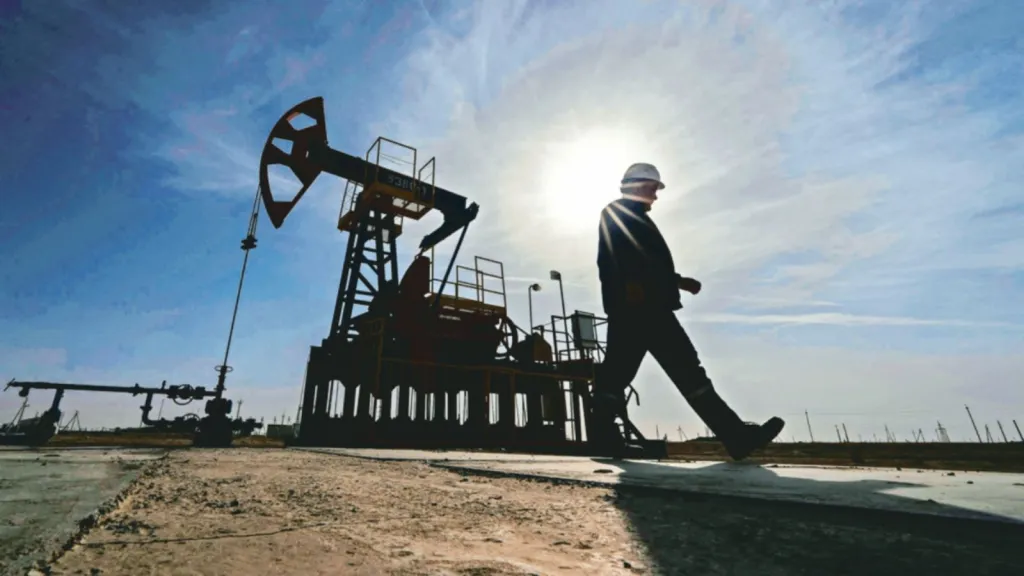
Elevated crude oil prices remain one of the principal risks to India’s economic outlook. As a major importer of crude oil, India is exposed to changes in international energy prices, which can influence transportation costs, industrial production expenses, inflation and the country’s import bill.
Higher oil prices can increase the cost of fuel, logistics, petrochemical products and other inputs used by businesses. Companies may absorb some of these increases, but prolonged cost pressures can also affect profit margins, investment decisions and the prices charged to consumers.
Maritime freight disruptions along West Asian transit routes add another layer of uncertainty. Higher shipping costs or delays can increase the expense of importing raw materials and exporting finished products, putting pressure on businesses that depend on international supply chains.
For India, these developments could complicate efforts to maintain manufacturing growth while controlling inflation. Higher imported costs may also affect the competitiveness of domestic producers if businesses cannot pass on the increases to customers.
The ministry said uncertainty surrounding energy prices, supply-chain pressures and geopolitical developments would remain relevant to manufacturing costs and investment decisions. Sustaining industrial momentum will therefore require continued efforts to expand production, strengthen domestic supply chains and improve export competitiveness.
Inflation Rises, Putting Price Stability in Focus
Inflation has emerged as a significant consideration for policymakers as energy costs and food prices influence household budgets. Household inflation rose to 5.54% in September from 4.83% in August, according to data released on October 12.
The increase highlights the challenge of maintaining economic growth while preventing higher costs from spreading across the wider economy. Food prices can have a direct effect on household purchasing power, while elevated fuel costs can feed into transportation, manufacturing and distribution expenses.
The Reserve Bank of India has previously acknowledged evidence of elevated inflation expectations and a broader spread of inflationary pressures. If households and businesses begin to expect prices to rise persistently, workers may seek higher wages and companies may adjust prices more frequently, potentially making inflation harder to contain.
The Finance Ministry said near-term inflation would depend on domestic food supply management, global energy price movements and liquidity conditions in the financial system.
The effectiveness of the RBI’s recent rate increase in limiting secondary inflation effects will also depend on how the central bank manages liquidity, the ministry said. Monetary tightening can help moderate demand and inflation expectations, but its effects may take time to influence prices across the economy.
Policymakers therefore face a balancing act. They must contain inflation without unnecessarily weakening consumption, investment or other sources of economic activity.
RBI Measures Aim to Limit Currency Volatility
India’s exposure to imported energy makes exchange-rate stability another important factor in the inflation outlook. When crude oil prices rise, a weaker rupee can increase the domestic cost of imports further, adding to pressure on businesses and consumers.
The ministry said recent RBI measures to provide direct dollar liquidity to public-sector oil marketing companies and curb currency speculation could help limit extreme exchange-rate volatility and mitigate imported inflation.
Dollar liquidity can help eligible companies meet their foreign-currency payment requirements, while measures aimed at reducing speculative pressure may support more orderly market conditions. However, such steps cannot eliminate the underlying effects of sustained increases in international crude oil prices.
The overall impact on inflation will depend on energy prices, currency movements, shipping costs and how businesses respond to higher input expenses. These factors will remain important in determining the pace of price increases over the coming months.
Government Steps to Ease Food Inflation
Alongside the risks from energy markets, the ministry highlighted supply-side measures intended to contain food inflation and reduce pressure on household budgets.
These measures include releasing stored onions through the ‘Kanda Express’, imposing stockholding limits on sugar dealers and cutting customs duties on crude edible oils. The measures are intended to improve the availability of key food items or reduce costs at different points in the supply chain.
Releasing onions from government stocks can help increase market supply when prices rise, while stockholding limits are intended to discourage excessive accumulation of commodities. Lower customs duties on crude edible oils can reduce import costs, although the extent to which savings reach consumers depends on market conditions and how suppliers adjust prices.
Such interventions can help address temporary shortages and sudden price increases. However, their effectiveness depends on the scale of the supply disruption, the timing of implementation and changes in domestic and international markets.
The ministry also warned that risks to food inflation remain. An intensifying El Niño event could reduce soil moisture during the upcoming rabi sowing season, potentially affecting agricultural production. Weather-related disruptions could place additional pressure on food supplies and prices.
Festive-season demand represents another possible source of upward pressure. Increased household spending can support economic activity, but stronger demand for particular goods may contribute to price increases if supplies do not keep pace.
Manufacturing Expansion Remains Central to Growth Strategy
The Finance Ministry said recent industrial output data, manufacturing performance and developments at the policy and company levels pointed to continued efforts to expand production, increase localisation and strengthen technological capabilities.
It emphasised that India would need to increase production scale, domestic value addition, supply-chain depth and export competitiveness to broaden its manufacturing base.
Expanding manufacturing capacity can support economic growth by creating jobs, encouraging investment and reducing dependence on imported inputs in selected industries. Greater domestic value addition can also help Indian businesses capture a larger share of the economic benefits generated by production.
However, building a more competitive manufacturing sector requires more than increasing factory output. Businesses also need reliable access to raw materials, efficient logistics, suitable infrastructure, skilled workers and stable policy conditions.
International competitiveness will be particularly important as global supply chains adjust to geopolitical tensions and changing trade patterns. Indian manufacturers that can deliver products at competitive prices and meet international quality standards may be better positioned to expand exports.
The ministry said recent GST process reforms could further reduce compliance burdens and working-capital constraints for businesses. Easier tax compliance can help companies manage administrative costs, while more efficient working-capital management can improve their ability to purchase inputs and maintain production.
Healthy credit growth and recent trade agreements are also expected to support consumption, investment and exports. Access to finance can help businesses expand operations, while trade agreements may improve market access and create opportunities for exporters, depending on the terms and implementation of each arrangement.
What India’s Growth Outlook Means for the Second Half of FY27
The estimated 7.35% growth rate for the July-September quarter suggests that India has retained considerable economic momentum despite external uncertainty. Strong domestic demand, investment activity and services-sector performance continue to provide support.
However, the outlook for the second half of financial year 2026-27 will depend on whether these strengths can offset rising energy costs, food inflation and potential disruptions to agricultural production and global supply chains.
If crude oil prices remain elevated, businesses could face higher input costs while households contend with increased expenses. Persistent inflation could also complicate monetary policy decisions, particularly if price pressures become more widespread or inflation expectations rise further.
Conversely, effective food supply management, continued investment, healthy credit growth and improvements in manufacturing competitiveness could help sustain activity and moderate some of these risks.
The government’s challenge is to maintain growth without allowing temporary price pressures to become entrenched. That will require coordination between fiscal measures, supply-side interventions and monetary policy, alongside efforts to improve domestic production and resilience to external shocks.
The official GDP release on November 30 will provide a clearer assessment of second-quarter performance. Until then, the Finance Ministry’s estimate points to a resilient economy facing a more complicated policy environment, in which sustaining demand and investment must be balanced against the need to safeguard price stability.
For breaking news and live news updates, like us on Facebook or follow us on Twitter and Instagram. Read more on Latest Business on thefoxdaily.com.






COMMENTS 0