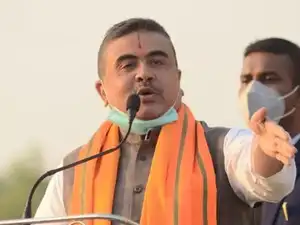
West Bengal could see a significant increase in industrial investment over the coming months, with Chief Minister Suvendu Adhikari announcing that the state government is prepared to facilitate investment proposals worth approximately ₹1 lakh crore. The announcement came alongside the launch of the West Bengal Investment Promotion Policy 2026, which aims to attract businesses, encourage manufacturing and generate employment.
The new policy introduces financial incentives for industries, including manufacturing companies, micro, small and medium enterprises (MSMEs), service-sector businesses and strategic projects. The government has also indicated that improving land availability and simplifying industrial approvals will be central to its investment strategy.
However, the investment announcement comes with an important financial qualification. Adhikari acknowledged that the state cannot immediately clear an accumulated industrial incentive backlog estimated at nearly ₹50,000 crore because of its existing debt burden, which he placed at approximately ₹8 lakh crore.
The chief minister said the government would honour incentive commitments arising under the new policy from May 9, 2026, but the older liabilities would have to wait until West Bengal becomes financially stronger.
The announcement highlights two major priorities for the new administration: attracting fresh industrial capital while managing financial obligations inherited from previous industrial incentive arrangements. Whether the proposed investment pipeline translates into operating factories, employment and sustained economic growth will depend on implementation, infrastructure, land availability and investor confidence.
₹1 Lakh Crore Investment Pipeline: What Suvendu Adhikari Announced
Adhikari said West Bengal could facilitate investments worth around ₹1 lakh crore over the next few months. The projection reflects the government’s assessment of industrial proposals, ongoing projects and land arrangements being developed across the state.
The announcement followed the introduction of the state’s new investment promotion policy in Kolkata on November 5, 2026.
The government has identified several businesses and industrial groups for which land arrangements or project discussions are already underway. These include companies associated with manufacturing, food processing, energy, automobiles and other industrial activities.
Among the developments mentioned by the chief minister were land arrangements involving Amul, Vedanta Group, Reliance and Campa Cola. The government has also facilitated proposals involving the Sanjiv Goenka Group in Haldia and industrial expansion in other parts of the state.
However, the ₹1 lakh crore figure should be understood as an investment pipeline or facilitation target rather than money already invested in completed projects. Individual proposals must still progress through the necessary investment, land, approval, financing and construction stages.
This distinction is important when evaluating industrial announcements. A proposed investment represents potential economic activity, while actual investment requires companies to commit capital and execute their projects.
New West Bengal Investment Promotion Policy 2026 Introduces Industry Incentives
The West Bengal Investment Promotion Policy 2026 is the centrepiece of the government’s latest attempt to strengthen the state’s industrial environment.
The policy is designed to provide financial assistance to eligible businesses and encourage investment in sectors considered important for future industrial growth. It also attempts to create greater certainty around the payment of incentives, an issue that has affected investor confidence in the state.
One of its significant features is the provision of assistance linked to eligible investment in plant and machinery. Depending on the category and location of an industrial unit, the assistance can reach 120 per cent of eligible fixed capital investment.
The government has also established a dedicated incentive funding mechanism intended to support payments under the new policy.
Unlike a general announcement promising financial assistance, a dedicated fund can provide investors with greater clarity about how approved benefits will be financed. Its effectiveness, however, will depend on regular budgetary allocations and timely implementation.
How much financial assistance can industries receive?
The policy differentiates between regular industrial units and businesses operating in designated thrust sectors or priority areas.
| Industrial category | Maximum assistance |
|---|---|
| Regular units | 100% of eligible fixed capital investment |
| Thrust-sector units or units in priority areas | 110% of eligible fixed capital investment |
| Thrust-sector units in priority areas | 120% of eligible fixed capital investment |
The assistance is linked to eligible investment in plant and machinery and is subject to the policy’s conditions and maximum limits. Payments can be distributed over a period of up to 10 years after production begins, or until the applicable assistance limit is reached, whichever occurs earlier.
Strategic and mega projects may also receive tailor-made benefits subject to government approval.
This structure is intended to make investment more attractive, particularly in sectors where initial capital requirements are substantial and projects may take several years to become commercially operational.
Which industries will receive priority?
The policy identifies several sectors for targeted assistance, reflecting the state’s ambition to attract investment beyond traditional manufacturing.
- Semiconductors and electronics
- Electric vehicles and battery manufacturing
- Automobiles and automotive components
- Specialty steel
- Critical minerals processing
- Green hydrogen
- Pharmaceuticals
- Defence manufacturing
- Shipbuilding and maritime industries
These sectors have different investment requirements, supply chains and infrastructure needs. Their inclusion indicates an effort to position West Bengal as a destination for both established manufacturing industries and emerging technology-driven businesses.
₹50,000 Crore Industrial Incentive Backlog: Why the Government Cannot Pay Immediately
While the promise of fresh investment has attracted attention, the outstanding industrial incentive liabilities represent one of the biggest financial challenges facing the West Bengal government.
Adhikari said the state has an accumulated incentive backlog of approximately ₹50,000 crore. These liabilities relate to commitments made under industrial incentive policies introduced by previous administrations.
The chief minister said the government was not currently in a financial position to clear the entire outstanding amount. He attributed the difficulty to West Bengal’s debt burden, which he estimated at approximately ₹8 lakh crore.
Adhikari argued that the accumulated liabilities could have been avoided if previous administrations had regularly paid the promised incentives rather than allowing the outstanding amount to grow.
He indicated that the government would consider clearing the backlog when West Bengal becomes financially stronger and moves towards a surplus financial position comparable to states such as Gujarat, Maharashtra and Tamil Nadu.
However, this statement does not establish a fixed repayment date. Investors with outstanding claims will therefore have to wait for further clarity regarding the government’s financial position and future repayment arrangements.
New incentive commitments will be treated differently
Although the government has ruled out immediate payment of historical incentive liabilities, it has drawn a distinction between previous commitments and benefits arising under its new policy.
Adhikari said his administration would take responsibility for eligible incentive commitments under the current policy for investments made on or after May 9, 2026, when the BJP government assumed office in West Bengal.
The new arrangement is intended to provide investors with greater confidence that financial assistance promised under the revised policy will have a dedicated funding mechanism.
The government has made a provision of ₹5,000 crore for the incentive programme. The dedicated fund is expected to receive budgetary support, with unspent amounts remaining available for subsequent allocations rather than automatically lapsing at the end of a financial year.
This approach could help address one of the major concerns businesses have raised about industrial incentives: whether announced financial benefits will actually be paid when companies become eligible.
Why the ₹8 Lakh Crore Debt Burden Matters for Industrial Growth
West Bengal’s estimated ₹8 lakh crore debt burden is central to understanding the government’s decision to delay payments of historical industrial incentives.
State governments must balance several financial responsibilities, including public infrastructure, healthcare, education, welfare programmes, salaries, interest payments and development expenditure.
Industrial incentives create another financial commitment. When governments promise tax-related assistance, reimbursements or other benefits, they must ensure that sufficient resources are available to meet those obligations.
If payments are delayed, companies may face difficulties managing project finances and calculating the actual cost of operating in a particular state.
For West Bengal, the challenge is therefore twofold. The government wants to offer attractive benefits to new investors while avoiding the creation of additional liabilities that could become difficult to manage later.
The success of the new policy will partly depend on whether the administration can maintain a predictable payment system without putting excessive pressure on the state budget.
Land Availability Becomes a Major Part of Bengal’s Industrial Strategy
Financial incentives alone cannot guarantee industrial investment. Companies also need suitable land, reliable electricity, transport connectivity, water supply, skilled workers and access to suppliers and markets.
Recognising this, the Adhikari government has placed considerable emphasis on industrial land availability.
The chief minister has indicated that the government wants to move away from both forcible land acquisition and an approach that leaves companies entirely responsible for purchasing land without adequate government support.
Instead, the administration intends to develop land banks and improve arrangements through which industrial plots can be made available to investors.
The government is also studying land policies adopted by states including Gujarat, Maharashtra, Uttar Pradesh and Andhra Pradesh.
Land pooling, planned industrial areas and improved land management could become important components of the state’s future industrial policy.
What happens to unused industrial land?
Another issue addressed by the chief minister concerns industrial plots allocated under previous administrations but not used for their intended projects.
Adhikari said companies holding land without initiating project-related work would be given three months to begin the process. Those that fail to do so could be asked to return the plots against a refund of the original purchase amount.
The proposal is intended to make better use of available industrial land and prevent valuable plots from remaining unused while other businesses search for suitable locations.
However, implementation will require careful consideration of existing agreements, investment commitments and the reasons individual projects have been delayed.
Some industrial projects take considerable time to secure financing, obtain environmental clearances and complete technical preparations. A consistent assessment process will therefore be important when deciding whether an allotted plot should be recovered.
Amul, Vedanta, Reliance and Other Companies Feature in Investment Plans
The government’s investment projection is supported by a number of company-specific proposals and ongoing industrial developments mentioned by Adhikari.
Amul has been offered two plots of approximately 15 acres each for proposed ice-cream manufacturing facilities. Vedanta Group has selected a plot belonging to the Kolkata Metropolitan Development Authority.
Land arrangements have also been facilitated for Campa Cola and Reliance projects at Haringhata. Matrix is associated with an expansion proposal at Panagarh.
The government has also mentioned proposals involving the Sanjiv Goenka Group in Haldia and the recovery of plots belonging to closed industrial units in the Barrackpore industrial belt.
These developments suggest that the investment strategy is not limited to attracting entirely new companies. It also involves expanding existing industrial activity and making previously underused industrial land available for new projects.
Ongoing projects and proposed industrial expansions
Adhikari also referred to several projects that are progressing across the state.
Work is underway on a Lux Cozi manufacturing unit involving an investment of approximately ₹600 crore and an Amul project valued at around ₹700 crore.
Steel expansion activities in Medinipur and an Amit Metaliks project at Raghunathpur were also mentioned.
Additionally, JSW Group chairman Sajjan Jindal has proposed a groundbreaking ceremony for the second phase of the group’s power plant at Salboni in January 2027.
The Reshmi Group is also planning project developments involving a second plant at Kharagpur and two projects in Purulia.
These announcements provide a more concrete picture of the industrial activity being discussed by the state government. Nevertheless, proposed project values, construction progress and actual capital expenditure must be assessed separately when measuring the state’s investment performance.
Could Singur Become an Important Industrial Destination Again?
Singur remains one of West Bengal’s most politically and economically significant industrial locations because of the controversy surrounding the Tata Nano project.
The earlier industrial project became a major political issue following protests over land acquisition, eventually contributing to the political changes that brought the Trinamool Congress to power in 2011.
The Adhikari government has indicated that it is exploring fresh industrial possibilities for the area.
The chief minister confirmed discussions with Ashok Leyland regarding a possible investment in Singur. The proposed project has attracted attention because it could bring commercial vehicle manufacturing activity back into a location that has remained closely associated with Bengal’s industrialisation debate.
However, discussions should not be confused with a completed investment agreement. The project’s final scope, implementation schedule and land arrangements would need to become clearer before its economic contribution could be assessed.
For Singur, a successful industrial project could have implications beyond the factory itself. Manufacturing activity can support transport services, component suppliers, logistics businesses, local shops and other supporting economic activities.
How the New Policy Could Affect Employment and Small Businesses
One of the government’s stated objectives is to connect industrial investment with employment generation.
Large manufacturing projects can create direct jobs in production, engineering, administration, maintenance and logistics. They can also generate indirect employment through suppliers, transport operators, contractors and service providers.
For smaller businesses, industrial expansion can create opportunities to supply components, packaging materials, maintenance services and other requirements to larger companies.
The policy’s coverage of MSMEs is therefore important. Smaller enterprises may not have the financial capacity to establish large manufacturing facilities, but they can become part of industrial supply chains when larger companies expand operations.
Service-sector incentives could also encourage investment in activities supporting industrial and urban development.
However, the actual employment impact will depend on the types of industries established, their production capacity and the proportion of jobs filled by workers from West Bengal.
Attracting investment is an important first step, but sustained job creation requires projects to become operational and maintain commercial activity over time.
West Bengal’s Competition With Gujarat, Maharashtra and Tamil Nadu
Adhikari’s reference to Gujarat, Maharashtra and Tamil Nadu highlights the government’s ambition to improve West Bengal’s position among India’s industrial destinations.
These states are important manufacturing and investment centres, although their industrial strengths, infrastructure and sectoral specialisations differ.
West Bengal has several potential advantages, including its geographical position in eastern India, access to the Kolkata metropolitan region, port connectivity and links with markets across eastern and northeastern India.
However, investors also evaluate land acquisition procedures, logistics costs, infrastructure reliability, regulatory approvals, labour availability and the predictability of government policies.
The new investment promotion policy attempts to address some of these considerations through financial incentives and improved land arrangements.
But incentives alone will not determine whether companies choose Bengal over competing states. The government will need to demonstrate that approvals are delivered efficiently, industrial land is available and financial commitments are honoured.
What to Watch in the Coming Months
The next phase of West Bengal’s industrial strategy will depend on how quickly the government converts its investment pipeline into actual projects.
Several developments will be particularly important:
- Investment agreements: Whether the proposed ₹1 lakh crore pipeline results in formal commitments and project execution.
- Industrial land: Whether the proposed land banks provide suitable plots without creating fresh acquisition disputes.
- Incentive payments: Whether the dedicated funding mechanism delivers approved benefits on schedule.
- Project implementation: Whether announced developments involving major companies move into construction and production.
- Employment generation: Whether new industrial activity creates sustained opportunities for local workers.
- Fiscal management: Whether the government can support new incentives while gradually improving its ability to address historical liabilities.
Can West Bengal Turn Its ₹1 Lakh Crore Investment Ambition Into Industrial Growth?
Suvendu Adhikari’s ₹1 lakh crore investment projection represents an ambitious attempt to reposition West Bengal as a competitive destination for manufacturing and industrial development.
The new Investment Promotion Policy 2026 offers financial assistance, identifies priority sectors and attempts to establish a more predictable system for supporting investors. The government’s emphasis on land availability and industrial infrastructure also addresses practical concerns that can influence business decisions.
However, the ₹50,000 crore incentive backlog and estimated ₹8 lakh crore debt burden reveal the financial limitations confronting the administration.
There is also an important difference between attracting investment proposals and delivering completed industrial projects. Companies must commit capital, obtain approvals, develop facilities and begin production before the promised economic benefits can be fully realised.
The government’s decision to separate new incentive commitments from historical liabilities may help it establish a fresh investment framework. At the same time, unresolved payments could remain a concern for businesses that are still waiting for previously promised benefits.
Ultimately, the success of the initiative will be measured not simply by the value of investments announced but by factories established, projects completed, jobs created and incentives paid on time.
West Bengal now faces the challenge of converting its investment ambitions into measurable economic activity while strengthening its financial position. The coming months will show whether the new policy can provide the consistency and confidence needed to attract businesses and support a sustained industrial revival.
For breaking news and live news updates, like us on Facebook or follow us on Twitter and Instagram. Read more on Latest India on thefoxdaily.com.






COMMENTS 0