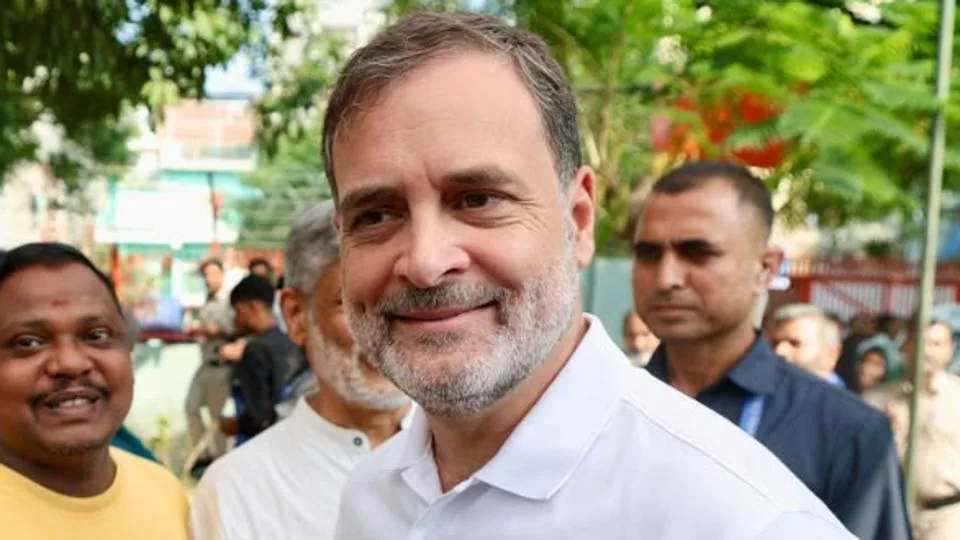
Congress leader Rahul Gandhi on Wednesday accused the government of allowing the Tata Group to be “criminally destroyed” and questioned why business leaders had remained silent amid the ongoing dispute involving the conglomerate’s leadership. His remarks come as tensions have emerged between Tata Sons, the group’s holding company, and Tata Trusts, its controlling shareholder.
In a post on X, Gandhi challenged business leaders to speak out, arguing that Indian businesses should not be treated as instruments of political power. His comments have brought renewed public attention to the disagreement over the reappointment of N Chandrasekaran as executive chairman of Tata Sons.
There was no immediate response from the Bharatiya Janata Party (BJP) or the Tata Group to Gandhi’s remarks. The allegations remain his political statements, and the underlying corporate dispute centres on differing interpretations of the company’s Articles of Association.
What Rahul Gandhi Said About the Tata Group
Gandhi used strong language to criticise what he described as the destruction of the Tata Group. He also questioned the willingness of business leaders to publicly challenge developments that they believe could affect the independence of Indian companies.
“Tata is being criminally destroyed, and no business leader dares say a word. How long will you stay silent? Until they own you? Indian business is not Modi and Shah’s plaything. You lack courage. We don’t. We will ensure justice for these crimes,” Gandhi said in his post on X.
His remarks directly linked the corporate dispute to broader political concerns about the relationship between government power and private enterprise. Gandhi argued that business leaders should not remain silent when the governance of a major Indian conglomerate is under scrutiny.
However, his description of the situation as a criminal act represents an allegation rather than an established legal finding. The available details concern a disagreement over Corporate Governance procedures, board voting and the interpretation of Tata Sons’ internal rules.
Why Tata Sons and Tata Trusts Are at Odds
The dispute involves two important entities within the Tata Group structure: Tata Sons, the holding company of the conglomerate, and Tata Trusts, its controlling shareholder. Their disagreement centres on the process used to approve a further five-year term for N Chandrasekaran as executive chairman of Tata Sons.
Noel Tata, chairperson of Tata Trusts, opposed a resolution passed on September 17 to reappoint Chandrasekaran after the end of his current term. His objection focused on the procedure followed by the board rather than simply the question of Chandrasekaran’s continuation in the role.
According to the position attributed to Tata Trusts, the procedure used for the September resolution differed from the process followed when Chandrasekaran was reappointed in 2022. This difference has become a central issue in the disagreement between the two sides.
The dispute is significant because Tata Sons occupies a central position in the group’s corporate structure. Decisions concerning its leadership and governance can affect the wider conglomerate, which operates across several industries and includes a large number of businesses.
The Disagreement Over N Chandrasekaran’s Reappointment
Chandrasekaran’s proposed reappointment for another five-year term has become the focal point of the dispute. Tata Trusts has questioned whether the resolution was validly approved under the applicable provisions of Tata Sons’ Articles of Association.
The Trusts contend that affirmative support from a majority of their nominee directors was a necessary condition for a valid resolution. Under this interpretation, the board could not approve the reappointment without satisfying that requirement.
Tata Trusts has also argued that a chairman’s casting vote could not override the failure to obtain the required support. The position reflects its interpretation of the company’s governance framework and the conditions governing decisions of this kind.
The disagreement therefore raises a fundamental corporate governance question: whether the board followed the correct procedure and whether the voting rules permitted the resolution to pass under the circumstances.
How Tata Sons Interprets Its Articles of Association
Tata Sons has relied on a different interpretation of Articles 104B, 118 and 121 of its Articles of Association. These provisions form part of the internal framework governing the company’s decision-making and board procedures.
One of the key issues is the operation of the casting vote provision when votes are equally divided. A casting vote can determine the outcome of a decision in certain circumstances, but its application depends on the governing rules and the specific situation in which it is used.
The two sides disagree over whether Article 118 applies to the reappointment of an incumbent chairman and how the casting vote should operate in this case. Their differing interpretations have contributed to the continuing uncertainty surrounding the September resolution.
Legal opinions obtained by the two sides have reportedly reached divergent conclusions on these questions. That divergence highlights the complexity of interpreting corporate rules when the rights of shareholders, board procedures and leadership appointments intersect.
The existence of differing legal opinions does not, by itself, establish that either side has violated the law. The outcome depends on the relevant provisions, the circumstances surrounding the vote and any subsequent resolution of the dispute.
Why the Dispute Matters for Corporate Governance
The disagreement extends beyond the question of who should lead Tata Sons. It also highlights the importance of clear governance rules, transparent decision-making and well-defined relationships between a company’s board and its controlling shareholders.
- Board decision-making: The dispute raises questions about how resolutions should be approved when directors disagree over the interpretation of voting rules.
- Shareholder influence: The disagreement highlights the role of controlling shareholders and their representatives in decisions involving senior leadership.
- Consistency in procedures: Tata Trusts’ objection partly concerns whether the process used in 2026 differed materially from the procedure followed in 2022.
- Legal interpretation: The different views on the Articles of Association demonstrate how internal corporate rules can become central to disputes over leadership and authority.
For large business groups, governance disagreements can create uncertainty around succession planning, board authority and strategic decision-making. The significance of this dispute will depend on how the parties resolve their differences and whether the validity of the reappointment is clarified.
Rahul Gandhi Connects the Dispute to Politics
Gandhi’s comments placed the corporate disagreement within a wider political argument about the relationship between government leaders and Indian businesses. By referring to Prime Minister Narendra Modi and Union Home Minister Amit Shah, he alleged that the country’s business community was being subjected to political influence.
His call for business leaders to speak out suggests that he views the Tata dispute as part of a broader concern about corporate independence. However, the supplied information does not establish that the government directed the disputed board decision or that political intervention caused the disagreement between Tata Sons and Tata Trusts.
The distinction between political criticism and the underlying corporate facts is important. Gandhi’s statements reflect his position, while the specific dispute concerns the interpretation of Tata Sons’ Articles of Association and the process used to approve Chandrasekaran’s reappointment.
The BJP had not issued an immediate response to Gandhi’s allegations at the time of the report. The Tata Group had also not provided an immediate response to his remarks.
What Happens Next?
The next developments will depend on whether Tata Sons and Tata Trusts can reach a common understanding of the relevant governance provisions or pursue further steps to resolve the disagreement. The central questions include whether the September 17 resolution met the required conditions and whether the casting vote could validly determine its outcome.
Any definitive assessment will require a careful examination of the Articles of Association, the circumstances of the board vote and the applicable legal interpretation. Until those questions are resolved, the competing positions should be treated as disputed interpretations rather than settled conclusions.
The absence of immediate responses from the BJP and Tata Group also means that their positions on Gandhi’s latest comments were not available in the supplied report. Any subsequent response could provide additional context, but it would not automatically resolve the separate corporate governance questions.
Key Takeaway
Rahul Gandhi has accused the Tata Group of being “criminally destroyed” and criticised business leaders for remaining silent. His remarks come amid a dispute between Tata Sons and Tata Trusts over the September 17 resolution to reappoint N Chandrasekaran as executive chairman for another five years. The disagreement centres on the interpretation of Articles 104B, 118 and 121 of Tata Sons’ Articles of Association, including whether a casting vote could validate the decision. With the parties holding different views and legal opinions reportedly diverging, the central issue remains the validity of the corporate decision-making process.
For breaking news and live news updates, like us on Facebook or follow us on Twitter and Instagram. Read more on Latest Business on thefoxdaily.com.






COMMENTS 0