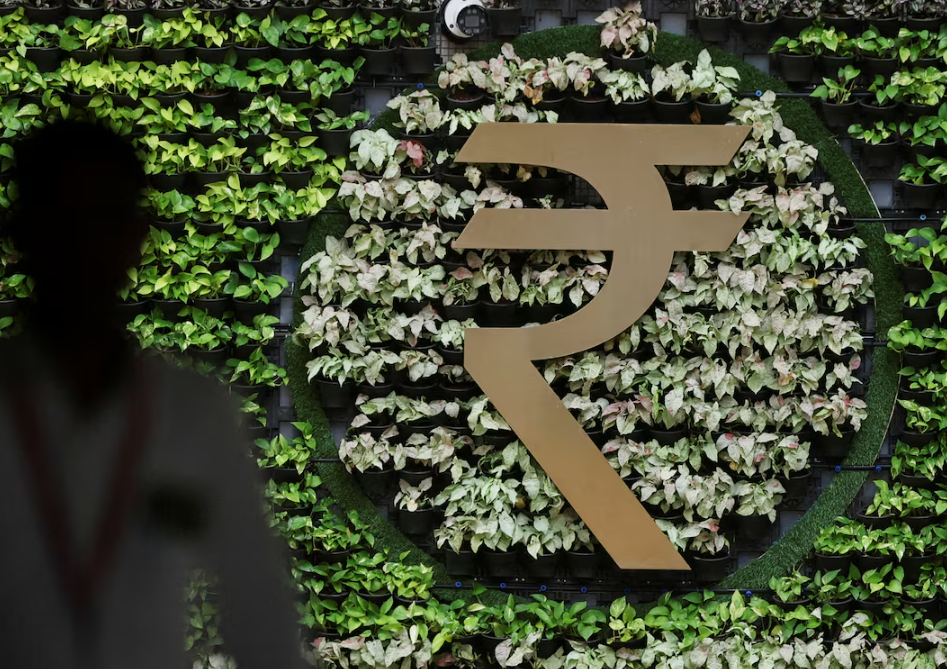
The Indian rupee is facing renewed pressure as elevated crude oil prices and expectations of a U.S. Federal Reserve rate hike combine to strengthen the forces working against the currency. Traders expect the rupee to open marginally weaker on Wednesday, September 16, after closing at ₹95.9550 per U.S. dollar on Tuesday.
The currency is now approaching the psychologically important ₹96-per-dollar level. A sustained move beyond that mark could expose the rupee to additional volatility, particularly if crude oil remains expensive and U.S. bond yields stay elevated.
Why the Rupee Is Under Pressure
Two major forces are currently shaping the rupee’s outlook: higher oil prices and changing expectations for U.S. interest rates.
Brent crude has been trading close to $110 a barrel amid disruptions to Middle Eastern oil supplies. For India, expensive crude creates additional pressure because the country relies heavily on imported oil to meet its energy requirements.
When crude becomes more expensive, India’s import bill can rise, increasing demand for U.S. dollars from oil companies and other importers. If dollar demand remains elevated, the rupee can come under pressure.
At the same time, expectations of tighter U.S. monetary policy can encourage global investors to hold more dollar-denominated assets. This can further complicate the environment for emerging-market currencies such as the rupee.
Rupee Falls for Seven Consecutive Sessions
The rupee has weakened for seven consecutive trading sessions, losing approximately 1.5% during the period despite near-daily intervention by the Reserve Bank of India.
About two weeks earlier, the currency was trading around ₹94.30 per dollar. It has since moved close to ₹96, highlighting how quickly the foreign-exchange environment has changed.
Tuesday’s trading session was particularly important because the rupee moved below ₹95.80, a level that traders had regarded as a key area of RBI support. A sustained break below that level, in rupee terms, means the currency is entering a zone where additional depreciation could occur.
| Indicator | Latest development |
|---|---|
| Rupee Tuesday close | ₹95.9550 per U.S. dollar |
| Recent losing streak | Seven sessions |
| Approximate decline during streak | 1.5% |
| Recent level around two weeks earlier | ₹94.30 per dollar |
| Key level watched by traders | ₹96 per dollar |
| Brent crude | Near $110 per barrel |
Why ₹96 Per Dollar Matters
The ₹96 level has become an important psychological and technical reference point for currency traders.
If the rupee merely touches ₹96 and then recovers, the move could remain contained. However, traders are watching for a sustained break above ₹96 per dollar. Such a move could encourage additional dollar buying and increase short-term volatility.
The importance of the level is also connected with the recent failure of ₹95.80 to hold as a support zone. Once a closely watched level breaks, market participants can reassess their expectations and adjust hedging positions.
That does not mean that a move beyond ₹96 automatically leads to a prolonged decline. Currency markets can reverse quickly when oil prices fall, dollar demand changes or central-bank intervention becomes stronger.
Fed Rate Hike Expectations Have Jumped
The second major challenge for the rupee is the sharp repricing of expectations for the U.S. Federal Reserve.
Interest-rate futures were pricing in more than a 90% probability of a Fed rate hike later on Wednesday, according to the CME FedWatch Tool. That compares with roughly 60% a week earlier.
The change in expectations has occurred alongside the rise in crude prices and stronger concerns about inflation. Higher energy costs can complicate the inflation outlook because fuel and transportation expenses can eventually feed into broader prices.
U.S. Treasury yields have also climbed to multi-year highs, making the dollar environment more challenging for emerging-market currencies.
Why U.S. Rate Expectations Affect the Rupee
Interest rates influence international capital flows. When investors expect U.S. rates to remain higher, dollar assets can become relatively more attractive.
For emerging markets, the effect can include greater demand for dollars, reduced appetite for some local-currency assets and higher hedging costs.
However, the relationship is not automatic. Investors also consider economic growth, inflation, trade balances, central-bank policy and the outlook for individual countries.
The Fed’s Message Could Matter More Than the Hike
Because the probability of a September rate increase has already risen above 90%, the actual decision may not be the biggest market-moving event.
Instead, investors are likely to focus heavily on the Federal Reserve’s updated economic projections and dot plot, as well as Chair Kevin Warsh’s comments during the press conference.
The central question is whether policymakers signal that another increase later in the year remains possible or indicate that they want to wait for more evidence before changing policy again.
Goldman Sachs suggested that the Fed may seek to prevent markets from becoming too confident about an October rate increase. One possible approach would be to emphasize that future decisions will depend on incoming economic and inflation data.
Oil Prices Create a Second Shock for India
The currency pressure cannot be viewed separately from the oil market.
Brent crude has moved sharply higher as attacks on energy infrastructure and shipping routes in the Middle East raise concerns about the reliability of regional supplies. The rise toward $110 a barrel represents a significant change from the lower oil-price environment seen earlier in the year.
For India, the impact extends beyond the foreign-exchange market. Higher crude prices can influence fuel costs, transportation expenses, inflation expectations and the country’s trade balance.
If expensive oil persists, the pressure can become more complicated because companies and consumers may face higher costs while policymakers have to balance inflation risks against economic growth.
RBI Intervention Has Limited the Decline
The Reserve Bank of India has been intervening frequently in the foreign-exchange market to limit excessive volatility. Traders reported near-daily intervention during the rupee’s recent decline.
Central-bank intervention can help smooth sharp movements by supplying dollars or managing liquidity conditions. However, intervention does not necessarily reverse the underlying forces driving a currency.
If oil remains elevated and global investors continue to anticipate higher U.S. interest rates, the RBI may face a difficult balancing act between allowing market adjustment and preventing disorderly moves.
| Pressure point | Potential effect on the rupee |
|---|---|
| Higher crude oil prices | Raises import-related dollar demand and can widen external pressure |
| Higher U.S. interest rates | Can support the dollar and challenge emerging-market currencies |
| Higher U.S. bond yields | Can increase the attractiveness of dollar-denominated assets |
| RBI intervention | Can reduce excessive volatility and smooth currency movements |
| Fed forward guidance | May determine whether current dollar strength persists |
What Traders Will Watch Next
1. The Fed’s September Decision
The immediate focus is the Federal Reserve’s policy announcement. While markets have increasingly priced in a rate increase, the accompanying statement and projections could determine the next direction for the dollar.
2. The Fed’s Dot Plot
The dot plot provides insight into policymakers’ expectations for future interest rates. Any meaningful change in the projected path could trigger movements in U.S. yields, the dollar and emerging-market currencies.
3. Oil Prices
Crude oil remains one of the most important external variables for the rupee. A further rise toward or above recent highs could increase pressure on India’s external accounts and inflation outlook, while a meaningful decline could reduce some of the immediate strain.
4. RBI Currency Operations
Market participants will continue watching how actively the RBI manages volatility. Intervention can influence the pace of a currency move even when broader global forces remain unfavorable.
5. U.S. Inflation Data
Future inflation readings will be crucial for determining whether the Fed can continue tightening or needs to become more cautious. This makes upcoming economic data particularly important for currency markets.
What a Weaker Rupee Could Mean for India
A weaker rupee has mixed effects on the Indian economy.
Export-oriented businesses can benefit from receiving more rupees for foreign-currency earnings, although the final impact depends on their imported inputs and hedging arrangements.
Importers, on the other hand, can face higher costs when the rupee depreciates. Oil is particularly important because crude is priced internationally in dollars.
A weaker currency combined with expensive crude can therefore create a more challenging inflation environment. If inflation becomes persistent, monetary policymakers may have less room to ease financial conditions.
There can also be consequences for companies with significant foreign-currency liabilities because servicing dollar-denominated obligations becomes more expensive in rupee terms.
Could the Rupee Stabilise?
The recent decline does not necessarily mean that the rupee will continue weakening at the same pace.
A stabilization could occur if crude prices retreat, geopolitical risks ease, U.S. yields decline or the Federal Reserve signals a more cautious approach toward additional rate increases.
Conversely, a combination of sustained oil supply disruptions, higher U.S. rates and continued dollar demand could keep the currency under pressure.
The most important distinction for markets will therefore be between a temporary shock and a persistent change in the underlying inflation and capital-flow environment.
Rupee Outlook: A Key Test for India’s External Stability
The rupee enters Wednesday’s session at a sensitive point. After seven consecutive sessions of losses and a close near ₹96 per dollar, traders are watching whether the currency can stabilize or establish a new trading range.
The Federal Reserve decision adds another layer of uncertainty. With markets already pricing in a high probability of a rate increase, the Fed’s communication about future policy could become more important than the initial rate move itself.
At the same time, crude oil near $110 a barrel keeps India’s external and inflation risks firmly in focus. The interaction between oil prices, U.S. monetary policy and RBI intervention will likely determine how much further volatility the rupee experiences.
For the Indian currency, the immediate challenge is therefore not a single economic indicator but the combination of high oil prices, elevated U.S. yields, changing Fed expectations and persistent dollar demand. How these forces evolve over the coming sessions will be critical for the rupee’s near-term direction.
For breaking news and live news updates, like us on Facebook or follow us on Twitter and Instagram. Read more on Latest Business on thefoxdaily.com.






COMMENTS 0