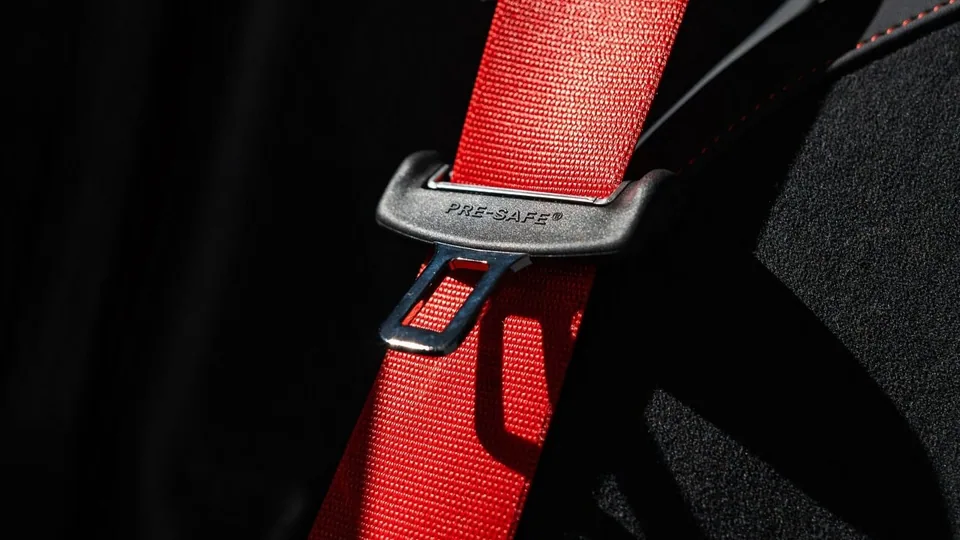
The automotive industry has invested billions of dollars in making vehicles safer, introducing technologies designed to prevent crashes and protect occupants when collisions happen. Modern cars can detect obstacles, automatically apply emergency brakes, monitor driver attention and deploy sophisticated airbag systems. Yet one of the most effective life-saving features remains something drivers have been asked to use for decades: the seat belt.
Approximately 10,000 people die in US road crashes every year while not wearing seat belts, accounting for roughly half of all vehicle-occupant fatalities. Despite improvements in vehicle engineering, stricter traffic laws and increasingly persistent warning systems, that figure has remained stubbornly high for more than a decade.
About 90% of Americans now use seat belts, a substantial improvement from the early 1980s, when usage was below 20%. But the remaining 10% have become the hardest group for automakers, safety researchers and regulators to reach.
The problem is forcing the industry to reconsider an approach that was once so unpopular that Congress effectively banned it: seat-belt interlock systems that prevent a vehicle from starting or restrict its operation until occupants buckle up.
The National Highway Traffic Safety Administration (NHTSA), the country’s leading automotive safety regulator, is considering whether modern interlock technology should be permitted as an alternative to certain existing vehicle safety testing requirements. The debate raises a difficult question for the automotive industry: how far should technology go to protect people who deliberately refuse to use basic safety equipment?
Why Are Seat Belts Still a Major Problem in Modern Cars?
Seat belts remain one of the most effective ways to reduce the risk of serious injury and death during a vehicle collision. They are designed to keep occupants inside the vehicle, distribute crash forces across stronger parts of the body and prevent people from striking the steering wheel, dashboard, windshield or other passengers.
Airbags provide additional protection, but they are not designed to replace seat belts. In many crashes, an airbag deploys with considerable force. Without a seat belt holding the occupant in the correct position, the person may move too close to the airbag before it inflates, increasing the risk of injury.
Modern vehicle safety systems therefore work best when occupants use seat belts properly. Even advanced airbags, automatic emergency braking and electronic stability control cannot eliminate the risks created when someone is thrown around inside a vehicle during a collision.
The problem is particularly serious in the United States, where seat-belt usage remains lower than in several other developed countries. Federal data cited in the industry debate puts US usage at approximately 90%, compared with rates of around 95% to 99% in Canada and many major European countries.
That difference may appear small, but it represents millions of people who regularly travel without one of the most basic forms of vehicle protection.
Why Do Some Drivers Refuse to Wear Seat Belts?
Safety researchers have found that people avoid seat belts for different reasons. There is no single explanation for why the remaining nonusers continue to ignore warnings and legal requirements.
Some drivers deliberately reject seat belts because they believe they are unnecessary, uncomfortable or restrictive. Others simply develop habits that make them less likely to buckle up, particularly when travelling short distances or driving familiar routes.
Researchers have also identified several groups and situations associated with lower seat-belt usage:
- Drivers who dislike restraints: Some people find seat belts uncomfortable or believe they restrict movement while driving.
- Young male drivers: Young men are frequently identified in road-safety research and enforcement campaigns as a group with higher rates of risky driving and seat-belt nonuse.
- Drunk drivers: People driving under the influence may be less likely to follow basic safety precautions, including wearing seat belts.
- Short-distance travellers: Some drivers believe that travelling only a few kilometres does not justify using a seat belt.
- Rear-seat passengers: Passengers in the back seat are often less likely to buckle up than those sitting in the front.
- People who disable warning systems: Some drivers deliberately disconnect or bypass vehicle alerts designed to encourage seat-belt use.
Comfort is another important issue. A poorly adjusted belt can rub against the neck, sit incorrectly across the body or feel restrictive. Some people may also struggle to find a comfortable position because of their height, body shape or seating arrangement.
However, researchers stress that discomfort does not remove the safety benefits of wearing a properly fitted belt. Correct adjustment can make a major difference in both comfort and protection.
Why Seat-Belt Warnings and Audible Alerts Are Not Enough
Automakers have spent decades trying to persuade drivers to buckle up through warning lights, dashboard messages and increasingly persistent audible alerts.
For most drivers, these systems work. A warning chime begins when someone enters the vehicle without fastening the seat belt, reminding the occupant to take action before driving.
However, the technology has struggled to change the behaviour of people who intentionally ignore or disable these systems.
Volvo Cars safety engineer Thomas Broberg has described the remaining nonusers as a difficult challenge for the industry. He argued that manufacturers cannot simply abandon efforts to reach the final 10%, even if technology alone may not provide the solution.
The problem is that warning systems depend on the driver responding to them. A person who has already decided not to wear a seat belt can ignore the noise, tolerate the flashing warning light or find a way to disable the alert.
Automakers have gradually increased the duration and persistence of these reminders. A new US regulation scheduled to take effect in 2028 will require driver seat-belt warnings to continue until the belt is fastened, rather than stopping after the existing 30-second alert period.
The change is intended to make it harder for drivers to ignore reminders. However, it does not physically prevent someone from driving without a seat belt.
The Return of Seat-Belt Interlocks: Technology That Could Stop Cars From Moving
One of the most controversial proposals now being reconsidered is the seat-belt interlock system.
An interlock connects the vehicle’s ignition or operating system to seat-belt sensors. If the driver or another specified occupant has not fastened a belt, the system can prevent the engine from starting or restrict the vehicle’s ability to operate.
More advanced versions could potentially limit a vehicle to very low speeds until the driver buckles up. The objective is to move beyond warnings and make seat-belt use a condition of normal vehicle operation.
The Alliance for Automotive Innovation, an industry group representing major car manufacturers, has supported reconsidering the technology. It argues that traditional warning systems have already achieved much of their potential and that further improvements may require stronger measures.
The proposal has also received attention from the NHTSA. In July 2026, the agency said it planned to seek public input on a proposal that could allow manufacturers to use interlock technology as an alternative to conducting complex crash tests evaluating vehicle safety for unbelted occupants.
The idea does not mean that every new car will immediately be required to prevent drivers from moving without seat belts. Regulatory approval, technical evaluation and public acceptance would still be necessary.
Nevertheless, the renewed discussion represents a significant shift in the industry’s approach to a problem that has resisted decades of conventional safety campaigns.
Why Did Congress Ban Seat-Belt Interlocks in the 1970s?
The United States has already experimented with seat-belt interlocks, but the first attempt created a major public backlash.
In the early 1970s, federal regulators believed that technology could force drivers to adopt safer behaviour. In 1972, the NHTSA introduced a rule requiring automakers to install systems that prevented vehicles from starting unless front-seat occupants fastened their seat belts.
The systems were relatively primitive by modern standards. Sensors sometimes incorrectly detected whether someone was sitting in a seat, while technical problems made vehicles difficult to start even when occupants were properly buckled.
Drivers complained that the technology was unreliable and intrusive. Some people who already wore seat belts disliked being forced to interact with a system that could malfunction.
Priya Prasad, a safety engineer who later worked on seat-belt technology at Ford, recalled experiencing problems with an interlock installed in his Mustang convertible. The system made starting the vehicle unnecessarily difficult, and he eventually removed a component to disable it.
Public opposition grew as similar complaints spread. Many drivers viewed the technology as an unnecessary restriction on personal freedom rather than a useful safety improvement.
Congress responded by passing legislation in 1974 that prevented federal regulators from requiring or permitting interlocks as a way for automakers to meet vehicle safety requirements. The decision effectively ended the first major effort to introduce mandatory seat-belt interlocks in American cars.
Instead, lawmakers and regulators focused on warning buzzers, dashboard indicators and mandatory seat-belt laws.
How the US Increased Seat-Belt Use From Below 20% to 90%
Although interlocks were abandoned, the United States gradually improved seat-belt usage through legislation, enforcement and public-awareness campaigns.
In the 1960s, seat belts were not widely used by American drivers and passengers. The issue gained national attention as road deaths increased and consumer safety advocates pushed for stronger vehicle protections.
Consumer activist Ralph Nader’s 1965 book, Unsafe at Any Speed, criticised the automotive industry’s approach to vehicle safety and helped intensify pressure for federal regulation.
Congress subsequently passed legislation requiring seat belts in new cars beginning in 1968 and established the federal agency that eventually became the NHTSA.
However, installing seat belts did not guarantee that people would use them. By the early 1980s, the proportion of occupants wearing seat belts remained only slightly above 12%.
A major shift came through state-level mandatory seat-belt laws. Under a policy approach developed during the Reagan administration, the federal government linked the requirement for automatic seat belts or airbags to whether states adopted mandatory seat-belt legislation.
Automakers opposed the prospect of additional safety equipment costs and supported efforts to encourage states to pass seat-belt laws. Chrysler chief executive Lee Iacocca argued in 1982 that many Americans viewed mandatory seat-belt requirements as an intrusion on personal freedom.
Over the following two decades, nearly every state introduced laws allowing police to issue citations for seat-belt violations. New Hampshire remained the exception for adult drivers and passengers.
Seat-belt usage rose to approximately 70% by the turn of the century and eventually reached around 90% during the middle of the 2010s.
The progress demonstrates that legislation, enforcement and technology can change public behaviour. However, the remaining group of nonusers has proven much more difficult to reach.
Ford’s Beltminder System Tried to Change Driver Behaviour
Automakers continued searching for ways to increase seat-belt use after the failure of early interlock technology.
In 2000, Ford introduced a system called Beltminder, developed under the leadership of safety engineer Priya Prasad. Rather than simply producing a short warning sound, the system combined dashboard warning lights with repeated audible alerts to remind drivers to buckle up.
Ford expected the system to face strong resistance. Suppliers and dealers had expressed concerns that customers might dislike persistent reminders and choose competing vehicles without the feature.
However, the company proceeded with the introduction. A Ford study found that Beltminder increased seat-belt usage by approximately five percentage points.
The result showed that more persistent reminders could influence driver behaviour, particularly among people who did not consistently wear seat belts.
But the system also revealed the limitations of warning-based technology. Some owners began searching online for ways to disable the alerts, demonstrating that a determined driver could still avoid the intended safety measure.
The experience reinforced the industry’s concern that reminders alone might not be sufficient to eliminate seat-belt nonuse.
BMW and General Motors Reconsidered Interlock Technology
By the early 2010s, automakers were once again discussing whether modern technology could make interlocks more practical.
In 2013, BMW asked the NHTSA to reconsider restrictions on seat-belt interlocks. The German manufacturer argued that technology had improved significantly since the unreliable systems of the 1970s.
The company suggested that modern interlocks could prevent a vehicle from operating normally or limit its speed when occupants failed to wear seat belts.
BMW also proposed allowing interlocks as an alternative to certain crash-testing requirements for unbelted occupants. The NHTSA rejected the request, saying it needed to evaluate the effectiveness and public acceptability of modern interlock systems more fully.
General Motors also experimented with a variation of seat-belt interlock technology during the middle of the 2010s. Testing indicated that it could improve usage among people who wore belts only occasionally, although the company did not introduce the system widely at the time.
The renewed industry interest suggests that automakers increasingly see the remaining nonusers as a problem that conventional reminders cannot fully address.
How New Technology Could Make Seat-Belt Interlocks More Reliable
One major difference between the original interlocks and modern proposals is the availability of advanced driver-monitoring and occupant-detection technology.
Today’s vehicles increasingly use cameras, sensors and electronic systems to monitor driver attention, identify occupants and detect conditions inside the cabin. These technologies could help manufacturers determine whether a seat belt is being worn correctly rather than simply detecting whether its buckle has been inserted.
That distinction is important because some drivers attempt to bypass warning systems by inserting a buckle without actually wearing the belt.
Suppliers are developing technologies designed to make such workarounds more difficult.
ZF Lifetec, a German automotive safety supplier, has worked on infrared-visible seat-belt webbing since 2019. The material can be detected by monitoring systems, helping vehicles determine whether the belt is being used correctly.
The technology could allow cameras and sensors to identify the actual position of the belt across an occupant’s body rather than relying only on a signal from the buckle.
Other automotive suppliers are also exploring ways to integrate seat-belt monitoring with existing driver-assistance systems. If regulators approve modern interlocks, these developments could help manufacturers introduce systems that are more reliable than the technology rejected in the 1970s.
However, the systems would need to balance accuracy, reliability, privacy and convenience. A sensor malfunction that prevents a driver from starting a vehicle could create safety and practical problems, particularly in emergency situations.
Why Stronger Seat-Belt Enforcement Is Still Necessary
Technology is only one part of the solution. Road-safety officials also argue that stronger enforcement of existing seat-belt laws is necessary to reduce preventable deaths.
In the United States, 35 states allow police officers to stop drivers specifically for failing to wear seat belts. Another 14 states generally permit seat-belt citations as a secondary offence during a traffic stop.
Enforcement policies vary by state, but the objective is to make drivers understand that refusing to buckle up can result in legal consequences.
NHTSA Administrator Jonathan Morrison has emphasised that Road Safety requires enforcement against multiple dangerous behaviours, including impaired driving, distracted driving, speeding and seat-belt violations.
Authorities are also trying to improve public messaging. The NHTSA has focused some campaigns on young men, using podcasts and social media to reach audiences that may be less responsive to traditional road-safety advertisements.
Researchers argue that campaigns are more effective when they address the reasons people avoid seat belts rather than simply repeating general safety messages.
For example, a campaign targeting young drivers may focus on crash risks and the consequences of being ejected from a vehicle. Another campaign could address discomfort by explaining how to adjust a seat belt correctly.
Why Rear-Seat Passengers Also Need to Wear Seat Belts
One overlooked part of the seat-belt problem involves passengers travelling in the back seat.
Many people automatically buckle up when driving or sitting in the front passenger seat but treat rear-seat travel differently. Some believe that sitting behind the front seats provides sufficient protection during a crash.
That assumption is dangerous. An unbelted rear-seat passenger can be thrown forward during a collision, striking the front seats or other occupants. In severe crashes, the passenger can also be ejected from the vehicle.
Unbelted occupants may therefore create additional risks for everyone inside the car, not just themselves.
Automakers and safety researchers increasingly recognise that seat-belt campaigns must address all seating positions. A driver wearing a belt does not make an unrestrained passenger safe.
Modern warning systems can help identify unbuckled occupants in different seats, but the effectiveness of those systems depends on accurate detection and whether passengers respond to the alerts.
Why Older Cars Remain a Major Challenge
Even if manufacturers introduce advanced seat-belt interlocks in future vehicles, the technology will not immediately solve the problem across the entire American vehicle fleet.
New safety systems are generally introduced in newly manufactured cars. Millions of older vehicles will remain on the road without advanced cameras, infrared seat-belt webbing or sophisticated occupant-monitoring systems.
Research indicates that older vehicles are associated with a higher frequency of unbelted occupant fatalities. These cars may also lack some of the crash-protection features available in modern models.
That means public education, traffic enforcement and existing seat-belt warning systems will continue to play an important role for years, even if new vehicles become more effective at preventing unbelted driving.
It also highlights why road-safety campaigns cannot depend entirely on automotive innovation. A person driving an older car still needs to make the same basic decision to buckle up.
Can the Car Industry Finally Eliminate the Last 10%?
The automotive industry’s renewed interest in seat-belt interlocks reflects the limits of decades of gradual improvements. Warning lights, audible alerts, mandatory laws and public campaigns have brought US seat-belt use close to 90%, but the remaining group continues to account for thousands of preventable deaths.
The Alliance for Automotive Innovation believes that even small improvements could save hundreds of lives annually. Its estimates suggest that every additional percentage point in seat-belt usage could make a meaningful difference to road safety.
However, the debate is not simply about whether interlocks can work. It is also about whether drivers will accept technology that restricts their ability to operate a vehicle and how manufacturers can prevent malfunctioning sensors from creating new problems.
The failure of the original interlocks in the 1970s remains an important warning. A safety system that is unreliable, inconvenient or easy to bypass may generate public opposition instead of improving behaviour.
Modern sensors and monitoring technology could address some of those weaknesses, but regulators will need evidence that the systems are effective and acceptable before approving broader use.
The Bigger Road-Safety Lesson: Advanced Cars Cannot Replace Responsible Driving
The seat-belt problem exposes a fundamental limitation of modern automotive safety. Cars can become more advanced, but their protective systems still depend heavily on the behaviour of the people inside them.
Automatic emergency braking can reduce the risk of certain collisions, airbags can cushion occupants and cameras can identify hazards. Yet none of these technologies can fully protect an unrestrained person during a serious crash.
Speeding, impaired driving and seat-belt misuse remain major contributors to preventable road deaths in the United States. Addressing these problems requires a combination of better vehicle engineering, effective enforcement and changes in driver behaviour.
The industry’s next challenge is not simply building cars that can protect people in increasingly complex crashes. It is finding ways to ensure that occupants use the safety equipment already available to them.
Nearly 70 years after Volvo introduced the modern three-point seat belt, the technology remains one of the most important innovations in automotive safety. The difficulty is no longer convincing most people that seat belts exist or that they work. It is reaching those who continue to refuse to use them.
Whether modern interlocks become part of that solution will depend on regulatory decisions, technological reliability and public acceptance. Until then, the simplest safety measure remains the most important: buckle up before the vehicle moves.
For breaking news and live news updates, like us on Facebook or follow us on Twitter and Instagram. Read more on Latest Business on thefoxdaily.com.





COMMENTS 0