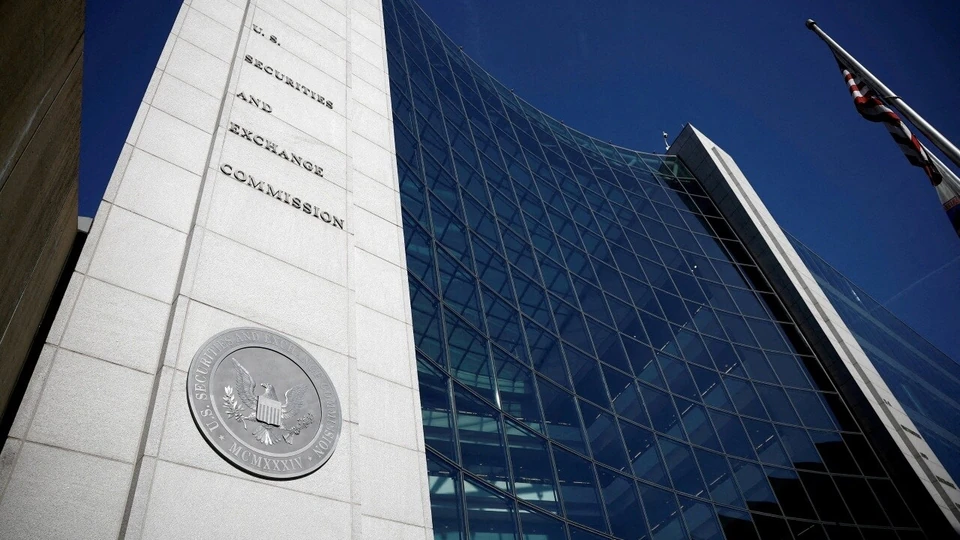
The US Securities and Exchange Commission (SEC) collected $1.1 billion in penalties during its latest federal fiscal year, marking its lowest annual total in nearly two decades. The decline highlights a significant shift in securities enforcement under the Trump administration, which has prioritised deregulation and policies intended to make it easier for companies to raise capital and introduce new financial products.
The figures, released by the SEC, show that the agency also brought substantially fewer enforcement actions than its historical average. The change has renewed debate over how aggressively the regulator should pursue financial misconduct, protect investors and oversee emerging areas such as cryptocurrency trading.
SEC Chairman Paul Atkins has argued that financial penalties and enforcement totals do not provide a complete picture of the agency’s work. However, the figures have drawn criticism from congressional Democrats, who are preparing to examine the regulator’s enforcement record.
Key Highlights
- The SEC collected $1.1 billion in penalties during its latest fiscal year, the lowest amount in nearly 18 years.
- The agency filed 348 enforcement actions, compared with an average of 634 annually over the previous decade.
- During the Biden administration, the SEC averaged approximately $5.8 billion in annual penalties.
- Under Chairman Paul Atkins, the regulator has withdrawn or dismissed several enforcement cases, particularly those involving cryptocurrency companies.
- The SEC continues to pursue traditional cases involving insider trading and fundraising fraud.
SEC Enforcement Actions Decline Sharply
The SEC filed 348 enforcement actions during the federal fiscal year that ended in September. This was considerably below the average of 634 actions recorded annually over the preceding decade.
The decline indicates a substantial reduction in the agency’s enforcement activity compared with its recent historical pattern. Enforcement actions are an important part of the SEC’s responsibilities, allowing it to investigate alleged violations of securities laws and pursue legal remedies against individuals and companies.
The latest figures also reflect a change in regulatory priorities under the Trump administration. The administration has pursued a deregulatory approach, with greater emphasis on reducing regulatory barriers and supporting capital formation.
However, fewer enforcement cases do not automatically establish whether investor protection has weakened or whether the agency is focusing its resources differently. The nature, seriousness and outcomes of individual cases also matter when evaluating the effectiveness of securities regulation.
SEC Penalties Reach Their Lowest Level Since the Financial Crisis
The $1.1 billion collected through court orders and settlements represents a major decline from the amounts reported in recent years. The last time the SEC’s enforcement collections fell below $2 billion was during the financial crisis of 2008, when regulators were dealing with the collapse and instability of financial institutions.
During the Biden administration, the SEC averaged approximately $5.8 billion in annual penalties. These figures included financial penalties as well as the forfeiture of profits obtained through alleged or established unlawful activity.
The comparison illustrates how significantly the agency’s financial enforcement results have changed. However, annual penalty totals can fluctuate depending on the size and timing of major settlements, court judgments and enforcement cases.
Therefore, the amount collected in a single year should not be treated as the only measure of whether the SEC is effectively carrying out its regulatory responsibilities.
Paul Atkins Says Enforcement Figures Do Not Tell the Full Story
SEC Chairman Paul Atkins has defended the agency’s approach, arguing that enforcement totals and financial remedies are not the only indicators of regulatory performance.
Atkins said enforcement actions and financial penalties are important measures of activity but are not necessarily the most meaningful indicators of the agency’s overall effectiveness.
His position reflects a broader regulatory approach that places greater emphasis on adapting rules to changing financial markets rather than relying primarily on enforcement proceedings. The administration has argued for making capital markets more accessible to businesses and supporting financial innovation.
At the same time, the SEC must continue balancing these objectives with its responsibility to protect investors, maintain fair markets and enforce federal securities laws.
Elizabeth Warren Criticises the Drop in Enforcement Activity
The SEC’s latest figures have attracted criticism from congressional Democrats. Senator Elizabeth Warren of Massachusetts criticised what she described as a sharp decline in enforcement activity and indicated that lawmakers would examine the agency’s record.
Warren is expected to take over the Senate Banking Committee when the committee’s leadership changes next year. She has said that the new Democratic majority in Congress will closely examine whether the Atkins-led SEC is adequately protecting American investors.
The potential congressional scrutiny could bring greater attention to the agency’s decisions to withdraw certain cases, its approach to cryptocurrency regulation and its priorities in traditional securities enforcement.
The disagreement reflects a wider debate about the balance between Financial Regulation and business flexibility. While supporters of deregulation argue that excessive enforcement can discourage investment and innovation, critics emphasise that strong oversight is necessary to deter fraud and maintain investor confidence.
SEC Changes Its Approach to Cryptocurrency Regulation
One of the most visible changes under Atkins has involved cryptocurrency enforcement. During the Biden administration, former SEC Chairman Gary Gensler maintained that many crypto assets qualified as securities and that companies offering or selling them needed to comply with investor-protection requirements.
Atkins has taken a different position, arguing that the SEC previously relied too heavily on enforcement actions to regulate the cryptocurrency industry instead of adapting its existing rules to the market’s specific structure.
Under the current leadership, the agency dropped most of its cryptocurrency lawsuits during the reported fiscal year. It also dismissed cases involving some former executives whose criminal sentences had been pardoned or commuted by President Donald Trump.
These decisions represent a significant change in the regulator’s approach to digital assets. The debate centres on how securities laws should apply to cryptocurrency businesses and whether clearer regulatory frameworks can provide greater certainty for companies and investors.
Several High-Profile Cases Were Dropped
The SEC’s enforcement changes also affected cases involving individuals and companies accused of financial or business-related misconduct. Among the cases dismissed were proceedings involving former executives such as Nikola founder Trevor Milton and Ozy Media co-founder Carlos Watson.
The source report states that these individuals had received presidential pardons or sentence commutations. The SEC’s decisions to dismiss related cases formed part of the broader reduction in enforcement activity under the agency’s new leadership.
Such developments have raised questions about the relationship between presidential clemency decisions and separate civil enforcement proceedings. Criminal cases and SEC civil actions are distinct legal processes, and the outcome of one does not automatically determine the status of the other.
Wall Street Had Opposed Higher Penalties Under Gary Gensler
The decline in SEC penalties follows years of criticism from parts of the financial industry over the regulator’s enforcement approach under former Chairman Gary Gensler.
Major financial institutions, including JPMorgan and Goldman Sachs, paid hundreds of millions of dollars to settle SEC investigations involving traders’ use of messaging applications that violated record-keeping requirements.
These investigations focused on financial firms’ failure to preserve business communications as required under securities regulations. Regulators argued that proper record-keeping is essential because it allows authorities to reconstruct trading activity, investigate potential misconduct and maintain effective oversight.
Wall Street firms criticised the scale of the penalties, while regulators treated the cases as an important part of enforcing compliance obligations. The change in leadership has brought a different approach to the use of financial penalties and enforcement proceedings.
Insider Trading and Fundraising Fraud Remain SEC Priorities
Despite reducing activity in certain areas, the SEC has continued pursuing cases involving traditional securities violations. These include insider trading, investment fraud and misleading fundraising practices.
In May, the agency sued 21 people accused of participating in an alleged insider trading network. According to the allegations, the group used confidential information supplied by a mergers-and-acquisitions lawyer, who allegedly shared valuable deal-related information with friends.
Insider trading cases remain an important part of the SEC’s investor-protection responsibilities because trading on confidential information can undermine confidence in the fairness of financial markets.
Fundraising fraud is another traditional enforcement area. The agency investigates cases in which companies or individuals allegedly mislead investors, misuse funds or make false claims while seeking capital.
The continuation of these cases suggests that the SEC has not abandoned its traditional enforcement responsibilities, even as it changes its approach to cryptocurrency and other regulatory areas.
What the Decline Means for Investors and Financial Markets
The reduction in enforcement actions and penalties could have implications for companies, financial institutions and individual investors. A less aggressive regulatory environment may reduce compliance uncertainty for businesses seeking to raise capital or introduce new financial products.
However, enforcement also plays an important role in discouraging fraud and protecting investors from misleading disclosures, insider trading and other securities violations. If regulatory oversight becomes less effective, investors may face greater difficulty identifying and avoiding misconduct.
For financial institutions, the change could influence how they assess regulatory risks and allocate resources to compliance programmes. However, companies remain subject to applicable securities laws and record-keeping obligations regardless of changes in enforcement priorities.
Investors should therefore continue examining company disclosures, financial statements and risk factors rather than assuming that lower enforcement totals mean fewer risks in the market.
Conclusion: SEC Faces Questions Over Its Enforcement Strategy
The SEC’s $1.1 billion enforcement total marks a major decline from the levels recorded during previous administrations and represents its lowest annual collection in nearly 18 years. The fall in enforcement actions also highlights the Trump administration’s shift towards a more deregulatory approach under Chairman Paul Atkins.
While the SEC leadership argues that financial penalties alone cannot measure regulatory effectiveness, the decline has raised concerns among congressional Democrats about investor protection and market oversight. The agency’s decisions involving cryptocurrency lawsuits and other high-profile cases are likely to remain central to that debate.
Ultimately, the SEC faces the challenge of supporting financial innovation and capital formation while maintaining confidence in US securities markets. Its future performance will depend not only on the number of cases it brings or the penalties it collects, but also on how effectively it identifies misconduct, protects investors and ensures fair market practices.
For breaking news and live news updates, like us on Facebook or follow us on Twitter and Instagram. Read more on Latest Business on thefoxdaily.com.






COMMENTS 0