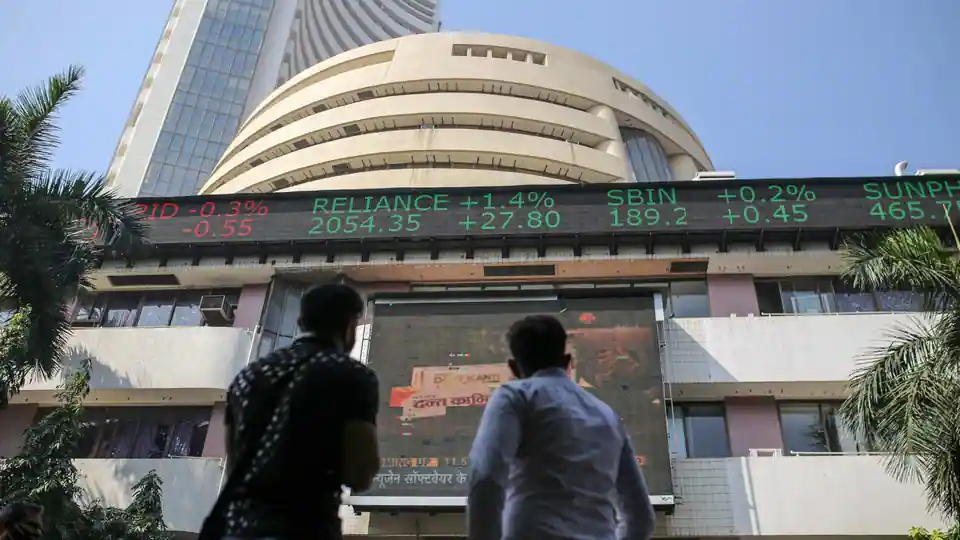
Indian stock markets opened sharply lower on Wednesday, September 9, as a fresh escalation in the Middle East conflict pushed Brent crude oil toward $100 a barrel and increased concerns about inflation, economic growth and foreign investment flows. The Sensex and Nifty 50 both came under pressure after already suffering a prolonged losing streak.
The latest market weakness highlights a familiar vulnerability for India: higher crude oil prices can quickly become a broader economic problem because the country imports most of its crude oil requirements. If elevated oil prices persist, investors may have to contend with pressure on corporate margins, inflation expectations, the trade deficit, the rupee and monetary-policy expectations.
Sensex and Nifty Fall at the Opening Bell
The BSE Sensex declined 474.44 points, or 0.63%, to 75,103.14 in early trading. The Nifty 50 fell 140.60 points, or 0.59%, to 23,494.50.
The decline extended a difficult period for Indian equities. Both benchmark indices had already lost about 2.2% over the previous seven sessions, with markets falling in six of those sessions. On Tuesday, the Sensex and Nifty closed at their lowest levels since June 12.
This means Wednesday’s weakness is not an isolated reaction to crude oil. Investors are entering the session with sentiment already fragile, making the market more sensitive to geopolitical developments and global economic signals.
Why Brent Crude Is Approaching $100
The immediate trigger was another escalation in the Middle East conflict. Brent crude futures climbed around 1.5% to $99.50 a barrel, bringing the benchmark close to the psychologically important $100 level.
Iranian-backed Houthis in Yemen reportedly launched strikes on several Saudi cities. US forces also struck multiple Iranian oil tankers, while Iran attacked a US military base in Jordan.
For financial markets, the importance of these developments goes beyond the military confrontation itself. The Middle East is central to global energy supplies, and any threat to oil production, transportation infrastructure or shipping routes can create a risk premium in crude prices.
Oil traders therefore watch geopolitical developments not only for actual supply losses but also for the possibility of future disruptions. Even before physical supplies disappear from the market, fears about disruption can push prices higher.
Why $100 Oil Matters So Much for India
India is particularly sensitive to crude oil because it relies heavily on imported oil to satisfy domestic energy demand. That makes international crude prices an important factor in the country’s external finances and inflation outlook.
When oil becomes significantly more expensive, Indian buyers have to spend more on imported energy. If the higher cost is not fully absorbed by companies or the government, it can eventually affect consumers through fuel, transportation and other costs.
The impact can spread through the economy in several stages:
- Higher import costs: India spends more on crude imports when international prices rise.
- Trade deficit pressure: A larger oil import bill can widen the merchandise trade deficit.
- Inflation risk: Expensive energy can increase transportation and production costs.
- Corporate margin pressure: Companies dependent on fuel and transportation may face higher expenses.
- Growth concerns: Persistent energy inflation can reduce purchasing power and increase business costs.
- Currency pressure: A larger dollar demand for energy imports can put pressure on the rupee.
The key issue for investors is therefore not simply whether Brent crosses $100 for a few trading sessions. The more important question is how long crude remains elevated.
Temporary Oil Spike or Prolonged Shock?
Markets can often absorb a short-lived geopolitical oil shock. A temporary jump in crude prices may have limited consequences if supply disruptions are quickly resolved and prices retreat.
A prolonged period of expensive crude is much more challenging.
If Brent remains close to or above $100 for an extended period, investors may begin reassessing earnings forecasts for oil-sensitive companies and the broader Indian economy. Expectations for inflation and interest rates could also change.
This creates an important distinction: the headline crude price matters, but the duration of the price shock matters even more.
US Inflation Data Adds Another Layer of Uncertainty
Indian investors are also waiting for the latest US inflation data later this week. The data could influence expectations surrounding the Federal Reserve’s interest-rate decision next week.
That creates a second source of uncertainty for Indian equities at the same time that geopolitical risks are increasing.
If US inflation remains stubbornly high, investors may expect US interest rates to stay elevated for longer. Higher US yields can make American bonds and dollar-denominated assets more attractive compared with emerging-market investments.
For India, this can affect foreign portfolio flows. When global investors reduce exposure to emerging markets, Indian equities can experience additional selling pressure, particularly when domestic sentiment is already weak.
Foreign Investors Continue to Sell Indian Shares
Foreign investor activity is another factor adding pressure to the market.
According to provisional data cited in the report, foreign investors were net sellers of Indian shares worth approximately ₹1.23 billion on Tuesday. They had also sold around $1.33 billion worth of Indian shares during September up to that point.
Foreign selling becomes particularly important when it coincides with global risk aversion. Geopolitical uncertainty, rising crude prices, US interest-rate expectations and currency concerns can reinforce one another.
However, foreign selling should not automatically be interpreted as a prediction of a prolonged market crash. Portfolio flows can change quickly when geopolitical conditions stabilize or global interest-rate expectations shift.
Why IT Stocks and Global-Facing Companies Need Attention
Indian information technology companies are heavily connected to global economic conditions, particularly the United States and other developed markets. Changes in global interest rates, business confidence and technology spending can therefore influence investor expectations for the sector.
When US monetary policy becomes tighter, investors often reassess valuations for growth-oriented companies. At the same time, geopolitical uncertainty can encourage investors to reduce exposure to riskier assets.
This creates a complicated environment for Indian IT stocks: their businesses may remain fundamentally strong, but their valuations can still react to changes in global risk appetite.
Stocks to Watch: Biocon
Biocon was in focus following media reports that Active Pine could sell a stake through a block deal estimated at around ₹6.38 billion.
Block deals can attract attention because a large share transaction may temporarily influence trading volumes and investor sentiment surrounding the company.
However, investors should distinguish between a shareholder selling shares and a change in the underlying business outlook. A stake sale by an investor does not automatically mean that the company’s operating fundamentals have deteriorated.
Stocks to Watch: Coforge
Coforge also attracted attention after the IT services company announced that Chairman Om Prakash Bhatt had resigned.
The resignation followed an internal audit connected to a board evaluation. The company said concerns included the disclosure of material information regarding Bhatt’s own performance to the board.
Corporate-governance developments can be particularly important for listed companies because investors assess not only revenue and profit growth but also the quality of oversight, transparency and board processes.
For Coforge, the market will likely focus on how the company manages the leadership transition and whether the development has any wider implications for governance or business operations.
Three Channels Through Which Oil Can Hurt Indian Stocks
The impact of crude oil on Indian equities can be understood through three major channels: inflation, earnings and capital flows.
1. Inflation Channel
Higher energy costs can feed into transportation, logistics and manufacturing expenses. If these increases become widespread, inflation expectations can rise.
That matters because investors closely monitor inflation when assessing the future direction of monetary policy.
2. Earnings Channel
Not every company is affected equally by higher crude prices. Airlines, logistics companies, chemical manufacturers and other fuel-intensive businesses can face greater cost pressure, while some energy-related businesses may benefit from higher prices.
Companies with strong pricing power may be able to pass higher costs to customers. Businesses operating with thin margins may have less flexibility.
3. Capital-Flow Channel
Higher oil prices can increase India’s import bill and put pressure on the external balance. At the same time, higher US rates can make global investors more cautious about emerging markets.
When both factors occur together, Indian equities can face pressure from domestic economic concerns and international portfolio flows at the same time.
Why the Nifty’s Recent Losing Streak Matters
The fact that the Sensex and Nifty have already declined about 2.2% over seven sessions is significant from a market-psychology perspective.
After several consecutive weak sessions, investors often become more sensitive to negative news. Traders may also reduce positions ahead of major economic announcements, creating additional volatility.
But a falling market does not necessarily mean that every stock or sector faces the same fundamental problem. Index movements can be heavily influenced by large-cap companies, financial stocks, IT companies and other heavyweight constituents.
The broader market therefore needs to be evaluated separately from the headline index numbers.
What Investors Should Watch Next
The next phase of market direction is likely to depend on several variables rather than one single event.
- Brent crude: Whether oil breaks decisively above $100 and, more importantly, whether it stays there.
- Middle East developments: Any further escalation involving major oil-producing countries or shipping routes could increase the risk premium.
- US inflation: The data could reshape expectations for the Federal Reserve’s next interest-rate decision.
- Foreign flows: Continued foreign selling could add pressure to Indian benchmarks.
- Rupee movement: Currency weakness could increase the domestic cost of imported commodities.
- Corporate earnings: Investors will assess whether higher input costs begin affecting profit expectations.
Could Brent Crude Move Above $100?
A sustained move above $100 would likely require more than a brief geopolitical headline. Markets would need evidence that supply risks are becoming materially larger or that transportation disruptions are lasting longer than expected.
On the other hand, if tensions ease and physical oil supplies remain available, the geopolitical premium could gradually decline.
This is why the $100 level should be viewed as a market threshold rather than an economic magic number. The difference between $99 and $101 is relatively small in practical terms. What matters more is whether prices remain elevated and begin changing inflation, consumption and business expectations.
How the Oil Shock Could Affect Different Indian Sectors
| Sector | Potential Impact of Higher Crude | Key Risk |
|---|---|---|
| Airlines | Negative | Higher fuel costs can pressure margins |
| Logistics | Negative | Higher transportation expenses |
| Paints and Chemicals | Potentially negative | Higher input and petrochemical costs |
| IT Services | Indirect | Global risk appetite and US rate expectations |
| Energy | Mixed | Impact depends on business model and pricing |
| Consumer Companies | Mixed to negative | Input costs and consumer purchasing power |
| Banks | Indirect | Growth, inflation and market sentiment |
The Bigger Picture for Indian Markets
The current sell-off demonstrates how closely India’s stock market is connected to developments outside the country. Domestic economic fundamentals remain important, but India cannot completely escape global shocks involving energy, interest rates, currencies and geopolitical risk.
Crude oil is particularly important because it connects several parts of the economy. A disruption in oil markets can affect imports, inflation, transportation, corporate costs, household purchasing power and the currency simultaneously.
That makes oil one of the most important global variables for Indian investors during periods of geopolitical stress.
At the same time, investors should avoid treating every market decline as evidence of a fundamental breakdown. Markets frequently price in expectations before the full economic impact becomes visible. If geopolitical tensions stabilize, crude prices fall and global rate expectations become more supportive, sentiment can change quickly.
Sensex and Nifty Outlook: Volatility Could Remain High
The near-term outlook for the Sensex and Nifty remains closely tied to crude oil and geopolitical developments. With Brent approaching $100, the Indian market has entered a period in which every major development in the Middle East could trigger a fresh reaction.
The upcoming US inflation data adds another catalyst. A combination of expensive crude and higher-than-expected US inflation would create a particularly difficult backdrop for emerging-market equities. Conversely, easing geopolitical tensions, softer oil prices and a more supportive global interest-rate outlook could help stabilize sentiment.
The most important takeaway is that India’s market weakness is being driven by a combination of factors rather than crude oil alone. Geopolitical escalation, rising energy prices, foreign selling, global interest-rate uncertainty and an already weak market trend are reinforcing each other.
Conclusion: Oil Is the Market’s Immediate Pressure Point
The Sensex and Nifty opened lower on September 9 as escalating Middle East tensions pushed Brent crude toward $100 a barrel. The decline extends a seven-session period in which both benchmark indices have already lost about 2.2%.
For India, the central concern is the economic impact of sustained expensive oil. A prolonged crude shock could increase the import bill, complicate inflation management, pressure corporate margins and affect investor flows.
Yet the crucial variable is not simply whether Brent crosses the $100 mark. The duration and scale of the oil shock will determine whether the current market pressure remains temporary or develops into a broader economic concern.
With US inflation data approaching and geopolitical tensions still elevated, investors should expect volatility to remain a defining feature of Indian equities in the near term.
For breaking news and live news updates, like us on Facebook or follow us on Twitter and Instagram. Read more on Latest Business on thefoxdaily.com.






COMMENTS 0