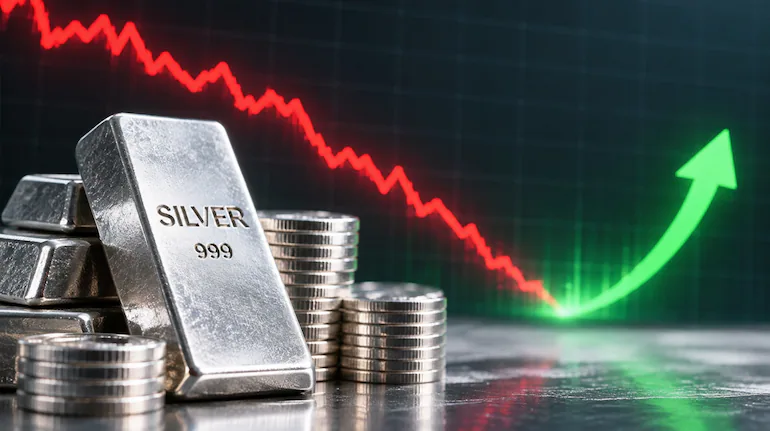
Silver Prices have fallen nearly 67% from their record high, triggering one of the sharpest corrections in the metal’s modern trading history. However, PL Capital believes silver may be approaching a potential bottom, with technical indicators suggesting that the recent decline could be losing momentum.
Comex silver prices dropped from nearly $121.60 on January 29, 2026, to around $39.50 this week, giving back approximately two-thirds of the gains recorded over the past ten months. The correction has been driven by expectations of further US interest rate hikes, a sharp decline in global equities and sustained outflows from silver exchange-traded funds (ETFs), according to PL Capital.
The brokerage has identified a support zone between $37 and $39.50, where silver could attempt to stabilise. However, it has cautioned that the technical signals currently indicate early stabilisation rather than a confirmed reversal of the broader downward trend.
PL Capital has advised investors interested in silver to consider gradual accumulation through Silver ETFs instead of making a lump-sum investment. The recommendation comes with an important condition: silver should sustain above the key support level of $35.
Silver Prices Fall Nearly 67% From January Record
The scale of silver’s correction has been significant. Comex silver reached a record high of nearly $121.60 on January 29, 2026, before declining to approximately $39.50 this week.
The fall represents a decline of roughly 67%, making it the second-deepest correction in modern history after the 1980 crash, according to the analysis cited by PL Capital.
Several factors have contributed to the selloff. Expectations of further interest rate increases in the United States have weighed on Precious Metals, while a sharp fall in global equity markets has added pressure to investor sentiment. Sustained outflows from silver ETFs have also contributed to the decline.
Silver is influenced by both investment demand and industrial consumption. This gives it a different market profile from gold, as changes in financial conditions and expectations about industrial activity can affect its price.
The recent correction has therefore reflected multiple pressures rather than a single market development. Whether prices can stabilise will depend on how these factors evolve alongside the technical support levels identified by the brokerage.
PL Capital Identifies $37–$39.50 as an Important Support Zone
PL Capital’s technical analysis identifies the $37–$39.50 range as an important support zone for Comex silver. The brokerage believes prices could experience consolidation in this area as the metal attempts to establish a base following its steep decline.
A support zone is a price range where buying interest may emerge and slow or temporarily halt a downward movement. It does not guarantee that prices will reverse, but it can help traders assess where selling pressure may begin to weaken.
In silver’s case, the identified range is particularly important because the metal has already experienced a substantial correction from its January record. If prices stabilise around this zone, it could indicate that the immediate selling pressure is easing.
However, a sustained break below the support range would weaken the current stabilisation argument. PL Capital has separately highlighted $35 as a key level that silver needs to hold for its broader constructive outlook to remain valid.
Harmonic ABCD Pattern Signals Possible Technical Completion
One of the key elements in PL Capital’s analysis is the Harmonic ABCD pattern visible on the daily price chart.
According to the brokerage, the decline from silver’s May high of approximately $89.50 has unfolded in this technical formation. The second downward leg, moving from point C to point D, now measures 2.01 times the recovery from point B to point C.
This is close to the textbook 2.0 completion level used in harmonic technical analysis. Such patterns are studied by traders to identify potential turning points by comparing the relative lengths of price movements.
The near-completion of the measured pattern suggests that the current decline may be approaching a technically significant area. It is one reason PL Capital believes silver could be nearing a potential bottom.
However, the completion of a chart pattern does not independently confirm a reversal. Prices can continue moving lower even after reaching a projected technical level, particularly when broader market conditions remain unfavourable.
RSI Shows Early Signs of Selling Momentum Exhaustion
PL Capital has also identified early signs of exhaustion in silver’s momentum indicators, particularly the Relative Strength Index (RSI).
The RSI is a technical indicator used to measure the speed and strength of recent price movements. Traders often examine it to assess whether buying or selling momentum is becoming stretched.
According to the brokerage, silver’s RSI has held a higher low even as the price recorded a lower low. This divergence can indicate that downward momentum is weakening, although it does not necessarily mean that prices have reached a final bottom.
The analysis also notes that RSI readings are approaching levels seen in July, which preceded the formation of the previous base.
Such a pattern can attract attention from technical traders because it suggests that selling pressure may be losing strength. Nevertheless, momentum indicators are most useful when supported by price stability and confirmation from other market signals.
Two Consecutive Weekly Gains Needed to Confirm Stabilisation
Despite identifying encouraging technical signals, PL Capital has warned against treating the current price movement as a confirmed trend reversal.
The brokerage believes that two consecutive weeks of positive closes while silver remains above the identified support zone would provide more reliable evidence of stabilisation.
This confirmation is important because a short-lived recovery can occur during a broader downward trend. A sustained improvement over multiple trading weeks would provide stronger evidence that buyers are returning and that selling pressure is easing.
Until that happens, the recent movement should be viewed as an early attempt to establish a price base rather than the beginning of a confirmed recovery.
Gold-Silver Ratio Near 85: Why It Matters
PL Capital has also pointed to the gold-silver ratio, which is currently near 85, approximately 10 points above its January level.
The gold-silver ratio measures how many ounces of silver are required to purchase one ounce of gold. It is widely monitored by precious-metal investors to compare the relative performance and valuation of the two metals.
A higher ratio means silver is trading at a lower price relative to gold, while a lower ratio indicates stronger relative performance by silver.
The current reading near 85 suggests that silver has weakened relative to gold compared with January. This provides another indicator for investors assessing the metal’s recent correction and potential recovery.
However, the ratio does not independently determine whether silver is undervalued or whether its price will rise. Its movement needs to be considered alongside demand conditions, interest rates, investment flows and broader precious-metal market trends.
December 8–9 US Federal Reserve Meeting Could Influence Silver
The upcoming US Federal Reserve meeting on December 8–9 is another important event for precious-metal markets, according to PL Capital’s analysis.
Interest rate expectations can influence silver prices because the metal does not generate interest income. When markets expect higher interest rates, interest-bearing assets may become relatively more attractive, potentially reducing demand for precious metals.
Expectations about Federal Reserve policy can also affect the US dollar and broader financial market sentiment. Changes in the dollar’s value may influence the price of internationally traded commodities, including silver.
The December meeting could therefore provide important signals about the direction of US monetary policy. If expectations of further rate increases strengthen, silver could face additional pressure. Conversely, a less restrictive outlook could improve sentiment towards precious metals.
However, the actual market reaction will depend on the Federal Reserve’s communication and how its decisions compare with investor expectations.
What Should Silver Investors Do?
Ashish Rajodiya, Head of Commodity at PL Capital, has suggested that investors consider accumulating silver gradually through Silver ETFs rather than making a large one-time investment.
“Investors can consider accumulating silver gradually through Silver ETFs in a staggered manner, rather than making a lump-sum investment. As long as silver prices sustain above the key support level of $35, the outlook remains constructive.”
The recommendation reflects the uncertainty surrounding silver’s near-term direction. Since the metal has already experienced a steep correction, investors may prefer to spread purchases over multiple periods rather than committing their entire intended allocation at one price.
Staggered buying involves investing smaller amounts at different intervals. This approach can reduce the risk of committing all available capital immediately before another price decline. However, it does not eliminate the possibility of losses if silver continues falling.
Silver ETFs provide investors with a way to gain exposure to silver prices without directly purchasing and storing physical metal. Their prices can fluctuate with the underlying silver market, and investors should also consider fund-related costs and tracking differences.
PL Capital’s recommendation is conditional on silver maintaining its key support level of $35. A sustained move below that level could weaken the brokerage’s constructive assessment.
Silver Price Targets: $43, $46–47 and $51–52
PL Capital has identified several upside levels that could become relevant if silver begins recovering from its recent correction.
- $43: The first upside level identified by the brokerage that could signal an initial recovery.
- $46–47: The region around the short-term moving average, which could act as the next important technical level.
- $51–52: A potential relief zone if the recovery gains further momentum.
These levels represent technical reference points rather than guaranteed price targets. Silver would need to regain upward momentum and sustain buying interest to move towards them.
The distinction between an initial rebound and a broader trend reversal is important. A recovery towards $43 may indicate that immediate selling pressure has eased, while a move towards higher levels would require continued strength.
Mumbai Silver Rates on November 26, 2026
Alongside the international market movement, the supplied market data lists the following silver prices in Mumbai for Thursday, November 26, 2026:
| Silver category | Price |
|---|---|
| 10 grams of silver | Rs 1,480 |
| 1 kilogram of silver | Rs 1,48,532 |
These domestic prices are different from international Comex quotations because Indian silver rates are also influenced by currency movements, import costs, taxes and local market conditions.
Why Silver’s Recovery Remains Uncertain
Although PL Capital has identified several technical signals that could indicate a potential bottom, the broader market environment remains important.
Expectations of further US rate hikes could continue to influence investor demand for precious metals. Weakness in global equities and continued outflows from silver ETFs may also affect sentiment.
On the other hand, stabilisation above the identified support range, improving RSI readings and a sustained sequence of positive weekly closes could strengthen the case for a recovery.
The gold-silver ratio and the Federal Reserve’s December policy meeting will provide additional indicators for investors to monitor. Together, these developments may help determine whether silver’s recent decline is approaching exhaustion or whether further volatility lies ahead.
Silver Nears a Potential Bottom, but Confirmation Is Still Needed
Silver’s nearly 67% decline from its January record has brought the metal close to the $37–$39.50 support zone identified by PL Capital. The brokerage’s analysis points to a near-completion of the Harmonic ABCD pattern and early signs of momentum exhaustion in the RSI.
These technical developments have raised the possibility that silver could be approaching a bottom. However, PL Capital has clearly distinguished early stabilisation from a confirmed trend reversal, highlighting the importance of two consecutive positive weekly closes above the support zone.
For investors considering exposure, the brokerage favours staggered accumulation through Silver ETFs rather than lump-sum buying, provided prices sustain above $35. The immediate recovery levels to watch are $43, $46–47 and $51–52.
Ultimately, silver’s direction will depend on whether technical support holds and whether broader market conditions become more favourable. Until stronger confirmation emerges, investors should recognise that the metal remains vulnerable to further price fluctuations.
For breaking news and live news updates, like us on Facebook or follow us on Twitter and Instagram. Read more on Latest Business on thefoxdaily.com.






COMMENTS 0