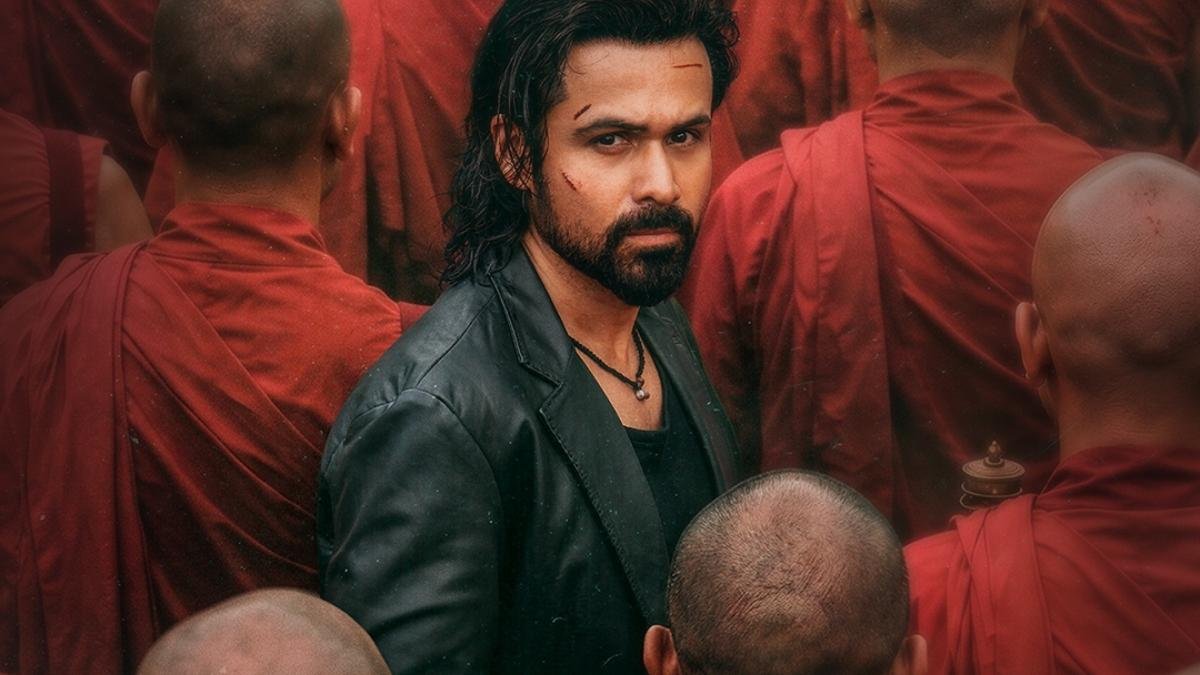
The Awarapan 2 trailer is short, but it understands exactly what audiences remember about its predecessor: Emraan Hashmi’s wounded intensity, doomed romance, brooding atmosphere and music-driven emotional storytelling. Rather than revealing the entire plot, the 1-minute-25-second preview uses violence, mystery and a handful of striking images to establish that Shivam’s story is far from over.
Directed by Nitin Kakkar, Awarapan 2 brings Hashmi back as Shivam, the character who became one of the defining figures of his early career. The sequel also features Disha Patani, Shabana Azmi, Suvinder Vicky, Vijayant Kohli, Atul Kumar, Aniruddh Rawal and Puran Gabbi in important roles.
The film is scheduled to release in theatres on August 14, 2026. Its arrival comes nearly 19 years after Awarapan, Mohit Suri’s 2007 romantic action drama that gradually developed a cult following rather than becoming simply another release from the era of Emraan Hashmi’s musical romances.
The sequel therefore has an unusual challenge. It is not merely introducing a new action story. It is attempting to reopen an emotional world that audiences have associated with a particular character, soundtrack and period of Hindi cinema.
The biggest question surrounding Awarapan 2 is consequently not whether Shivam can fight. It is whether the sequel can give his pain a new purpose without simply repeating the emotional formula of the first film.
What does the Awarapan 2 trailer reveal?
The trailer begins with Shivam being tortured while Shabana Azmi’s character watches. Her dialogue immediately establishes a threatening dynamic as she comments on his face and asks whether he likes meeting death.
Shivam’s response is deliberately cryptic: “I have an old relation with death.”
That line does several jobs at once. It recalls the fatalistic personality associated with the original character while establishing that this version of Shivam has already lived through considerable violence.
The trailer then accelerates into a montage of fights, weapons, confrontations and Shivam beating up several opponents.
Disha Patani appears only briefly, including in an image where she is seen playing a musical instrument. The limited glimpse suggests that the makers are deliberately keeping her character’s importance under wraps.
Instead of explaining the story, the trailer establishes three broad elements: Shivam is suffering, Shivam is dangerous and Shivam has unfinished business.
Who is Shivam?
For audiences who remember Awarapan, Shivam is not simply an action protagonist.
His appeal came from contradiction. He was capable of violence but emotionally vulnerable, hardened by circumstances but still capable of deep attachment. The character carried the weight of someone who had experienced loss and was unable to simply move on from it.
That emotional contradiction helped distinguish Awarapan from conventional action films.
The original film placed its protagonist inside a criminal world but gave the story a strong romantic and moral dimension. Shivam’s decisions were shaped by his emotional history rather than only by ambition or power.
The sequel appears to preserve that central idea while shifting the character toward vengeance.
That is potentially significant because revenge can be the natural next stage of a character defined by unresolved grief.
Why the return of Shivam matters
Sequels often bring back a successful character because audiences want familiarity. But returning to Shivam after such a long gap creates a different opportunity.
The character can now be treated as someone whose past has acquired additional weight.
When Awarapan released in 2007, Emraan Hashmi was closely associated with romantic dramas and music-heavy films. The character of Shivam fit neatly into that period of his career while also giving him space to play a more restrained and emotionally damaged protagonist.
Hashmi’s career has changed substantially since then. He has moved across romance, thrillers, crime dramas, mainstream action films and darker character parts.
Bringing Shivam back now creates an interesting contrast between the actor’s past image and his current screen persona.
The sequel can therefore work on two levels: as a continuation of Shivam’s fictional journey and as a return to one of Hashmi’s most recognisable dramatic identities.
Shabana Azmi could change the emotional balance
One of the trailer’s most intriguing developments is the apparent positioning of Shabana Azmi as an antagonist.
Her presence immediately changes the texture of the film.
Azmi is an actor associated with performances that can derive menace from restraint rather than simply from physical aggression. The trailer’s opening suggests that her character is capable of calmly observing violence while Shivam is being tortured.
That creates an interesting contrast.
Shivam is visibly battered and physically vulnerable, yet his dialogue indicates psychological resilience. Azmi’s character, meanwhile, appears to possess power over the situation without needing to display it through conventional action.
If the sequel develops this relationship properly, the conflict could become more compelling than a simple hero-versus-gangster confrontation.
The question is why she wants Shivam broken, what connects them and whether she is responsible for the new trauma that drives his revenge.
Revenge appears to replace the original film’s moral journey
The first Awarapan was remembered primarily for its emotional and romantic themes, even though it operated within an action-crime framework.
The sequel appears to be more directly organised around revenge.
That shift makes sense for a continuation, but it also introduces a creative risk.
Revenge stories are inherently repetitive unless the protagonist has something more complicated at stake. A character enters a conflict, identifies those responsible for his suffering and systematically confronts them. Without emotional development, the story can become a sequence of fights connected by exposition.
Awarapan 2 will need to avoid that trap.
Shivam’s revenge should ideally reveal something about him rather than simply demonstrate how effective he is at violence.
The most interesting version of the sequel would treat revenge as a psychological consequence of his unresolved past, not merely as an excuse for action scenes.
Disha Patani’s character remains a mystery
The trailer provides only a small glimpse of Disha Patani, making her role one of the film’s major unanswered questions.
Her appearance with a musical instrument immediately suggests a tonal connection to the romantic and musical identity of the franchise.
But the trailer does not establish whether she is Shivam’s new romantic interest, an ally, someone connected to his past or a character whose relationship with him becomes central to the revenge plot.
Keeping this information hidden may be a deliberate strategy.
For a film whose predecessor became strongly associated with music and romance, revealing too much about its emotional relationship in the trailer could reduce the impact of the theatrical experience.
At the same time, the sequel has to establish its own identity rather than simply replacing one romantic relationship with another.
The music will carry enormous expectations
Any discussion of Awarapan inevitably returns to its soundtrack.
The 2007 film developed a long afterlife partly because songs such as Toh Phir Aao, Tera Mera Rishta and Maula Maula became deeply associated with its emotional atmosphere.
The music was not merely an accessory to the story. It became part of how audiences remembered the film.
That creates a difficult benchmark for the sequel.
Awarapan 2 features music from Mithoon, Jeet Gannguli, Amaal Mallik, Ankit Sachdev and Wasif Ahmad, with lyrics credited to Sayeed Quadri, Rashmi Virag, Akhil Sachdeva and Sachin Urmtosh.
The large musical team suggests that the makers understand how important songs are to the franchise’s identity.
But recreating the atmosphere of a beloved soundtrack is difficult.
The sequel does not necessarily need another “Maula Maula.” It needs songs that perform the same dramatic function for this story—giving Shivam’s emotional life a musical language of its own.
Awarapan 2 must avoid becoming nostalgia cinema
This is perhaps the sequel’s biggest creative challenge.
Nearly two decades have passed since the original. Audiences who loved Awarapan have changed, and so has Hindi cinema.
Contemporary viewers have seen increasingly sophisticated crime dramas, action thrillers and character-driven revenge stories. Simply bringing back the old emotional vocabulary may not be enough.
Nostalgia can attract audiences to the theatre, but it cannot sustain an entire film.
The sequel therefore needs to answer a difficult question: what does Shivam’s story have to say now that it could not have said in 2007?
The answer could involve ageing, unresolved grief, the consequences of violence or the way trauma changes a person over time.
If the film finds that contemporary emotional core, its connection to the original could become meaningful rather than merely commercial.
How the sequel can differentiate itself from the original
| Element | Awarapan | Awarapan 2 |
|---|---|---|
| Central emotional drive | Love, sacrifice and moral conflict | Revenge, trauma and unresolved pain |
| Shivam’s position | A conflicted figure inside a criminal world | A hardened survivor confronting new enemies |
| Tone | Romantic, melancholic and dramatic | Darker, more action-oriented and threatening |
| Key mystery | Shivam’s emotional and moral choices | The forces behind his suffering and revenge |
| Music | Central to the film’s cult identity | Expected to bridge nostalgia with a new emotional story |
The distinction is important. A sequel does not need to duplicate the original’s tone to remain faithful to it.
In fact, allowing Shivam to evolve may be the more authentic continuation.
Why Emraan Hashmi is well suited to the material
Hashmi’s greatest strength in emotionally dark roles has often been his ability to communicate exhaustion without excessive theatricality.
Shivam requires precisely that quality.
A revenge protagonist can easily become one-dimensional if every scene is played at maximum intensity. The character becomes more interesting when anger is mixed with fatigue, regret or emotional emptiness.
The trailer’s dialogue about his “old relation with death” suggests that the sequel is again positioning Shivam as someone who does not fear death in the conventional sense.
That fatalism could become the emotional bridge between the two films.
Instead of asking whether Shivam can survive, the sequel may be more interested in whether he has anything left to lose.
Action is only half the challenge
The trailer clearly promises more elaborate action than the brief original preview material suggested. Shivam is shown fighting multiple opponents, and the visual language appears designed for a contemporary action audience.
That is expected from a sequel arriving in an era when Indian action cinema has become increasingly ambitious in scale and choreography.
But action alone cannot recreate Awarapan‘s emotional appeal.
The original’s cult reputation was not built purely around fights. Its lasting memory is connected to melancholy, romance, music and Hashmi’s performance.
Therefore, Awarapan 2 will have to balance two audiences: those returning for Shivam and those discovering him for the first time.
The action should advance the emotional story rather than interrupt it.
The real villain may be Shivam’s past
The trailer’s mystery surrounding Shabana Azmi’s character opens the possibility of a larger thematic conflict.
Perhaps the most compelling revenge story is one in which the protagonist eventually discovers that defeating the external enemy cannot erase what happened to him.
That would be particularly appropriate for Shivam.
A character who has already developed a complicated relationship with death may not simply be seeking justice. He may be trying to give meaning to his suffering.
If the sequel explores that dimension, its action could become a physical expression of an internal conflict.
This is also where the title Awarapan becomes significant. The word carries a sense of aimlessness, detachment and emotional drifting. If the original Shivam was defined by emotional dislocation, the sequel could ask what happens when that emptiness turns into a single-minded pursuit of revenge.
The August 14 release creates another challenge
Awarapan 2 is scheduled to release on August 14, alongside Sunny Deol and Preity Zinta’s Partition drama Batwara 1947.
The clash places two very different films in competition for theatrical attention.
For Awarapan 2, the opportunity is clear: the film can target audiences looking for action, romance, music and nostalgia around the Independence Day period.
Its biggest advantage may be the recognition attached to Shivam himself.
However, recognition also creates expectations. Audiences who have carried memories of Awarapan for almost two decades will inevitably compare the new film’s performances, songs, atmosphere and emotional impact with the original.
What could make Awarapan 2 work?
- A meaningful continuation: Shivam should evolve rather than simply repeat his old personality.
- A layered antagonist: Shabana Azmi’s character needs motivation beyond being a conventional villain.
- Emotional stakes: Revenge should connect to Shivam’s psychology and history.
- Memorable music: The soundtrack should create its own identity rather than rely entirely on nostalgia.
- Strong supporting characters: Disha Patani and the ensemble should have meaningful functions within the story.
- Controlled action: Fight sequences should reveal character and move the narrative forward.
The biggest unanswered question after the trailer
The trailer’s greatest strength is also its biggest limitation: it reveals almost nothing about the actual story.
We know Shivam is tortured. We know he survives. We know he fights. We know he wants revenge. We know there is a mysterious woman played by Disha Patani and an apparently powerful antagonist played by Shabana Azmi.
But the emotional connection between these pieces remains deliberately hidden.
That could work in the film’s favour.
Rather than giving away every major twist, the makers have chosen to sell the character, mood and music of the sequel.
For a franchise built on emotional atmosphere, that may be the smarter marketing decision.
Conclusion: Can Awarapan 2 recreate the old magic without living in the past?
Awarapan 2 has one advantage that cannot be manufactured: Shivam already means something to a generation of Emraan Hashmi fans. The original film may not have been an immediate blockbuster phenomenon on the scale of some of Hashmi’s other films, but its emotional intensity and soundtrack gave it a lasting cult following.
The sequel now has to convert that nostalgia into a fresh story.
The trailer suggests a darker and more violent chapter, with Shivam moving from emotional suffering towards vengeance. Shabana Azmi’s apparent antagonist adds mystery, while Disha Patani’s limited appearance leaves the romantic and emotional dimensions deliberately unclear.
The music is another crucial component. The original soundtrack created an unusually strong association between songs and character emotion, meaning the sequel cannot treat music as background decoration.
Most importantly, the film needs to understand why Shivam remains memorable.
He was never compelling merely because he could fight. He was compelling because he seemed broken, detached and capable of love at the same time.
If Awarapan 2 can preserve that contradiction while giving Shivam a genuinely new emotional journey, the sequel may have a chance to become more than a nostalgia-driven comeback.
The most promising version of the film is not one where Shivam simply returns to defeat another group of villains. It is one where his old wounds become the foundation of a new conflict—and where revenge forces him to confront the very pain that made him unforgettable in the first place.
That is the story the trailer hints at. Whether Awarapan 2 can turn that promise into something emotionally lasting will be decided when the film reaches theatres on August 14.</
For breaking news and live news updates, like us on Facebook or follow us on Twitter and Instagram. Read more on Latest Entertainment on thefoxdaily.com.






COMMENTS 0