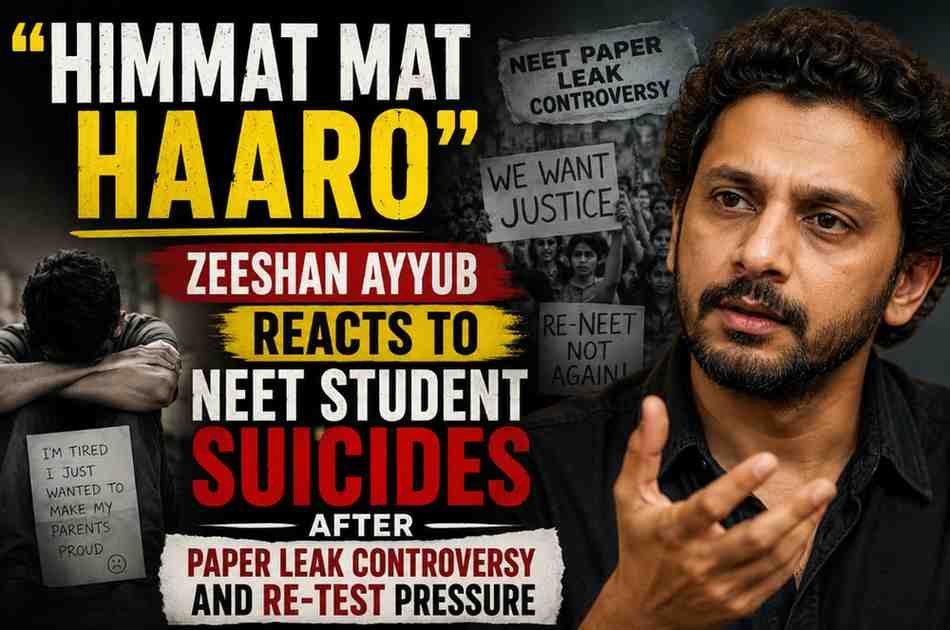
Actor Zeeshan Ayyub has expressed deep concern over the growing number of student suicides reportedly linked to the NEET-UG paper leak controversy and subsequent re-examination pressure. Reacting to the situation, the actor urged students not to lose hope, saying “Himmat mat haaro” (don’t give up), as distressing reports continue to emerge from different parts of the country.
According to multiple police records, family accounts, and media reports, at least 11 NEET aspirants have allegedly died by suicide in recent weeks, following the cancellation of the original exam and uncertainty surrounding the re-test process. While authorities continue investigations into individual cases, the broader situation has triggered a national debate on exam pressure and mental health support for students.
NEET Paper Leak Crisis and Its Ripple Effect on Students
The current crisis stems from allegations of a NEET-UG paper leak, which led to the cancellation of the original exam and the announcement of a re-test. The National Testing Agency (NTA) and government authorities have been conducting investigations while also attempting to restore exam integrity through stricter monitoring and security measures.
However, the sudden disruption has left millions of aspirants under immense stress. Many students had already performed well in the original exam or were preparing for counselling stages before the cancellation created uncertainty.
This disruption has had a severe psychological impact, particularly on students from rural and economically weaker backgrounds who often invest significant emotional and financial resources in the exam.
Rising Mental Health Concerns Among Medical Aspirants
The NEET exam is among India’s most competitive entrance tests, with over 20 lakh candidates competing for limited medical seats every year. The pressure to succeed is already extremely high, and the added uncertainty of re-examinations has intensified emotional distress among students.
Reports from across India indicate growing anxiety, depression, and emotional breakdowns among aspirants. In several tragic cases, students reportedly left behind notes or messages expressing fear of failure or inability to cope with repeated exams.
Experts have repeatedly warned that high-stakes examinations without adequate psychological support systems can create dangerous levels of stress among young candidates.
What Triggered the NEET Crisis: A Brief Background
The NEET controversy escalated after allegations of question paper leaks surfaced, leading to investigations and multiple arrests across states. Authorities later confirmed irregularities and initiated action against suspected networks involved in exam malpractice.
Following this, the original NEET-UG examination was cancelled, and a re-test was scheduled. While the decision aimed to ensure fairness, it also created widespread uncertainty among aspirants who had already prepared under extreme pressure.
In recent years, India has witnessed multiple paper leak scandals across competitive exams, raising concerns about systemic vulnerabilities and exam security frameworks.
Zeeshan Ayyub’s Emotional Appeal to Students
Amid rising distress, actor Zeeshan Ayyub’s message has resonated with many students and parents. By urging aspirants not to give up hope, he highlighted the emotional toll such crises can have on young minds.
His statement reflects a growing trend of public figures speaking out about mental health challenges faced by students in competitive academic systems. The phrase “Himmat mat haaro” has been widely shared online as a message of encouragement during a deeply sensitive moment.
While celebrity interventions do not solve systemic issues, they often help amplify awareness around mental health and the need for institutional support.
Why NEET Pressure Becomes So Overwhelming
The NEET examination represents a life-defining milestone for millions of Indian students aspiring to become doctors. The intense competition, combined with limited seats in government medical colleges, creates an extremely high-pressure environment.
Several factors contribute to this stress:
- Extremely low selection ratio compared to applicants
- Multiple years of preparation for many candidates
- Financial burden on families investing in coaching
- Social expectations and peer pressure
- Fear of losing a full academic year due to failure or re-exam cycles
When combined with uncertainties like paper leaks and re-tests, these pressures can become emotionally overwhelming for students.
Growing Debate Over Exam System Reforms
The NEET controversy has reignited discussions about the need for stronger reforms in India’s examination system. Education experts and policymakers have repeatedly emphasized the importance of transparency, digital security, and faster grievance redressal mechanisms.
At the same time, mental health advocates argue that academic systems must evolve to include emotional support structures alongside academic rigor.
The crisis has also raised questions about whether centralized exams with massive participation require additional psychological safety nets for students facing repeated disruptions.
Public Reaction and Social Media Concern
As reports of student suicides circulate, social media platforms have seen widespread concern, grief, and calls for reform. Hashtags related to NEET reform and student mental health have been trending intermittently, reflecting public frustration and empathy.
Many users have urged authorities to prioritize student counseling services, helplines, and on-ground mental health support during examination periods.
The situation has also sparked political reactions, with leaders across parties calling for accountability and systemic improvements in exam governance.
Need for Stronger Mental Health Support in Education
One of the most critical gaps highlighted by the crisis is the lack of structured mental health infrastructure for exam aspirants. While academic coaching is widely available, psychological counseling remains limited or inaccessible for many students.
Experts suggest several urgent measures:
- Mandatory counseling services at coaching institutes
- 24/7 student helplines during exam cycles
- School-level mental health awareness programs
- Early identification of stress symptoms among aspirants
- Parent awareness campaigns to reduce academic pressure
Without such interventions, experts warn that competitive exam stress could continue to have severe consequences.
Understanding the Bigger Issue Behind the Tragedy
While individual cases of suicide are deeply personal and complex, the broader pattern highlights systemic pressure within high-stakes education systems. The NEET crisis has exposed how quickly uncertainty in examination processes can escalate into mental health emergencies.
This is not just an exam-related issue but a reflection of how education systems interact with mental well-being, societal expectations, and institutional accountability.
Conclusion: A Call for Compassion and Systemic Change
Zeeshan Ayyub’s appeal to students to “stay strong” comes at a time when the NEET crisis has become more than just an academic controversy—it has turned into a national conversation about mental health, pressure, and reform.
With at least 11 reported student suicides linked to the ongoing uncertainty, the situation demands urgent attention from policymakers, educators, and society at large.
While investigations into the paper leak continue, the immediate priority remains clear: ensuring that students are supported emotionally, protected psychologically, and guided through one of the most stressful phases of their academic lives.
The NEET crisis serves as a reminder that education systems must balance competition with compassion, and achievement must never come at the cost of young lives.
“`
For breaking news and live news updates, like us on Facebook or follow us on Twitter and Instagram. Read more on Latest Entertainment on thefoxdaily.com.



COMMENTS 0