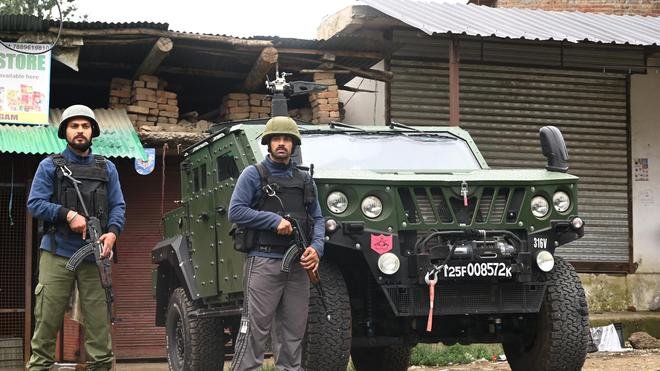
The Kulgam terror attack has once again brought the spotlight on the vulnerability of migrant workers in Jammu and Kashmir. In response to the tragic killing of two labourers, Chief Minister Omar Abdullah announced a compensation of ₹10 lakh for each victim’s family, in addition to the ₹6 lakh immediate relief already provided by district authorities.
Who: Two migrant labourers, Jammu and Kashmir administration, Chief Minister Omar Abdullah
What: Terror attack resulting in deaths and compensation announcement
When: August 1, 2026
Where: Kulgam district, Jammu and Kashmir
Why: Targeted violence against non-local workers
How: Terror attack amid ongoing security challenges in the region
While compensation offers immediate relief, the incident raises larger questions about security preparedness, migrant confidence, and the long-term stability of the region.
Understanding the Kulgam Terror Attack
Kulgam, located in south Kashmir, has witnessed intermittent militant activity over the years. The recent attack specifically targeted migrant labourers, a pattern that has emerged sporadically in recent times. These workers, often employed in construction and seasonal industries, are critical to the local economy but remain among the most vulnerable groups.
Unlike high-profile attacks on security forces, such incidents are designed to create fear and disrupt normalcy. The psychological impact often extends far beyond the immediate victims.
Why Migrant Workers Are Targeted
- They symbolize economic integration and normalcy
- They are relatively soft targets with limited protection
- Attacks generate widespread fear and media attention
- They can disrupt local economic activities
This makes such attacks not just acts of violence, but also strategic attempts to destabilize everyday life.
Compensation Breakdown and Government Response
The government’s financial response has been swift, combining immediate relief with additional compensation from the state leadership.
| Type of Assistance | Amount per Family | Authority |
|---|---|---|
| Immediate Relief | ₹6 lakh | District Administration |
| Additional Compensation | ₹10 lakh | Chief Minister |
| Total Compensation | ₹16 lakh | Combined |
While this financial support is significant, it also reflects a broader governance approach where monetary compensation becomes the first line of response to tragedy.
Timeline of Events
Understanding how events unfolded helps clarify both the urgency and the response mechanisms.
- Attack occurs: Two migrant labourers killed in Kulgam
- Immediate response: Security forces secure the area
- District action: ₹6 lakh compensation announced
- State intervention: CM Omar Abdullah adds ₹10 lakh per family
- Ongoing: Investigation and heightened security measures
The speed of administrative action indicates preparedness at a procedural level, but it also highlights the reactive nature of responses.
Deep Analysis: Why This Incident Matters Beyond Headlines
1. Security vs Perception Gap
Even if security metrics show improvement, incidents like the Kulgam terror attack create a perception of instability. For migrant workers and their families, perception often matters more than statistics.
2. Economic Ripple Effects
Migrant workers play a crucial role in sectors such as construction, agriculture, and small-scale industries. Fear-driven migration reversals can:
- Delay infrastructure projects
- Increase labor costs
- Disrupt local supply chains
3. Psychological Impact
Such attacks are designed to instill fear. The psychological consequences include:
- Reduced willingness of workers to travel to the region
- Anxiety among existing migrant communities
- Strain on local social harmony
4. Policy Challenge
The government faces a dual challenge:
- Ensuring physical security
- Building long-term trust
Compensation addresses neither fully—it is a short-term remedy, not a structural solution.
Comparison: Compensation vs Prevention
| Aspect | Compensation Approach | Preventive Approach |
|---|---|---|
| Timing | After incident | Before incident |
| Impact | Financial relief | Lives saved |
| Public Perception | Reactive governance | Proactive governance |
| Long-Term Benefit | Limited | High |
This comparison highlights a critical gap: preventive security measures are far more valuable than post-incident compensation.
The Bigger Picture: Migrant Safety in Conflict Zones
The Kulgam incident is not isolated—it reflects a broader issue of migrant safety in sensitive regions. Across conflict-prone areas globally, migrant workers often face:
- Limited institutional protection
- Lack of local support networks
- Higher exposure to targeted violence
In Kashmir, this issue is further complicated by geopolitical sensitivities and internal dynamics.
What More Can Be Done?
1. Strengthening Local Intelligence
Improved intelligence networks can help prevent attacks before they occur.
2. Worker Registration Systems
Maintaining a database of migrant workers can improve monitoring and protection.
3. Dedicated Security Zones
Providing secure accommodations for migrant workers can reduce vulnerability.
4. Community Integration Programs
Encouraging interaction between locals and migrants can build trust and reduce isolation.
Unique Insight: The “Invisible Workforce” Problem
One angle often overlooked is how migrant workers remain largely invisible in policy frameworks. They contribute significantly to local economies but lack:
- Strong representation
- Formal protection systems
- Consistent policy attention
This invisibility makes them easy targets—not just for violence, but also for systemic neglect.
Prediction: What Happens Next?
Based on current patterns, several developments are likely:
- Short-term increase in security presence in Kulgam
- Temporary decline in migrant worker inflow
- Renewed political focus on safety measures
- Gradual normalization unless further incidents occur
However, without structural reforms, similar incidents may continue to recur.
Real-World Impact on Families
For the families of the victims, compensation offers financial support but cannot replace lost lives. The impact includes:
- Loss of primary income source
- Emotional trauma
- Long-term financial uncertainty
This underscores the need for holistic support systems beyond one-time payments.
Conclusion: A Tragedy That Demands More Than Compensation
The Kulgam terror attack is a stark reminder that security challenges in Jammu and Kashmir persist, even as efforts toward normalization continue. The ₹10 lakh compensation announced by Omar Abdullah reflects administrative responsiveness, but it also highlights a deeper issue: the need to move from reactive relief to proactive protection.
Ensuring the safety of migrant workers is not just a security concern—it is essential for economic stability, social cohesion, and long-term peace in the region.
As the situation evolves, the real measure of governance will not be how quickly compensation is announced, but how effectively such tragedies are prevented in the first place.
For breaking news and live news updates, like us on Facebook or follow us on Twitter and Instagram. Read more on Latest Entertainment on thefoxdaily.com.

COMMENTS 0