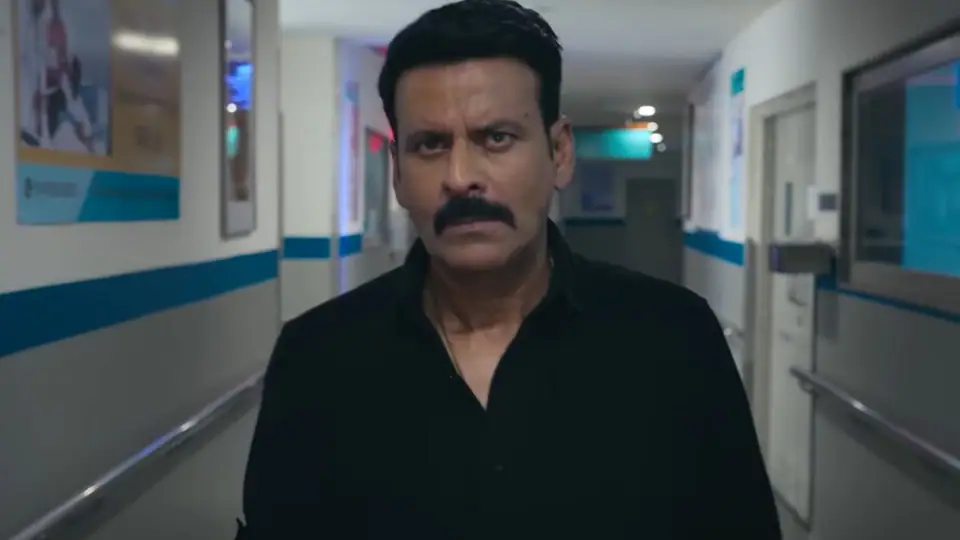
Veteran actor Manoj Bajpayee has criticised Bollywood for limiting talented performers through typecasting, arguing that many gifted actors have missed out on meaningful roles and recognition because the industry repeatedly confines them to familiar characters. Despite his celebrated career and memorable performances, Bajpayee believes filmmakers have explored only a small part of his acting abilities.
Speaking to Zoom ahead of his upcoming Netflix thriller Gajab Raat, previously titled Ghooskhor Pandat, the actor reflected on the challenges performers face when they are not given opportunities to demonstrate their full range. He also spoke about the emotional and professional consequences of an industry that, in his view, has failed to recognise several talented artists.
Bajpayee’s most striking admission was that only 25 per cent of his acting potential has been utilised so far. While the statement reflects his dissatisfaction with the opportunities he has received, it also reveals that his enthusiasm for acting remains undiminished. He believes there is still much more he can bring to the screen.
The actor also acknowledged the influence of streaming platforms, saying the arrival of OTT services has significantly changed the entertainment landscape and how audiences engage with performances. His comments come as he prepares to return to Netflix with Gajab Raat, a thriller directed by Ritesh Shah and produced by Friday Film Works.
Manoj Bajpayee Says Bollywood Has Ruined Talented Actors Through Typecasting
In his interview with Zoom, Bajpayee discussed how stereotyping can prevent actors from exploring different characters and developing their creative abilities. According to him, performers are often repeatedly cast in similar roles, making it difficult for them to demonstrate their versatility or move beyond the image associated with their earlier work.
The actor’s criticism extended beyond his personal experiences. He argued that Bollywood has lost talented performers by failing to provide them with suitable opportunities, fair treatment and the recognition they deserved. Some, he suggested, eventually faded from public attention without receiving the appreciation their abilities warranted.
Speaking about the issue, Bajpayee said, “Stereotyping is for many actors, and we have ruined talents just by doing that in this industry.” He also criticised the treatment actors sometimes receive on film sets, pointing to the roles they are offered and the way they are treated professionally.
He described the industry’s reputation in particularly strong terms, saying that talented performers had been diminished by the opportunities and treatment made available to them. In his view, some actors who could have contributed significantly to cinema were left without the recognition they deserved.
His remarks highlight a persistent challenge in the entertainment business: the tendency to associate performers with a particular character type after a successful role. An actor known for playing an intense police officer, for instance, may continue receiving similar parts even if they possess the ability to portray a romantic lead, a comic character or someone with a completely different personality.
Such casting decisions can be commercially understandable because filmmakers often prefer familiar formulas. However, repeatedly relying on the same image can restrict an actor’s professional growth and prevent audiences from seeing other dimensions of their talent.
Typecasting can also influence how the industry evaluates performers. When actors are continually associated with one kind of character, casting directors and producers may overlook their suitability for roles that fall outside that category. This can become a cycle in which limited opportunities reinforce the very image that restricts their careers.
Bajpayee’s comments question whether the industry always makes enough room for performers to evolve. His argument is that actors should be recognised for their wider abilities rather than being judged solely by the characters they have played previously.
‘Only 25 Per Cent of My Acting Abilities Have Been Used,’ Says Manoj Bajpayee
Despite his extensive experience, Bajpayee believes that much of his acting potential remains unexplored. The actor said he has consistently maintained that only 25 per cent of his abilities have been used, suggesting that the roles offered to him have not fully reflected the range he believes he possesses.
For an actor who has spent years working across different projects, the admission is a reminder that professional success does not necessarily mean creative satisfaction. Recognition can bring new opportunities, but it does not guarantee that every performer will receive the kinds of roles they hope to explore.
Bajpayee acknowledged that his belief in his untapped potential could be part of an actor’s natural hunger to do more. Rather than expressing frustration alone, he appeared pleased that he continues to feel motivated by the possibilities ahead.
“I have always maintained that only 25 percent of my acting abilities have been used; there’s a lot. But I think that’s an actor’s greed or an actor’s hunger, and I am very happy that the fire is still burning in the belly,” he said.
The remark reflects a mindset in which acting remains a process of discovery. Even after years in the profession, performers may want to explore unfamiliar emotions, experiment with different styles and accept roles that challenge their established screen identities.
For actors, creative growth often depends on the characters and stories available to them. A performer may be capable of playing a wide range of personalities, but the opportunity to demonstrate that versatility depends on the scripts being written and the willingness of filmmakers to cast them in unexpected roles.
Bajpayee’s statement also draws attention to the difference between an actor’s public image and their own understanding of their capabilities. Audiences may associate a performer with a handful of memorable characters, while the actor may feel that many other aspects of their craft remain unexplored.
His comments suggest that he is not ready to settle into a predictable pattern. The desire to take on more demanding parts remains central to his approach, even as he reflects critically on the industry’s past decisions.
Why Typecasting Can Limit an Actor’s Career
Typecasting can offer advantages when an actor becomes closely associated with a popular character or a successful genre. Familiarity can help performers build a recognisable identity, while audiences may actively seek them out for roles they have played convincingly in the past.
The problem emerges when that familiarity becomes a restriction. If an actor is repeatedly offered similar characters, they may have fewer opportunities to demonstrate their range or develop a different professional identity. Their career can become tied to the industry’s expectations rather than their own creative ambitions.
This can be particularly challenging for performers who want to move between genres. An actor recognised for serious drama may wish to explore comedy, while someone associated with romantic roles may want to take on a morally complex antagonist. Without opportunities to make those transitions, their abilities can remain less visible to audiences.
Breaking away from an established image often requires filmmakers to take creative risks. Casting an actor against type can produce unexpected performances and give a familiar face a new dimension. It can also help a story feel more unpredictable, especially when viewers bring assumptions about an actor’s screen persona to a new role.
However, not every repeated casting decision amounts to harmful stereotyping. Some performers deliberately build careers around a particular kind of character, and familiar roles can remain creatively satisfying when the writing offers something new. The issue Bajpayee raises is the loss of choice when actors are not given the opportunity to explore other possibilities.
His criticism also points towards the importance of recognition. Talented performers may struggle to build lasting careers if they are not offered substantial roles or treated as valuable creative contributors. When that happens, audiences can miss out on performances that might have emerged under different circumstances.
By questioning the industry’s reliance on familiar character types, Bajpayee has brought attention to the responsibility of filmmakers, writers and casting teams to look beyond established images. A broader approach to casting can create more varied stories while giving actors the freedom to develop their craft.
Manoj Bajpayee Credits OTT Platforms With Changing Bollywood
Although Bajpayee remains critical of the way the film industry has treated actors, he believes the emergence of streaming platforms has brought substantial changes. He particularly highlighted the way OTT has influenced audiences, encouraging them to pay closer attention to performances and storytelling.
According to the actor, viewers have become more engaged with the details of what they watch. Families can watch content at home, discuss the performances and openly identify elements they find effective or unconvincing.
“Mainly after the emergence of OTT here, things have changed drastically and we should always thank the coming of OTT in our country, and the families are watching. They can easily point it out and they talk about it in detail,” Bajpayee said.
His comments suggest that streaming has changed not only how people access entertainment but also how they discuss it. Audiences can revisit scenes, compare performances and spend more time examining the writing, character development and storytelling choices behind a production.
OTT platforms have also expanded the kinds of projects available to viewers. Alongside feature films, streaming services offer series and other formats that can give characters more time to develop. These formats may allow performers to explore complicated personalities, relationships and emotional journeys over a longer narrative.
For actors, this broader range of storytelling can create opportunities to take on characters that might not fit conventional commercial formulas. Projects can focus on distinctive themes, morally complicated individuals or narratives that require a more gradual approach to character development.
Nevertheless, streaming does not automatically solve every problem associated with typecasting. Actors still depend on writers, directors, producers and casting teams to create opportunities for them. The same limitations can exist across different formats when projects repeatedly rely on familiar character types.
Even so, Bajpayee’s comments show that he views OTT as a positive development for Indian entertainment. The growth of streaming has helped broaden the viewing landscape and, in his assessment, encouraged audiences to discuss performances in greater detail.
That increased attention can matter for actors whose work depends on subtlety and characterisation. When viewers engage closely with individual performances, they may develop a greater appreciation for the creative choices that make a character convincing.
Gajab Raat Reunites Manoj Bajpayee With Neeraj Pandey
Bajpayee’s comments arrive ahead of his upcoming Netflix thriller Gajab Raat, which reunites him with filmmaker Neeraj Pandey nearly a decade after their earlier collaborations on Aiyaary and the short film Ouch.
Produced by Friday Film Works, Gajab Raat is directed by Ritesh Shah and unfolds over a single night. The story centres on a police officer caught between personal interests and professional duty. One decision sets off a chain of events with serious consequences, placing the character in a situation where personal considerations and official responsibilities come into conflict.
The film’s single-night structure provides a concentrated setting for its thriller narrative. With events unfolding within a limited period, the story can focus on the pressure surrounding the central decision and the consequences that follow.
The premise also creates room to explore the moral challenges faced by someone responsible for upholding the law. A police officer’s duty can conflict with private interests, creating difficult choices about responsibility, loyalty and the impact of individual actions.
Gajab Raat marks Ritesh Shah’s directorial debut. The filmmaker takes charge of a story built around a police officer’s dilemma and a series of developments triggered by one consequential decision.
The film also features Saqib Saleem, Akshay Oberoi, Divya Dutta, Kiku Sharda, Nushrratt Bharuccha and Shraddha Das alongside Bajpayee. The ensemble cast brings together performers from different areas of Indian entertainment for a thriller driven by character choices and escalating events.
For Bajpayee, the project adds another thriller to a career that has included a wide variety of roles. Its central character faces a conflict between personal and professional interests, offering a story in which decisions and their consequences are central to the drama.
Gajab Raat Release Date and Netflix Premiere
According to the announcement accompanying the interview, Gajab Raat is scheduled to premiere globally on Netflix on October 23. The film was previously titled Ghooskhor Pandat before being announced under its current name.
The Netflix release brings the project to viewers across international markets and reunites Bajpayee with Pandey after their previous collaborations. The thriller’s single-night setting and focus on a police officer’s difficult decision form the foundation of its story.
With Ritesh Shah making his directorial debut and a cast that includes several familiar names, the film represents a new project for Bajpayee as he continues to seek varied material. Its release also comes as the actor speaks openly about the need for the industry to give performers opportunities beyond their established screen identities.
What Manoj Bajpayee’s Remarks Mean for His Career
Bajpayee’s criticism of Bollywood reflects a continuing concern about the way casting decisions can shape an actor’s professional future. He believes that talented performers have sometimes been denied meaningful opportunities because the industry has relied too heavily on stereotypes and familiar character types.
His admission that only 25 per cent of his acting abilities have been used is particularly striking because it frames his career as an ongoing creative journey rather than a completed achievement. The actor believes there is still much more he can offer, and his comments indicate that his ambition remains strong.
At the same time, his appreciation of OTT platforms suggests that he sees opportunities for change. Streaming has broadened access to different kinds of content and, in his view, encouraged audiences to engage more deeply with performances and storytelling.
As Gajab Raat prepares for its Netflix premiere, Bajpayee’s remarks offer insight into the challenges and motivations that continue to shape his work. They also raise a broader question for the film industry: how many compelling performances remain unrealised because actors are not given the opportunity to move beyond familiar roles?
For Bajpayee, the answer begins with recognising that an actor’s potential can extend far beyond the characters audiences already know. His desire to explore that potential remains undiminished, reinforcing his belief that creative growth requires more than professional recognition. It also requires the freedom to take risks, discover new dimensions and continue finding stories worth telling.
For breaking news and live news updates, like us on Facebook or follow us on Twitter and Instagram. Read more on Latest Entertainment on thefoxdaily.com.






COMMENTS 0