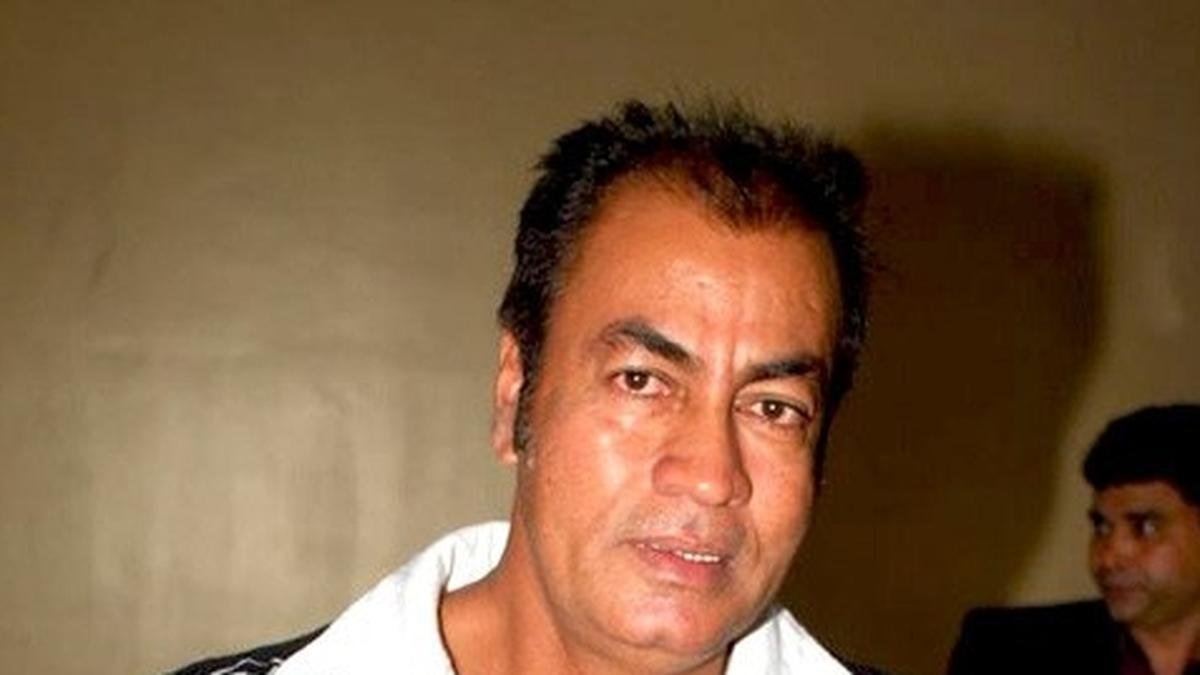
Pradeep Rawat, the veteran actor remembered by generations of viewers for playing Ashwatthama in Mahabharat and Deva in Ghajini, has died at the age of 74. Rawat died on August 4, 2026, after a battle with cancer. His death marks the passing of an actor whose career stretched across television and multiple Indian film industries, often finding him in roles that required authority, menace or an unmistakable screen presence.
The news was shared publicly by his Lagaan co-star Yashpal Sharma, who paid tribute to Rawat on social media. Sharma’s brief message referred to two of the roles most closely associated with the late actor: “Ghajini” and Deva from Lagaan.
For many viewers, however, Rawat’s career began much earlier than those celebrated film appearances. His portrayal of Ashwatthama in the television series Mahabharat gave him widespread recognition and established an association with imposing, dramatic characters that continued throughout his career.
His journey is therefore worth remembering not simply as the career of a supporting actor in major films, but as an example of how performers can build enduring identities from characters that remain in the audience’s memory long after the film or television series has ended.
Who was Pradeep Rawat?
Pradeep Rawat was an Indian actor who worked extensively across Hindi cinema, television and other Indian-language film industries. He became widely known through television before establishing himself as a familiar face in mainstream Indian cinema.
His screen career included films such as Meri Jung, Sarfarosh, Lagaan, The Hero: Love Story of a Spy, Ghajini and Chhaava, alongside numerous television appearances.
What distinguished Rawat was his ability to make supporting characters memorable. He was rarely dependent on being the central protagonist. Instead, his performances often gave secondary characters a sense of physical authority and dramatic weight.
That is an important part of his legacy: Rawat demonstrated how a supporting performer can become inseparable from the identity of a film or television story.
Why Ashwatthama in Mahabharat became a defining role
Rawat’s rise to prominence was closely associated with his portrayal of Ashwatthama in Mahabharat.
For an actor, playing a figure from the Mahabharata comes with a particular challenge. Audiences already approach such characters with established cultural and literary associations. The performance therefore has to communicate both familiarity and personality.
Rawat’s portrayal helped establish the kind of screen presence that later became a recurring feature of his career: physical intensity combined with a commanding appearance.
The significance of the role also lies in timing. Indian television’s mythological serials had an enormous cultural reach, allowing performers to become familiar faces in homes across the country.
Before social media and today’s fragmented streaming landscape, television characters could achieve an extraordinary level of recognition. A role in a major mythological serial could therefore shape an actor’s public identity for years.
For Rawat, Ashwatthama became the foundation on which a much longer screen career was built.
From television recognition to mainstream cinema
Rawat’s transition into films illustrates the changing relationship between Indian television and cinema.
Rather than treating television as a separate acting ecosystem, many performers moved between the two mediums, carrying with them the recognition they had developed among viewers.
Rawat appeared in films including Meri Jung and later Sarfarosh, expanding his presence within Hindi cinema.
Sarfarosh, in particular, became part of a period when Hindi films were increasingly exploring crime, terrorism, policing and national security through more grounded dramatic narratives. Rawat’s ability to play formidable figures fitted naturally into that environment.
His film career subsequently became increasingly diverse, even though many of his most remembered parts continued to involve authority or antagonistic energy.
Lagaan gave Pradeep Rawat another unforgettable character
For a large section of contemporary Indian audiences, Rawat is inseparable from Lagaan.
The 2001 film, directed by Ashutosh Gowariker and starring Aamir Khan, combined period drama, sport, colonial history and ensemble storytelling. Within that large cast, Rawat played Deva, one of the members of the village cricket team.
Deva’s importance came partly from his physicality and temperament. The character initially appears formidable and confrontational, but his place within the team gives him a broader emotional function.
The film’s cricket matches required an ensemble in which every player had a recognisable identity. Rawat’s screen presence helped Deva stand out without turning the character into a separate storyline.
This was one of Rawat’s particular strengths: he could communicate a character quickly, often through posture, expression and physical presence, without requiring extensive dialogue.
That quality is especially valuable in ensemble films, where supporting performers have limited screen time but must still make an impression.
Why Ghajini made Rawat internationally recognisable
Rawat’s association with Ghajini introduced his work to another generation of viewers.
In Aamir Khan’s 2008 Hindi adaptation of the Tamil film, Rawat played the antagonist Deva. The character’s physical presence and threatening relationship with the protagonist made him one of the film’s memorable supporting figures.
The film became a major commercial success and helped popularise a particular style of Hindi action thriller built around an emotionally driven protagonist, nonlinear storytelling and physical transformation.
Rawat’s role was important because the antagonist needed to create a credible threat against an unusually determined hero.
The result was another character that became part of the film’s popular memory.
There is an interesting symmetry in Rawat’s association with the names “Deva” in both Lagaan and Ghajini. In one film, the character is part of an underdog team fighting for survival; in the other, the name is associated with a violent antagonist. The contrast reflects the range within Rawat’s recurring screen image.
Pradeep Rawat’s career was bigger than Ghajini
Although Ghajini is among the titles most frequently mentioned when Rawat’s career is discussed, reducing his legacy to one film would overlook the breadth of his work.
His filmography included The Hero: Love Story of a Spy, while his television work included shows such as Tehkikaat, Chandrakanta and Yug.
He also worked across Indian-language cinema, reflecting a broader reality of the country’s film industry: successful performers often move between linguistic markets when their screen persona suits different kinds of stories.
That ability to work across industries helped Rawat remain relevant over a long period rather than being defined by one particular decade.
A career built around character rather than celebrity
Rawat belonged to a generation of actors for whom recognition did not necessarily mean occupying the centre of the poster.
Indian cinema has always relied heavily on character actors. They create the texture around leading stars, establish the credibility of antagonists, strengthen ensemble casts and often provide the visual shorthand through which audiences understand a fictional world.
Rawat’s career is a strong example of that tradition.
He could play mythological figures, antagonists, authority figures and supporting characters without needing to transform himself into a conventional leading man.
His lasting contribution was the ability to make a character feel larger than the amount of screen time it received.
Pradeep Rawat and the changing face of Indian cinema
Rawat’s career also mirrors several major changes in Indian entertainment.
He began during an era when television was becoming a powerful national medium. Mythological programming could create stars with extraordinary household recognition.
He then moved through the Hindi film industry during the 1990s and 2000s, a period marked by the expansion of multiplex cinema, more varied genres and increasingly ambitious ensemble productions.
His later work also reflects the increasingly multilingual nature of Indian cinema, in which performers, technicians and filmmakers frequently move between industries.
Today, actors can build visibility through streaming platforms, social media and international releases. Rawat’s career belongs to an earlier system, but his path demonstrates something that remains true: audiences remember performances more strongly than billing order.
Comparing his most remembered roles
| Role | Project | Why it mattered |
|---|---|---|
| Ashwatthama | Mahabharat | Established Rawat’s public recognition through a major mythological television series |
| Deva | Lagaan | Made him part of one of Hindi cinema’s most celebrated ensemble films |
| Deva | Ghajini | Strengthened his identity as a powerful screen antagonist in a major action thriller |
| Supporting roles | Sarfarosh, The Hero and other projects | Demonstrated his ability to move across genres and character types |
The comparison reveals something interesting. Rawat’s most remembered performances came from radically different contexts—mythology, sports drama and psychological action thriller.
What connects them is not the genre but his ability to project authority.
Why character actors often leave the strongest memories
There is a curious paradox in popular cinema. Leading actors receive the largest amount of attention, but audiences often remember supporting characters with surprising precision.
The reason is partly structural.
A supporting character generally enters a story with a specific dramatic function. The audience quickly understands what that person represents—danger, loyalty, conflict, authority, comic relief or resistance.
Actors such as Rawat become effective because they make that function feel like a complete personality.
His imposing physicality certainly contributed to his screen identity, but physical presence alone cannot sustain a career lasting decades. The actor’s ability to adapt that presence to different narrative contexts was equally important.
In Lagaan, that physicality could become part of a team dynamic. In Ghajini, it could become threatening. In Mahabharat, it could contribute to the grandeur expected of a mythological character.
The same basic screen quality could therefore produce very different dramatic effects.
The significance of Pradeep Rawat’s death at 74
Rawat’s death is a reminder of how much of Indian popular culture is carried by performers whose work spans generations.
A viewer may have first encountered him as Ashwatthama on television, another through Lagaan, and a younger audience through Ghajini or later films.
That cross-generational familiarity is difficult to manufacture.
It comes from longevity, recognisable performances and participation in projects that themselves become cultural reference points.
His passing therefore resonates beyond a single film community. It marks the loss of a performer whose career connected Indian television’s mass era with the evolving landscape of mainstream cinema.
What Pradeep Rawat leaves behind
Rawat’s legacy is not based on one signature protagonist. Instead, it is spread across a collection of characters that remain instantly identifiable.
Ashwatthama represents his television breakthrough. Deva in Lagaan represents his contribution to an ensemble classic. His role in Ghajini represents the kind of antagonist who could leave an impression even alongside a major star.
His other television and film appearances add further layers to that career.
That makes his body of work particularly valuable to look back on. It shows how an actor can build a lasting identity without following the conventional path from supporting roles to leading-man status.
Conclusion: Remembering the actor behind the memorable faces
Pradeep Rawat’s death at 74 closes a career that travelled from mythological television to some of the most recognisable films in modern Indian popular cinema.
He became widely known as Ashwatthama in Mahabharat, reached another generation through Lagaan and became closely associated with the antagonist in Ghajini. His work in Sarfarosh, The Hero: Love Story of a Spy, Meri Jung, Chhaava and television series such as Tehkikaat, Chandrakanta and Yug further demonstrates the breadth of his career.
But the most useful way to remember Rawat may be to look beyond individual titles.
He represented a particular kind of Indian screen actor: the performer who could walk into a scene and immediately alter its energy. Sometimes that meant menace. Sometimes it meant authority. Sometimes it meant simply making a supporting character impossible to overlook.
In an industry where celebrity often determines how much attention a performer receives, Pradeep Rawat’s career offered a quieter lesson: memorable cinema also depends on actors who make supporting characters feel essential.
His most famous roles will continue to introduce him to new audiences, but his larger legacy lies in the consistency with which he gave Indian television and cinema characters a physical and dramatic presence that audiences could recognise instantly.
For breaking news and live news updates, like us on Facebook or follow us on Twitter and Instagram. Read more on Latest Entertainment on thefoxdaily.com.






COMMENTS 0