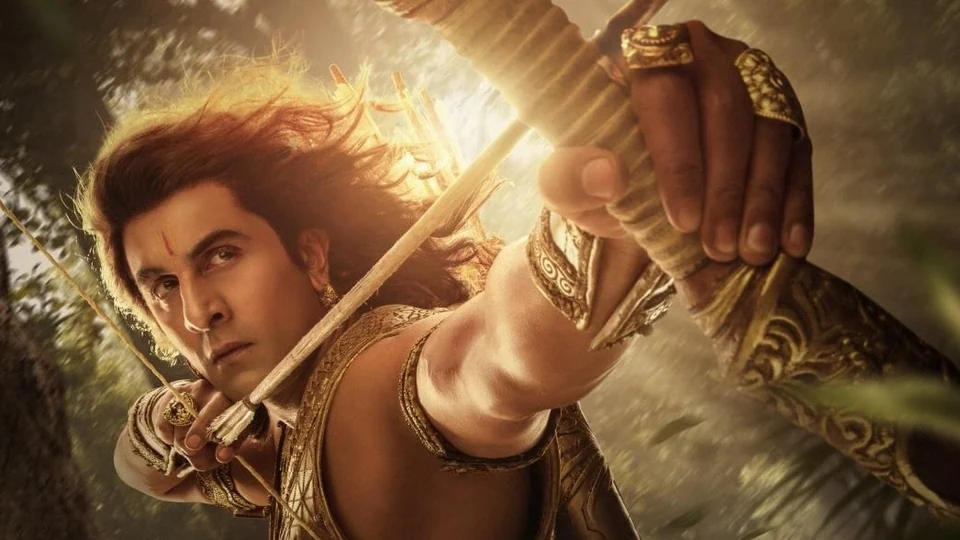
Ramayana box office collection day 20: Nitesh Tiwari’s Ramayana: Part 1 continues its strong theatrical run, moving closer to the ₹1,000 crore mark at the Indian box office. Headlined by Ranbir Kapoor, Yash and Sai Pallavi, the mythological epic has maintained audience interest across multiple language versions, even as its daily collections have fluctuated during its third week.
After experiencing a decline in collections over the weekend and on Monday, the film registered a noticeable recovery on its third Tuesday. Its estimated earnings increased to ₹16.11 crore, indicating that the film continues to attract moviegoers in theatres. With its India net collection now approaching ₹1,000 crore, the next phase of its box office journey will be closely watched.
Ramayana Box Office Collection Day 20: Third Tuesday Earnings
Ramayana: Part 1 collected an estimated ₹16.11 crore net in India on its third Tuesday, taking its total domestic net collection to approximately ₹971.56 crore. The latest figures represent a significant improvement over Monday, when the film earned around ₹12.70 crore.
The Tuesday collection was approximately 26.85% higher than Monday’s earnings. The increase suggests that the film experienced a midweek recovery after the preceding slowdown. Although daily box office figures can vary with audience turnout, show availability and regional demand, the latest numbers have strengthened its position as it approaches the ₹1,000 crore milestone.
The Hindi version remained the biggest contributor to the day’s earnings. It collected approximately ₹14.34 crore across 13,544 shows. The Kannada version added around ₹83 lakh from 445 shows, while the Tamil and Telugu versions earned approximately ₹58 lakh and ₹36 lakh, respectively.
The language-wise figures underline the importance of the Hindi market to the film’s domestic performance. At the same time, collections from Kannada, Tamil and Telugu screenings indicate that the film has continued to reach audiences beyond its primary language market.
Language-Wise Box Office Performance on Tuesday
The Hindi version accounted for the overwhelming share of the film’s third Tuesday earnings. Its estimated collection of ₹14.34 crore was substantially higher than the combined contributions from the other three language versions listed in the available figures.
Here is the reported language-wise breakdown for the day:
| Language | Estimated Collection | Number of Shows |
|---|---|---|
| Hindi | ₹14.34 crore | 13,544 |
| Kannada | ₹83 lakh | 445 |
| Tamil | ₹58 lakh | 571 |
| Telugu | ₹36 lakh | 425 |
| All listed versions | ₹16.11 crore | 14,985 |
The figures show that the Hindi version continued to drive the film’s box office performance. The collections from the regional-language releases, however, remain an important part of its overall theatrical reach.
Ramayana Moves Closer to the ₹1,000 Crore India Net Mark
With an estimated domestic net collection of ₹971.56 crore, Ramayana: Part 1 needs approximately ₹28.44 crore more to cross the ₹1,000 crore milestone in India. The film is therefore within striking distance of the landmark, although its pace over the coming days will determine when it reaches the target.
Crossing ₹1,000 crore in India net would mark a major achievement for the production. The milestone is particularly significant for a film based on a familiar epic, where audience expectations extend beyond its star cast to its storytelling, visual presentation, music and interpretation of a culturally important narrative.
The Tuesday recovery also offers a positive development after the weekend slowdown. However, a single day’s increase does not necessarily establish a sustained upward trend. The film’s subsequent weekday collections and the next weekend’s audience response will provide a clearer picture of its remaining theatrical potential.
What Is Ramayana: Part 1 About?
Directed by Nitesh Tiwari, Ramayana: Part 1 is the opening instalment of a planned two-part cinematic adaptation of the Hindu epic. The film is titled Ramayana: Rise of a Legend in international markets and brings together a large ensemble cast to portray central characters from the traditional story.
Ranbir Kapoor plays Lord Rama, while Sai Pallavi portrays Goddess Sita. Yash appears as Ravana, the central antagonist whose conflict with Rama forms a defining part of the narrative. The casting brings together performers from different Indian film industries, reflecting the production’s ambition to reach a wide domestic and international audience.
The supporting cast includes Ravie Dubey as Lakshman, Rakul Preet Singh as Surpanakha, Lara Dutta as Queen Kaikeyi, Arun Govil as King Dashrath and Kajal Aggarwal as Mandodari.
With its story rooted in one of India’s most widely recognised epics, the film carries the challenge of presenting familiar characters and events to contemporary audiences. Its two-part structure also gives the filmmakers room to develop the narrative across separate releases rather than compressing the entire story into a single instalment.
Who Is Producing Ramayana and Who Composed Its Music?
The film is produced by Namit Malhotra and Yash under the banners of Prime Focus Studios and Monster Mind Creations. The production brings together filmmaking and visual-effects expertise, with DNEG and ReDefine handling the visual effects.
The music is composed by Hans Zimmer and A.R. Rahman, bringing together two internationally recognised composers for the project. Their involvement is a significant creative element of the film, particularly given the scale of its mythological setting and the emotional importance of its central characters.
Visual effects are especially important for a screen adaptation of the Ramayana, which includes expansive settings, supernatural elements, large-scale confrontations and characters with extraordinary abilities. The work by DNEG and ReDefine forms part of the production’s effort to translate these elements into a cinematic experience.
The combination of a prominent Indian cast, international creative collaborators and large-scale visual production has helped position Ramayana as an ambitious film project. Its box office performance will also contribute to the broader conversation around the commercial prospects of Indian mythological cinema.
Why Is Ramayana Part 2 Releasing During Diwali 2028?
The second instalment of Ramayana is scheduled to arrive during Diwali 2028. The release plan gives the production an additional year to complete the sequel, with producer Namit Malhotra explaining that the team wants sufficient time to deliver the concluding chapter on the scale it deserves.
In an interview with E! News, Malhotra discussed the decision to extend the production timeline. He said the response to the first part had encouraged the team to take additional time rather than rush the follow-up.
“That extra year is what I genuinely believe we need to do justice for a film of this size. When you see part 2 coming in, that will be a whole other story. We didn’t want to do a rush job or get ahead of ourselves. We want to deliver the finale in the most grand way that it deserves.”
Malhotra’s comments indicate that the extended schedule is intended to give the team more time to work on the sequel’s production and presentation. For a project involving extensive visual effects and a large-scale narrative, completing the film within a carefully planned timeline can be an important part of maintaining production quality.
The producer also emphasised that the team wants the second instalment to build on the work undertaken for the first film. Rather than prioritising an earlier release, the makers appear focused on preparing a concluding chapter that matches the scale of the story.
What Could Influence Ramayana’s Box Office Run Ahead?
With the India net collection at ₹971.56 crore, the immediate focus is on whether the film can cross ₹1,000 crore in the coming days. Its third Tuesday recovery has brought the target closer, but the final outcome will depend on how well it sustains audience interest during the remainder of its theatrical run.
Several factors can influence the film’s performance from this point. Weekday occupancy, weekend footfall, the number of available screenings and competition from other releases can all affect daily earnings. The performance of its Hindi version will remain particularly important because it currently contributes the largest share of the reported domestic collection.
Regional-language collections will also be worth tracking. A strong performance across multiple versions can help a large-scale release maintain a broader audience base, although the contribution from each market may differ depending on local preferences and screening availability.
The film’s upcoming milestone is also likely to draw attention because the ₹1,000 crore India net mark represents a significant commercial benchmark. However, box office comparisons need to distinguish between domestic net collections, gross earnings and worldwide totals. These figures measure different aspects of a film’s commercial performance and should not be treated as interchangeable.
Ramayana: Part 1 Box Office and Sequel: Key Details
- Director: Nitesh Tiwari.
- Lead cast: Ranbir Kapoor, Yash and Sai Pallavi.
- Day 20 collection: Approximately ₹16.11 crore net in India.
- Total India net collection: Approximately ₹971.56 crore.
- Monday collection: Approximately ₹12.70 crore.
- Third Tuesday growth: Around 26.85% compared with Monday.
- Producer: Namit Malhotra and Yash.
- Music composers: Hans Zimmer and A.R. Rahman.
- Sequel release: Scheduled for Diwali 2028.
Ramayana: Part 1 is now approaching one of the biggest domestic box office milestones, with its estimated India net collection standing at ₹971.56 crore after 20 days. The 28% rise described in the film’s latest daily performance reflects a recovery from Monday, although the reported day-on-day increase based on the supplied figures is approximately 26.85%. With around ₹28.44 crore still needed to reach ₹1,000 crore, the film’s next few days in theatres will determine how soon it enters the milestone club.
For breaking news and live news updates, like us on Facebook or follow us on Twitter and Instagram. Read more on Latest Entertainment on thefoxdaily.com.






COMMENTS 0