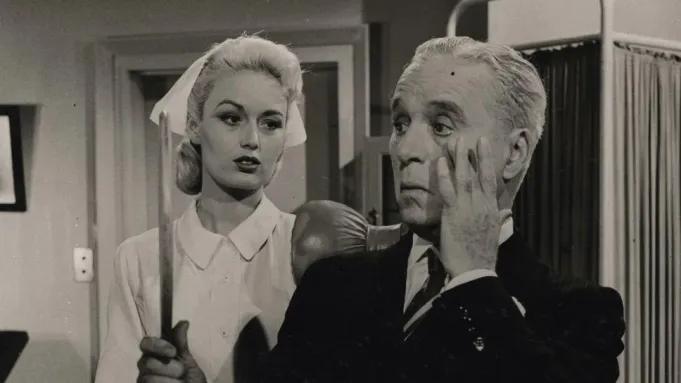
The Locarno Film Festival‘s “Red & Black” retrospective revisits one of Hollywood‘s most controversial and defining chapters—the era of the Hollywood Blacklist. Curated by film historian Ehsan Khoshbakht, the ambitious program explores how political ideology, censorship, artistic resistance and film history became deeply intertwined during the Cold War. By bringing together works from legendary filmmakers, screenwriters and actors affected by the blacklist, the retrospective also invites audiences to reflect on the continuing relationship between politics, freedom of expression and cinema in today’s increasingly polarized world.
Although the events that inspired the retrospective unfolded more than seven decades ago, the questions they raise remain remarkably relevant. How should artists respond to political pressure? Can creative freedom survive ideological conflict? And what happens when governments, industries or public opinion begin policing ideas instead of encouraging debate?
The “Red & Black” program examines these questions through classic Hollywood films, noir masterpieces, political dramas and overlooked works whose historical significance extends far beyond entertainment.
What Was the Hollywood Blacklist?
The Hollywood Blacklist refers to a period beginning in the late 1940s when numerous writers, directors, actors and producers were denied employment because of alleged or suspected associations with communist organizations or left-wing political beliefs.
During this period, many creative professionals were:
- Questioned about their political affiliations.
- Asked to identify colleagues with similar beliefs.
- Removed from studio projects.
- Denied professional opportunities.
- Forced to work anonymously or under pseudonyms.
- Driven into exile or early retirement.
The blacklist became one of the most controversial episodes in American entertainment history because it challenged the balance between national security concerns and freedom of expression.
The Political Climate Behind the Blacklist
The blacklist emerged during the early Cold War, when fears surrounding communism heavily influenced American politics and public discourse.
Many government investigations focused on alleged communist influence across various sectors, including Hollywood, universities and labor organizations.
As political tensions intensified, suspicion alone often became enough to damage careers, regardless of whether any unlawful activity had occurred.
This atmosphere created lasting consequences for artists whose personal beliefs—or perceived beliefs—became more important than their creative achievements.
Why Locarno’s “Red & Black” Retrospective Matters Today
The retrospective is not simply a historical exhibition. It encourages audiences to consider how political pressure can influence artistic expression in every generation.
By revisiting films created during or influenced by the blacklist era, the program explores broader themes including:
- Freedom of speech.
- Political conformity.
- Censorship.
- Creative resistance.
- Cultural memory.
- The social responsibility of artists.
Its relevance extends beyond American history, offering lessons applicable to societies worldwide where debates about free expression continue.
Charlie Chaplin: A Symbol of Independent Artistic Voice
Among the influential figures associated with the retrospective is Charlie Chaplin, whose career illustrates the complicated relationship between politics and artistic independence.
Although celebrated globally for his cinematic achievements, Chaplin also faced political scrutiny because of his outspoken social views and humanitarian themes.
His experiences demonstrate how internationally respected artists can become subjects of political controversy during periods of ideological conflict.
Dorothy Parker and the Intellectual Community
Writer Dorothy Parker represents another important voice connected to the era.
Known for her wit, literary brilliance and social commentary, Parker’s political engagement reflected a broader tradition of writers who believed artists should actively participate in public debate.
Her legacy highlights how literature, journalism and cinema frequently intersect with political discourse.
Why ‘High Noon’ Remains a Powerful Political Allegory
One of the most discussed films connected to blacklist-era conversations is High Noon.
Although presented as a Western, many critics and historians have interpreted it as an allegory about moral courage, public silence and the consequences of abandoning individuals facing political persecution.
Its themes continue to resonate because they explore:
- Personal integrity.
- Social responsibility.
- Fear of isolation.
- The cost of standing by one’s principles.
The film demonstrates how popular genres can communicate profound political ideas without becoming overtly ideological.
The Role of Film Noir During the Blacklist Era
Film noir emerged as one of Hollywood’s defining styles during the same historical period.
Characterized by moral ambiguity, pessimism and psychological complexity, noir often reflected broader anxieties surrounding post-war society.
Common noir themes included:
- Distrust of institutions.
- Isolation.
- Corruption.
- Identity.
- Justice.
- Power.
These themes made noir particularly well suited to exploring the uncertainties of its historical moment.
| Theme | How It Appears in Blacklist-Era Cinema | Modern Relevance |
| Freedom of Expression | Artists challenged political pressure | Supports democratic debate |
| Censorship | Creative careers restricted by ideology | Raises questions about artistic independence |
| Moral Courage | Characters face difficult ethical choices | Encourages individual responsibility |
| Political Polarization | Society divided by competing ideologies | Reflects ongoing global challenges |
| Collective Memory | Cinema preserves historical experiences | Helps future generations learn from history |
Why Political Cinema Endures
Political films remain influential because they encourage audiences to think critically about society rather than simply consume entertainment.
Such films often examine:
- Justice.
- Power.
- Human rights.
- Equality.
- Historical memory.
- Democratic values.
Rather than providing simple answers, they invite viewers to consider multiple perspectives and engage in meaningful discussion.
Paul Thomas Anderson and the Legacy of Hollywood History
The retrospective also acknowledges how contemporary filmmakers continue engaging with Hollywood’s complex past.
Modern directors frequently revisit historical events not only to preserve memory but also to examine how those events continue influencing today’s cultural and political conversations.
This ongoing dialogue between generations demonstrates cinema’s ability to reinterpret history for new audiences.
Why Film Festivals Preserve Cultural Memory
International festivals such as Locarno play an important role in keeping important cinematic history accessible.
Retrospectives allow audiences to:
- Rediscover overlooked classics.
- Understand historical context.
- Explore evolving filmmaking styles.
- Recognize cinema’s role in social change.
- Connect historical events with contemporary issues.
These programs ensure that influential works remain part of ongoing cultural conversations rather than fading into obscurity.
Lessons for Contemporary Audiences
The history of the Hollywood Blacklist reminds viewers that artistic freedom should never be taken for granted.
Healthy creative environments depend upon:
- Open dialogue.
- Respect for differing viewpoints.
- Independent artistic expression.
- Critical thinking.
- Protection of cultural diversity.
Understanding the past helps societies navigate present-day debates surrounding free expression, political disagreement and cultural responsibility.
Conclusion
Locarno’s “Red & Black” retrospective offers far more than a celebration of classic Hollywood films—it provides an opportunity to revisit one of cinema’s most significant historical periods and examine its continuing relevance in today’s world. By exploring the experiences of artists affected by the Hollywood Blacklist, the program encourages thoughtful discussion about censorship, political polarization and the enduring importance of creative freedom.
As audiences rediscover works associated with figures such as Charlie Chaplin, Dorothy Parker and the creators behind influential classics like High Noon, the retrospective demonstrates that cinema remains a powerful medium for preserving history, questioning authority and inspiring meaningful public conversation across generations.
For breaking news and live news updates, like us on Facebook or follow us on Twitter and Instagram. Read more on Latest Entertainment on thefoxdaily.com.






COMMENTS 0