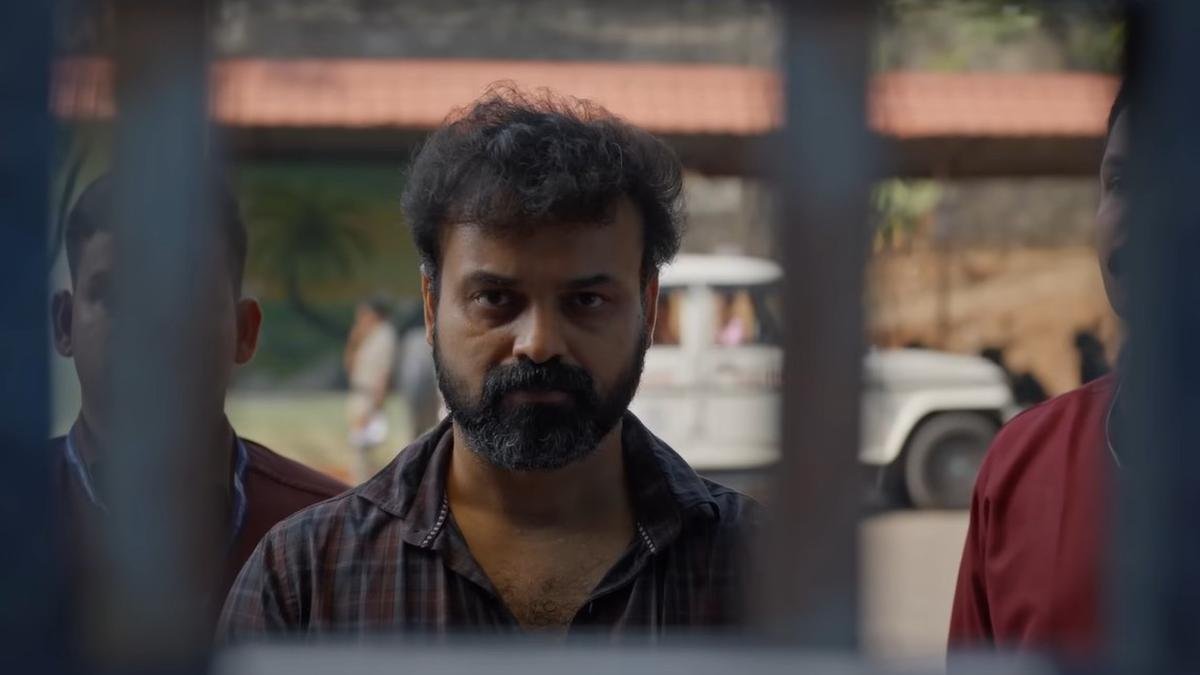
Malayalam cinema has earned a reputation for producing intelligent crime dramas that value character psychology over spectacle. Over the past decade, police procedurals written by filmmakers with firsthand law enforcement experience have added a layer of realism rarely seen in mainstream thrillers. Unmadham arrives with that same promise but takes a far more experimental route, blending crime investigation with psychological instability, creative obsession, and self-referential storytelling.
Written by acclaimed screenwriter and former police officer Shahi Kabir and directed by Kiran Das, the film refuses to remain within one genre. Instead, it constantly shifts between grounded police work, mental conflict, supernatural suggestions, and commentary on filmmaking itself. While this ambition makes Unmadham one of the year’s more intriguing Malayalam releases, the execution struggles to maintain consistency across its nearly two-and-a-half-hour runtime.
At its strongest, the film offers a fascinating exploration of creativity and obsession. At its weakest, it relies on narrative shortcuts that reduce the emotional and investigative impact of its own mystery.
A Story Built Around an Unusual Police Officer
Unlike conventional crime thrillers that introduce fearless investigators chasing dangerous criminals, Unmadham centers on a police officer who is fighting a very different battle—his desire to become a successful screenwriter.
Shelly, played by Kunchacko Boban, is emotionally exhausted, professionally distracted, and increasingly consumed by stories rather than investigations. His prolonged absences from work and unpredictable behavior begin affecting both his career and family life, creating tension with his wife Soumya.
Everything changes when Shelly discovers an old police case surrounded by mysterious rumors and local superstition. What initially appears to be another forgotten investigation slowly becomes the foundation for both his screenplay and his psychological descent.
This dual narrative allows the audience to constantly question which events belong to reality, which originate from Shelly’s imagination, and whether the distinction even matters.
Shahi Kabir Turns the Camera Toward His Own Profession
One of the film’s most fascinating elements is its meta-narrative structure.
Having established himself as one of Malayalam cinema’s leading writers of police dramas, Shahi Kabir effectively examines his own creative process through Shelly’s character. Rather than presenting another straightforward investigation, he asks where compelling crime stories originate and whether repeated exposure to violence changes how investigators view reality.
This self-reflective approach separates Unmadham from conventional thrillers.
The screenplay subtly questions whether the growing popularity of realistic police dramas has exhausted genuine stories, forcing writers to search for increasingly unusual narratives capable of surprising audiences.
That idea alone gives the film a unique identity within Malayalam cinema.
Genre-Blending Is Both the Film’s Greatest Strength and Biggest Weakness
Unmadham constantly shifts between multiple storytelling styles.
| Genre Element | How It Functions in the Film |
|---|---|
| Police Procedural | Investigation into an old mysterious case |
| Psychological Drama | Explores Shelly’s deteriorating mental state |
| Supernatural Mystery | Questions whether superstition influences reality |
| Meta Cinema | Examines the process of turning real cases into films |
| Family Drama | Shows personal consequences of obsession and ambition |
Individually, each genre contributes something valuable. Together, however, they occasionally compete rather than complement one another.
Moments that initially appear psychologically complex sometimes receive supernatural explanations, while investigative breakthroughs occasionally feel driven more by coincidence than careful detective work.
This inconsistency weakens the suspense because viewers are never entirely certain which storytelling rules the film intends to follow.
Kunchacko Boban Delivers One of the Film’s Biggest Strengths
If there is one reason audiences remain invested throughout the film, it is Kunchacko Boban’s committed performance.
Rather than portraying Shelly as a stereotypical troubled police officer, Boban creates a deeply conflicted individual torn between professional responsibility and artistic ambition.
His performance captures subtle emotional shifts, allowing audiences to empathize with a man whose imagination increasingly blurs the boundaries between observation and invention.
Even during moments when the screenplay becomes uncertain, Boban’s portrayal provides emotional continuity.
His restrained acting prevents the psychological aspects from becoming melodramatic, making Shelly’s internal struggles feel authentic.
Lijomol Jose Makes the Most of Limited Material
Lijomol Jose delivers another dependable performance as Soumya, Shelly’s wife.
Although the character primarily functions as the emotional anchor of the family, the screenplay offers relatively limited opportunities for deeper development.
Much of Soumya’s role revolves around reacting to Shelly’s increasingly erratic behavior.
Despite these limitations, Lijomol succeeds in conveying the frustration of someone watching a loved one slowly become consumed by obsession.
The Investigation Rarely Matches the Premise
The central mystery surrounding the old case file promises a layered investigation involving folklore, forgotten evidence, and hidden truths.
Unfortunately, the investigation itself never fully reaches that potential.
Several key revelations arrive with less emotional impact than expected, and important breakthroughs occasionally rely on intuition rather than convincing detective work.
Because the narrative frequently shifts into Shelly’s imagination, the screenplay sometimes uses fictional possibilities to explain gaps in logic instead of strengthening the investigation itself.
As a result, the mystery feels less satisfying than its intriguing premise suggests.
The Psychology of Creativity Takes Center Stage
Perhaps the film’s most overlooked achievement is its exploration of creativity itself.
Writers often transform fragments of reality into fiction, filling gaps with imagination while searching for emotional truth.
Unmadham visualizes that process by allowing audiences to enter Shelly’s creative mind.
The film suggests that storytelling is rarely a straightforward reconstruction of facts. Instead, memories, fears, assumptions, and emotions become intertwined until reality itself begins to feel uncertain.
This psychological perspective offers one of the movie’s most original ideas.
Technical Excellence Keeps the Experience Engaging
Director Kiran Das demonstrates confidence in handling shifting moods throughout the film.
The visual language effectively distinguishes reality from imagination without relying on excessive stylistic tricks.
Atmospheric cinematography, measured editing, and restrained sound design contribute significantly to the psychological tension.
Rather than overwhelming audiences with constant jump scares or loud background music, the film often builds unease through silence and visual ambiguity.
This understated approach aligns well with the film’s thematic ambitions.
What Unmadham Says About Modern Malayalam Thrillers
Malayalam cinema has increasingly embraced realistic police investigations inspired by true events.
Unmadham appears to question whether the genre has become creatively saturated.
By making its protagonist both a police officer and aspiring screenwriter, the film explores how creators search for fresh stories in an industry where audiences constantly expect originality.
This commentary extends beyond cinema.
It reflects broader challenges facing storytellers across literature, streaming platforms, and television, where balancing authenticity with entertainment has become increasingly difficult.
Could a Tighter Narrative Have Made a Bigger Impact?
One of the film’s biggest issues is pacing.
At over 140 minutes, several sequences repeat emotional beats without significantly advancing either the investigation or Shelly’s personal journey.
A more streamlined narrative might have intensified both the mystery and psychological drama.
Reducing some narrative detours would also have allowed the strongest themes—creative obsession, blurred reality, and moral ambiguity—to receive greater focus.
Despite these shortcomings, the film never feels entirely without purpose because its central ideas remain compelling.
Final Verdict: An Intelligent Experiment That Doesn’t Fully Solve Its Own Mystery
Unmadham deserves recognition for attempting something far more ambitious than a conventional crime thriller. Rather than delivering another predictable police procedural, it explores creativity, mental conflict, and storytelling through an inventive meta-narrative framework.
Kunchacko Boban anchors the film with one of his more nuanced performances, while Kiran Das creates an atmosphere that effectively supports the psychological tone. Shahi Kabir’s screenplay introduces fascinating questions about memory, fiction, and the creative process, even if it occasionally struggles to answer them convincingly.
Viewers expecting a tightly constructed investigative thriller may find the narrative uneven. However, audiences interested in character-driven psychological dramas that challenge traditional storytelling conventions will likely appreciate its ambition.
Ultimately, Unmadham is a film rich in ideas but less consistent in execution. It demonstrates that Malayalam cinema continues to experiment fearlessly with genre, even when those experiments produce imperfect results. While it may not rank among the finest crime dramas in recent years, it offers enough originality and thoughtful commentary to remain a conversation-worthy addition to the industry’s evolving landscape.
For breaking news and live news updates, like us on Facebook or follow us on Twitter and Instagram. Read more on Latest Entertainment on thefoxdaily.com.

COMMENTS 0