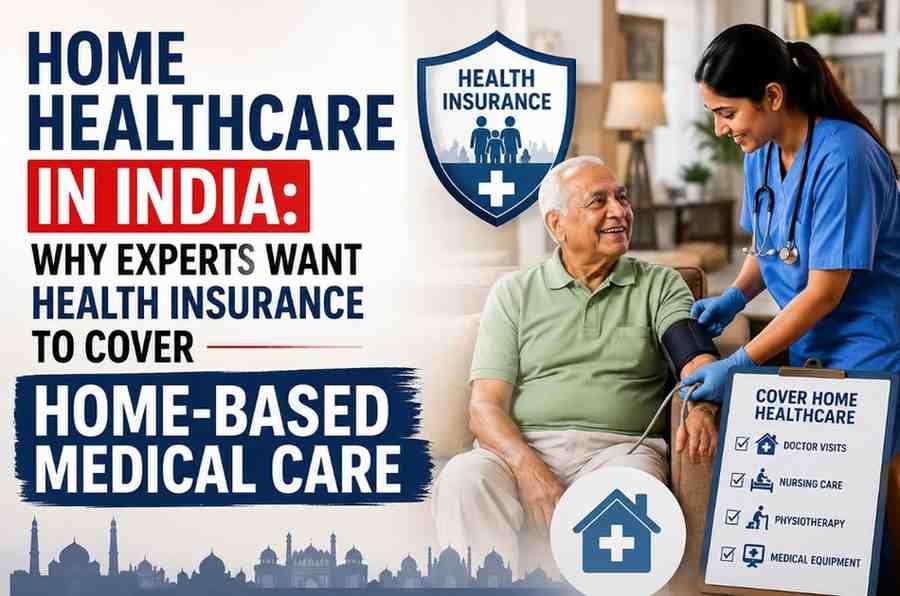
India’s healthcare system is undergoing a quiet but significant transformation. As life expectancy rises, chronic illnesses become more common, and medical technology enables more treatments to be delivered outside hospitals, home healthcare has emerged as an essential part of patient care. Yet for many families, one major obstacle remains: Health Insurance often does not adequately cover medical care provided at home.
Doctors, geriatric care specialists, and patient advocates argue that India’s insurance landscape has not kept pace with changing healthcare needs. While most health insurance policies primarily reimburse hospitalisation expenses, a growing share of treatment from post-surgery recovery and palliative care to physiotherapy, nursing support, and chronic disease management—now takes place within patients’ homes.
As India prepares for one of the world’s fastest-growing elderly populations, experts say expanding insurance coverage for home-based care is no longer a convenience but a healthcare necessity.
Why Home Healthcare Is Becoming More Important
Healthcare is no longer confined to hospital walls. Advances in medical equipment, digital monitoring, telemedicine, and portable diagnostic technologies have made it possible for many patients to receive safe and effective treatment without prolonged hospital stays.
Home healthcare now supports patients recovering from surgery, individuals living with chronic illnesses, people requiring rehabilitation, and elderly adults who need continuous medical supervision but do not necessarily require hospital admission.
For many families, receiving care at home also improves comfort, reduces stress, and lowers the risk of hospital-acquired infections.
India’s Ageing Population Is Reshaping Healthcare Needs
India is experiencing a demographic shift. Improvements in healthcare and life expectancy mean more people are living longer than ever before. At the same time, age-related conditions such as diabetes, hypertension, arthritis, dementia, stroke, Parkinson’s disease, and heart disease are becoming increasingly common.
Older adults often require long-term care rather than emergency treatment. This includes nursing assistance, medication management, physiotherapy, nutritional support, and regular health monitoring—services that can frequently be delivered at home.
The challenge is that while healthcare delivery has evolved, insurance policies have not always evolved alongside it.
What Is Home Healthcare?
Home healthcare refers to professional medical services delivered in a patient’s residence under the supervision of qualified healthcare providers. It differs from informal caregiving by family members because it involves trained medical personnel and structured treatment plans.
Common home healthcare services include:
- Doctor consultations at home
- Nursing care
- Physiotherapy and rehabilitation
- Post-operative monitoring
- Palliative and end-of-life care
- Chronic disease management
- Medication administration
- Home-based diagnostic testing
- Medical equipment support such as oxygen therapy
These services help bridge the gap between hospital discharge and full recovery.
Why Current Health Insurance Falls Short
Traditional health insurance in India has historically focused on hospitalisation because inpatient treatment represented the largest share of medical expenses. However, modern medicine increasingly emphasizes shorter hospital stays followed by supervised recovery at home.
Many insurance policies continue to reimburse surgery, hospital room charges, and inpatient procedures while offering limited or no coverage for extended nursing care, rehabilitation, or home medical visits.
This leaves families paying significant out-of-pocket expenses even when home treatment is medically recommended.
| Traditional Insurance Coverage | Emerging Patient Needs |
|---|---|
| Hospital admission | Home nursing care |
| Surgical procedures | Post-operative rehabilitation |
| ICU treatment | Long-term chronic disease management |
| Hospital diagnostics | Home diagnostic services |
| Inpatient medication | Continuous medical monitoring at home |
Why Experts Want Insurance to Cover Home-Based Care
Healthcare professionals believe expanding insurance coverage could improve both patient outcomes and healthcare efficiency.
Potential benefits include:
- Lower financial burden on families
- Reduced hospital overcrowding
- Better recovery in familiar home environments
- Lower risk of hospital-acquired infections
- Improved quality of life for elderly patients
- Greater continuity of care after discharge
Experts argue that insurance should support treatment wherever it is medically appropriate, rather than limiting reimbursement based solely on location.
The Growing Burden of Chronic Diseases
Unlike acute illnesses that require brief hospital stays, chronic diseases often demand continuous care over months or years. Conditions such as heart failure, chronic kidney disease, chronic obstructive pulmonary disease (COPD), dementia, and neurological disorders frequently require ongoing monitoring rather than repeated hospital admissions.
Home healthcare allows many patients to manage these conditions safely while maintaining greater independence.
Without adequate insurance support, however, long-term home care can become financially challenging for many households.
How Home Healthcare Can Benefit Hospitals
Expanding home healthcare is not only beneficial for patients—it can also strengthen the healthcare system.
When medically stable patients recover at home, hospitals can reserve beds for emergencies and critically ill individuals. This improves resource allocation, particularly during periods of high demand.
The COVID-19 pandemic demonstrated how valuable home-based medical care can be when healthcare facilities become overwhelmed.
The Role of Technology in Home-Based Care
Digital healthcare innovations have significantly expanded the possibilities of home treatment. Remote patient monitoring devices, wearable sensors, teleconsultations, electronic medical records, and portable diagnostic tools allow doctors to supervise patients without requiring constant hospital visits.
These technologies make home healthcare safer, more efficient, and increasingly practical for managing chronic illnesses and post-operative recovery.
Insurance policies that recognize these advances could encourage wider adoption of technology-enabled care.
Global Shift Toward Home Healthcare
Many healthcare systems worldwide are gradually expanding support for home-based care as populations age and medical costs rise. Policymakers increasingly recognize that treating patients at home, when clinically appropriate, can improve patient satisfaction while reducing pressure on hospitals.
India’s demographic transition suggests similar policy discussions are likely to become increasingly important in the coming years.
Expanding insurance coverage could become one of the key drivers of this transformation.
The Economic Impact on Families
Out-of-pocket healthcare expenditure remains a major concern for Indian households. Even when hospitalisation is covered, expenses such as home nursing, rehabilitation, physiotherapy, medical equipment rentals, and caregiver support may fall entirely on families.
For elderly patients requiring prolonged recovery, these costs can accumulate rapidly, creating financial strain alongside emotional stress.
Broader insurance coverage could help reduce these unexpected expenses while improving access to essential services.
The Future of Health Insurance in India
Healthcare experts believe insurance products are likely to evolve as patient needs continue changing. Future policies may increasingly include flexible benefits covering hospital care, outpatient services, preventive healthcare, rehabilitation, and home-based treatment within a single integrated plan.
Artificial intelligence, digital claims processing, and remote monitoring technologies could further simplify reimbursement for home healthcare services.
Such innovations may redefine what comprehensive health insurance looks like over the next decade.
Conclusion
India’s ageing population is reshaping healthcare in ways that extend far beyond hospital walls. As more patients recover, rehabilitate, and manage chronic illnesses at home, the gap between modern medical practice and traditional insurance coverage has become increasingly apparent.
Doctors, geriatric specialists, and patient advocates argue that home healthcare is no longer an optional service but an essential component of quality medical care. Expanding insurance coverage to include medically necessary home-based treatment could improve patient outcomes, reduce financial hardship, and ease pressure on hospitals.
As healthcare continues evolving, insurance policies may also need to evolve—from covering where care happens to covering what patients genuinely need to recover safely and live healthier lives.
For breaking news and live news updates, like us on Facebook or follow us on Twitter and Instagram. Read more on Latest Health on thefoxdaily.com.




COMMENTS 0