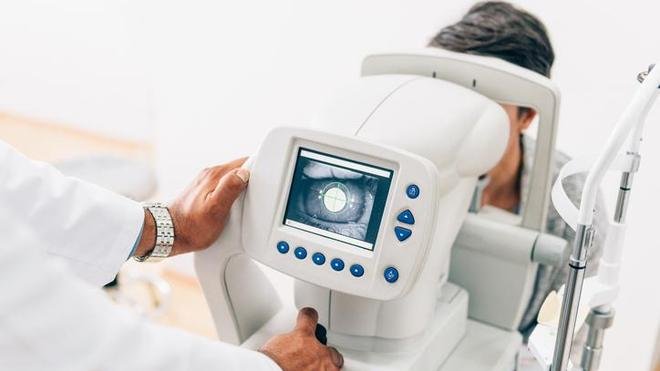
For many people, haemophilia is associated with prolonged bleeding, easy bruising or bleeding into joints and muscles. But one of its less discussed consequences can involve the eyes, where bleeding may threaten vision and where the opportunity to prevent permanent damage can be limited. The problem becomes more complicated when haemophilia itself has not yet been diagnosed.
India’s haemophilia diagnosis gap is therefore more than a question of how quickly a patient receives a label for a genetic disorder. It can influence whether potentially serious bleeding is recognised early enough, whether appropriate clotting-factor treatment is considered promptly, and whether specialists know the underlying reason for an unusual bleeding episode.
Haemophilia is a hereditary bleeding disorder caused by deficiency or impaired function of specific clotting factors. Haemophilia A is associated with factor VIII deficiency, while haemophilia B involves factor IX deficiency. The severity of bleeding varies according to the level of clotting-factor activity. People with severe disease may experience spontaneous bleeding, while those with milder disease may first come to medical attention after surgery, trauma or another event that causes prolonged bleeding.
The overlooked issue is that an eye-related bleeding episode may not initially look like a classic bleeding disorder. Changes in vision, eye discomfort or other visual symptoms can have many possible causes. When haemophilia has not been identified, the connection between an ocular problem and an underlying clotting disorder may not be immediately obvious.
Why haemophilia diagnosis matters when vision is at stake
Bleeding inside or around the eye is uncommon compared with bleeding into joints and muscles in haemophilia. That rarity can itself create a diagnostic challenge. Doctors naturally consider more common causes first when a patient arrives with a new visual complaint.
Yet the eye is a particularly sensitive organ. Blood in the wrong location can interfere with normal visual function, increase pressure in certain circumstances or damage delicate structures. The clinical response therefore depends not only on identifying where bleeding has occurred, but also on understanding why it happened.
In a person already known to have haemophilia, an unexplained ocular bleeding event immediately carries additional significance. In someone whose haemophilia has never been diagnosed, the same presentation may require a broader investigation.
This is where India’s diagnosis gap becomes important. If a bleeding disorder is recognised only after repeated bleeding episodes, major trauma or an invasive procedure, opportunities for earlier risk assessment may already have been missed.
What is the haemophilia diagnosis gap in India?
The diagnosis gap refers to people who have haemophilia but remain undiagnosed, are diagnosed late or cannot easily access appropriate confirmatory testing and specialist care.
Several factors can contribute to this problem. Awareness of inherited bleeding disorders remains uneven, particularly outside specialised medical centres. Symptoms can also vary substantially between individuals. A child or adult with a milder form of haemophilia may not have the dramatic bleeding history that immediately raises suspicion.
Another challenge is access to specialised laboratory testing. Diagnosis may require a combination of screening tests, clotting-factor assays and clinical assessment. Such services are not necessarily available with equal accessibility in every part of the country.
For families living far from major medical centres, the journey can involve multiple consultations before a definitive diagnosis is reached. This is not simply inconvenient. With a bleeding disorder, delays can influence how future injuries, operations, dental procedures and unexpected bleeding events are managed.
The hidden connection between diagnosis and eye health
Vision-threatening bleeding in haemophilia is rare, but rare does not mean irrelevant. The important question is not how frequently the complication occurs; it is whether a preventable loss of vision can be avoided when it does occur.
Consider the difference between two patients presenting with an unexplained eye problem. One has a documented history of haemophilia and is already connected to a haematology team. The other has never been diagnosed with a bleeding disorder and has no known family history.
The first patient arrives with crucial information already available. The treating team can factor the bleeding disorder into investigations and treatment decisions. The second patient may need the underlying disorder to be discovered while the eye problem itself is being assessed.
This distinction illustrates a broader principle in medicine: diagnosis is not merely about naming a disease. It creates information that changes how subsequent emergencies are managed.
Why symptoms can be misleading
One reason haemophilia can remain undiagnosed is that abnormal bleeding does not always announce itself in an unmistakable way.
A person may have experienced unusually prolonged bleeding after a procedure without understanding that it was abnormal. Recurrent bruising may be dismissed as insignificant. A family may not realise that several relatives have had similar bleeding problems. In some cases, the condition may remain unnoticed until a significant injury or surgical procedure exposes the underlying clotting abnormality.
Eye symptoms create another layer of complexity. A sudden change in vision can be associated with numerous ocular conditions, and the symptoms alone may not reveal the underlying cause. When a bleeding disorder is not already known, the clinician must recognise when the overall history warrants coagulation testing.
That makes awareness particularly important among primary-care doctors, emergency clinicians, ophthalmologists, paediatricians, dentists and surgeons.
Haemophilia is not simply a disease of joints
The classic image of haemophilia is repeated bleeding into joints, particularly in severe disease. Joint bleeding can cause pain, swelling and progressive damage when not adequately managed.
However, haemophilia can affect much more than musculoskeletal health. Bleeding can occur in muscles and soft tissues, and serious bleeding can occur at other anatomical sites. Head injuries are particularly important because internal bleeding may not always be immediately visible.
Ocular bleeding belongs to this wider spectrum of possible bleeding complications. It should not be treated as the defining feature of haemophilia, but it should also not be overlooked simply because it is uncommon.
Why early recognition can change the clinical pathway
The central advantage of early haemophilia diagnosis is preparedness.
Once haemophilia has been confirmed, patients and families can receive appropriate education about bleeding risks, medical procedures and when urgent evaluation may be necessary. A treatment plan can be developed with specialists, and the patient can be connected to haemophilia care services.
In the context of a sudden eye problem, knowing that a patient has a bleeding disorder can be clinically significant because treatment decisions may need to account for the underlying deficiency of a clotting factor.
The exact management of an ocular bleeding event depends on the location and severity of bleeding, the patient’s factor level, treatment history and the findings of the ophthalmology and haematology teams. There is no single treatment pathway suitable for every patient.
What can be generalised, however, is the importance of rapid recognition and coordinated assessment when significant bleeding is suspected.
Where India’s healthcare system faces a practical challenge
India has highly specialised centres capable of diagnosing and treating bleeding disorders, but access is not uniform. Specialist laboratories and comprehensive haemophilia services are more concentrated in larger cities, creating an accessibility problem for patients in smaller towns and rural areas.
This creates a geographic dimension to the diagnosis gap.
A patient who lives close to a specialist centre may be able to obtain a factor assay and specialist consultation relatively quickly. Another patient may first visit a local clinic, then a district hospital, followed by a larger centre before the possibility of haemophilia is considered.
Digital healthcare, referral networks and better communication between laboratories and specialist centres could help reduce some of these delays. But technology alone cannot solve the problem. Clinicians also need a clear understanding of when an unexplained bleeding history should trigger investigation.
The missed opportunity: recognising haemophilia before an emergency
One of the most important lessons from the diagnosis gap is that haemophilia should ideally be identified before a major bleeding event forces the issue.
Routine medical encounters can provide opportunities to recognise warning signs. A detailed history of bleeding after dental procedures, operations or injuries can be valuable. Family history can also provide an important clue because haemophilia is inherited.
Women and girls can also be relevant to the diagnostic conversation. Although classic haemophilia has historically been discussed primarily as a disorder affecting males, females can carry the relevant genetic change and may themselves have reduced clotting-factor levels and bleeding symptoms. This makes family-based awareness and appropriate evaluation important.
The goal should not be to test everyone indiscriminately. The goal is to make clinicians more alert to patterns that justify investigation.
From eye emergency to system-level lesson
The risk of preventable vision loss offers a useful lens through which to understand the larger haemophilia problem.
An ocular bleeding episode may begin in an ophthalmology setting, but the solution can require several specialties working together. The ophthalmologist assesses the eye. The haematologist addresses the underlying bleeding disorder. The laboratory confirms or characterises the clotting abnormality. Emergency and primary-care teams may be involved when the patient first presents.
This makes haemophilia a condition where fragmented healthcare can create unnecessary vulnerability.
A patient does not experience healthcare as separate departments. They experience one clinical journey. If information about an inherited bleeding disorder is lost between those departments, the patient may pay the price.
Comparison: diagnosis after crisis versus diagnosis before crisis
| Early diagnosis pathway | Delayed diagnosis pathway |
|---|---|
| Bleeding history is recognised earlier | Bleeding episodes may be attributed to individual events |
| Appropriate coagulation testing can be arranged | Diagnosis may require repeated medical encounters |
| Patient and family can receive bleeding-risk education | Families may remain unaware of inherited risk |
| Specialist care can be planned | Specialist involvement may begin during an emergency |
| Known haemophilia can inform management of future procedures and injuries | Clinicians may initially lack critical diagnostic information |
What better diagnosis could look like
Closing India’s haemophilia diagnosis gap will require more than increasing awareness campaigns. A stronger system would connect several parts of healthcare.
1. Strengthen clinical suspicion
Doctors should be familiar with bleeding patterns that warrant evaluation, particularly unusual or excessive bleeding after procedures, recurrent unexplained bleeding and a relevant family history.
2. Expand access to diagnostic testing
Specialised clotting-factor testing needs to become easier to access beyond a limited number of major medical hubs. Reliable referral pathways can help patients reach appropriate laboratories and specialists without unnecessary delays.
3. Improve emergency communication
People diagnosed with haemophilia should be able to communicate their condition quickly during emergencies. Clear medical records and treatment information can be particularly valuable when the patient presents to a facility unfamiliar with their history.
4. Build stronger ophthalmology-haematology links
Ophthalmologists do not need to become haemophilia specialists. But they should know when an unusual bleeding presentation, combined with the patient’s history, warrants haematological assessment.
5. Use family history more effectively
When haemophilia is identified in one family member, relatives may benefit from appropriate counselling and evaluation. This can uncover previously unrecognised cases and allow affected individuals to plan safer medical care.
The larger lesson for India’s healthcare system
The story of haemophilia and vision is ultimately a story about the cost of delayed diagnosis.
Modern healthcare increasingly depends on recognising disease before complications occur. For inherited bleeding disorders, that principle is especially important because the diagnosis can influence how a person is managed throughout life.
The challenge is not simply to find more patients with haemophilia. It is to find them earlier, connect them with appropriate care and ensure that the diagnosis remains visible whenever they enter the healthcare system.
The same approach can also improve outcomes beyond Eye Health. Early recognition can help inform decisions around surgery, dental treatment, injuries and other situations where uncontrolled bleeding may become dangerous.
What could happen next?
India’s progress in haemophilia care will increasingly depend on whether specialist expertise can be connected with patients outside major urban centres. Better referral systems, broader diagnostic access, clinician education and coordinated specialist care could gradually reduce the number of people who remain undiagnosed.
There is also an opportunity to change the way haemophilia is understood by the public. It should not be viewed only as a condition that causes bleeding after obvious injuries. Some people may have a less obvious history, and the absence of a previous diagnosis does not automatically rule out an inherited bleeding disorder.
For eye specialists, the message is equally important: an unusual bleeding presentation deserves attention to the patient’s broader medical and family history, particularly when the symptoms cannot be adequately explained by a common ocular condition.
Conclusion: Preventing vision loss begins before the eye emergency
Vision-threatening bleeding associated with haemophilia may be uncommon, but its significance extends far beyond the number of cases. When a bleeding disorder remains undiagnosed, an emergency involving the eye can become more difficult to recognise and manage promptly.
India’s haemophilia diagnosis gap therefore represents a broader healthcare challenge: the distance between a patient’s first symptoms and the right diagnosis, laboratory test and specialist care.
Closing that distance could have benefits that reach well beyond haemophilia itself. Earlier diagnosis gives patients knowledge, gives doctors crucial clinical information and creates a clearer pathway for managing future bleeding risks.
The most important shift is therefore from reacting to bleeding after it becomes serious to recognising the possibility of haemophilia before a crisis occurs. In the rare situation where vision is threatened, that earlier knowledge may make a critical difference.
For breaking news and live news updates, like us on Facebook or follow us on Twitter and Instagram. Read more on Latest Health on thefoxdaily.com.


COMMENTS 0