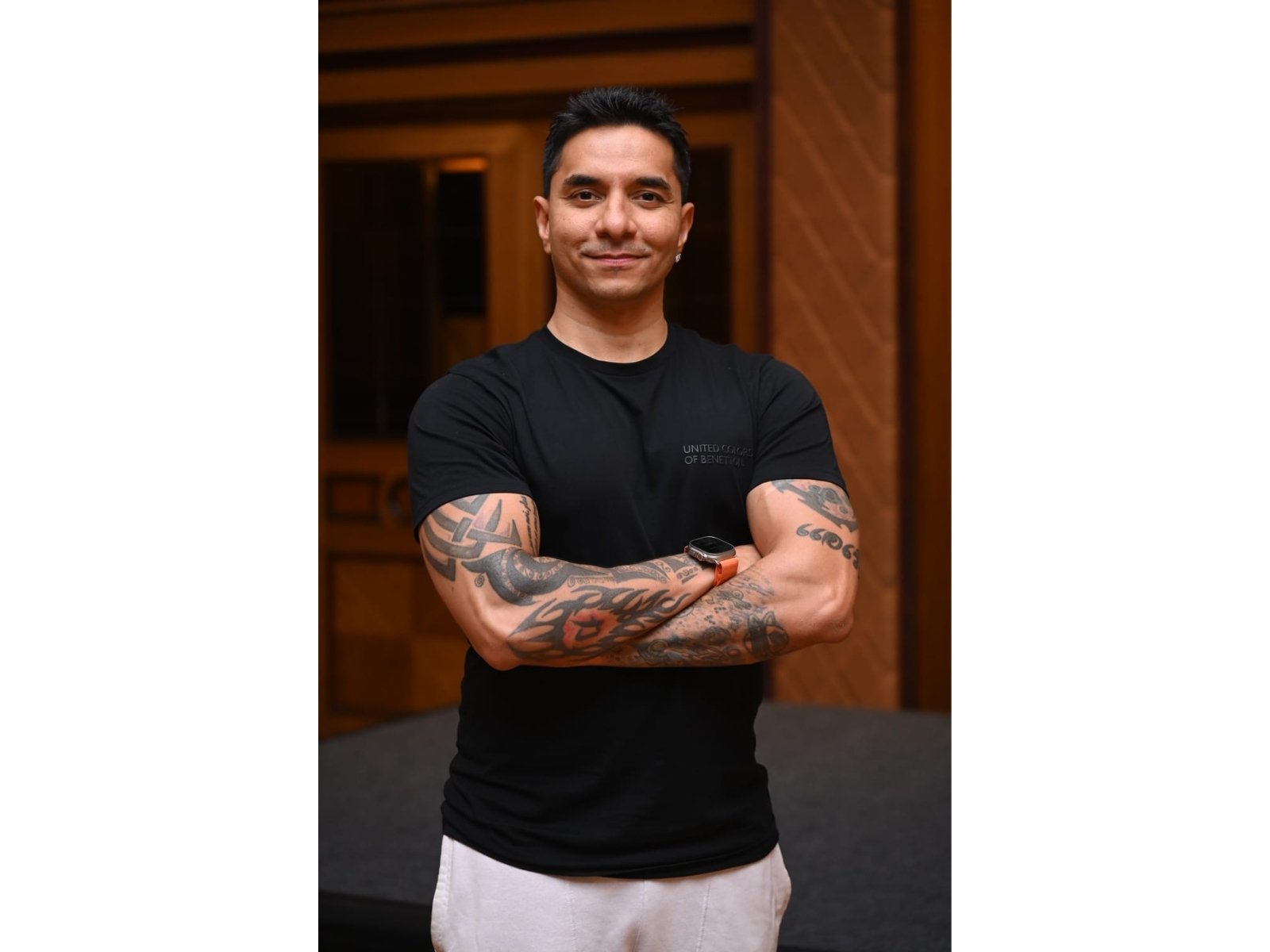
Luke Coutinho has announced the Foundational Medicine and Lifestyle Certification, Level 1: Find Your Rhythm, a new educational programme focused on helping participants understand the connection between everyday lifestyle choices and long-term health.
The first edition of the one-day classroom certification is scheduled for September 26, 2026, at Taj Lands End in Mumbai. The programme is designed to bring together different aspects of wellness, including nutrition, movement, sleep, emotional wellbeing, recovery and breathwork, rather than treating each area of health as an isolated subject.
The certification is expected to appeal to healthcare professionals, nutritionists, health coaches, practitioners, researchers and educators, while also being relevant to parents, caregivers, people with lived health experiences and individuals interested in expanding their understanding of lifestyle and wellness.
What Is the Find Your Rhythm Certification?
Find Your Rhythm is Level 1 of the newly announced Foundational Medicine and Lifestyle Certification. The programme is based on the idea that sustainable health is built on several interconnected foundations rather than a single diet, exercise routine or wellness intervention.
Luke Coutinho’s approach places emphasis on understanding how areas such as food, movement, sleep, emotional wellbeing, environment and breathing can interact with one another.
This makes the programme different from a conventional workshop that focuses on one health topic. Instead, the emphasis is on developing a broader understanding of lifestyle and how everyday choices can influence overall wellbeing.
When and Where Will the Programme Take Place?
The first edition of the certification is scheduled for September 26, 2026, beginning at 9 AM.
The programme will take place at Taj Lands End in Mumbai and is planned as a one-day, in-person classroom experience.
The classroom format is significant because it allows participants to engage directly with the programme’s framework rather than simply consuming wellness information online.
What Does Foundational Medicine Mean?
The central concept behind the programme is Foundational Medicine, a lifestyle-focused framework associated with Luke Coutinho’s health education work.
The approach focuses on strengthening everyday foundations of health while recognising the importance of appropriate medical care.
Instead of asking only what supplement someone should take or which diet they should follow, the framework encourages a broader look at factors such as food, physical activity, sleep, emotional health, environment and breathing.
This approach reflects an increasingly important idea in health education: individual lifestyle behaviours rarely operate in isolation.
The Six Lifestyle Foundations
- Food: Understanding nutrition and developing sustainable eating habits.
- Movement: Making physical activity and functional movement part of everyday life.
- Sleep: Recognising quality sleep and recovery as essential parts of wellbeing.
- Emotional wellbeing: Understanding the role of stress, emotions and psychological resilience.
- Environment: Considering how surroundings and everyday living conditions influence health behaviours.
- Breath: Exploring breathing and breathwork as components of a broader wellness routine.
These areas are interconnected. For example, poor sleep can affect energy and food choices, while stress may make it harder to maintain exercise or healthy eating habits. A more complete lifestyle approach considers these relationships instead of focusing on one behaviour at a time.
Who Is the Certification For?
The programme has been positioned for a broad group of learners.
Healthcare professionals, clinicians, nutritionists, health coaches, practitioners, researchers and educators may find the framework relevant to their work. The programme is also aimed at people outside the healthcare sector, including parents, caregivers and lifelong learners interested in understanding health more deeply.
This broad audience reflects the growing demand for health literacy. People are increasingly required to make decisions about food, exercise, sleep and wellness while navigating a huge amount of information online.
Why Health Literacy Matters in the Age of Wellness Trends
Social media has made health information easier to access than ever, but accessibility does not always mean accuracy.
People regularly encounter claims about fasting, supplements, detoxes, restrictive diets, exercise programmes and “miracle” health solutions. Some may be useful, while others can be exaggerated or unsuitable for particular individuals.
This creates a new challenge: people do not necessarily need more health information. They need better ways to understand and evaluate it.
A foundations-based approach can help shift the conversation away from short-lived trends and toward sustainable behaviours.
Why “Find Your Rhythm” Is an Important Theme
The title Find Your Rhythm reflects the idea that sustainable health cannot always be reduced to a rigid routine that everyone must follow.
People have different lifestyles, working hours, family responsibilities, fitness levels, dietary preferences and health needs. A routine that works for one person may be difficult or inappropriate for another.
The more practical approach is to understand the underlying principles and then develop habits that can realistically fit into everyday life.
This can be particularly important when discussing long-term lifestyle change. Extreme programmes may create impressive short-term results, but consistency is usually what determines whether a behaviour becomes part of a person’s life.
How Lifestyle Foundations Work Together
Health behaviours can influence one another in ways that are easy to overlook.
A person who sleeps poorly may feel too tired to exercise. Reduced physical activity can then affect energy and mood. Stress may lead to irregular eating, while an inconsistent diet can make it harder to maintain stable energy throughout the day.
Conversely, improving one foundation can sometimes make another easier to manage.
Regular movement may support sleep. Better sleep can make it easier to maintain healthy food choices. A structured routine can reduce daily stress and create more opportunities for physical activity.
The important point is that health is dynamic. Improving wellbeing is often less about finding one perfect habit and more about creating a system of habits that supports one another.
How the Certification Fits Into Luke Coutinho’s Work
The new certification builds on Luke Coutinho’s wider work in lifestyle and health education.
His approach has previously focused on areas including nutrition, sleep, metabolic health, emotional wellbeing and other lifestyle-related topics. The new certification brings these concepts together within a structured classroom format.
This makes Level 1 potentially significant as an educational foundation for people who want to understand the broader philosophy before exploring more specialised areas.
Education Should Complement Medical Care
An important distinction in lifestyle education is the difference between learning about healthy habits and replacing professional medical treatment.
Nutrition, exercise, sleep and stress management can support overall health, but they do not automatically replace diagnosis, medication or clinical treatment when those are required.
People with medical conditions should discuss significant changes to their diet, exercise routine or treatment plan with their healthcare professionals.
A responsible lifestyle programme should therefore be viewed as a way of improving health knowledge and supporting healthier behaviours, not as a substitute for necessary medical care.
What Makes the Programme Different From a Typical Wellness Workshop?
| Feature | Find Your Rhythm Approach | Typical Trend-Based Wellness Content |
|---|---|---|
| Focus | Multiple interconnected lifestyle foundations | Often centred on one trend or intervention |
| Learning style | Structured classroom education | Often short-form or social-media driven |
| Nutrition | Considered as part of a broader lifestyle system | May focus heavily on individual foods or diets |
| Exercise | Viewed as part of sustainable daily movement | Can emphasise short-term challenges |
| Wellbeing | Includes sleep and emotional wellbeing | May focus primarily on physical appearance |
| Long-term goal | Build sustainable health habits | Often focused on quick results |
The Bigger Shift From Health Hacks to Health Foundations
One of the most interesting aspects of the Foundational Medicine and Lifestyle Certification is its focus on moving away from the health-hack mentality.
The internet has made it easy to turn complex health subjects into simple slogans. “Eat this,” “avoid that,” “try this supplement” and “do this workout” are easy messages to share, but human health is considerably more complicated.
A foundations-first philosophy asks a different question: what basic behaviours can be improved consistently, and how do those behaviours interact?
That shift could be particularly useful for people who feel overwhelmed by constantly changing wellness trends.
Why Sustainable Health Habits Matter
The most effective lifestyle change is rarely the most extreme one.
A sustainable routine may look less dramatic than a strict 30-day challenge, but it has one major advantage: it can continue after the challenge ends.
Healthy eating, regular movement, adequate sleep and emotional balance are not short-term projects. They are ongoing parts of everyday life.
This is where the idea of “finding your rhythm” becomes particularly relevant. Instead of attempting to follow somebody else’s perfect routine, people can learn the principles and adapt them to their own circumstances.
What Participants Can Take Away
The broader value of the certification lies in helping participants think about health as a connected system.
Rather than treating nutrition, exercise, sleep and emotional wellbeing as separate subjects, the programme brings them together under one framework.
For professionals, this may provide a broader language for discussing lifestyle with clients or patients. For individuals and caregivers, it may help build a stronger foundation of health knowledge and encourage more thoughtful decisions about everyday habits.
The Future of Lifestyle Medicine Education
The launch of Find Your Rhythm comes at a time when people are becoming increasingly interested in preventive health, personalised wellness and lifestyle-based approaches.
The biggest opportunity for programmes in this space is to move beyond promises of quick transformation and focus instead on practical, evidence-informed education.
If lifestyle education is going to have a lasting impact, participants need more than lists of foods to eat or exercises to perform. They need to understand why habits matter, how different behaviours interact and when professional medical support is necessary.
That is ultimately the larger idea behind a foundations-first approach.
Conclusion
Luke Coutinho’s Foundational Medicine and Lifestyle Certification, Level 1: Find Your Rhythm introduces a structured approach to understanding health through interconnected lifestyle foundations.
Scheduled for September 26, 2026, at Taj Lands End in Mumbai, the one-day programme brings together areas including nutrition, movement, sleep, emotional wellbeing, recovery and breathwork.
Its most distinctive idea is that sustainable health is not built around a single miracle habit. It comes from understanding the foundations of wellbeing and creating routines that can realistically become part of everyday life.
As wellness information continues to expand across social media and digital platforms, that broader perspective may become increasingly valuable. The future of health education may not belong to the loudest health hack, but to approaches that help people understand the bigger picture.
For breaking news and live news updates, like us on Facebook or follow us on Twitter and Instagram. Read more on Latest Health on thefoxdaily.com.



COMMENTS 0